Why Educators Are Racing to Master AI: The Top 9 Courses You Can’t Ignore

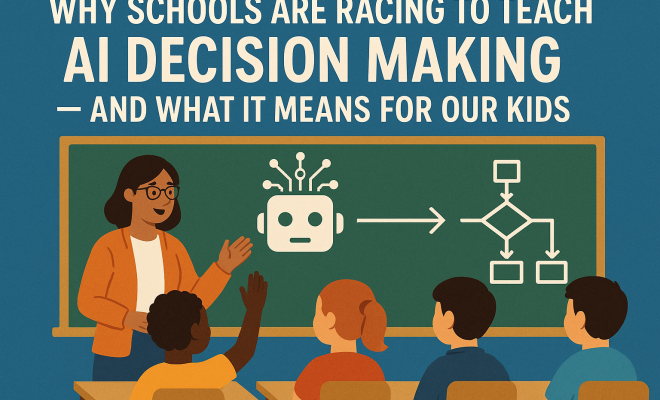
Let’s face it, the buzz around artificial intelligence in education isn’t just background noise anymore; it’s a roaring siren. For those of us deeply invested in PreK-12 education, whether as teachers, administrators, or support staff, the landscape is shifting under our feet. Gone are the days when AI felt like a distant, futuristic concept. Today, it’s impacting everything from lesson planning to student assessment, and honestly, if you’re not getting on board, you’re going to be left behind.
The truth is, employers in education are increasingly valuing practical AI fluency over traditional academic degrees for many roles. We’re seeing a significant seven-percentage-point decrease in degree requirements for positions exposed to AI, which tells you just how quickly the priorities are changing. This isn’t about replacing teachers with robots, but about empowering us with powerful new tools. It demands new competencies: data analysis, seamless technology integration, critical judgment, creativity, and, perhaps most importantly, ethical reasoning. As an educator who’s seen the challenges firsthand, I can tell you these skills aren’t just ‘nice-to-haves’ anymore; they’re essential. So, if you’re ready to embrace the future and want to find the best online courses for AI upskilling in PreK-12 education, you’ve come to the right place. Let’s dive into some of the top options that can truly make a difference in your classroom and career.
1. Google’s AI for Educators Course: Bridging the Digital Divide
When Google throws its hat into the ring, you pay attention, right? Their ‘AI for Educators’ course is a fantastic starting point, especially for those who might feel a bit overwhelmed by the sheer scope of artificial intelligence. It’s designed specifically with K-12 educators in mind, focusing on practical applications rather than deep-dive theoretical computer science. You won’t be building algorithms from scratch, but you’ll certainly understand how to leverage existing AI tools to enhance learning experiences.
What makes this course stand out is its emphasis on ethical AI use and responsible implementation. We’re talking about safeguarding student data, understanding biases in AI, and fostering critical thinking skills in students as they interact with AI. These are critical conversations that need to happen in every school, and Google provides a solid framework for them. Plus, it’s often free or very low-cost, making it highly accessible for educators on a tight budget. For many, this is one of the best online courses for AI upskilling in PreK-12 education to get your feet wet.
2. Coursera’s AI in Education Specialization by the University of Michigan: Academic Rigor Meets Practical Application
If you’re looking for something with a bit more academic heft, the ‘AI in Education Specialization’ offered by the University of Michigan through Coursera is an excellent choice. This isn’t just a single course; it’s a series of courses designed to give educators a comprehensive understanding of AI’s potential and challenges in educational settings. They cover topics like machine learning fundamentals, natural language processing, and how these technologies are being applied in intelligent tutoring systems and adaptive learning platforms.
What I appreciate about this specialization is its focus on research-backed pedagogical strategies. It doesn’t just show you what AI can do; it helps you understand *why* and *how* to integrate it effectively to improve student outcomes. The instructors are often leading researchers in educational technology, bringing a wealth of knowledge and current insights. While it comes with a cost, the certificate you earn upon completion can be a significant boost to your professional profile, demonstrating a serious commitment to mastering AI integration in PreK-12 education.
3. edX’s AI for K-12 Educators by Microsoft: Tools and Strategies from a Tech Giant
Microsoft has also stepped up to the plate with its ‘AI for K-12 Educators’ course available on edX. Similar to Google’s offering, this course is tailored for classroom teachers and administrators, focusing on practical skills and tools. However, Microsoft’s approach often leans into its own ecosystem of products, which can be a huge benefit if your school district already uses Microsoft 365 or Azure services. You’ll learn how to leverage AI features embedded in familiar applications to streamline tasks and create more engaging lessons.
Beyond the tools, the course delves into the pedagogical implications of AI, discussing how it can support personalized learning, differentiate instruction, and even assist with assessment and feedback. They also touch upon crucial topics like digital citizenship and data privacy, which are paramount in any AI-driven classroom. For districts heavily invested in Microsoft technologies, this is arguably one of the best online courses for AI upskilling in PreK-12 education, offering direct applicability and immediate impact. (See: AI in Education – U.S. Department of Education.)
4. ISTE’s AI Explorations for Educators Certificate: Standards-Based Excellence
The International Society for Technology in Education (ISTE) is a name every educator should know when it comes to technology integration. Their ‘AI Explorations for Educators Certificate’ program is specifically designed to align with ISTE Standards, which means it focuses on competencies that are widely recognized as essential for effective tech-infused teaching. This isn’t just about learning AI; it’s about learning to teach *with* and *about* AI in a way that aligns with best practices.
The ISTE program emphasizes hands-on activities, project-based learning, and collaborative experiences. You’ll learn how to introduce AI concepts to students, design AI-powered lessons, and develop computational thinking skills in your learners. It’s a comprehensive program that really pushes educators to think critically about the role of AI in shaping the future workforce. If you’re looking for a credential that carries weight within the education community, this certificate program is definitely worth considering. It’s a robust option among the best online courses for AI upskilling in PreK-12 education. For more context, see AI Skills vs Traditional Skills for Jobs.
5. MIT xPRO’s AI in Education: Future of Teaching and Learning: Cutting-Edge Insights from a Pioneer
When you hear MIT, you immediately think of groundbreaking technology, right? MIT xPRO’s ‘AI in Education: Future of Teaching and Learning’ course offers a deep dive into the theoretical underpinnings and practical applications of AI from a world-renowned institution. This course is for educators who want more than just a surface-level understanding; they want to grasp the core concepts and stay ahead of the curve.
The curriculum often covers advanced topics like machine learning algorithms, deep learning, and their specific relevance to educational research and practice. You’ll explore how AI can personalize learning paths, automate administrative tasks, and even provide predictive analytics for student performance. While it might be more challenging than some entry-level courses, the insights gained from MIT’s experts are invaluable. It’s an investment, both in time and money, but for those seeking a truly transformative understanding, this is certainly one of the best online courses for AI upskilling in PreK-12 education.
6. Code.org’s AI Fundamentals for K-12 Teachers: Demystifying AI for Younger Learners
Code.org has done an incredible job of making computer science accessible to millions of students, and their ‘AI Fundamentals for K-12 Teachers’ course continues that mission. This course is particularly valuable for elementary and middle school educators who want to introduce AI concepts to younger learners without getting bogged down in complex coding. It focuses on conceptual understanding and playful exploration of AI principles.
You’ll learn how to teach students about machine learning through hands-on activities, explore ethical considerations in age-appropriate ways, and foster computational thinking skills. The resources provided are often ready-to-use in the classroom, making it incredibly practical for busy teachers. Code.org’s philosophy is about demystifying technology, and they do an excellent job of making AI feel approachable and exciting for both teachers and students. For foundational knowledge that translates directly to the elementary and middle school classroom, this is easily one of the best online courses for AI upskilling in PreK-12 education.
7. University of Helsinki’s Elements of AI: A Free, Foundational Course for Everyone
While not exclusively for educators, the University of Helsinki’s ‘Elements of AI’ course is a phenomenal, free resource that every educator should consider. It’s designed for a general audience, meaning it breaks down complex AI concepts into easily digestible modules without requiring any prior programming knowledge. This makes it an ideal starting point for educators who are complete novices to AI but want a solid theoretical foundation.
The course covers everything from what AI actually is, to its societal implications, to basic machine learning principles. It emphasizes critical thinking about AI’s capabilities and limitations, which is crucial for fostering informed discussions in the classroom. The fact that it’s free removes any financial barrier, making it an accessible entry point for countless educators. Before you dive into more specialized courses, getting this foundational understanding can make a huge difference, positioning it as a top contender among the best online courses for AI upskilling in PreK-12 education for beginners.
8. FutureLearn’s AI in the Classroom by Coventry University: Practical Strategies for Immediate Impact
FutureLearn hosts a variety of excellent courses, and ‘AI in the Classroom’ by Coventry University is tailored specifically for educators looking for immediate, actionable strategies. This course focuses less on the underlying algorithms and more on how to integrate existing AI tools and platforms into your daily teaching practice. Think about AI-powered feedback tools, automated grading assistance, and resources for generating engaging content.
What I find particularly useful about this course is its emphasis on pedagogical innovation. It encourages educators to think creatively about how AI can support different learning styles and address diverse student needs. You’ll explore case studies and practical examples, which always resonate well with teachers. It’s often offered in a flexible, self-paced format, making it easy to fit into a busy educator’s schedule. For practical application and direct classroom relevance, this is undoubtedly one of the best online courses for AI upskilling in PreK-12 education. (See: BBC News on AI's impact in education.)
9. Udemy/Coursera Individual Courses on Specific AI Tools: Targeted Skill Development
Sometimes, what you need isn’t a broad overview but rather deep expertise in a specific AI tool or application. Platforms like Udemy and Coursera offer a vast array of individual courses that focus on particular AI technologies. For instance, you might find a course specifically on ‘Using ChatGPT for Lesson Planning,’ ‘Google Bard for Differentiated Instruction,’ or ‘AI-Powered Assessment Tools.’ For more context, see Mistake Leaving New Grads Unemployable in the AI Era.
These targeted courses are excellent for educators who have a basic understanding of AI but want to master a particular piece of software or a specific application. They are often taught by industry experts or experienced educators who can provide practical tips and tricks. The beauty of these platforms is the sheer variety and the ability to pick and choose exactly what you need. While you might not get a comprehensive ‘AI in education’ certificate from a single course, building a portfolio of these specific skills can be incredibly empowering and makes them a flexible option for the best online courses for AI upskilling in PreK-12 education, especially for personalized professional development.
Why AI Upskilling is Non-Negotiable for PreK-12 Educators
Let’s be real, the idea of “upskilling” can sound like just another buzzword, another thing to add to an already overflowing plate. But with AI, it’s different. This isn’t about jumping on a trend; it’s about staying relevant and effective in a rapidly changing world, both for us as educators and for the students we serve. Think about it: our students are growing up in a world where AI is already everywhere, from the algorithms recommending videos on YouTube to the smart assistants in their homes. If we’re not equipping them to understand and responsibly interact with this technology, we’re failing them.
Beyond preparing students, AI upskilling makes *our* jobs easier and more impactful. Imagine spending less time on administrative tasks and more time on meaningful interactions. AI can help personalize learning at scale, something we’ve always strived for but often struggled to achieve with limited resources. It can offer immediate feedback, analyze student performance patterns, and even generate differentiated content. This isn’t about replacing the human element; it’s about amplifying it, freeing us up to focus on the unique human aspects of teaching – empathy, critical thinking, mentorship, and fostering creativity.
The shift in employer expectations I mentioned earlier isn’t just a ripple; it’s a wave. School districts are starting to recognize that educators with AI fluency aren’t just innovative; they’re essential. They can lead the charge in integrating new tools, developing ethical guidelines, and ultimately, shaping the future of learning within their schools. So, viewing these courses as an optional extra would be a mistake. They’re becoming foundational for any educator who wants to lead and innovate in the coming years.
The Impact of AI on Different PreK-12 Roles
It’s easy to think of AI in the classroom as only affecting teachers, but the truth is, its reach is much broader. Every role within the PreK-12 system is touched by this technological evolution. Let’s break down how:
For Teachers:
- Lesson Planning & Content Creation: AI can generate lesson plans, create differentiated reading passages, develop quiz questions, and even design interactive activities based on learning objectives. This frees up immense amounts of time.
- Personalized Learning: Adaptive learning platforms powered by AI can tailor content, pace, and remediation to each student’s needs, providing a truly individualized educational experience.
- Assessment & Feedback: AI can assist with grading objective assignments, provide instant feedback on student writing (grammar, style, clarity), and analyze performance data to identify learning gaps.
- Classroom Management: Some AI tools can help monitor student engagement, detect potential disinterest, and even analyze behavioral patterns to inform interventions.
For School Administrators:
- Operational Efficiency: AI can streamline scheduling, manage facilities, and automate communication with parents.
- Data-Driven Decision Making: Predictive analytics can help identify students at risk of dropping out, forecast enrollment trends, or optimize resource allocation.
- Curriculum Development: AI can help identify emerging skill needs in the workforce, informing curriculum updates to better prepare students for the future.
- Professional Development: Administrators need to understand AI not just to use it, but to guide their staff in its ethical and effective implementation, identifying the best online courses for AI upskilling in PreK-12 education for their teams.
For Support Staff (Counselors, Librarians, IT):
- Counselors: AI can help identify students struggling academically or emotionally by analyzing various data points, allowing counselors to intervene proactively.
- Librarians: AI can enhance resource discovery, personalize reading recommendations, and help students develop digital literacy and critical evaluation skills for AI-generated information.
- IT Professionals: Managing AI infrastructure, ensuring data security, and troubleshooting AI tools become core responsibilities. They also play a crucial role in vetting and deploying AI solutions safely.
As you can see, AI isn’t just a teacher’s tool; it’s a systemic shift that requires everyone in education to understand its capabilities and limitations. Upskilling ensures that the entire school community can leverage AI for better outcomes. For more context, see AI Is Leaving New Grads Behind. (See: New York Times on AI for educators.)
Key Considerations When Choosing an AI Upskilling Course
With so many options, how do you pick the right one? It’s not just about finding the “best” course in a general sense; it’s about finding the best course *for you*. Here’s what to consider:
- Your Current AI Knowledge: Are you a complete beginner, or do you have some foundational understanding? Some courses are designed for novices, while others assume a certain level of technical literacy. Don’t bite off more than you can chew initially.
- Your Role in Education: A PreK teacher’s needs might differ significantly from a high school administrator’s. Look for courses that align with your specific responsibilities and the age group you work with.
- Learning Style: Do you prefer hands-on projects, theoretical lectures, self-paced modules, or live interactions? The format and pedagogy of the course matter.
- Cost vs. Value: Free courses are fantastic for foundational knowledge, but sometimes a paid specialization offers deeper insights, personalized feedback, and a recognized credential. Weigh the investment against the potential career benefits.
- Time Commitment: Be realistic about how much time you can dedicate. Some courses are short, intensive workshops, while others are multi-week specializations.
- Accreditation & Recognition: Does the course offer a certificate? Is it from a reputable institution or organization? A recognized credential can be valuable for professional development requirements or career advancement.
- Ethical Framework: Does the course adequately address the ethical implications of AI in education, including bias, privacy, and responsible use? This is absolutely critical.
The Ethical Imperatives of AI in Education
We can’t talk about AI upskilling without talking about ethics. This isn’t just a footnote; it’s foundational. As educators, our primary responsibility is to protect and nurture our students. AI, while powerful, comes with inherent risks if not handled thoughtfully. Here are some of the ethical considerations that any good AI upskilling course should address:
- Data Privacy and Security: AI systems often rely on vast amounts of student data. How is this data collected, stored, and used? Educators must understand regulations like FERPA and GDPR and ensure that any AI tool they use is compliant and secure.
- Algorithmic Bias: AI systems are trained on data, and if that data reflects societal biases (e.g., racial, gender, socioeconomic), the AI will perpetuate and even amplify those biases. This can lead to inequitable outcomes in assessment, personalized learning, or even disciplinary actions. Educators need to be able to identify and mitigate these biases.
- Transparency and Explainability: Can we understand *why* an AI made a particular recommendation or assessment? Opaque “black box” AI systems make it difficult to trust their outputs or challenge their decisions, especially when they impact a student’s learning path or future.
- Autonomy and Agency: How do AI tools affect student agency? Are students becoming overly reliant on AI for thinking or problem-solving? We must ensure AI enhances, rather than diminishes, critical thinking and independent learning.
- Digital Divide: Will AI widen the gap between students who have access to advanced technology and those who don’t? Educators need to advocate for equitable access and ensure AI tools don’t exacerbate existing inequalities.
- Human Oversight: AI should always be a tool, not a replacement for human judgment. Upskilling means understanding when to trust AI and, crucially, when to override its suggestions.
The best online courses for AI upskilling in PreK-12 education will embed these ethical discussions throughout their curriculum, not just in a single module. This prepares educators to be responsible innovators, ensuring AI serves humanity’s best interests in the classroom.
Looking Ahead: The Future of AI and Education
The current state of AI in education is just the beginning. We’re on the cusp of even more transformative changes. Imagine truly intelligent tutoring systems that understand not just what a student knows, but *how* they think, adapting their teaching style in real-time. Or AI that can predict learning difficulties long before they become significant problems, allowing for early, targeted interventions. We might see AI-powered tools that help students develop executive function skills, support social-emotional learning, or even generate entire virtual learning environments tailored to specific historical periods or scientific concepts.
Educators who embrace upskilling now will be at the forefront of these innovations. They won’t just be users of AI; they’ll be co-creators, shaping how these powerful tools are developed and deployed in ways that truly benefit students. This is an exciting time to be an educator, and while the challenges are real, the potential rewards for our students are immense. Choosing one of these best online courses for AI upskilling in PreK-12 education isn’t just about professional development; it’s about investing in the future of learning itself.
The integration of AI into PreK-12 education isn’t just a trend; it’s a fundamental shift, creating new career paths and demanding a significant evolution in our skill sets as educators. From data analysis and technology integration to critical judgment and ethical reasoning, these new competencies are paramount. The discussion around AI in classrooms can be emotionally charged, touching on concerns about job security and the very future of teaching. But as I’ve always believed, embracing innovation, rather than fearing it, is the path forward. These online courses offer incredible opportunities for us to not only adapt but to truly thrive in an AI-driven educational landscape, ensuring we continue to provide the best possible learning experiences for our students.
Trending Now
- Why Ignoring AI Skills Now Could…
- our breakdown of this crucial shift in ai skills vs traditional skills for jobs could make or break your career
- Why These AI Certifications Are Quietly Reshaping Your Career Path
- our breakdown of the quiet revolution: how ai is reshaping your career path
- read the full story
Frequently Asked Questions
Why should educators learn about AI?
Educators should learn about AI because it is fundamentally changing the landscape of education. AI tools can enhance lesson planning, improve student assessments, and provide valuable data insights, making it essential for educators to be fluent in these technologies to stay relevant and effective in their roles.
What are the best AI courses for teachers?
Some of the best AI courses for teachers include Google's 'AI for Educators' course, which focuses on practical applications of AI in the classroom. Other notable courses may cover topics like data analysis, ethical reasoning, and technology integration, all tailored for PreK-12 education.
How is AI being used in education today?
AI is being used in education to personalize learning experiences, automate administrative tasks, and enhance student assessments. It also aids in data analysis, helping educators make informed decisions to improve teaching strategies and student outcomes.
What skills do educators need to effectively use AI?
Educators need skills such as data analysis, technology integration, critical judgment, creativity, and ethical reasoning to effectively use AI in the classroom. These competencies enable them to harness AI tools to enhance learning and teaching processes.
Is AI a threat to teachers?
AI is not a threat to teachers; rather, it serves as a tool to empower them. While it automates certain tasks, it enhances educators' abilities to focus on teaching and engaging with students, making their roles even more impactful.
Have you experienced this yourself? We'd love to hear your story in the comments.