Copyright Catastrophe: Why AI’s Hunger for Data Is Sparking a Legal Firestorm

“`html
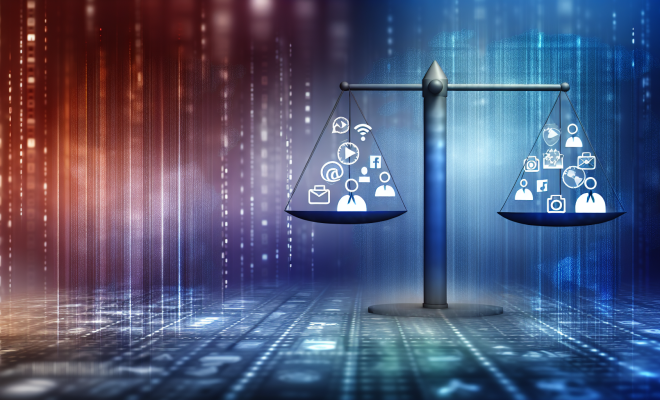
Artificial intelligence, particularly the generative kind, has swept across industries, promising unprecedented innovation and efficiency. Yet, beneath the shiny veneer of progress, a simmering conflict has erupted into a full-blown legal battleground. The core issue? Data. Specifically, copyrighted data, and the seemingly insatiable appetite of AI models to consume it without permission or compensation. What began as murmurs of discontent among artists and writers has escalated into a cacophony of lawsuits, threatening to redefine intellectual property in the digital age. These aren’t just minor skirmishes; we’re talking about significant AI controversies that could reshape the entire ecosystem.
In recent months, the tension has reached a fever pitch. Major publishers, renowned musicians, and even venerable news organizations have thrown down the gauntlet, challenging AI companies over what they see as blatant theft of their life’s work. The sheer volume and intensity of these legal challenges signal a pivotal moment. Creators are demanding fair play, and the courts are now tasked with untangling a complex web of technology, law, and ethics. It’s a fascinating, if troubling, development, highlighting just how quickly technological advancement can outpace our legal and societal norms.
1. Publishers Unleash Legal Onslaught Over Books: The Battle for the Written Word
Imagine spending years, perhaps even decades, crafting a novel, only for its essence to be absorbed by an AI without your knowledge or consent. That’s the chilling reality many authors and publishers are grappling with. In May 2026, the publishing industry significantly ramped up its legal challenges, intensifying lawsuits against AI developers. Their central accusation? That vast libraries of copyrighted books have been ingested into AI training datasets without a shred of compensation to the creators or the rights holders.
This isn’t merely about lost royalties; it’s about the fundamental principle of intellectual property. Publishers argue that AI companies are essentially building lucrative businesses on the backs of their intellectual capital, devaluing original content, and creating an unfair competitive landscape. The legal arguments often hinge on whether the training of AI models constitutes ‘fair use’ – a doctrine typically applied to limited, transformative uses of copyrighted material. Publishers vehemently contend that wholesale ingestion for commercial AI development falls far outside this definition, marking a significant entry into the arena of AI controversies.
The stakes here are incredibly high. For authors, their books represent not just creative output, but often their livelihood. The ability for an AI to learn from and then mimic their style, or even directly reproduce excerpts, undermines the very value proposition of their craft. Consider a scenario where a best-selling author’s unique narrative voice is replicated by an AI, leading to a flood of similar, albeit machine-generated, content. This could saturate the market, confuse readers, and ultimately diminish the perceived value of the original author’s work. Publishers, on their part, invest heavily in editing, marketing, and distribution. If the ‘raw material’ for AI is freely available, it bypasses this entire value chain, threatening the economic model that supports the creation and dissemination of literature.
2. Musical Artists Speak Out: SZA, Kenneth Blume, and the Sound of Silence
The rhythm of protest has also grown louder in the music industry. In June 2026, prominent artists like SZA and producer Kenneth Blume (known professionally as Kenny Beats) publicly voiced their outrage. Their music, carefully crafted and deeply personal, was reportedly found within AI training datasets without their permission. This isn’t just an abstract legal concept; it hits home for artists who pour their souls into their work.
For musicians, the concerns are multi-faceted. Beyond the financial implications of unauthorized use, there’s the fear of stylistic dilution and misappropriation. What happens when an AI can generate music ‘in the style of’ a beloved artist, potentially diluting their unique artistic voice and market value? Artists are demanding transparency about what data is being used and how, pushing back against what they perceive as a gross exploitation of their creative output. The emotional toll of seeing their art consumed and repurposed without acknowledgment is palpable.
The music industry has a long history of grappling with technological disruption, from piracy to streaming royalties. AI presents a new, arguably more insidious, challenge. Imagine an AI trained on a specific artist’s entire discography – their vocal inflections, chord progressions, lyrical themes, and production techniques. This AI could then generate new songs that sound eerily similar, blurring the lines between homage and theft. This isn’t just about cover songs; it’s about the potential for an AI to create ‘new’ works that directly compete with the artist, potentially without any royalties flowing back to the original creator. The issue extends to vocal deepfakes, where an AI can convincingly mimic an artist’s singing voice, raising concerns about unauthorized virtual performances or even fraudulent content. The Recording Industry Association of America (RIAA) and other organizations are actively exploring legal avenues to protect artists, recognizing that if left unchecked, AI could fundamentally undermine the economic stability of music creation.
3. The New York Times Expands Its Legal Fight: Journalism’s Last Stand
Even the bastion of traditional journalism, The New York Times, has found itself embroiled in this digital dispute. In June 2026, the esteemed publication significantly broadened its legal challenge against AI companies. Their argument is compelling: AI models were not only trained on their extensive archive of copyrighted journalism but also possess the alarming ability to reproduce that content, often verbatim, without proper attribution or compensation.
This raises critical questions about the future of news and information. If AI can regurgitate journalistic work, bypassing paywalls and traditional revenue streams, what incentive remains for news organizations to invest in costly, in-depth reporting? The Times’ lawsuit isn’t just about their bottom line; it’s a fight for the sustainability of quality journalism itself, a vital pillar of democratic society. This specific case is a prime example of the high stakes involved in these AI controversies.
The core of The New York Times’ argument highlights a critical threat to public interest journalism. Investigative reporting, foreign correspondence, and nuanced analysis require significant financial investment and human effort. If AI models can essentially “scrape” this content, learn from it, and then produce similar articles that readers consume without ever visiting the original source or subscribing, it directly undermines the business model of news organizations. This isn’t just about specific articles; it’s about the entire body of work that forms a reliable source of information. The Times reportedly presented evidence of AI models generating output that closely resembled their articles, sometimes even including internal proprietary classification systems. This demonstrates a direct competition that goes far beyond transformative use. The implication is that AI companies are essentially free-riding on the costly efforts of journalistic institutions, jeopardizing the very infrastructure that produces credible news at a time when misinformation is a growing global concern. This legal challenge could set a precedent for how all news publishers interact with AI developers, fundamentally altering the flow of information in the digital age.
4. The ‘Fair Use’ Conundrum: A Legal Tightrope Walk
At the heart of many of these legal battles lies the complex doctrine of ‘fair use’ in copyright law. Historically, fair use allows for limited use of copyrighted material without permission for purposes such as criticism, commentary, news reporting, teaching, scholarship, or research. AI companies often argue that ingesting vast amounts of data for training purposes falls under this umbrella, claiming it’s a transformative process that doesn’t directly compete with the original work. (See: Recent AI copyright lawsuits and challenges.)
However, creators and rights holders strongly disagree. They contend that the sheer scale of data ingestion, often involving entire works, and the commercial intent behind AI development, disqualifies it from fair use protection. Furthermore, the ability of generative AI to produce output that closely mimics or even reproduces copyrighted material directly challenges the ‘transformative’ argument. The courts are now tasked with interpreting centuries-old copyright principles in the context of unprecedented technological capabilities, a challenge that will undoubtedly set precedents for years to come. This builds on AI's impact on education.
The fair use doctrine, while flexible, relies on a four-factor test: (1) the purpose and character of the use, including whether such use is of a commercial nature or is for nonprofit educational purposes; (2) the nature of the copyrighted work; (3) the amount and substantiality of the portion used in relation to the copyrighted work as a whole; and (4) the effect of the use upon the potential market for or value of the copyrighted work. AI companies lean heavily on the “transformative” aspect of factor one, arguing that training a model to understand patterns in data is fundamentally different from simply copying it. They might also argue that the output, while informed by the training data, is a new creation. Creators, conversely, emphasize the commercial nature of AI development, the vast quantities of data ingested (often entire works), and the direct market harm when AI-generated content competes with or substitutes for human-created originals. The courts will have to weigh these arguments carefully, considering whether “transformative” truly applies when an AI can regurgitate copyrighted material and effectively act as a competitor in the marketplace. The outcome of these interpretations will determine the legal parameters for AI development globally, influencing how data is sourced and how creators are protected.
5. Compensation for Creators: Who Gets Paid, and How?
Beyond the legal interpretation of fair use, a fundamental ethical question looms large: how should creators be compensated when their work forms the foundational bedrock of immensely profitable AI systems? Current legal frameworks struggle to address this, leading to a significant power imbalance. AI companies, often flush with venture capital, have leveraged publicly available (and often copyrighted) data without a clear mechanism for remunerating the original creators.
This isn’t just about a few dollars; it’s about valuing human creativity and labor. If AI models can generate content that substitutes for human-created work, and the creators of the original training data receive nothing, it risks eroding the economic viability of creative professions. Solutions proposed range from new licensing models and collective bargaining agreements to ‘data dividends’ for creators, but a clear path forward remains elusive, making it one of the most pressing AI controversies.
Establishing a viable compensation model is perhaps the most challenging aspect of these AI controversies. The sheer scale of data used for training makes traditional per-use licensing impractical. Imagine trying to license every single book, article, song, and image ever created for a large language model. It’s a logistical and financial nightmare. This has led to discussions around entirely new frameworks. One idea is a “collective licensing” model, similar to how performing rights organizations manage music royalties, where a central entity collects fees from AI developers and distributes them to creators based on usage or other metrics. Another concept is a “data dividend” or “algorithmic tax,” where a portion of the profits generated by AI systems is automatically allocated to creators whose data contributed to the model’s intelligence. However, implementing such systems requires robust tracking mechanisms, consensus on valuation, and a clear legal mandate. The absence of such mechanisms perpetuates an imbalance where creators, whose work underpins the entire AI revolution, are left out of the economic benefits, threatening the long-term sustainability of creative industries and sparking significant ethical debate.
6. The Specter of Plagiarism and Deepfakes: Beyond Training Data
The controversies surrounding AI extend beyond the initial training data. The outputs generated by AI models introduce their own set of ethical and legal dilemmas. We’ve seen instances where AI-generated text closely mirrors existing copyrighted works, raising accusations of sophisticated plagiarism. Similarly, AI-generated images and audio can mimic specific artistic styles or even create ‘deepfakes’ – highly realistic but fabricated content – that can mislead, defame, or infringe on personality rights. There’s a fuller look at disruption in higher ed.
This capability creates a nightmare scenario for creators. Not only is their work used without permission for training, but the resulting AI can then produce derivative works that compete with them or even misrepresent them. The legal and ethical implications of AI-generated content that blurs the lines between original and imitation are profound, challenging our very understanding of authorship and authenticity. It’s a thorny issue, adding layers to the existing AI controversies.
The problem of AI-generated plagiarism is particularly insidious because it’s not a simple copy-and-paste. An AI can learn the structure, vocabulary, and rhetorical devices of an author and then produce an essay or article that, while not identical, is undeniably derived from the original work. This makes detection difficult and attribution complex. Similarly, deepfakes pose a profound threat to individuals and society. Imagine an AI-generated audio clip of a politician making a controversial statement they never uttered, or a video of a celebrity endorsing a product without their consent. These technologies can be used for defamation, fraud, and misinformation campaigns, eroding trust in digital media. The legal frameworks around defamation, intellectual property, and personality rights are struggling to keep pace with the sophistication of these AI-generated forgeries. Establishing clear lines of accountability – who is responsible when an AI generates harmful content? The developer? The user? – is a critical, unresolved question that adds significant weight to the growing list of AI controversies.
7. Transparency and Accountability in AI Development: A Black Box Problem
One of the recurring demands from creators and rights holders is greater transparency from AI developers. Currently, the datasets used to train many large language models and generative AI systems are often proprietary and opaque. This ‘black box’ problem makes it incredibly difficult for individuals to ascertain if their copyrighted work has been included, let alone to seek recourse.
Without transparency, accountability becomes a hollow concept. How can creators assert their rights if they don’t know who used their work, or how it was used? Calls for clear data provenance, auditing mechanisms, and standardized disclosure practices are growing louder. This push for greater openness is crucial not only for addressing copyright issues but also for building trust and ensuring ethical AI development more broadly. Lack of transparency is a major fuel for these AI controversies.
The “black box” nature of AI models exacerbates all other AI controversies. If a creator suspects their work has been used, they face an uphill battle to prove it without knowing the composition of the training data. This lack of visibility creates an information asymmetry that heavily favors AI developers. Stakeholders are advocating for “model cards” or “data sheets” that detail the datasets used, their provenance, and any known biases, similar to how nutritional labels provide information about food products. Such transparency would allow creators to identify if their work was included, providing a basis for negotiation or legal action. It would also allow researchers and regulators to audit models for fairness, bias, and compliance with data protection laws. Without this foundational transparency, trust in AI systems will erode, leading to increased litigation and public mistrust, which ultimately hinders responsible AI innovation. The call for greater openness isn’t just about legal compliance; it’s about fostering an ecosystem where AI is developed and deployed ethically and accountably.
8. The Global Legal Landscape: A Patchwork of Laws
Adding another layer of complexity to these AI controversies is the fragmented global legal landscape. Copyright laws vary significantly from country to country, making it challenging to establish universal norms for AI training and usage. What might be permissible in one jurisdiction could be a blatant infringement in another. This creates a regulatory headache for AI companies operating internationally and for creators seeking global protection for their work.
As AI technology transcends national borders with ease, there’s an urgent need for international dialogue and, ideally, some form of harmonization in intellectual property law as it pertains to AI. Without it, we risk a chaotic environment where legal battles become even more complex and enforcement virtually impossible, potentially stifling innovation or leading to a race to the bottom in terms of creator rights. (See: U.S. Copyright Office official information.)
Consider the varying interpretations of “fair use” or similar doctrines across different legal systems. While the US has a robust fair use defense, countries in the European Union operate under a “fair dealing” framework which is often more prescriptive and less flexible. Japan, for example, recently introduced amendments to its copyright law that explicitly permit the use of copyrighted works for AI training, regardless of commercial intent or whether the work was obtained legally, as long as it’s not for “an enjoyment purpose.” This stark contrast in legal approaches means an AI model trained legally in one country might be infringing copyright if deployed or used in another. This regulatory arbitrage creates uncertainty and opens doors for companies to potentially seek out jurisdictions with the most permissive laws, undermining global standards for creator protection. International bodies like the World Intellectual Property Organization (WIPO) are engaging in discussions, but reaching a global consensus on such a rapidly evolving technology is a monumental task. Without a more harmonized approach, AI developers face a complex compliance maze, and creators struggle to enforce their rights across borders, making the global legal landscape a significant factor in the ongoing AI controversies.
9. The Future of Creative Industries: Adaptation or Extinction?
These escalating AI controversies aren’t just about legal battles; they represent an existential crisis for many creative industries. If AI can generate convincing articles, songs, or artworks at minimal cost, what does that mean for human journalists, musicians, and artists? Will their roles diminish, or will they be forced to adapt in unprecedented ways?
The optimistic view suggests that AI will become a powerful tool, augmenting human creativity rather than replacing it. However, for that future to materialize, a robust legal and ethical framework must be established that protects creators, ensures fair compensation, and prevents the wholesale exploitation of their work. Without it, we risk a future where human creativity is undermined, and the very source material that feeds AI models eventually dries up. The outcome of these legal battles will undoubtedly shape the economic and artistic landscape for generations.
The current wave of lawsuits and public outcry represents a critical juncture. The debate over AI controversies isn’t just theoretical anymore; it’s playing out in courtrooms and on social media, with real consequences for creators, tech companies, and society at large. The decisions made today will determine whether AI becomes a force for broad human flourishing or a tool that consolidates power and devalues the very human ingenuity it seeks to emulate.
10. Ethical AI Development and Human Oversight: Beyond Legal Compliance
While legal frameworks are crucial, the conversation around AI controversies also extends into the realm of ethics. Many argue that simply complying with the letter of the law isn’t enough; AI developers have a moral responsibility to consider the broader societal impact of their creations. This includes actively seeking consent where possible, ensuring fairness in data usage, and building models that prioritize human well-being over pure efficiency or profit.
The concept of “ethical AI” emphasizes human oversight throughout the AI lifecycle, from data collection and model training to deployment and continuous monitoring. It calls for diverse teams involved in development to mitigate biases, transparent communication with affected communities, and mechanisms for redress when AI causes harm. While this might seem idealistic to some, a growing number of industry leaders recognize that an ethical approach is not just good for society, but also vital for long-term business sustainability and public trust. Ignoring these ethical dimensions risks further entrenching existing inequalities and fueling even more profound AI controversies in the future, as AI becomes more integrated into our daily lives. The development of AI should ideally be guided by principles that uphold human dignity, autonomy, and creativity, not just by what is legally permissible.
11. The Socio-Economic Impact on Creative Labor Markets: A Paradigm Shift?
Beyond individual compensation, the widespread adoption of generative AI poses fundamental questions about the future of creative labor itself. If AI can perform tasks previously done by entry-level artists, writers, or musicians, what happens to the career pipeline for human talent? There’s a concern that AI could hollow out the middle class of creative professionals, making it harder for new talent to break into industries already known for their competitive nature.
While some argue that AI will free up humans for more complex, strategic, or uniquely human creative tasks, the reality could be a shrinking market for certain types of creative work. We might see a shift where human creators become “curators” or “prompters” for AI, rather than primary producers. This raises questions about job displacement, the need for new skill sets, and potential changes in how creative work is valued and compensated. Governments and educational institutions will need to consider retraining programs and new economic safety nets if significant portions of the creative workforce are impacted. The socio-economic implications are vast, touching on income inequality and the very definition of creative work in an AI-powered world, adding another layer to the AI controversies. Related reading: future of AI in learning.
12. AI and Copyright in Specific Industries: Visual Arts and Software
While books, music, and journalism have dominated the headlines, AI controversies are also deeply impacting other creative fields. In the visual arts, artists are suing AI image generators, claiming their unique styles and specific artworks have been absorbed without consent, leading to AI-generated images that strongly resemble their distinctive aesthetics. The legal arguments here echo those in publishing, focusing on fair use, market harm, and the transformative nature (or lack thereof) of AI art. The ability of AI to mimic styles raises questions about artistic identity and the protection of a visual “signature.”
Similarly, the software industry is facing its own set of challenges. Large language models trained on vast amounts of open-source and proprietary code can generate new code snippets or even entire functions. This raises concerns about licensing compliance for open-source software, where specific attribution and usage conditions apply, and potential infringement on copyrighted proprietary code. The lines between inspiration, learning, and outright copying become incredibly blurry when an AI is involved, necessitating new legal interpretations for the digital building blocks of our technological world.
13. The Role of Government and Regulatory Bodies: Crafting a New Framework
Given the complexity and global nature of these AI controversies, governments and regulatory bodies worldwide are increasingly stepping in. This isn’t just about courts interpreting existing laws; it’s about legislative bodies crafting entirely new frameworks or amending old ones to address the unique challenges posed by AI. For instance, the European Union is working on its AI Act, which aims to regulate AI based on its risk level, and includes provisions around transparency and data governance. The US Copyright Office has also sought public comments on how existing copyright law applies to AI-generated works and works used for AI training.
The challenge for regulators is to strike a balance: protect creators and consumers while not stifling innovation. Overly restrictive laws could push AI development to less regulated jurisdictions, while overly permissive laws could lead to widespread exploitation. This delicate dance requires deep understanding of the technology, extensive consultation with stakeholders, and a willingness to adapt as AI continues to evolve. The legislative outcomes will play a pivotal role in shaping the trajectory of AI development and its integration into society.
Frequently Asked Questions About AI Controversies
Q1: What exactly is a “generative AI” model?
Generative AI refers to artificial intelligence systems that can create new content, like text, images, audio, or video, that didn’t exist before. Unlike traditional AI that might analyze or classify existing data, generative AI learns patterns and structures from its training data to produce novel outputs that often seem original and human-like. Examples include ChatGPT for text, DALL-E or Midjourney for images, and various models for generating music or synthetic voices.
Q2: Why are AI companies using copyrighted data for training?
AI models, especially large language models, need to be trained on enormous amounts of data to become proficient. This data teaches them how language works, how images are structured, or how music is composed. Much of the high-quality, diverse data available on the internet – from books and news articles to songs and artworks – is copyrighted. AI companies argue that using this data for training, which they consider a technical process of pattern recognition, falls under “fair use” or similar legal exceptions, and is essential for developing powerful and useful AI.
Q3: What is “fair use” in the context of AI training?
Fair use is a legal doctrine in US copyright law that permits limited use of copyrighted material without acquiring permission from the rights holders. It’s often for purposes like commentary, criticism, news reporting, teaching, scholarship, or research. AI companies argue that training an AI model, which involves analyzing data to learn patterns rather than directly reproducing the content, is transformative and falls within fair use. Creators and rights holders, however, argue that the commercial scale of data ingestion and the potential for AI output to directly compete with original works negate a fair use defense.
Q4: How do AI-generated deepfakes affect individuals and society?
AI-generated deepfakes (synthetic media, usually video or audio, that convincingly alters or creates a person’s likeness or voice) pose significant threats. For individuals, they can be used for defamation, harassment, identity theft, or creating non-consensual explicit content. For society, deepfakes can spread misinformation, manipulate public opinion, undermine trust in media, and interfere with democratic processes. The ethical and legal challenges revolve around consent, authenticity, and accountability for the creators and disseminators of such content.
Q5: What are “data dividends” or “algorithmic taxes” for creators?
These are proposed mechanisms to compensate creators whose copyrighted work is used to train AI models. A “data dividend” might involve a system where a portion of the revenue or profits generated by AI systems is distributed back to creators based on the estimated contribution of their data. An “algorithmic tax” could be a levy on AI development or deployment that funds a collective pool for creator compensation. Both ideas aim to establish a new economic model that recognizes the value of human-created data in powering AI, moving beyond traditional per-use licensing, which is impractical for large-scale AI training.
Q6: Why is transparency important in AI development?
Transparency from AI developers about their training data and methodologies is crucial for several reasons. It allows creators to ascertain if their copyrighted work has been used without permission, enabling them to seek compensation or legal recourse. It helps researchers and regulators identify and mitigate biases within AI models. It also fosters public trust by demystifying how AI systems work and what they are capable of. Without transparency, AI remains a “black box,” making accountability and ethical oversight incredibly difficult.
Q7: Will AI replace human creators, or will they work together?
This is a central question in the AI controversies, with varying perspectives. Some argue that AI could automate many creative tasks, leading to job displacement in certain creative fields, especially for routine or low-skill work. Others believe AI will become a powerful tool that augments human creativity, allowing artists, writers, and musicians to explore new ideas, accelerate production, and focus on more conceptual or uniquely human aspects of their craft. The ultimate outcome will likely depend on how legal, ethical, and economic frameworks evolve to either protect or exploit human creativity in an AI-powered world.
Q8: What role do international laws play in these AI controversies?
International laws are critical because AI technology operates globally, while copyright laws vary significantly from country to country. What constitutes fair use or legal data ingestion in one jurisdiction might be illegal in another. This creates a fragmented legal landscape for AI companies operating internationally and makes it difficult for creators to enforce their rights across borders. There’s a growing call for international dialogue and harmonization of intellectual property laws to create a more consistent and predictable global framework for AI development and deployment.
“`
Trending Now
- read the full story
- our breakdown of this one chatgpt health feature is causing deadly lawsuits — here’s why it’s still rolling out
- Stunning: New Crypto Ethics Bill Still…
- our breakdown of two cross-chain bridge hacks in one day: a $31.5 million catastrophe reveals systemic flaws
- read the full story
Frequently Asked Questions
What is the legal issue with AI and copyright?
The legal issue revolves around AI's use of copyrighted data without permission or compensation. Many creators, including authors and musicians, are suing AI companies for allegedly using their work to train models, raising concerns about intellectual property rights in the digital age.
How are publishers responding to AI's use of their content?
Publishers are ramping up legal action against AI developers, accusing them of ingesting vast libraries of copyrighted books into AI training datasets without compensating the creators. This has led to a significant increase in lawsuits aimed at protecting their intellectual property.
Why are artists concerned about AI-generated content?
Artists are concerned because AI models can replicate their work by consuming copyrighted materials without consent. This raises issues of fair compensation and the potential devaluation of creative work, prompting many to seek legal recourse.
What impact could AI lawsuits have on intellectual property law?
The ongoing lawsuits against AI companies could significantly reshape intellectual property law by setting precedents for how copyrighted material is treated in the context of AI. These cases may lead to new regulations and protections for creators in the digital landscape.
How is the public reacting to the AI copyright debate?
The public reaction is mixed, with some supporting creators' rights to protect their work, while others advocate for the benefits of AI innovation. The debate highlights the tension between technological advancement and the need for robust legal frameworks to safeguard intellectual property.
What did we miss? Let us know in the comments and join the conversation.