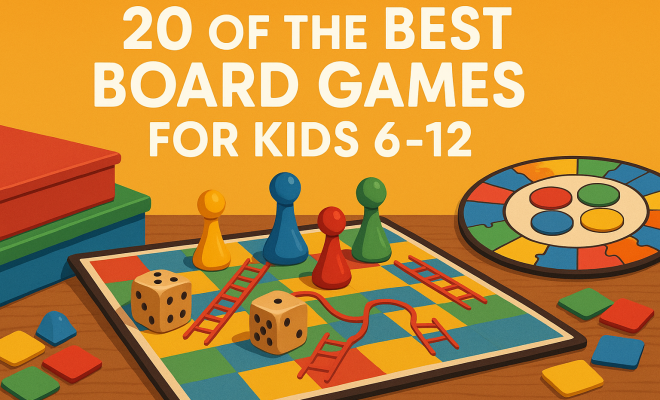
20 of the Best Board Games for Kids 6-12
“`html
Finding the best board games for kids aged 6-12 can be a daunting task, especially with the myriad of options available on the market today. Board games provide not only entertainment but also opportunities for learning and social development. In this comprehensive guide, we’ll explore 20 of the best board games for kids, diving into their unique features, benefits, and why they’re perfect for family game nights or gatherings with friends.
1. Ticket to Ride: First Journey
This version of the classic Ticket to Ride game is tailored specifically for younger players. In Ticket to Ride: First Journey, children embark on a train adventure across Europe, collecting train cards and claiming routes to connect cities. The game is known for its vibrant illustrations and simple mechanics, making it easy for children to grasp the basics of strategic thinking and planning.
The game typically lasts about 30 minutes, keeping younger audiences engaged without wearing them out. It’s a fantastic introduction to the popular Ticket to Ride series, setting the stage for more complex gameplay as they grow older.
2. Blokus
Blokus is a fantastic game that combines strategy with spatial awareness. Players take turns placing their colored pieces on a grid, trying to block their opponents while maximizing their own space. The rules are simple, yet the gameplay can become intensely competitive as players work to outsmart one another.
One of the key benefits of Blokus is its ability to teach kids about critical thinking and planning ahead. With pieces shaped like Tetris blocks, kids will not only enjoy the challenge but also improve their geometry skills. Its quick playtime and engaging mechanics make it a staple in many family game collections.
3. Carcassonne
Carcassonne is a tile-placement game that invites children to build a medieval landscape, complete with cities, roads, and fields. Players draw and place tiles to expand their territory, earning points for completed features. The game’s beautiful artwork and engaging theme immerse players in a strategic yet relaxing experience.
Carcassonne encourages kids to think ahead and develop their spatial reasoning skills. The game supports various strategies, allowing for a different experience each time it’s played. Additionally, the game has expansions available, which can add even more fun as kids become more comfortable with the mechanics.
4. Chutes and Ladders
Chutes and Ladders is a classic game that has stood the test of time. Perfect for younger kids, it teaches counting and promotes the understanding of good and bad fortune through its simple gameplay involving ladders and chutes. Players spin a spinner to navigate the board, climbing ladders to advance and sliding down chutes when misfortune strikes.
While it may not involve complex strategies, Chutes and Ladders is an excellent choice for younger children, helping them learn patience and taking turns in a fun and engaging way. Its straightforward mechanics make it ideal for family play, as everyone can join in regardless of age.
5. Connect 4
Connect 4 is a two-player game that revolves around strategy and foresight. Players take turns dropping colored discs into a vertical grid, aiming to connect four of their own pieces in a row. The game is fast-paced and can be completed in about 20 minutes, making it ideal for quick game sessions.
This game is perfect for developing critical thinking skills as kids learn to anticipate their opponent’s moves while strategizing their own. It’s a fantastic way to introduce young players to competitive gameplay and the importance of planning ahead.
6. Guess Who?
Guess Who? is a fun, interactive game that promotes deductive reasoning. Players ask yes or no questions to narrow down a list of characters and be the first to guess their opponent’s chosen character. The game fosters critical thinking and decision-making in a light-hearted and entertaining way.
What makes Guess Who? even more appealing is its simplicity and accessibility. The game can be enjoyed by children as young as six, making it a great option for family game nights. The combination of strategy and luck keeps players engaged and eager to play again.
7. Catan: Junior
For families looking to introduce economic strategy to their kids, Catan: Junior is an excellent option. This adaptation retains the core mechanics of the classic Settlers of Catan but simplifies them for younger audiences. Players collect resources to build pirate lairs on a board filled with islands. (See: best board games for kids.)
Catan: Junior not only teaches resource management but also encourages negotiation and trade, which are essential skills in both gameplay and real life. As kids develop their strategic thinking, they’ll learn to make decisions that can lead to victory.
8. Operation
Operation is a classic game that tests both dexterity and hand-eye coordination. Players use tweezers to remove various ailments from a patient without touching the sides, which buzzes and lights up if they do. This game adds a physical element to the board game genre, engaging kids in a fun and challenging way.
Operation is perfect for family game night as it elicits laughter and excitement, while also helping children improve their fine motor skills. It’s a game that combines fun and learning seamlessly, making it one of the best board games for kids.
9. Qwirkle
Qwirkle is a tile-placement game that combines elements of matching and strategy. Players score points by creating lines of tiles that share either a color or shape. The simplicity of the rules makes it easy for children to learn, while the strategy involved keeps the game engaging for all ages.
This game promotes critical thinking and pattern recognition, essential skills for young learners. With no reading required, it’s accessible to a wide range of ages, making it a great addition to any family game night.
10. King of Tokyo
In King of Tokyo, players become monsters battling for supremacy in Tokyo. The game features a combination of dice rolling, strategy, and a bit of luck. Players can choose to attack their opponents or earn points to become the king of Tokyo, creating exciting gameplay dynamics.
King of Tokyo encourages strategic thinking and risk-taking, allowing kids to make decisions that can lead to victory. The vibrant artwork and engaging theme captivate young players, making it one of the best board games for kids and a fantastic choice for family fun.
11. Spy Alley
Spy Alley is a game of deduction and strategy where players assume the roles of spies. The objective is to uncover your opponents’ identities while keeping yours a secret. Players collect spy gear and navigate through the board, using their wits to outmaneuver others.
This game helps develop critical thinking and social skills as players must bluff and deduce to win. Spy Alley is ideal for slightly older kids, as it introduces more complex strategies and the thrill of deception in a fun and engaging way.
12. Sleeping Queens
Sleeping Queens is a delightful card game that combines strategy and luck. Created by a young girl, this game involves players trying to wake up queens by playing matching cards and using special actions. The simple rules and engaging theme make it accessible to younger kids while still providing fun for older players.
Sleeping Queens promotes memory and strategic thinking, as players must remember which cards have been played and plan their moves accordingly. This game is perfect for family gatherings, allowing everyone to participate and enjoy the whimsical characters.
13. Animal Upon Animal
Animal Upon Animal is a stacking game that challenges players to construct a tower of wooden animals. Players take turns placing their animals on the pile without toppling it over. The game is simple yet requires careful balance and planning, making it suitable for younger kids.
This game fosters fine motor skills and encourages cooperative play. Animal Upon Animal is a fun and engaging way for kids to learn about balance and patience while enjoying friendly competition.
14. What Do You Meme? The Family Game
In What Do You Meme?, players compete to create the funniest memes using caption cards. This family-friendly version is perfect for kids aged 8 and older, introducing them to humor and creativity in a fun way. Players take turns judging which meme is the best for each round, promoting laughter and creativity.
What Do You Meme? is an excellent way to encourage kids to express their sense of humor while developing their skills in storytelling and creativity. The game is easy to learn and offers endless replayability, making it a fantastic addition to your collection.
15. Sushi Go!
Sushi Go! is a fast-paced card game where players draft sushi-themed cards to create the best meal. The goal is to collect the most points by combining different sushi types. With its adorable artwork and simple mechanics, it’s an accessible option for kids and families.
The game promotes strategic thinking and decision-making, as players must choose wisely from limited options. Sushi Go! is perfect for quick rounds of fun and teaches kids about making choices under pressure. (See: impact of games on child development.)
16. Labyrinth
Labyrinth is a maze-based board game where players navigate their paths to collect treasures while shifting the maze with every turn. The game encourages strategic planning and adaptability, as players must adjust their routes to stay ahead of their opponents. Related reading: engaging math games.
The unique gameplay mechanics keep kids engaged and promote problem-solving skills. Labyrinth is suitable for various ages and is an excellent choice for family game nights, keeping everyone entertained as they work to achieve their goals.
17. My First Carcassonne
As a simplified version of the original Carcassonne, My First Carcassonne is specifically designed for younger players. Kids take turns placing tiles to create a landscape with roads and cities while trying to place their pawns strategically. The game introduces the basic principles of tile placement without overwhelming young minds.
This game fosters creativity and spatial reasoning while providing a solid foundation for future gaming experiences. My First Carcassonne is a delightful way to introduce younger kids to strategy games.
18. Elefun
Elefun is a lively game that combines action and excitement. Players use nets to catch butterflies that flutter out of an elephant’s trunk. The game is not only fun but also helps develop motor skills and encourages active play.
Ideal for younger children, Elefun promotes teamwork and friendly competition. Its engaging gameplay keeps kids moving and laughing, making it a great choice for family fun.
19. Hoot Owl Hoot!
In Hoot Owl Hoot!, players work cooperatively to help owls return to their nest before the sun comes up. The game promotes teamwork and critical thinking as players must strategize their moves together. With simple rules, it’s accessible for younger children, making it a great introduction to collaborative gameplay.
This game teaches kids about working together toward a common goal, emphasizing the importance of cooperation and communication. Hoot Owl Hoot! is a charming and educational game perfect for family game nights.
20. Dragonwood
Dragonwood is a captivating game where players venture into a mystical forest to capture creatures and collect treasures. The game combines dice rolling with card collection, creating a unique blend of strategy and chance. Players must use their cards to defeat creatures and earn points.
Dragonwood encourages strategic thinking and decision-making as players assess risks before embarking on quests. Its fantasy theme captivates young imaginations, and it’s an entertaining way for kids to develop cognitive skills while having fun.
Why Board Games Matter for Kids
Board games do more than just entertain; they offer numerous developmental benefits. Playing these games can significantly enhance a child’s cognitive skills, social abilities, and emotional development. For instance, games that require strategy, like Catan: Junior or Blokus, teach children how to think critically and plan ahead. These skills are essential not only in games but also in everyday decision-making.
Additionally, board games promote social interaction. They provide a safe space for children to learn about teamwork, cooperation, and even healthy competition. When kids play together, they develop important social skills such as communication, empathy, and problem-solving. These interactions can foster friendships and improve their ability to collaborate with peers.
Family game nights are particularly beneficial as they create bonding moments between parents and children. These shared experiences can deepen relationships and establish routines that children come to cherish.
Expert Perspectives on Board Games
Many child development experts advocate for the inclusion of board games in children’s playtime. Dr. Alison Gopnik, a developmental psychologist, highlights that games can act as powerful tools for learning. She states, “Children learn best when they are actively involved in the process, and board games naturally allow for hands-on learning experiences.”
Similarly, child psychologist Dr. David Elkind emphasizes the benefits of cooperative games, noting, “When children play games that require teamwork, they learn the value of working together toward common goals, which is essential for their social development.”
These insights underline the importance of selecting the right board games for kids, ensuring that they promote both fun and growth. This builds on supporting SEL at home.
Statistics on Board Games and Child Development
Consider the following statistics that illustrate the positive impact of board games on children’s development:
- According to a 2021 study by the American Psychological Association, children who regularly play board games show improved mathematical skills, with a reported increase in numeracy skills by 15% when compared to peers who do not engage in such activities.
- A survey by the National Association of School Psychologists found that 78% of parents believe that playing board games helps their children develop better social skills.
- Furthermore, a report published by the Journal of Educational Psychology highlighted that children who play strategy games tend to demonstrate enhanced problem-solving skills, with a 25% improvement noted in standardized tests related to these abilities.
These statistics highlight the value of incorporating board games into children’s routines, demonstrating their potential as tools for learning and development.
Frequently Asked Questions (FAQ)
What age group are board games suitable for?
Most board games listed in this guide are ideal for children aged 6-12, but many can be enjoyed by younger children with adult supervision or by slightly older kids looking for a more challenging experience. Always check the age recommendations on the game box or description for guidance.
How often should kids play board games?
Incorporating board games into regular family activities can be beneficial. Aim for at least one game night each week, but any time spent playing games can be advantageous for skill development and family bonding. The key is consistent engagement without overwhelming kids.
Can board games help with learning disabilities?
Yes! Many children with learning disabilities benefit from the structured play that board games provide. Games can improve focus, develop critical thinking, and enhance social skills. Parents can choose games that align with their children’s interests and learning needs to make the experience enjoyable and educational.
Are there board games that promote STEM learning?
Absolutely! Games like Robot Turtles and Gravity Maze are designed to introduce kids to coding concepts and engineering through play. These games encourage logical reasoning, problem-solving, and can serve as a fun introduction to STEM topics.
How do I choose the right board game for my child?
Consider your child’s interests, age, and skill level. Look for games that not only match their tastes but also provide opportunities for learning and social interaction. It can be helpful to read reviews or seek recommendations from other parents or educators to find the most suitable options.
Choosing from the best board games for kids can transform family time into memorable experiences filled with laughter, learning, and bonding. Each game listed above offers unique features and benefits, catering to various age groups and interests. So gather your family, pick a game, and enjoy quality time together!
“`
Trending Now
Frequently Asked Questions
What are the best board games for kids aged 6-12?
Some of the best board games for kids aged 6-12 include Ticket to Ride: First Journey, Blokus, and Carcassonne. These games not only provide fun but also promote strategic thinking, critical planning, and social interaction, making them ideal for family game nights or gatherings.
What benefits do board games offer for children?
Board games for children offer numerous benefits, including enhancing critical thinking, improving social skills, and fostering teamwork. They provide a fun way for kids to learn new concepts while developing patience and strategic planning abilities.
How long do board games for kids typically last?
Most board games designed for kids, like Ticket to Ride: First Journey and Blokus, typically last around 30 to 60 minutes. This duration keeps young players engaged without causing fatigue, making them suitable for family game nights.
Are there board games that help with learning?
Yes, many board games, such as Blokus and Carcassonne, incorporate educational elements that enhance skills like geometry, critical thinking, and strategic planning. These games make learning enjoyable and engaging for children.
What age group are Ticket to Ride: First Journey and Blokus suitable for?
Ticket to Ride: First Journey is specifically designed for younger players aged 6-12, while Blokus is also suitable for this age group. Both games are easy to understand and provide a great introduction to strategic gameplay.
Agree or disagree? Drop a comment and tell us what you think.