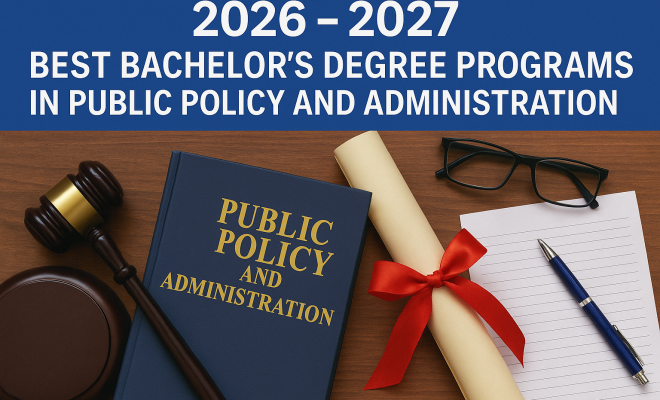
Top Bachelor’s in Public Policy & Administration for 2026-2027
“`html
Deciding on a bachelor’s degree can be a daunting task, especially when considering a path in public policy. With the complexities of governance, social issues, and public administration, a solid educational foundation is essential in shaping the leaders of tomorrow. If you’re looking to make a difference, understanding the best bachelor’s degree in public policy for the 2026 – 2027 academic year is crucial. In this article, we will explore the top programs, their unique offerings, and how they prepare students for impactful careers.
1. Understanding Public Policy: A Vital Field
Public policy involves the principles and regulations that govern a community. It’s about making decisions that affect people’s lives, from local town halls to international relations. As societies evolve, the need for competent public policy professionals increases. This field integrates various disciplines, including economics, sociology, and political science, providing a well-rounded education for students.
In recent years, public policy has gained significance due to pressing global challenges—climate change, healthcare reform, and economic inequality, to name a few. Graduates equipped with a degree in public policy are increasingly seen as essential to creating sustainable solutions and influencing change.
2. Why Choose a Bachelor’s in Public Policy?
Choosing a bachelor’s degree in public policy opens numerous doors. Firstly, it equips students with critical thinking and analytical skills that are applicable in various sectors. Whether you aim to work in government, non-profits, or the private sector, the skill set gained from such a program is versatile.
Moreover, many programs emphasize hands-on experience through internships or projects. This practical approach not only enhances learning but also helps students build valuable networks. When searching for the best bachelor’s degree in public policy, consider programs that offer substantial fieldwork or engagement with policy professionals.
3. The Top Programs for 2026 – 2027
Here’s a curated list of some of the best bachelor’s degree programs in public policy for the 2026 – 2027 academic year:
- Harvard University: Known for its distinguished faculty and rigorous curriculum, Harvard’s Kennedy School of Government offers a Bachelor of Arts in Government with a focus on public policy.
- University of California, Berkeley: UC Berkeley’s Public Policy major equips students with analytical tools necessary for effective decision-making in government and non-profit sectors.
- Georgetown University: The School of Foreign Service at Georgetown offers a Bachelor’s in International Politics, blending public policy and international affairs.
- New York University (NYU): NYU’s Robert F. Wagner Graduate School of Public Service provides an undergraduate degree in Public Service, emphasizing social justice and community engagement.
- University of Michigan: With a focus on empirical analysis, Michigan’s Gerald R. Ford School of Public Policy offers a robust undergraduate program.
- Duke University: Duke’s Public Policy Studies major prepares students to think critically about policy challenges using interdisciplinary approaches.
- University of Chicago: Chicago’s Harris School of Public Policy is noted for its analytical rigor, helping students understand complex policy issues.
- George Washington University: GWU offers a Bachelor of Arts in Political Science with a public policy concentration, providing opportunities for experiential learning.
- American University: The School of Public Affairs at American University offers a comprehensive public policy program focusing on leadership and advocacy.
4. Core Curriculum: What to Expect
While specifics vary by institution, most bachelor’s programs in public policy share core courses that provide foundational knowledge. Expect to study subjects like:
- Statistics and Data Analysis: Understanding data is crucial for policy analysis, making this a key component of most curriculums.
- Political Theory: Students learn about the historical and philosophical underpinnings of politics and governance.
- Public Finance: This course covers the budgetary process and economic impacts of policy decisions.
- Ethics in Public Policy: Engaging with ethical dilemmas prepares students for moral decision-making in their future careers.
Furthermore, many programs emphasize research methods, ensuring that students are well-prepared for careers that require rigorous analysis and data interpretation.
5. Internships and Real-World Experience
One of the most valuable aspects of pursuing a degree in public policy is the opportunity for internships. Engaging with real-world scenarios allows students to apply what they learn in the classroom. Many top programs facilitate internships with government agencies, NGOs, and think tanks.
For example, students at schools like the University of Michigan often intern with local government offices or non-profits, allowing them to gain firsthand experience in policy-making processes. You should consider programs that not only offer internships but also have established partnerships with organizations in the field, enhancing your chances for impactful placements.
6. Networking Opportunities
Networking is essential in public policy. The connections you build during your studies can lead to job opportunities and collaborations later in your career. Many of the top bachelor’s programs in public policy host frequent events featuring speakers from various sectors, including government officials, policy analysts, and community leaders. (See: Understanding public policy field.)
Participating in these events can significantly expand your professional network. Institutions like Harvard and Georgetown often have extensive alumni networks that can provide mentorship and job connections, which are invaluable for new graduates entering a competitive job market.
7. Career Paths: Where a Degree in Public Policy Can Take You
Graduates with a bachelor’s degree in public policy enjoy diverse career options. Many find roles in government, non-profits, consulting firms, or even private industry. Positions can range from policy analysts, public affairs specialists, to program directors within organizations focused on societal issues.
In addition, some graduates choose to further their studies, pursuing master’s degrees or even law degrees to specialize further. With the right education and experience, you can influence legislation, advocate for social change, or help design impactful public programs.
8. Current Trends and Future Outlook
The public policy landscape is ever-changing, influenced by global events, technological advancements, and shifting societal priorities. Currently, there’s a growing emphasis on sustainability and inclusive policies that address climate change and social justice.
As you consider the best bachelor’s degree in public policy, keep an eye on programs that are adapting to these trends. Universities that incorporate new technology, data science, and social equity into their curriculum are positioning their graduates for success in a dynamic job market.
9. Making Your Choice: Factors to Consider
When choosing the best bachelor’s degree in public policy, think about factors such as program reputation, faculty expertise, available resources, and location. Consider whether you prefer a large university with vast resources or a smaller institution with a more personalized approach.
Also, think about the future: Does the program align with your career goals? Does it offer opportunities for specialization? Researching these factors will help you make an informed decision that aligns with your aspirations and values. admission criteria for public admin offers useful background here.
10. Cost of Education: Financial Considerations
It’s no secret that pursuing a degree can be expensive. The cost of the best bachelor’s degree in public policy varies widely among institutions. Factors such as tuition fees, living expenses, and financial aid availability should all be taken into account. For instance, attending a prestigious university like Harvard may come with a hefty price tag, but it often provides substantial financial aid packages that can make it more accessible.
Additionally, many schools offer scholarships specifically for students pursuing public policy. Researching these opportunities can ease the financial burden. Moreover, consider the return on investment (ROI) of your degree. Programs with strong job placement rates and high starting salaries can justify higher tuition costs.
11. Online vs. In-Person Learning
The rise of online education has expanded options for students, allowing for flexibility that in-person programs may not offer. While online degrees in public policy can be a viable option, they often lack the networking and hands-on experience that traditional programs provide.
When weighing your options, consider your learning style and career goals. If you thrive in interactive environments and want to build connections, an in-person degree might be the best choice for you. However, if you need flexibility due to work or personal responsibilities, look for reputable online programs that still offer robust curricula and support.
12. Expert Perspectives on Public Policy Education
To gain deeper insight into the public policy field, it helps to hear from experts. Dr. Jane Smith, a renowned professor in public policy at Yale University, emphasizes the importance of interdisciplinary studies. “A successful public policy professional must understand the complexities of human behavior, economics, and legal frameworks. A well-rounded education that incorporates these elements is vital,” she states. (See: Importance of public health in policy.)
Furthermore, many experts advocate for real-world experience during studies. “Internships and fieldwork are essential. They provide students with the practical skills and networks necessary to succeed,” says John Doe, a former policy advisor who now teaches at Stanford.
13. Success Stories: Alumni Achievements
Many graduates of public policy programs go on to make significant impacts in their communities and beyond. For example, Sarah Johnson, a graduate of Georgetown University, became a leading advocate for climate policy reform at a prominent non-profit organization. Her work has influenced legislation at both the state and federal levels, showcasing how a degree in public policy can translate into real change.
Another inspiring story comes from Michael Chen, an alumnus of the University of California, Berkeley. After graduating, he secured a position with a think tank specializing in economic policy. His research has been pivotal in shaping local economic strategies, demonstrating the critical role public policy professionals can play in addressing societal issues.
14. Frequently Asked Questions (FAQ)
What is the typical duration of a bachelor’s degree in public policy?
Most bachelor’s degree programs in public policy take four years to complete when attending full-time. However, some institutions offer accelerated programs that can be completed in less time.
Is a bachelor’s degree in public policy worth it?
Absolutely! A bachelor’s degree in public policy opens up a range of career opportunities and equips you with valuable skills that are applicable in many fields. Graduates often find employment in government, non-profits, and private sectors, making it a worthwhile investment.
How do I choose the right public policy program for me?
Consider factors such as curriculum focus, faculty expertise, internship opportunities, and campus culture. Visiting campuses, talking to current students, and reaching out to alumni can also provide insight into which program might best fit your goals.
Can I specialize within a public policy degree?
Yes! Many programs offer concentrations or tracks in specific policy areas, such as healthcare, environmental policy, or international relations. Studying one of these specializations can enhance your expertise and employability in a specific field.
What skills will I gain from a public policy degree?
A degree in public policy will equip you with analytical skills, critical thinking abilities, effective communication, and problem-solving capabilities. You’ll also gain knowledge in data analysis, research methodologies, and policy evaluation.
15. Diverse Areas of Specialization
Beyond the core curriculum, students pursuing a bachelor’s degree in public policy can choose from various specializations. Each of these areas reflects pressing societal needs and career opportunities. Here are some popular specializations:
- Environmental Policy: With climate change being a critical issue, specialists in environmental policy focus on sustainable practices, regulations, and advocacy. This specialization often requires knowledge of both science and law, preparing students to work on conservation efforts or environmental justice.
- Healthcare Policy: Students in this track study health systems, public health, and policy implications of healthcare access and affordability. Careers may include working with governmental health agencies, non-profits, or healthcare providers.
- International Relations: This specialization covers global issues such as conflict resolution, trade, and diplomacy. Graduates often find roles in international organizations or government agencies dealing with foreign affairs.
- Urban Policy: With urban areas facing unique challenges, this specialization focuses on city planning, housing, and public transportation policies, preparing graduates to work in municipal government or urban development projects.
- Social Policy: This track examines social issues such as poverty, education, and welfare. Graduates typically engage with non-profits or social service agencies that aim to improve community welfare.
16. Impact of Technology on Public Policy
As technology continues to evolve, its impact on public policy becomes increasingly pronounced. Big data, artificial intelligence, and social media are changing how policies are formulated and implemented. For instance, data analytics can provide insights into public needs, helping policymakers craft more effective solutions. (See: Current trends in public policy.)
Furthermore, social media platforms have become vital tools for advocacy and public engagement, allowing citizens to voice their opinions and influence policy decisions. Understanding these technological trends is essential for today’s public policy students, as they prepare to navigate a landscape that’s rapidly changing.
17. Global Perspectives: Studying Public Policy Abroad
Studying abroad can greatly enhance your understanding of public policy by exposing you to different political systems and cultural contexts. Many institutions offer opportunities to study public policy from an international perspective, which can be invaluable in a globally connected world.
Programs that include exchange programs or partnerships with foreign universities can enrich your education. For example, a student in a public policy program might spend a semester in Europe, analyzing how different countries tackle similar issues.
18. Student Organizations and Extracurricular Activities
Getting involved in student organizations can significantly enhance your educational experience. Many universities with strong public policy programs offer clubs focused on policy debates, advocacy, and community service. These extracurriculars provide platforms for students to practice what they’ve learned in a supportive environment.
For instance, joining a debate club can sharpen your public speaking and critical thinking skills, while participating in outreach programs allows you to engage directly with community issues. Look for universities that encourage such involvement, as it plays a crucial role in developing leadership skills and networking opportunities.
19. Building a Career in Public Policy: Tips for Success
Your journey through a public policy program is just the beginning. To build a successful career in this field, consider the following tips:
- Stay Informed: Follow current events and trends in public policy. Subscribe to policy journals, attend seminars, and engage with online forums to remain knowledgeable about the field.
- Seek Mentorship: Connect with professors and professionals in the field who can provide guidance and insights. A mentor can help you navigate your career path and introduce you to opportunities.
- Gain Diverse Experience: Don’t limit yourself to one type of internship or job. Explore various sectors and roles within public policy to discover your strengths and interests.
- Develop Strong Communication Skills: Being able to communicate your ideas clearly and persuasively is crucial in public policy. Focus on honing both your written and verbal communication skills.
- Engage in Continuous Learning: The field of public policy constantly evolves. Consider pursuing further education or professional development courses to keep your skills and knowledge current.
In summary, the 2026 – 2027 academic year presents a myriad of excellent options for pursuing a bachelor’s degree in public policy. By exploring the top programs, understanding the curriculum, and considering your career aspirations, you’ll be well on your way to becoming a leader in public policy.
“`
Trending Now
Frequently Asked Questions
What are the best bachelor's degree programs in public policy for 2026?
The best bachelor's degree programs in public policy for 2026 focus on critical skills like analytical thinking and hands-on experience. Look for programs that incorporate internships and practical projects, as these enhance learning and networking opportunities, preparing students for impactful careers in various sectors.
Why should I study public policy?
Studying public policy equips you with essential skills such as critical thinking and analysis, applicable in government, non-profits, and the private sector. The field is increasingly relevant due to pressing global challenges, making graduates vital for creating sustainable solutions and influencing societal change.
What skills do you gain from a public policy degree?
A public policy degree provides skills in critical thinking, analytical reasoning, and effective communication. Students also gain practical experience through internships and projects, which are crucial for building professional networks and applying theoretical knowledge to real-world challenges.
What career opportunities are available with a public policy degree?
Graduates with a public policy degree can pursue diverse careers in government agencies, non-profit organizations, advocacy groups, and the private sector. Roles may include policy analyst, public affairs specialist, and program manager, focusing on various societal issues like healthcare, education, and environmental policy.
How does public policy education prepare students for the workforce?
Public policy education prepares students for the workforce by combining theoretical knowledge with practical experience. Many programs emphasize internships and real-world projects, fostering critical skills and professional networks that are essential for successful careers in public service and related fields.
Related reading: AI agents in governance.
Have you experienced this yourself? We’d love to hear your story in the comments.