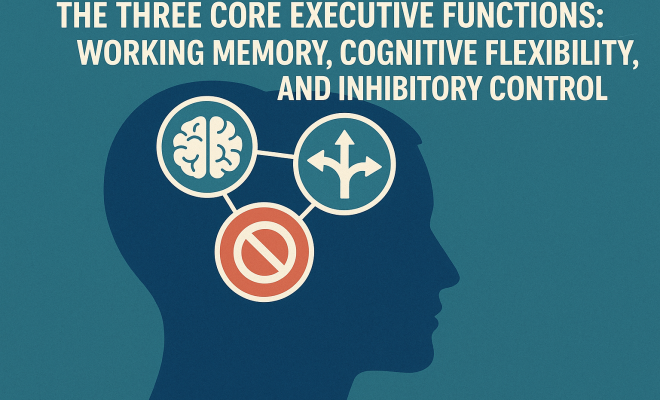
“The Three Core Executive Functions: Working Memory, Cognitive Flexibility, and Inhibitory Control”
“`html
When it comes to education, the focus often lies on academic knowledge and skills. However, a deeper understanding reveals that students’ success is fundamentally linked to something less tangible yet equally crucial: their executive functions in education. Understanding these cognitive abilities can not only enhance teaching strategies but also foster a more responsive learning environment. In this article, we’ll explore the three core executive functions—working memory, cognitive flexibility, and inhibitory control—and how they play a vital role in the educational journey.
Understanding Executive Functions
Executive functions are a set of cognitive processes that enable individuals to plan, focus attention, remember instructions, and handle multiple tasks successfully. These functions are essential for goal-directed behavior and are critical in the educational context. They help students navigate complex tasks, regulate their emotions, and manage time effectively.
Research indicates that the development of executive functions begins in early childhood and continues into adolescence. While these skills are foundational for learning, they also have significant implications beyond the classroom, impacting social interactions and emotional well-being.
The Importance of Executive Functions in Education
In the realm of education, executive functions are linked to academic performance and overall success. Students equipped with strong executive functions tend to exhibit better problem-solving skills, greater adaptability, and improved focus. This leads to more effective learning and a higher likelihood of academic achievement.
For educators, recognizing the role of executive functions can transform teaching approaches. By incorporating strategies that support these cognitive processes, teachers can help students overcome challenges and thrive in their academic pursuits. Additionally, understanding executive functions can aid in identifying students who might struggle in these areas, allowing for timely interventions.
Working Memory: The Foundation of Learning
Working memory is often described as the brain’s “scratchpad.” It allows individuals to temporarily hold and manipulate information needed for complex tasks such as reasoning, comprehension, and learning. This cognitive function is essential for effective problem-solving, as it enables students to keep relevant details in mind while discarding irrelevant information.
For instance, when solving a math problem, a student uses working memory to remember the steps required, the numbers involved, and the final answer they aim to achieve. Research consistently shows that students with stronger working memory skills perform better academically, particularly in subjects like math and reading.
However, working memory isn’t solely about retaining information; it also involves actively processing and manipulating that information. For instance, students might need to reorganize their thoughts or consider multiple viewpoints when completing a project, which further emphasizes the importance of this executive function in education.
Cognitive Flexibility: Adapting to New Situations
Cognitive flexibility, sometimes referred to as cognitive shift, is the mental ability to switch between thinking about different concepts or to think about multiple concepts simultaneously. This skill is vital for adapting to new situations and solving problems that don’t have a straightforward solution.
In a classroom setting, cognitive flexibility allows students to adjust their strategies when faced with obstacles. For example, if a student encounters a difficult text, cognitive flexibility helps them to rethink their approach, perhaps by summarizing the text in simpler terms or discussing it with a peer. This adaptability can make the difference between feeling overwhelmed by challenges and effectively overcoming them.
Moreover, cognitive flexibility is essential for collaboration. In group projects, students must negotiate different ideas, perspectives, and working styles. The ability to shift one’s mindset and consider varying viewpoints not only enhances the group’s overall performance but also aids in building social skills.
Inhibitory Control: Regulating Behavior
Inhibitory control refers to the ability to suppress impulsive responses and focus attention on tasks at hand. This executive function is crucial for self-regulation—the capacity to manage one’s emotions, thoughts, and behaviors in order to achieve goals. (See: Executive functions and learning.)
In educational contexts, inhibitory control manifests in various ways. For instance, during a test, students must resist the temptation to check their phones and stay focused on the exam. Proper inhibitory control allows them to manage distractions and maintain their attention on the task, leading to better performance.
Additionally, inhibitory control plays a crucial role in emotional regulation. Students who can manage their emotions are better equipped to handle stress, frustration, and anxiety, particularly during challenging academic experiences. By fostering inhibitory control, educators can help students develop resilience and persistence, which are essential traits for lifelong learning.
The Interconnection of Executive Functions
While working memory, cognitive flexibility, and inhibitory control can be analyzed individually, they are often interdependent. For example, a student might utilize their working memory to recall information while also employing cognitive flexibility to adjust their approach based on that information. Similarly, inhibitory control can help a student focus on a task while using their working memory to manipulate relevant data.
This interconnectedness suggests that enhancing one executive function may lead to improvements in others. Therefore, educational strategies that target multiple executive functions simultaneously can be particularly effective. For instance, incorporating collaborative learning activities can enhance cognitive flexibility while also requiring students to exercise working memory and inhibitory control.
Practical Strategies for Enhancing Executive Functions in Education
Given the importance of executive functions in education, educators can implement various strategies to foster these skills among students. Here are some practical approaches:
- Incorporate Mindfulness Practices: Mindfulness exercises can improve inhibitory control and emotional regulation. Activities such as deep breathing or guided meditation can help students stay focused and manage anxiety.
- Use Visual Aids: Graphic organizers, charts, and diagrams can enhance working memory by visually representing information, making it easier for students to process and retain essential concepts.
- Encourage Flexible Thinking: Introduce open-ended questions and problems that require students to consider multiple solutions. This can bolster cognitive flexibility and creative problem-solving.
- Implement Goal Setting: Teaching students to set specific, measurable goals can enhance their inhibitory control. By breaking down tasks into manageable parts, students can focus their attention and resist distractions.
- Promote Collaborative Learning: Group projects and peer discussions can enhance all three executive functions by encouraging students to share ideas, negotiate solutions, and hold each other accountable.
The Role of Technology in Supporting Executive Functions
In today’s digital age, technology can play a significant role in enhancing executive functions. Various apps and software are designed to help students improve their working memory, develop cognitive flexibility, and strengthen inhibitory control.
For instance, programs that utilize gamified learning can engage students while simultaneously challenging their cognitive abilities. Games that require strategic thinking, problem-solving, and focus can be particularly effective. Additionally, digital tools that provide reminders, organizational support, and task management features can help students develop better self-regulation skills.
However, it’s essential to strike a balance. While technology can be a valuable asset, over-reliance on devices can also lead to distractions. Educators should encourage mindful use of technology to ensure that students harness its potential to enhance executive functions without falling prey to its pitfalls.
Current Relevance and Future Implications
As we continue to evolve our understanding of education, the emphasis on executive functions has never been more critical. With increasing awareness of the varied learning styles and needs of students, it’s essential to recognize that cognitive processes significantly influence academic outcomes.
Moreover, the ongoing discussions around mental health in schools highlight the need for emotional and behavioral regulation. Executive functions are a crucial part of this conversation, as they directly impact students’ ability to cope with stress, build relationships, and maintain focus.
Looking ahead, integrating executive function training into standard curricula could revolutionize educational practices. Schools can adopt a more holistic approach that encompasses not only academic knowledge but also the development of essential cognitive and emotional skills.
Examples of Executive Function Interventions in Schools
There are several evidence-based interventions that schools can implement to enhance executive functions. Programs like the PROMISE program (Promoting Relationships and Eliminating Violence Network) have seen success in helping students develop better emotional regulation and problem-solving skills. This program uses a combination of teaching strategies, including social-emotional learning and cognitive-behavioral approaches.
Another example is the Tools of the Mind curriculum, which focuses on self-regulation and promotes activities that foster executive function skills. This program has shown promising results in preschool and early elementary settings by incorporating play-based learning that enhances students’ cognitive abilities. (See: Research on executive functions.)
Additionally, schools can implement behavioral interventions that offer incentives for demonstrating self-regulation skills. Positive reinforcement strategies can motivate students to practice inhibitory control and improve their focus in class.
Statistics on Executive Function Development
Research has shown that executive functions are highly malleable and can be developed through targeted interventions. For instance, a study published in the journal Psychological Science found that children who participated in executive function training improved their scores on tasks measuring working memory and inhibitory control by an impressive 30% compared to a control group.
Furthermore, longitudinal studies suggest that children with strong executive function skills are more likely to achieve higher academic performance and have better outcomes in adulthood, including career success and mental health stability. This underscores the long-term importance of fostering executive functions during the formative years.
Expert Perspectives on Executive Functions in Education
Experts in child development emphasize the critical role of executive functions in shaping not just academic success but also overall life skills. Dr. Adele Diamond, a leading researcher in the field, asserts that “executive functions are the skills we need to keep our emotions in check and make good decisions. These skills can be nurtured and developed, much like we would teach math or reading.”
Similarly, Dr. Mark Bertin highlights, “Teaching children how to manage their attention and behavior can have profound impacts. It’s not just about academic readiness; it’s about preparing them for the challenges of life.” His insights emphasize that education systems should prioritize executive function development as part of a comprehensive approach to student well-being and success.
Challenges in Teaching Executive Functions
Despite the growing recognition of the importance of executive functions, many educators face challenges in teaching these skills. One significant hurdle is the lack of training and resources available to teachers. Many educators are not equipped with the tools or techniques to effectively incorporate executive function skills into their lessons.
Additionally, classroom environments that are heavily focused on standardized testing may inadvertently undermine the cultivation of these skills. High-stakes assessments often prioritize rote memorization over critical thinking and problem-solving, which are directly linked to executive functions.
To address these challenges, professional development opportunities for teachers should include training on executive functions, along with strategies to integrate these skills into everyday classroom practices.
FAQ Section on Executive Functions in Education
What are executive functions?
Executive functions are cognitive processes that help individuals plan, focus attention, remember instructions, and juggle multiple tasks successfully. They are key for goal-directed behavior and are crucial for effective learning.
Why are executive functions important in education?
Executive functions play a vital role in academic performance, social interactions, and emotional well-being. They help students manage their time, adapt to changing situations, solve problems, and regulate their emotions, all of which contribute to successful learning experiences.
How can teachers help develop executive functions in students?
Teachers can foster executive functions through various strategies such as incorporating mindfulness practices, using visual aids, engaging students in collaborative learning, encouraging goal setting, and providing structured environments that support self-regulation.
Are executive functions fixed or can they be improved?
Executive functions are not fixed; they can be improved through targeted interventions and practice. Research shows that with the right strategies, students can enhance their working memory, cognitive flexibility, and inhibitory control over time.
What role does technology play in supporting executive functions?
Technology can support executive function development by providing tools that help students organize their tasks, manage their time, and engage in gamified learning experiences that challenge their cognitive skills. However, it’s essential to ensure technology use is balanced and purposeful.
Strategies for Supporting Executive Function Development at Home
Parents can also play a crucial role in promoting executive functions through various home activities. Here are some ideas:
- Establish Routines: Creating consistent daily routines helps children develop their inhibitory control and planning skills. When kids know what to expect, they can better manage their time and responsibilities.
- Encourage Problem-Solving: When faced with everyday challenges, invite children to brainstorm solutions with you. This not only builds cognitive flexibility but also teaches them to approach problems from different angles.
- Play Strategy Games: Engaging in board games or puzzles can enhance working memory and strategic thinking. Games that require planning, like chess or checkers, are particularly beneficial.
- Limit Distractions During Homework: Help children create a quiet workspace free from interruptions. Teaching them to prioritize tasks and focus on one assignment at a time can strengthen their ability to inhibit distractions.
The Global Perspective on Executive Functions in Education
Different countries and educational systems are beginning to recognize the importance of executive functions in education. In Finland, for example, the emphasis on student well-being and holistic education includes fostering self-regulation skills as part of the curriculum. This approach not only focuses on academic achievement but also aims to nurture well-rounded individuals.
In contrast, many educational systems around the world still heavily prioritize standardized testing, often at the expense of developing these critical skills. Countries that embrace a more rounded approach, emphasizing emotional intelligence and cognitive skills, may see significant benefits in student outcomes. Research indicates that students who receive instruction aimed at improving executive functions perform better academically and exhibit improved social skills.
Future Research Directions on Executive Functions
The field of executive functions in education is ripe for further research. Future studies could explore the most effective methods for teaching executive functions across various age groups and cultural contexts. There’s also a need for longitudinal studies to evaluate the long-term impact of executive function interventions on academic achievement and personal development.
Additionally, examining the relationship between executive functions and digital literacy could provide insights into how technology can be leveraged to enhance these skills. As the educational landscape continues to evolve, understanding how executive functions interact with modern learning tools will be essential for preparing students for the future.
Conclusion: Empowering Educators and Students
Understanding the core executive functions—working memory, cognitive flexibility, and inhibitory control—is essential for fostering an enriching educational environment. By recognizing the profound impact these functions have on learning and growth, educators can create strategies that not only enhance academic performance but also equip students with the skills they need for future success.
As we continue to prioritize executive functions in education, we move closer to a more supportive and effective learning landscape, where every student has the opportunity to reach their full potential.
“`
Trending Now
Frequently Asked Questions
What are the three core executive functions?
The three core executive functions are working memory, cognitive flexibility, and inhibitory control. These cognitive processes are essential for planning, focusing attention, and managing multiple tasks, playing a crucial role in students' learning and overall success.
How do executive functions impact education?
Executive functions significantly influence academic performance by enhancing problem-solving skills, adaptability, and focus. Students with strong executive functions are more likely to achieve academic success and effectively navigate complex tasks in the educational environment.
Why are executive functions important for students?
Executive functions are vital for students as they enable goal-directed behavior, emotional regulation, and effective time management. These skills are foundational for learning and can impact social interactions and emotional well-being beyond the classroom.
Can executive functions be developed in children?
Yes, the development of executive functions begins in early childhood and continues into adolescence. With appropriate support and strategies, educators and parents can help enhance these cognitive abilities, leading to improved learning outcomes.
What strategies can teachers use to support executive functions?
Teachers can adopt various strategies to support executive functions, such as incorporating activities that promote working memory, encouraging flexible thinking, and teaching self-control techniques. These approaches can create a more responsive learning environment and foster student success.
Agree or disagree? Drop a comment and tell us what you think.