Computex 2026: Modular Gaming Laptops Are the Future
“`html
When you think of the latest innovations in gaming laptops, what comes to mind? Slim designs, high-resolution displays, and cutting-edge graphics cards? While these elements are undeniably crucial, a new trend is emerging that could change the way we look at laptops entirely. Enter the Computex 2026 gaming laptop showcase from Framework, a company that’s bravely challenging the norms of a market dominated by sealed devices. Their fully modular laptop concept aims to shift the paradigm towards upgradeability, longevity, and sustainability in an industry often criticized for its disposable mentality.
A Closer Look at the Framework Concept
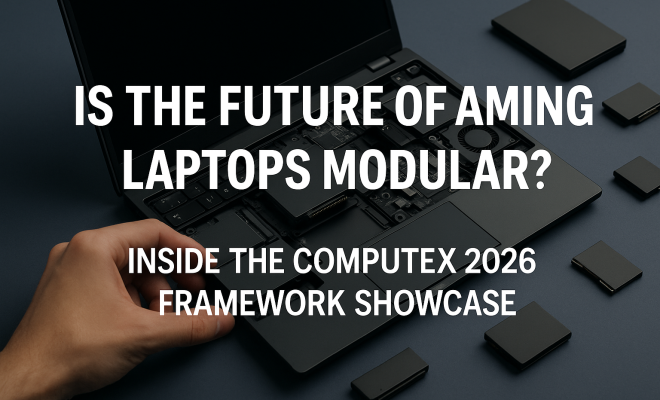
Framework’s latest model, showcased at Computex 2026, is a testament to the company’s vision of a modular laptop that puts control back in the hands of the consumer. Imagine a laptop where you can easily swap out the CPU, GPU, RAM, storage, and even the display without needing specialized tools or expertise. This approach is not just about convenience; it’s about creating a more sustainable product that can evolve with your needs.
The heart of Framework’s design philosophy lies in its commitment to modularity. Each component of the laptop is designed to be as user-friendly as possible. For example, replacing the battery, memory, or even the motherboard can be done in minutes, allowing users to keep their machines updated with the latest technology. This kind of upgradeable design could particularly appeal to gamers who want to maintain a competitive edge without shelling out for a brand new device every couple of years.
The Components That Can Be Swapped
During the Computex 2026 event, Framework highlighted several key components that users can replace or upgrade. These include:
- CPU: Users can choose from a variety of processors to suit their performance needs.
- GPU: Graphics cards can be upgraded as new models are released, ensuring optimal gaming performance.
- RAM: Memory options can be increased to enhance multitasking capabilities.
- Storage: SSDs can be easily swapped out for larger or faster drives.
- Display: Different screen configurations can be chosen, whether you prioritize refresh rates for gaming or color accuracy for creative tasks.
This level of personalization is a stark contrast to the current market trend, where many manufacturers opt for integrated components, leaving users with little to no options for future upgrades. The Framework approach not only extends the life of the device but also reduces electronic waste, a critical factor in today’s environmentally-conscious landscape.
Performance: Can Modular Design Compete?
One of the most pressing questions surrounding the Framework model is whether a modular laptop can hold its own against traditional gaming laptops in terms of performance. Critics argue that while modular devices may offer flexibility, they could also lead to compromises in power and efficiency. However, Framework has designed its components to meet or exceed the performance benchmarks of leading gaming laptops.
For instance, the ability to upgrade the GPU allows users to install the latest and most powerful graphics cards that can handle the most demanding games. This adaptability means that, instead of buying a new laptop when a new generation of graphics cards is released, gamers can simply swap out the component. Not only does this save money, but it also ensures that the laptop’s performance remains competitive.
Furthermore, Framework has partnered with top-tier manufacturers to ensure that their components are not just comparable but can outperform many existing options on the market. This strategic partnership ensures that gamers aren’t sacrificing quality for upgradeability.
Price Considerations: Is It Worth the Investment?
When it comes to buying a gaming laptop, price is always a significant factor. The initial cost of a modular laptop such as the Framework model may be higher than traditional laptops. However, the long-term savings from not needing to purchase a new laptop every few years could balance out the initial investment.
Consider the scenario where a gamer invests in a high-end gaming laptop today. In two years, when a new graphics card is released that significantly outperforms the current one, they’ll likely need to replace the entire laptop to keep up. In contrast, a Framework laptop allows that gamer to upgrade just the GPU, extending the lifespan of their investment significantly.
Moreover, the potential for users to sell or trade in their old components could offset costs, making this approach to laptop ownership not only feasible but financially smart. Framework’s model resonates particularly well with the rising generation of gamers who are more conscious of their tech purchases than ever before. They want performance, but they also want longevity and value for their money.
The Convenience Factor
Another critical aspect of the Computex 2026 gaming laptop from Framework is the convenience of maintenance and repairs. In a world where many laptop manufacturers deliberately seal their devices, leaving users with little recourse in case of failure, the modular approach allows for easy fixes. If a component fails, users can replace it without sending the device back for extensive repairs or dealing with warranty claims. (See: modular design in laptops.)
This level of accessibility is particularly appealing to tech-savvy gamers who enjoy tinkering with their machines. The community around modding and DIY repairs has always been strong, and Framework’s design will likely attract those who are keen on maintaining their own devices. It empowers users to take charge of their technology, further enhancing their overall gaming experience.
Sustainability: A Game Changer?
In an age where sustainability is becoming a non-negotiable aspect of consumer choices, Framework’s modular laptop offers a refreshing alternative to the traditional gaming laptop market. By allowing users to upgrade individual components rather than replacing the entire machine, Framework helps to minimize electronic waste. This aligns with the growing consumer demand for environmentally-friendly practices across all industries.
Moreover, the modular approach promotes a circular economy. Users can sell or donate their old components, giving them a second life instead of tossing them into a landfill. This creates a community of users who can share parts, knowledge, and resources, fostering a culture of sustainability in tech that has been sorely lacking.
Framework’s commitment to sustainability doesn’t just make economic sense; it also resonates with the ethical concerns of many gamers today. The realization that their gaming habits can contribute to environmental degradation is prompting many to rethink their tech purchases, making the Framework laptop a timely offering.
Community and User Engagement
Another exciting aspect of Framework’s approach is how it encourages community engagement. By allowing users to customize and share their builds, Framework fosters a collaborative environment where gamers can showcase their unique setups. This not only enhances user experience but also creates a sense of belonging within the community.
Framework has already set up forums and platforms where users can exchange ideas, offer tips for upgrades, and share their gaming experiences with others. This kind of engagement is often missing from traditional gaming laptop ecosystems, which can feel more like one-sided transactions than vibrant communities.
Imagine gamers coming together to discuss the latest performance tweaks or the best components for specific gaming genres. Such interactions enrich the gaming experience and create a loyal fanbase that feels connected to the brand.
Challenges Ahead for Modular Design
Despite the many advantages of the Computex 2026 gaming laptop, it’s essential to recognize the challenges that lie ahead. The concept of modular laptops, while intriguing, may face skepticism from a market that has long been conditioned to expect sleek, sealed devices. Consumers may question the reliability and performance of interchangeable components, which could hinder acceptance.
Moreover, manufacturing partners will need to ensure the highest quality standards across all components to maintain consumer trust. Any shortcomings in performance or durability could quickly tarnish the brand’s reputation.
Another hurdle is the perception of modular technology as being less portable. Many gamers prioritize lightweight and compact designs that are easy to transport. If the modular laptop appears bulkier or less convenient than its traditional counterparts, it may deter some users.
The Potential Future of Gaming Laptops
The future of gaming laptops may very well hinge on the success of models like Framework’s Computex 2026 showcase. As the demand for sustainability, upgradeability, and user engagement rises, companies that embrace a modular philosophy will likely find themselves at the forefront of the industry.
Framework’s innovative approach could inspire other manufacturers to rethink their designs. If modular laptops gain traction, we could see a shift in consumer expectations, leading to a new era of flexibility and customization in gaming technology.
Ultimately, whether the modular laptop will become a mainstream choice or remain a niche product remains to be seen. What is clear, however, is that Framework has sparked important discussions about the future of gaming laptops and how we interact with technology.
A Final Thought: Embracing Change in Gaming
As the Computex 2026 gaming laptop market opens up to new ideas, it’s refreshing to see a company like Framework daring to challenge the status quo. The conversation around modularity is not just a trend; it represents a potential shift toward more responsible and user-focused technology. Whether you’re a casual gamer or a hardcore enthusiast, the concept of being able to upgrade your laptop piece by piece is a compelling one. It’s a reminder that in this rapidly evolving landscape, the best gaming experiences may come from devices that adapt and grow with us, rather than forcing us to constantly start over. (See: sustainability in technology.)
Comparing Traditional vs. Modular Gaming Laptops
To fully appreciate Framework’s vision, it’s helpful to compare traditional gaming laptops with their modular counterparts. Traditional laptops generally come with integrated components, which limits how long they can serve your gaming needs. When new technology emerges, users often face a dilemma: adapt by buying an entirely new system or struggle along with outdated hardware.
In contrast, the modular design allows users to cherry-pick upgrades. For example, if a gamer invested in a high-performance CPU two years ago, they won’t need to replace it if the GPU becomes outdated. Instead, they can simply upgrade the GPU, significantly extending the lifespan of their laptop.
Consider this: according to a report from IDC, over 50% of consumers keep their laptops for four years or more. With the rapid advancements in gaming technology, many of these users will find themselves at a technological standstill. A modular laptop can mitigate this problem by offering a straightforward upgrade path.
Expert Insights on Modular Gaming Laptops
Industry analysts and tech experts are increasingly recognizing the potential of modular gaming laptops. For instance, tech blogger and hardware expert JonnyGuru stated, “The need for upgradeability in tech is like breathing; it’s essential. Framework is tapping into a market that is not just looking for performance but also for long-term value.”
Additionally, Dr. Sarah O’Neil, a sustainability researcher, pointed out that “the gaming industry has an enormous environmental footprint, and adopting modular technology could significantly reduce waste. By giving gamers the capacity to extend their devices’ lifespan, Framework is paving the way for a more sustainable future.” This perspective underscores the importance of not only performance but also ethical considerations in gaming technology.
Statistics on Gaming Laptop Ownership
Understanding the landscape of gaming laptops can provide insights into why a modular design is appealing. Recent studies show that:
- Nearly 70% of gamers prefer upgrading parts rather than buying new systems.
- Over 65% of tech consumers expressed interest in sustainable tech products.
- Gaming laptops have seen a 25% increase in sales over the last three years, in part due to the rise of eSports and competitive gaming.
- Research predicts that by 2026, the modular laptop market could grow by 15% annually.
These statistics reflect a clear consumer demand for products that offer both performance and sustainability. The emergence of modular gaming laptops like Framework’s may just be the shift the industry needs.
FAQs About the Computex 2026 Gaming Laptop
1. What makes the Framework laptop different from traditional gaming laptops?
The Framework laptop is fully modular, allowing users to easily upgrade parts like the CPU, GPU, RAM, and storage. This contrasts with most gaming laptops that come with integrated components, limiting upgrade options.
2. How easy is it to upgrade components in the Framework laptop?
Upgrading components in the Framework laptop is designed to be user-friendly. Most replacements can be done within minutes without specialized tools, making it accessible even for those with limited technical skills.
3. What are the sustainability benefits of a modular laptop?
Modular laptops reduce electronic waste by allowing users to replace individual components instead of discarding the entire device. This contributes to a circular economy, where old parts can be sold or reused.
4. Are modular laptops as powerful as traditional gaming laptops?
Yes, Framework’s components are built to meet or exceed performance benchmarks set by leading gaming laptops. The modularity does not compromise power; in fact, it allows users to keep their hardware up-to-date with the latest technology. (See: future of gaming laptops.)
5. Is the initial investment in a modular laptop worth it?
While the upfront cost may be higher, the long-term savings from not needing to replace the entire laptop every few years can make it a financially smart choice. The ability to sell or trade in old components also adds value.
6. Will modular laptops become mainstream?
While it’s too early to predict definitively, the growing consumer demand for sustainability and upgradeability suggests that modular laptops could gain significant traction in the market, challenging traditional designs.
7. Can I customize the Framework laptop to my gaming needs?
Absolutely! The modular design allows you to tailor your laptop’s specifications based on your gaming preferences, whether you prioritize graphics performance, faster load times, or better multitasking.
New Trends in Gaming Laptop Technology
As we look toward the future, it’s worth noting some emerging trends in gaming laptop technology that may complement the modular approach. One of the most significant is the integration of artificial intelligence (AI) in optimizing performance. Gaming laptops are now utilizing AI to manage power consumption and enhance graphics rendering dynamically. This kind of intelligent resource management pairs well with modular designs, allowing users to leverage upgrades while benefitting from advanced technologies.
Additionally, advancements in thermal management are becoming crucial. As gaming laptops become more powerful, they generate more heat. Companies are innovating with new cooling systems that are not only more efficient but also quieter, resolving a common complaint among gamers. A modular laptop that can incorporate advanced cooling solutions as components are upgraded will likely have a competitive edge.
How Modular Laptops Can Shape the Future of Gaming
The introduction of modular laptops like the Framework model could herald a new era for gaming technology. By encouraging users to invest in long-lasting, upgradeable devices, manufacturers may gradually shift consumer culture away from disposability. This could shift the narrative in the gaming community as users start to value sustainability alongside performance.
Furthermore, as eSports continues to grow, players are always looking for the best equipment to gain an edge. A modular gaming laptop that allows for quick upgrades could become the go-to choice for competitive gamers who need to stay ahead of the curve without constantly investing in new machines.
Final Thoughts on the Future of Modular Gaming Laptops
The Computex 2026 gaming laptop from Framework represents a significant moment in the evolution of gaming technology. As we continue to navigate a world increasingly focused on sustainability and user autonomy, the modular approach has the potential to redefine how we think about our devices. It encourages a culture of ownership and responsibility, allowing consumers to tailor their technology to meet their ever-changing needs.
This shift is not just about performance; it’s about reimagining the relationship between users and their devices. Whether you’re a casual gamer or a die-hard enthusiast, the possibility of creating a laptop that evolves alongside your needs is an exciting frontier. The Framework laptop could very well set the standard for the next generation of gaming technology.
“`
Trending Now
- our breakdown of “temperament and sibling conflict: why children from the same family can be so different”
- “Should My Child Attend TK or…
- the complete explanation
- “The Safe Place in Conscious Discipline: Creating Calming Spaces for Emotional Regulation”
Frequently Asked Questions
What is a modular gaming laptop?
A modular gaming laptop is a type of laptop designed to allow users to easily swap out components like the CPU, GPU, RAM, and storage. This approach enables gamers to upgrade their systems without needing specialized tools, promoting longevity and sustainability in a market often criticized for disposable devices.
How does the Framework gaming laptop work?
The Framework gaming laptop operates on a modular design philosophy, allowing users to replace key components such as the CPU and GPU quickly and easily. This user-friendly system ensures that gamers can keep their laptops up to date with the latest technology without the need for complex expertise.
What are the benefits of a modular laptop?
The benefits of a modular laptop include enhanced upgradeability, longer lifespan, and reduced electronic waste. Users can adapt their laptops to changing performance needs by swapping out outdated components, ultimately saving money and contributing to a more sustainable approach to technology.
Is the Framework laptop good for gaming?
Yes, the Framework laptop is designed with gamers in mind, allowing for easy upgrades of critical components like the GPU and RAM. This modular approach ensures that users can maintain high performance and adapt their systems as new gaming technology becomes available.
What components can be upgraded in a modular gaming laptop?
In a modular gaming laptop, key components that can be upgraded include the CPU, GPU, RAM, storage, and even the display. This flexibility allows users to customize their machines to meet their specific gaming needs and keep up with advancements in technology.
Agree or disagree? Drop a comment and tell us what you think.