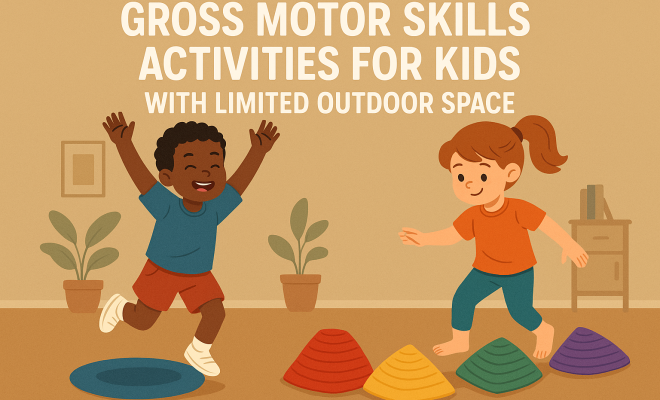
“Gross Motor Skills Activities for Kids with Limited Outdoor Space”
“`html
When you think of kids playing and developing their gross motor skills, outdoor spaces often come to mind. However, not every family has access to a large backyard or a nearby park. Whether you live in an urban environment with limited green spaces or an apartment that doesn’t lend itself to outdoor play, it’s important to understand that gross motor skills activities for kids can be done indoors and in small areas. In this article, we’ll explore how to keep your little ones active and engaged while developing those essential skills, even when outdoor space is scarce.
Understanding Gross Motor Skills
Before we dive into activities, let’s clarify what we mean by gross motor skills. These skills involve the large muscles of the body and include movements such as running, jumping, throwing, and climbing. Developing gross motor skills is crucial for children’s overall physical development and coordination. They help with everyday tasks, sports, and even academic tasks that require fine motor skills, such as writing.
The Importance of Gross Motor Skills Activities for Kids
Engaging in activities that promote gross motor skills is vital for several reasons:
- Physical Health: Regular physical activity helps combat obesity and its related health issues.
- Social Skills: Group activities encourage teamwork and communication.
- Cognitive Development: Movement enhances brain development and improves focus.
- Emotional Well-being: Physical activity can reduce anxiety and boost mood.
For children who may not have easy access to outdoor spaces, finding innovative ways to incorporate these activities indoors or in limited spaces becomes essential.
Creative Activities for Limited Indoor Spaces
Here are ten engaging gross motor skills activities for kids that can be done in confined areas without requiring extensive outdoor environments:
1. Indoor Obstacle Course
An obstacle course can fit in any space, no matter how small. Use furniture, cushions, or any household items to create a fun challenge. For example, kids can crawl under tables, hop onto cushions, or balance on tape laid out on the floor. This not only develops their physical skills but also sparks their creativity as they think about how to maneuver through the course.
2. Balloon Volleyball
Who doesn’t love a good game of volleyball? Take it indoors with a balloon! Set up a ‘net’ using a piece of string or a line of tape, and let the kids hit the balloon back and forth. This game helps improve hand-eye coordination and balance while keeping the energy levels high.
3. Dance Party
Put on some music and let the kids dance! Dancing is a fantastic way to enhance balance, coordination, and rhythm. You can even introduce simple dance moves or follow a dance tutorial online. This fun activity also allows kids to express themselves and release energy.
4. Animal Walks
Transform your living room into a jungle! Have your child mimic different animal movements, like crawling like a bear, hopping like a frog, or waddling like a penguin. Not only is this exercise amusing, but it also strengthens various muscle groups and improves coordination.
5. Simon Says with Movements
Playing Simon Says is a classic game that can easily incorporate gross motor activities. Include commands such as “jump like a kangaroo” or “stretch like a cat.” This game sharpens listening skills while providing a physical challenge, making it a win-win!
6. DIY Mini Bowling
Set up a mini bowling alley using plastic bottles as pins and a soft ball. Kids can roll the ball towards the pins, refining their aim and coordination. You can even keep score to make it a friendly competition!
7. Balloon Pop Relay Race
For this activity, you’ll need balloons and a bit of space. Set up a relay race where kids must carry a balloon between their knees or elbows, racing to pop it at the finish line. This game emphasizes balance and coordination, and the popping aspect adds an exciting twist.
8. Creative Crafting with Movement
Incorporate gross motor skills into arts and crafts! For instance, have kids stand and paint on large canvases mounted on the wall. This encourages reaching, stretching, and movement as they create. You can even make it a team project, promoting collaboration and sharing. (See: CDC on physical activity for children.)
9. Towel Tug-of-War
Grab a towel and engage in a friendly tug-of-war! This activity builds strength and endurance. Make sure to establish clear rules to keep the game safe and fun. You can also switch teams to encourage cooperation and teamwork.
10. Parachute Play
If you have a parachute or a large sheet, you can create a variety of activities. Kids can lift it high, run underneath, or create waves by moving it up and down. This activity promotes cooperative play while enhancing motor skills.
Setting Up a Safe Environment
Safety is paramount when creating spaces for gross motor skills activities for kids, especially indoors. Consider the following tips:
- Clear the Area: Ensure that the play area is free from obstacles that could cause tripping or injuries.
- Use Soft Materials: Use cushions, mats, or soft surfaces to prevent injuries during falls.
- Supervise Activities: Always keep an eye on your children to ensure they are safe and following the rules.
By keeping the environment safe and organized, you can allow your children to explore and enjoy physical activities without worry.
Incorporating Technology
In today’s digital age, technology can also play a role in encouraging physical activities. Many apps and online resources offer guided exercises and games specifically designed to promote gross motor skills. Consider using:
- Interactive Dance Apps: Programs that teach dance moves through fun routines.
- Fitness Challenges: Online challenges that encourage kids to complete various physical tasks.
- YouTube Channels: Channels dedicated to kids’ workouts that are engaging and suitable for different ages.
These platforms can provide additional motivation and structure, making physical activity more appealing to children.
Balancing Indoor and Outdoor Play
While it’s possible to create engaging indoor activities, it’s essential to balance indoor play with outdoor experiences when possible. Time spent outside can enhance a child’s overall development. Try to incorporate short outdoor trips to parks or playgrounds when the weather permits, or even backyard play if available. Outdoor experiences provide a different variety of gross motor skills activities that can complement those done indoors.
Encouraging Family Participation
One of the best ways to engage children in gross motor skills activities is to involve the whole family. Family games can promote bonding while encouraging physical activity. Here are some fun options to consider:
- Family Dance Offs: Turn on your favorite music and have a dance-off.
- Obstacle Course Challenges: Create family competitions based on your indoor obstacle course.
- Outdoor Family Sports: If you have a yard, set up a mini soccer or basketball game together.
Not only does this approach build children’s confidence in their abilities, but it also reinforces the importance of a physically active lifestyle.
The Role of Educators and Caregivers
Teachers and caregivers play a crucial role in fostering gross motor development, especially for children who may not have as much outdoor playtime. Incorporating structured movement activities into the school day or after-school programs can be hugely beneficial. Here are some suggestions:
- Movement Breaks: Introduce short movement breaks between lessons to keep energy levels up.
- Physical Education Curriculum: Develop a curriculum that includes diverse activities appealing to all children.
- Community Resources: Utilize community centers or local programs that offer structured physical activities.
By emphasizing the value of gross motor skills activities, educators can help instill a lifelong appreciation for movement and exercise.
Strategies to Foster Gross Motor Skills in Early Childhood
It’s never too early to start fostering gross motor skills in children. Here are some strategies specifically tailored for preschoolers and toddlers:
1. Create a Movement-Rich Environment
From the moment they begin to crawl, providing a space where children can explore different types of movement is essential. Set up areas designated for climbing, crawling, and rolling to allow your child to experiment with their body’s capabilities.
2. Use Everyday Objects
Household items can become fantastic props for gross motor development. For example, empty cardboard boxes can serve as tunnels to crawl through or obstacles to climb over. Encourage children to play with these items in creative ways, promoting exploration and movement.
3. Encourage Outdoor Exploration
When the opportunity arises, take children out to explore different terrains—be it sand, grass, or a gravel path. Each surface provides a different sensory experience and challenges their balance and coordination in unique ways.
4. Participate in Community Activities
Look for local classes or community activities focused on movement, such as swimming, gymnastics, or dance classes for young children. Being involved in group activities can enhance their social skills while developing gross motor abilities. (See: WHO fact sheet on physical activity.)
Understanding the Developmental Stages
Gross motor skills develop in stages, from simple movements to more complex actions. Here’s a brief overview:
Infants (0-12 months)
- Development of head and neck control
- Rolling over, sitting up, and crawling
- Pulling up to stand and cruising along furniture
Toddlers (1-3 years)
- Walking independently and beginning to run
- Climbing stairs with assistance
- Kick and throw a ball
Preschoolers (3-5 years)
- Jumping with both feet
- Balancing on one foot for a few seconds
- Starting to catch and throw a ball with more accuracy
Understanding these stages helps caregivers provide appropriate activities to support development at each phase.
Statistics on Physical Activity and Development
Research shows that incorporating regular physical activity into children’s daily routines significantly impacts their health and development. According to a report from the World Health Organization:
- Only 23% of children ages 6-17 meet the recommended 60 minutes of daily physical activity.
- Physical inactivity among children increases the risk of obesity and chronic diseases in later life.
- Active children are more likely to develop strong bones, muscles, and joints.
These statistics underline the importance of finding ways to integrate gross motor skills activities, particularly in environments where outdoor play is limited.
Expert Perspectives on Gross Motor Skills Development
Experts in child development emphasize the importance of playful movement for young children. According to pediatric occupational therapist, Dr. Amy R. McCoy:
“Children learn through play, and gross motor skills are foundational for their overall development. Activities that engage different muscle groups not only help them physically, but they also foster problem-solving skills and creativity.”
Frequently Asked Questions
What are gross motor skills?
Gross motor skills involve the use of large muscle groups to perform tasks such as walking, running, jumping, and throwing. These skills are essential for everyday movements and activities.
How can I promote gross motor skills at home?
You can promote gross motor skills at home by incorporating fun activities like obstacle courses, dancing, and creative play that encourages movement. Use everyday items to create challenges that require balance, coordination, and strength.
What are some signs my child is developing gross motor skills?
Signs of developing gross motor skills include improved balance, the ability to run and jump with control, and participation in activities like climbing and riding a bike. Look for milestones like skipping and hopping on one foot as they grow older.
How much physical activity do children need?
Children aged 2-5 years need at least 3 hours of physical activity per day, while kids aged 6-17 should aim for at least 60 minutes of moderate to vigorous physical activity every day.
What if my child is reluctant to engage in physical activities?
If your child is reluctant, try to make activities more engaging by incorporating games, music, or family participation. Offer choices and allow them to lead the play, fostering a sense of control and enthusiasm.
Additional Benefits of Gross Motor Skills Activities
Engaging children in gross motor skills activities not only supports their physical development but also has numerous other benefits:
Enhanced Sleep Quality
Physical activity has been shown to improve sleep patterns in children. When kids engage in gross motor activities, they expend energy that can contribute to deeper and more restful sleep. This is crucial for their physical and cognitive growth.
Improved Self-Esteem
As children conquer new physical challenges, their self-confidence grows. Successfully completing an obstacle course or mastering a new dance move can lead to a sense of accomplishment, fostering a positive self-image.
Developing Motor Planning Skills
Many gross motor activities require kids to plan their movements and anticipate changes in their environment. This enhances their motor planning skills, which are vital for more complex tasks as they grow, such as sports or dance routines.
Building Relationships
Participating in group activities encourages children to interact with peers. This interaction is key for developing social skills, such as teamwork, sharing, and communication. Activities that involve collaboration can teach children how to work effectively with others.
How to Integrate Gross Motor Skills Activities into Daily Routines
Incorporating gross motor skills activities into your child’s daily routines doesn’t have to be overwhelming. Here are some simple ways to make it happen:
1. Morning Movement
Start the day with a quick movement session. A 10-minute family dance or a few animal walks can get everyone’s energy up and set a positive tone for the day.
2. Use Transition Times
During transition times, such as moving from one room to another, encourage your child to hop, skip, or gallop. This adds movement into regular routines and makes transitions more fun.
3. Combine Learning with Movement
Incorporate movement into learning activities. For example, when practicing counting, have your child jump the number of times they are counting. This not only reinforces learning but also keeps them physically active.
4. Wind Down with Stretching
At the end of the day, incorporate stretching as part of the bedtime routine. This can help relax their bodies and prepare them for sleep while also promoting flexibility.
Conclusion: Making the Most of Limited Space
With creativity and intention, it’s entirely possible to foster gross motor skills in children even with limited outdoor space. The activities explored in this article not only keep kids physically active but also help build confidence, social skills, and emotional well-being. Remember, every little bit counts, and the key is to make movement a fun and integral part of daily life. So gather those cushions, turn up the music, and let the fun begin!
“`
Trending Now
- read the full story
- this guide on “using bloom’s taxonomy to write better learning objectives for lesson plans”
- our breakdown of “bloom’s taxonomy for parents: how to ask questions that deepen your child’s learning at home”
- read the full story
- our breakdown of “proprioception activities for kids: 25 sensory diet ideas to improve body awareness”
Frequently Asked Questions
What are some gross motor skills activities for kids indoors?
Indoor activities such as obstacle courses, balloon volleyball, and dance parties can help develop gross motor skills in kids. These activities promote movement and coordination while keeping children engaged, even in limited spaces.
How can I help my child develop gross motor skills without outdoor space?
You can create a variety of activities indoors, such as using furniture for obstacle courses, playing catch with soft balls, or incorporating dance and movement games. These activities encourage physical movement and skill development in confined areas.
Why are gross motor skills important for children?
Gross motor skills are essential for overall physical development, coordination, and everyday tasks. They play a crucial role in children's ability to participate in sports, enhance cognitive functions, and improve emotional well-being through physical activity.
What is an indoor obstacle course for kids?
An indoor obstacle course is a creative setup using household items like pillows, chairs, and blankets to create challenges for children. It encourages running, jumping, crawling, and balancing, effectively promoting gross motor skills in a confined space.
How does physical activity benefit children's social skills?
Physical activities that involve teamwork, such as group games or obstacle courses, help children develop social skills by encouraging communication, cooperation, and problem-solving while they play and engage with their peers.
What’s your take on this? Share your thoughts in the comments below — we read every one.