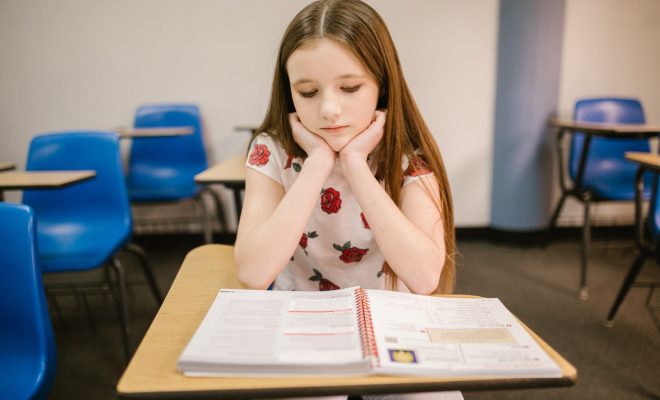
“How to Support Children Who Haven’t Yet Developed Conservation Understanding in Math Class”
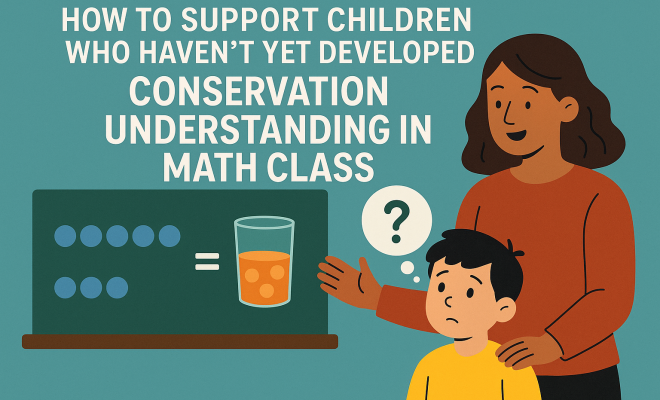
“`html
Mathematics is a foundational skill that shapes a child’s cognitive development and prepares them for future learning. One critical aspect of early math education is the concept of conservation, which refers to the understanding that certain properties of objects, such as volume or number, remain the same despite changes in their form or arrangement. Unfortunately, many children struggle with this concept, and as educators and parents, it’s essential to understand how to support children in math who haven’t yet developed conservation understanding.
1. Understanding Conservation in Mathematics
Before diving into strategies for support, it’s crucial to grasp what conservation means in the context of math. Conservation is a cognitive skill that typically develops in children around the age of 7, according to developmental psychologist Jean Piaget. This skill includes understanding that the quantity of a set remains the same even if its appearance changes. For example, if you pour the same amount of liquid from a short, wide glass into a tall, narrow one, a child who understands conservation will recognize that the amount of liquid hasn’t changed, despite its different appearance.
Understanding conservation is vital for several mathematical concepts, including addition, subtraction, and even basic geometry. Children lacking this foundational understanding may struggle with more complex math problems later on, making it essential for educators to find ways to support these learners.
2. Identifying Signs of Difficulty with Conservation
Recognizing when a child is struggling with conservation is the first step in supporting them. Some signs may include frequent confusion when counting, difficulty comparing quantities, and challenges in understanding basic addition and subtraction. For example, a child might insist that two rows of blocks are unequal even when the number of blocks is the same, merely because one row appears longer than the other.
Observing their interactions during math activities can also be revealing. Are they consistently relying on visual cues rather than logical reasoning? Do they show frustration when faced with tasks that require understanding conservation? These indicators can help educators and parents tailor their approach to meet each child’s unique needs.
3. Using Hands-On Activities to Foster Understanding
One effective way of supporting children in math is through hands-on activities. Children often learn best when they can manipulate objects to see how quantities change or remain consistent. Using everyday items like blocks, beads, or even food items can make math concepts tangible. For instance, you can create a simple activity where children pour water between containers of different shapes to visualize conservation in action.
Additionally, grouping and rearranging objects can help reinforce the understanding that quantity remains constant despite changes in arrangement. For example, you might ask a child to line up two rows of blocks and then rearrange them while affirming that the numbers haven’t changed. This tactile approach not only makes learning fun but also solidifies the concept of conservation in their minds.
4. Encouraging Peer Interaction and Discussion
Children often learn well from their peers. Encouraging collaborative activities such as group work can provide opportunities for discussion about conservation concepts. When students explain their reasoning to one another, they can clarify their understanding and develop their critical thinking skills. You might set up small groups where students can work together to solve problems that involve conservation, discussing their thought processes as they go along.
Peer interaction also allows children to see different perspectives and approaches to the same problem, helping to enhance their understanding. For example, if one child sees the same quantity differently than another, discussing these views can lead to a deeper comprehension of conservation principles.
5. Integrating Technology and Visual Aids
Incorporating technology can also play a significant role in supporting children’s understanding of conservation. There are numerous educational apps and games specifically designed to teach math concepts, including conservation. These interactive tools often make learning engaging while providing immediate feedback, which is important for learning.
Visual aids, such as charts and diagrams, can also be beneficial when explaining conservation. For example, using a number line or visual representations of numbers can help children visualize how quantities remain the same despite different arrangements. By combining technology with visual learning, educators can create a multifaceted approach to teaching conservation. (See: Understanding conservation in psychology.)
6. Fostering a Growth Mindset
Encouraging a growth mindset is critical when supporting children in math. This concept, developed by psychologist Carol Dweck, emphasizes the belief that abilities can be developed through dedication and hard work. By fostering this mindset, children may become more resilient in facing challenges, including difficulties with conservation.
When children encounter struggles, it’s essential to praise their effort rather than the outcome. For instance, instead of saying, “Great job!” after a correct answer, you might say, “I really appreciate how hard you worked on that problem!” This encourages persistence and helps children view challenges as opportunities for growth, making them more likely to engage with difficult mathematical concepts like conservation.
7. Providing Real-World Contexts
Linking math concepts to real-world contexts can make them more relatable and understandable for children. By using everyday situations that require conservation understanding, such as sharing snacks or dividing toys, you can help solidify these ideas. For example, if you have eight cookies and want to share them equally among four friends, children can physically count and distribute the cookies while discussing how the number remains constant.
Real-life examples not only provide context but also demonstrate the relevance of math in daily activities. This approach can make learning feel less abstract and encourage children to engage more deeply with mathematical concepts.
8. Systematic Progress Monitoring
Monitoring progress is essential in supporting children who are developing conservation understanding. Regular assessments can help identify areas where a child is excelling or struggling. These assessments can be formal, such as quizzes, or informal, like observing how a child tackles specific tasks in a classroom setting.
By keeping track of progress, educators and parents can adjust their strategies as needed. If a child shows improvement in one area but continues to struggle with conservation, targeted interventions can be introduced to address these specific challenges. Tailoring approaches based on progress helps ensure that support remains relevant and effective.
9. Collaborating with Families and Caregivers
Finally, collaboration with families and caregivers is crucial for supporting children in math. Educators should engage parents and guardians in the learning process, providing them with resources and strategies to reinforce conservation understanding at home. This might include simple math games, everyday activities that involve counting, or suggestions for using household items to illustrate conservation principles.
When parents are actively involved in their child’s learning journey, it reinforces the concepts learned in school and provides additional opportunities for practice. This partnership creates a consistent learning environment, making it easier for children to grasp complex math concepts like conservation.
10. Common Misconceptions About Conservation
When discussing conservation, it’s important to address some common misconceptions that children might hold. For example, many children believe that if a shape is transformed (like squishing a ball of clay), the amount of that shape changes as well. They may think that a tall, narrow glass holds more liquid than a short, wide glass simply because of appearance. Understanding these misconceptions is vital for educators as they provide an opportunity to correct misunderstandings and deepen comprehension.
Engaging children in discussions about these misconceptions can lead to more fruitful learning experiences. You can ask leading questions that encourage children to think critically about their reasoning. For instance, you might ask, “If we make this ball of clay into a pancake shape, do you think there’s more or less clay?” Such discussions can stimulate critical thinking and help children solidify their understanding of conservation.
11. Statistics on Math Proficiency and Conservation Skills
Research shows that many children face challenges in gaining proficiency in math, often linked to their understanding of conservation. According to a study by the National Assessment of Educational Progress (NAEP), only about 40% of fourth graders in the U.S. are considered proficient in mathematics. A significant factor contributing to this statistic is the lack of foundational skills, including conservation, that are critical for success in later mathematical learning.
Additionally, a report by the Institute of Education Sciences highlights that early mastery of conservation can predict later success in mathematics. Children who demonstrate a solid understanding of conservation by age 6 are more likely to excel in standardized math assessments by the time they reach fourth grade. This correlation underscores the importance of targeted interventions in early education. (See: Supporting children's education and development.)
12. Expert Perspectives on Supporting Children in Math
Experts in child development and education stress the importance of addressing foundational skills, including conservation, as early as possible. Dr. Susan D. Clements, a prominent researcher in early childhood mathematics, notes, “Children’s understanding of conservation is not just about math; it’s about how they view the world. Teaching them these concepts lays the groundwork for critical thinking and problem-solving skills that will benefit them in all areas of life.”
Another expert, Dr. Julie Sarama, emphasizes the role of interactive play in developing mathematical understanding. “Engaging children in play-based learning activities allows them to explore concepts like conservation in a fun and meaningful way,” she states. “It’s not just about worksheets; it’s about fostering a love for math that will carry through their education.”
13. Strategies for Parents to Support Math Learning at Home
Parents play a vital role in reinforcing math concepts at home. Here are some effective strategies to support children in math learning:
- Incorporate Math into Daily Activities: Use cooking, shopping, or gardening to introduce mathematical concepts. For example, while baking, you can measure ingredients and discuss how the amounts remain the same regardless of the container used.
- Play Math Games: Board games that involve counting, strategy, and problem-solving can solidify math skills in a fun and engaging way. Games like Monopoly or Uno can create opportunities to practice math skills.
- Encourage Questioning: Let your child ask questions about the world around them, especially in relation to quantity and measurement. Encourage them to think critically about how things can change shape but not quantity.
- Be Patient and Positive: Math can be a source of anxiety for some children. Approach learning with patience, and celebrate small successes to build confidence.
14. Frequently Asked Questions (FAQ)
What age do children typically grasp conservation?
Most children begin to understand conservation around the age of 7, but some may show signs earlier. It’s essential to provide support tailored to each child’s readiness.
How can I tell if my child is struggling with conservation?
Watch for signs like confusion when counting or comparing quantities, reliance on visual cues instead of logical reasoning, and frustration during math activities that involve conservation tasks.
Are there specific activities you recommend for teaching conservation?
Yes! Activities like pouring liquids between different-shaped containers, rearranging blocks, or using everyday items like snacks for sharing can help children visualize and understand conservation principles effectively.
What if my child seems to grasp conservation but struggles with other math concepts?
It’s not uncommon for children to excel in some areas while struggling in others. Continuous practice and support in various math concepts, alongside assessment of their understanding, can help identify specific areas that need additional focus.
How can technology be effectively used to support math learning at home?
There are many educational apps and online games specifically designed to teach math concepts, including conservation. Look for programs that offer interactive learning experiences, immediate feedback, and various levels of difficulty to keep your child engaged.
15. The Importance of a Supportive Learning Environment
Creating a supportive learning environment is crucial for helping children develop a solid understanding of conservation and other math concepts. This includes providing a space where children feel safe to make mistakes, ask questions, and explore their understanding of math without fear of judgment.
Encouragement from both educators and parents can significantly boost a child’s confidence and willingness to engage with challenging concepts. Celebrating progress, no matter how small, helps children see math as an exciting challenge rather than a daunting task.
Ultimately, fostering a supportive atmosphere helps children not just in understanding math but also in developing a lifelong love for learning. With the right tools, strategies, and encouragement, children can overcome their struggles with conservation and thrive in their mathematical learning journey.
16. The Role of Cultural Context in Learning Math
Children’s experiences with math can be greatly influenced by their cultural background. Various cultures have different approaches to learning and teaching mathematics, which can affect how children understand concepts like conservation. For instance, in some cultures, storytelling and oral traditions are used to convey mathematical concepts, making them more relatable and engaging for children.
Recognizing these cultural differences allows educators to bring diverse perspectives into the classroom. Incorporating cultural examples or stories about numbers and quantities can make lessons on conservation more meaningful. For example, using traditional games or activities from a child’s culture can bridge the gap between abstract concepts and real-life applications, enhancing their understanding significantly.
17. Engaging Math Competitions and Clubs
Math competitions and clubs can also provide children with additional platforms to explore mathematical concepts, including conservation. Participating in these activities encourages a sense of community and camaraderie among peers, fostering a positive attitude toward math. Competitions often present problems that require deep thinking and application of multiple math skills, including the understanding of conservation.
For example, a math club might host activities where children must solve puzzles involving the reallocation of resources, helping them visualize and apply conservation principles in creative ways. These experiences not only boost confidence but also provide a fun and engaging atmosphere for learning.
18. Long-term Benefits of Mastering Conservation Skills
Mastering conservation is not just crucial for immediate mathematical problems; it has long-term benefits that extend across various life skills. Children who understand conservation tend to develop better problem-solving abilities and critical thinking skills. These skills are vital not only in academics but also in everyday scenarios such as budgeting, resource allocation, and even social interactions.
A solid grounding in such foundational concepts can lead to higher levels of mathematical proficiency in later years. Studies show that children who master conservation skills in early childhood often perform better on standardized tests and in advanced math classes during their academic careers.
19. Conclusion
In summary, supporting children who haven’t yet developed conservation understanding in math is a multifaceted approach that involves hands-on learning, peer interaction, technology, and family collaboration. By utilizing these strategies, educators and parents can help build a strong mathematical foundation that will serve children throughout their educational journey. Remember, fostering understanding in math is not just about teaching concepts; it’s about nurturing a love for learning that can last a lifetime.
“`
Trending Now
Frequently Asked Questions
What is conservation in math for children?
Conservation in math refers to a child's understanding that certain properties of objects, like number or volume, remain constant despite changes in their form or arrangement. This cognitive skill typically develops around age 7 and is crucial for grasping foundational math concepts.
How can I tell if my child struggles with conservation?
Signs that a child may struggle with conservation include confusion when counting, difficulty comparing quantities, and challenges with basic addition and subtraction. For instance, they might insist that two equal rows of blocks are different simply based on their appearance.
Why is conservation important in early math education?
Conservation is vital in early math education because it underpins essential concepts like addition, subtraction, and geometry. Without a solid understanding of conservation, children may face challenges with more complex math problems later in their education.
What strategies can support children with conservation difficulties?
To support children struggling with conservation, educators and parents can use hands-on activities, visual aids, and real-life examples. Engaging children in tasks that involve comparing quantities and discussing changes in appearance can help them develop this critical understanding.
At what age do children typically develop conservation skills?
Children typically develop conservation skills around the age of 7, according to developmental psychologist Jean Piaget. This understanding is crucial for their overall cognitive development and future success in mathematics.
Have you experienced this yourself? We’d love to hear your story in the comments.