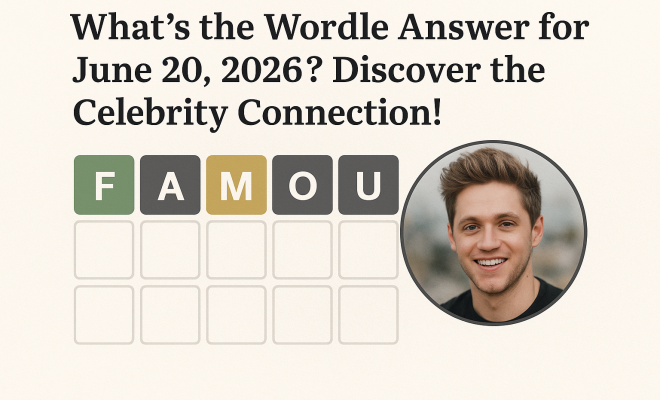
What’s the Wordle Answer for June 20, 2026? Discover the Celebrity Connection!
“`html
Wordle has taken the internet by storm, becoming a daily ritual for millions around the globe. As players eagerly log on each morning, the hunt for the daily puzzle answer turns into a race against time, fueled by urgency, competition, and social sharing. On June 20, 2026, the Wordle answer June 20 2026 is revealed to be “DRAKE,” an answer that not only ties into a well-known celebrity but also connects with the broader cultural zeitgeist.
The Allure of Wordle: Why This Game is a Daily Ritual
Since its inception, Wordle has captivated audiences with its simple yet addictive format. Each day, players are presented with a five-letter word to guess within six attempts. This format invites both casual players and word enthusiasts to engage in a shared experience. The game’s blend of challenge and accessibility makes it appealing to a diverse audience. But what truly sets Wordle apart from other word games is the community it fosters.
Players often rush to find hints or the final answer before their friends and family do. This urgency creates a predictable spike in searches online, with many turning to platforms like Google for help. It’s a social phenomenon that thrives on sharing results and strategies, ultimately solidifying the game as part of a daily routine for many.
Unpacking June 20, 2026: The Cultural Impact of the Answer
The chosen word for June 20, 2026, “DRAKE,” not only serves as an answer but also as a nod to one of the most influential figures in modern music. The Canadian rapper, singer, and songwriter has made headlines for over a decade, continuously evolving his sound and dominating the charts. His name alone generates immediate recognition and curiosity, making it an excellent choice for a Wordle answer.
The impact of choosing a celebrity name like Drake goes beyond just being a fun word; it taps into the cultural pulse. Players who might not be avid Wordle fans may still search for this answer due to their interest in Drake’s music, further broadening the game’s audience.
The Rise of Spoiler Culture in Wordle
In a time when social media dominates our communication, the notion of spoiler culture has become a significant aspect of how we interact with games like Wordle. Players often share their scores, strategies, and hints on platforms like Twitter, Instagram, and TikTok, fostering a community of enthusiasts who engage with the game collectively.
This sharing culture fuels a competitive spirit among players. The desire to solve the puzzle before seeing the answer creates an exhilarating challenge, turning the game into a race. As people post their results, they engage others, creating a ripple effect of interest and participation.
The Mechanics of Wordle: How It Works
At its core, Wordle operates on a straightforward premise. Players input five-letter guesses and receive color-coded feedback in response. Correct letters in the correct position turn green, while correct letters in the wrong position show up in yellow. Letters that don’t belong in the word are marked in gray.
This system not only allows players to strategize their next guess but also introduces an element of logic and deduction. Each correct guess narrows down the possibilities, creating a satisfying experience as players inch closer to the solution. The thrill of arriving at the right answer, especially on days like June 20, 2026, when the answer is “DRAKE,” culminates in a sense of achievement.
Social Sharing: The Heart of the Wordle Experience
The modern landscape of gaming is profoundly influenced by social media. For Wordle players, sharing results has become part of the fun. After tackling the day’s puzzle, many rush to Twitter or Facebook to post their results, often accompanied by a sense of pride or competition.
This behavior enhances the community aspect of Wordle, as players celebrate their victories and share tips with one another. Platforms like TikTok have seen countless videos showcasing players’ strategies, guessing processes, and even humorous failures. The answer “DRAKE” is likely to spark conversations around not just the game but also the artist himself, as fans discuss their favorite songs and albums. (See: Wikipedia article on Wordle.)
Hints and Strategies for Wordle
For those still honing their skills, understanding some effective strategies can dramatically improve the experience. One approach is to start with a word that contains commonly used letters. Words like “STARE” or “CRANE” can provide a solid foundation, offering valuable feedback on multiple letters at once.
Another strategy is to pay close attention to the feedback received after each guess. If a letter appears in yellow, think of other placements for it in subsequent attempts. The game rewards thoughtful guessing, and keeping a mental note of letters that have been ruled out or confirmed can help players arrive at the answer faster.
Analyzing the Popularity of Wordle on Social Media
Wordle’s viral appeal on social media can be attributed to several factors. The combination of a shared challenge, the allure of celebrity names, and the community it fosters creates a unique ecosystem. On platforms like Instagram, users often post aesthetically pleasing snapshots of their results, inviting comments and discussions that amplify engagement.
Moreover, the daily nature of the game keeps players returning. Each day presents a fresh challenge, and the anticipation builds as players await the new word. The mention of a globally recognized name like Drake only serves to heighten that anticipation, making it even more shareable.
Wordle Beyond June 20: What Lies Ahead?
While the Wordle answer June 20 2026 is “DRAKE,” the future of the game looks promising. With millions of players worldwide, the developers behind Wordle have ample opportunities to experiment with word selections that resonate culturally. By continuing to incorporate recognizable names and concepts, the game can maintain its relevance in an increasingly crowded market.
As more players join the fun, we can expect to see a greater variety of answers that connect themes of pop culture, politics, and everyday life. It’s a formula that keeps players engaged, curious, and coming back for more.
The Future of Wordle and Its Cultural Significance
Wordle has become more than just a game; it represents a shared cultural experience that transcends geographical boundaries. The puzzle fosters connections among friends, families, and even strangers as they come together to solve a new word each day. The answer “DRAKE” on June 20, 2026, is just a reflection of how the game intertwines with popular culture.
As we look to the future, it’s clear that Wordle will continue to be a significant part of our everyday lives. It will evolve with trends and adopt new characteristics that cater to a changing audience, fostering a community that thrives on collaboration, competition, and creativity.
A Final Thought: The Joy of Collective Puzzle Solving
Ultimately, the joy of Wordle lies in its ability to bring people together. Each day is an opportunity to engage in a light-hearted challenge, share the experience, and celebrate victories, no matter how small. The answer for June 20, 2026 — “DRAKE” — beautifully encapsulates the blend of personal achievement and cultural relevance that Wordle embodies.
So, whether you’re a seasoned player or a newcomer, embrace the challenge and immerse yourself in this captivating word game. After all, the thrill of solving today’s puzzle is just a part of what makes Wordle a beloved daily ritual for so many.
Delving Deeper: The Psychology Behind Word Games
Engaging with word games like Wordle doesn’t just entertain; it also taps into various psychological benefits. Cognitive researchers suggest that regular participation in puzzles can enhance mental acuity and boost vocabulary. When you play Wordle, you’re not just guessing; you’re exercising your brain. This cognitive workout can improve problem-solving skills and sharpen memory.
Furthermore, the satisfaction derived from solving a puzzle can trigger the release of dopamine, a chemical associated with pleasure. Each successful guess in Wordle is a mini triumph that can lead to a more positive mindset, making it a great daily habit for mental well-being.
Wordle Statistics: The Numbers Behind the Game’s Success
Wordle’s rapid rise to fame is not only anecdotal; it can also be quantified. According to various reports, Wordle had over 2 million players in its early months, and that number skyrocketed to over 45 million by the end of 2022. This growth was sustained by its simplistic yet engaging format and the daily nature of its challenges. (See: BBC coverage on Wordle's impact.)
Moreover, a survey conducted by gaming analysts indicated that about 78% of players share their results online, highlighting the game’s social aspect. The game’s accessibility on mobile devices further contributed to its widespread adoption, allowing players to engage with it anytime, anywhere.
In addition to the numbers, Wordle’s influence can be seen in the rise of similar games. Many developers have launched spin-offs and clones, vying to capture the magic that Wordle had during its peak popularity. This underscores the significant cultural imprint that Wordle has made in just a few years.
Exploring Wordle Variations: What’s Out There?
Since its inception, many variations of Wordle have emerged, catering to different interests and demographics. For example, there’s “Absurdle,” which presents a more challenging twist by changing possible answers after each guess. Then there’s “Heardle,” which focuses on music snippets rather than words, appealing to music lovers. These variations keep the spirit of Wordle alive while providing fresh challenges for dedicated players.
In addition, localized versions have appeared, allowing players in different languages and cultures to enjoy a similar experience. This adaptability highlights how Wordle has become a global phenomenon, as people from all walks of life can engage with the game in ways that resonate with them personally.
Frequently Asked Questions About Wordle
What is Wordle?
Wordle is a daily word puzzle game where players guess a five-letter word within six attempts. Each guess provides feedback through color coding to indicate correct and incorrect letters.
How does scoring work in Wordle?
Wordle does not have a traditional scoring system. The game’s emphasis is on completing the puzzle within six tries. Players often share their results, which are displayed in a grid format, showcasing how many attempts it took without revealing the answer.
Can I play Wordle offline?
Wordle is primarily designed to be played online through its website. However, some players have created printable versions or downloadable apps that mimic the original format, allowing for offline play.
Are there any strategies for winning Wordle?
Yes! Starting with words that contain common vowels and consonants can increase your chances of quickly identifying correct letters. Additionally, paying attention to the feedback after each guess is crucial for narrowing down potential solutions.
How often is the Wordle answer updated?
The Wordle answer changes daily, with a new five-letter word released each day at midnight local time. Players around the world compete to guess the word within the same timeframe, adding to the game’s appeal.
What makes June 20, 2026, special?
June 20, 2026, features “DRAKE” as the Wordle answer, tying the game’s fun with the cultural significance of a prominent music artist. This makes it a memorable date for Wordle enthusiasts and fans alike.
How can I get better at Wordle?
Practice is key! The more you play, the better you’ll become at recognizing patterns and improving your vocabulary. Additionally, discussing strategies with friends or joining online communities can provide new insights and tips to enhance your gameplay. (See: New York Times article about Wordle.)
Personalizing Your Wordle Experience
Players often seek ways to personalize their Wordle experience, whether it’s through custom themes or unique challenges. Websites and social media groups have emerged, offering users the chance to create their own puzzles based on personal interests or current events. This level of engagement allows for a deeper connection with the game and can make the daily challenge feel fresh and relevant.
The Role of Technology in Wordle’s Popularity
Technology has played a significant role in the explosion of Wordle’s popularity. The game’s simple interface is mobile-friendly, encouraging users to play on their smartphones during commutes or lunch breaks. Additionally, the feedback mechanism provides an instant reward system that keeps players engaged. The rapid sharing capabilities afforded by social media platforms further amplify its reach, allowing engagement beyond just the game itself.
Exploring the Educational Benefits of Word Games
Word games like Wordle are not just entertaining; they also offer valuable educational benefits. Teachers and educators are increasingly incorporating word games into their curricula to enhance vocabulary and critical thinking skills. By utilizing games in the classroom, educators can create an interactive learning environment where students are motivated to engage with language in a fun and productive way.
Furthermore, studies have shown that regular exposure to word games can improve language skills in children, helping to expand their vocabulary and enhance reading comprehension. This makes Wordle not only a delightful challenge for adults but also a useful tool for students of all ages.
Wordle’s Community and its Global Reach
What’s particularly fascinating about Wordle is its diverse community. Players from different backgrounds, cultures, and age groups come together to enjoy the game. International players often share their results in various languages, creating a tapestry of global interaction. As players connect through their shared experiences, Wordle fosters a sense of belonging, even across vast distances.
To enhance this community spirit, developers are exploring features that allow for more collaborative gameplay. Future updates may incorporate cooperative modes where players can team up to tackle challenges or compete against their friends in real time.
Engaging with Wordle: Tips for New Players
If you’re new to Wordle, diving into the game can feel overwhelming. To help ease your way in, consider starting with familiar five-letter words first. Utilizing common vowel and consonant patterns can guide your guesses in the right direction. Also, don’t hesitate to look at strategies shared by more experienced players. Many Wordle enthusiasts blog or create YouTube tutorials that break down their thought processes and techniques.
Participating in online forums can also be a great way to learn from others. As you immerse yourself in discussions, not only will you pick up useful tips, but you’ll also become part of a vibrant community that shares your interests.
“`
Trending Now
Frequently Asked Questions
What was the Wordle answer for June 20, 2026?
The Wordle answer for June 20, 2026, was 'DRAKE.' This answer not only relates to a well-known celebrity but also reflects broader cultural trends, making it a significant choice for the day's puzzle.
Why is Wordle so popular?
Wordle's popularity stems from its simple yet addictive format, allowing players to guess a five-letter word within six attempts. The game's community aspect, where players share results and strategies, adds to its appeal, making it a daily ritual for many.
How does Wordle create a sense of urgency among players?
Wordle creates urgency by encouraging players to find the daily answer before their friends and family. This competition drives a spike in online searches, with many turning to Google for hints and the final answer.
What cultural significance does the word 'DRAKE' hold in Wordle?
Choosing 'DRAKE' as the Wordle answer taps into the cultural pulse, referencing one of modern music's most influential figures. It not only engages avid players but also attracts those who are fans of the celebrity, enhancing the game's relevance.
How does Wordle foster community among players?
Wordle fosters community by encouraging players to share their results and strategies on social media. This communal experience enhances engagement and creates a shared sense of excitement, drawing in both casual and dedicated players.
Agree or disagree? Drop a comment and tell us what you think.