Social Learning Theory in Elementary Classrooms
“`html
Understanding Social Learning Theory
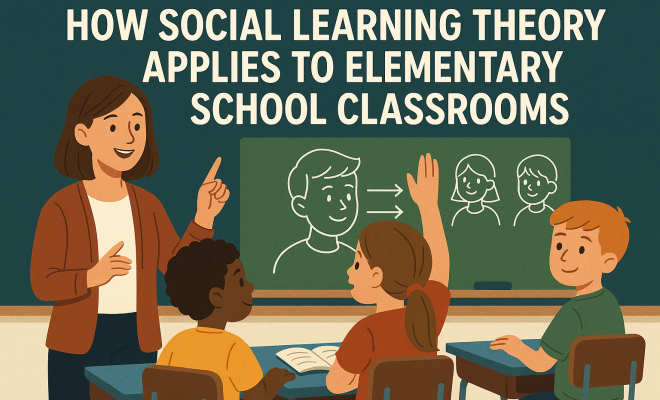
Social Learning Theory, developed by Albert Bandura in the 1960s, posits that individuals learn within a social context, primarily through observation and imitation. Bandura suggested that learning occurs not only through direct experience but also by watching others — a process that can be particularly impactful in educational settings. This theory plays a crucial role in shaping the social and academic environment of elementary school classrooms, where young children are absorbing information at an astonishing rate and are highly influenced by their peers and teachers.
Historical Context of Social Learning Theory in Education
Before the emergence of Social Learning Theory, educational philosophies were largely grounded in behaviorism, which emphasized direct reinforcement and punishment as the primary means of shaping behavior. Bandura’s contributions shifted this focus, highlighting the importance of social context. The classic “Bobo Doll” experiment, conducted by Bandura in 1961, demonstrated how children mimic behaviors they observe in adults. This foundational research emphasized the role of modeling in learning, a concept that has since been integrated into various educational methodologies.
In elementary education, recognizing that children learn from their environment has led educators to develop strategies that incorporate peer interactions, collaborative learning, and role modeling. The evolution of teaching practices over the decades reflects a growing understanding of the significance of social learning processes in fostering academic and social skills among young learners.
Key Concepts of Social Learning Theory in Education
At the core of Social Learning Theory are several key concepts that educators can leverage to enhance classroom dynamics.
- Modeling: Teachers serve as role models for their students. When educators demonstrate positive behaviors, academic skills, and problem-solving strategies, students are more likely to adopt these attributes.
- Imitation: Children often emulate their peers’ actions, particularly if they perceive those behaviors as being rewarded or valued. This tendency can be harnessed to encourage cooperation and collaboration among students.
- Observation: Learning through observation can be particularly effective in diverse classrooms, where students can benefit from watching their classmates tackle similar challenges.
- Reinforcement: The feedback system in a classroom is critical. Positive reinforcement for desired behaviors encourages repetition, while constructive feedback helps guide students toward improvement.
These concepts lay the groundwork for practical applications of Social Learning Theory in elementary school settings.
Practical Applications in Elementary Classrooms
Integrating Social Learning Theory into elementary classrooms involves creating an environment that promotes interaction, engagement, and support. Here are some effective strategies:
1. Collaborative Learning
Group work is a staple in many elementary classrooms, and for good reason. By engaging in collaborative learning activities, students learn to communicate, solve problems together, and share knowledge. For instance, implementing small group projects allows children to observe and imitate peers while collectively tackling a task. This approach not only enhances academic learning but also nurtures social skills, such as teamwork and empathy.
2. Peer Teaching
Peer teaching is another powerful application of social learning. In this framework, students take on the role of both learner and teacher, explaining concepts to one another. This method reinforces their understanding while allowing them to practice communication skills. For example, older students could tutor younger peers in subjects like math or reading, solidifying their own knowledge while helping others. (See: Social Learning Theory on Wikipedia.)
3. Role Modeling by Teachers
Teachers naturally serve as role models in the classroom. By consciously demonstrating positive behaviors—such as patience, kindness, and critical thinking—educators can significantly influence their students. For instance, a teacher who openly discusses their problem-solving process while tackling a complex math problem encourages students to adopt a similar approach when faced with challenges.
4. Encouraging Reflection
Encouraging students to reflect on their learning processes can also enhance the effects of social learning. Journals or reflection sessions where children discuss what they learned from their peers or what strategies worked best can deepen their understanding. This practice not only promotes self-awareness but also reinforces the value of learning from others.
Current Relevance of Social Learning Theory
In today’s educational landscape, Social Learning Theory remains highly relevant. The shift toward technology-enhanced learning environments has introduced new dynamics to social learning. With the rise of online learning platforms and digital classrooms, educators must adapt Bandura’s principles to fit these modern contexts.
For example, online forums and collaborative tools allow students to observe and learn from their peers from different locations. Video conferencing platforms enable real-time interaction, facilitating modeling and imitation across distances. This adaptation is especially crucial in light of the recent global events that have disrupted traditional learning environments, emphasizing the need for flexible, socially aware teaching strategies.
Challenges and Considerations
While the benefits of applying Social Learning Theory in elementary education are clear, challenges exist. One challenge is ensuring equitable participation among students. In a diverse classroom, some students may dominate discussions while others remain silent. Teachers must actively facilitate balanced participation to ensure that all voices are heard and respected.
Another consideration involves cultural differences that may affect learning styles and social interactions. Educators need to be sensitive to these differences and adapt their teaching methods accordingly, ensuring that all students feel included and valued in the learning process.
Assessment Techniques Aligned with Social Learning Theory
Assessing student learning in a manner consistent with Social Learning Theory involves more than traditional testing. Instead, educators can employ a variety of formative assessments that capture collaborative efforts and peer interactions. Here are some effective assessment strategies:
- Project-Based Assessments: Group projects allow for evaluation of both individual contributions and collaborative skills. Teachers can assess how well students worked together and the quality of their final product.
- Peer Assessments: Encouraging students to assess each other’s contributions fosters accountability and reflection on group dynamics. This method promotes critical thinking about collaboration.
- Self-Reflections: Providing opportunities for students to reflect on their learning experiences can give insights into their understanding of social learning dynamics. Self-assessments encourage students to think critically about their roles in group settings.
Real-World Examples of Application
To illustrate the effectiveness of Social Learning Theory in practice, consider a classroom where students are learning about ecosystems. The teacher might start the unit by showing a video of a nature documentary, highlighting various species and their interdependence. Following the video, students could engage in group discussions, drawing on what they observed and imitating the analytical approaches their peers exhibit.
As a project, students could collaborate to create a diorama of a specific ecosystem, each taking a role based on their strengths. Throughout this process, they would observe their peers’ problem-solving techniques, contributing to a rich learning environment infused with social interactions.
Future Directions for Research and Practice
Continued research into Social Learning Theory’s application in education is vital. Future studies may explore the impact of digital tools on social learning outcomes, the effects of teacher training on implementing social learning strategies, and the long-term benefits of social learning practices on student success beyond elementary education. (See: Research on Social Learning in Education.)
Educators can also explore hybrid models that blend social learning with technology, ensuring that students are equipped with both the social skills and digital literacy needed for success in the 21st century.
Expanding the Scope of Social Learning Theory
Social Learning Theory is not limited to the classroom. Its principles can be applied in various educational settings, including after-school programs, sports teams, and community organizations. For instance, in an after-school program focused on arts, students can learn by observing their peers’ techniques in painting or drawing, encouraging them to adopt new styles and approaches to their work.
Furthermore, in sports, young athletes often learn skills and teamwork by watching their coaches and more experienced players. These environments can offer rich opportunities for applying social learning in ways that complement traditional academic structures.
The Role of Technology in Social Learning Theory
Technology has transformed how we approach Social Learning Theory in education. Online platforms offer an unprecedented ability to connect learners across vast distances. Students can collaborate on projects using tools like Google Docs or engage in discussions through forums and chat rooms, broadening their perspectives and learning from peers worldwide.
Video tutorials available online have become essential resources, allowing students to learn at their own pace. They can observe experts performing tasks, from coding to cooking, and then practice these skills themselves. This accessibility to diverse learning resources enhances the modeling aspect of Social Learning Theory, enabling students to find and follow role models beyond their immediate environment.
Expert Perspectives on Social Learning Theory
Experts in education and psychology often discuss the significance of Social Learning Theory in shaping modern educational approaches. Dr. Carol Dweck, known for her work on growth mindset, emphasizes how social learning environments can foster resilience and adaptability. She points out that when students feel supported in their learning, they are more likely to take risks and embrace challenges.
Educational psychologist Dr. David Johnson highlights the importance of collaborative learning in developing social skills. He notes that through group work, students not only learn academic content but also how to communicate effectively and resolve conflicts. This dual focus on academic and social competencies aligns with the principles of Social Learning Theory and is critical in preparing students for the complexities of life outside the classroom.
Statistics Supporting Social Learning Theory
Research provides compelling evidence supporting the effectiveness of Social Learning Theory in educational settings. According to a study published in the Journal of Educational Psychology, classrooms that employed collaborative learning strategies saw a 25% increase in student engagement compared to traditional lecture-based methods. Additionally, a survey conducted by the National Education Association revealed that 85% of teachers believe that peer-to-peer learning enhances understanding of material.
Moreover, a meta-analysis of educational interventions found that students who participated in peer teaching programs scored, on average, 15% higher on assessments than their peers in traditional learning environments. These statistics underline the value of incorporating social learning strategies into educational practices.
Frequently Asked Questions about Social Learning Theory in Education
What is the main idea of Social Learning Theory?
The main idea of Social Learning Theory is that people learn from one another through observation, imitation, and modeling. It emphasizes the importance of social context in the learning process.
How can teachers apply Social Learning Theory in the classroom?
Teachers can apply Social Learning Theory by facilitating collaborative learning, encouraging peer teaching, providing opportunities for role modeling, and promoting reflection on learning processes.
What are some challenges of using Social Learning Theory in education?
Challenges include ensuring equitable participation among students, addressing diverse cultural backgrounds, and adapting to different learning styles within a classroom setting.
Can Social Learning Theory be applied outside of traditional classrooms?
Absolutely! Social Learning Theory is applicable in various settings, including after-school programs, sports teams, and community organizations, where observation and interaction can enhance learning.
How does technology impact Social Learning Theory?
Technology enhances Social Learning Theory by providing online platforms for collaboration, access to diverse learning materials, and opportunities for students to learn from experts around the world.
Challenges in the Implementation of Social Learning Theory
Implementing Social Learning Theory in educational settings isn’t without its hurdles. One significant challenge is the varying levels of student engagement. Not all students are equally motivated to participate in group activities or peer discussions, which can lead to an uneven learning experience. Educators must find creative ways to engage reluctant learners, such as using gamification strategies to make participation more appealing.
Another challenge is the potential for negative modeling. Students may observe behaviors that are not conducive to a positive learning environment, such as bullying or disengagement. Educators need to be vigilant in modeling appropriate behavior and addressing negative influences promptly.
Furthermore, teachers themselves may need training to effectively facilitate social learning. Many educators have been trained primarily in traditional teaching methods and may feel unprepared to implement social learning strategies. Professional development programs focused on these techniques can bridge this gap, equipping teachers with the necessary skills to foster a collaborative classroom.
The Future of Social Learning Theory in Education
Looking ahead, the integration of Social Learning Theory in education is likely to evolve with emerging trends. As more schools adopt blended learning models that combine in-person and online instruction, the opportunities for social learning will expand. This hybrid approach allows students to engage in collaborative projects both in the classroom and virtually, providing a richer, more diverse learning experience.
Additionally, the increasing recognition of social and emotional learning (SEL) in education aligns closely with Social Learning Theory. Educators are beginning to appreciate the importance of nurturing students’ emotional intelligence alongside academic skills, leading to a more holistic approach to education that values social learning as a key component of success.
Research into the long-term effects of social learning practices will also be important. Understanding how these methods impact student outcomes, particularly in terms of social skills and academic achievement, can help refine educational practices and policies.
Conclusion: Embracing Social Learning in Education
In essence, Social Learning Theory offers invaluable insights into how children learn within social contexts. By applying its principles in elementary classrooms, educators can create dynamic learning environments that foster collaboration, communication, and community. As we continue to navigate an ever-changing educational landscape, embracing the tenets of social learning will be crucial in preparing our students for the complexities of the modern world.
“`
Trending Now
Frequently Asked Questions
What is Social Learning Theory in education?
Social Learning Theory, developed by Albert Bandura, emphasizes that individuals learn through observation and imitation within a social context. In education, it highlights how students can acquire knowledge and behaviors by watching teachers and peers, making it a vital framework for enhancing learning in elementary classrooms.
How does Social Learning Theory apply to elementary school classrooms?
In elementary classrooms, Social Learning Theory informs teaching strategies by encouraging peer interactions and collaborative learning. Educators utilize modeling, where they demonstrate desired behaviors and skills, allowing students to learn not just from direct instruction but also from observing their classmates and teachers.
What are the key concepts of Social Learning Theory?
Key concepts of Social Learning Theory include modeling, imitation, and reinforcement. In an educational setting, teachers act as role models, demonstrating positive behaviors and academic skills that students can observe and imitate, thereby fostering both social and academic development.
What was the Bobo Doll experiment?
The Bobo Doll experiment, conducted by Albert Bandura in 1961, demonstrated that children imitate behaviors they observe in adults. This pivotal study illustrated the power of modeling in learning and has significantly influenced educational practices by emphasizing the importance of role models in classrooms.
How can teachers use Social Learning Theory in their classrooms?
Teachers can apply Social Learning Theory by implementing strategies that promote modeling, such as demonstrating problem-solving techniques, encouraging group work, and creating a classroom environment that fosters observation and imitation among peers, thereby enhancing both academic and social skills.
Agree or disagree? Drop a comment and tell us what you think.