Boost Middle School Learning with Social Pragmatics Role Play
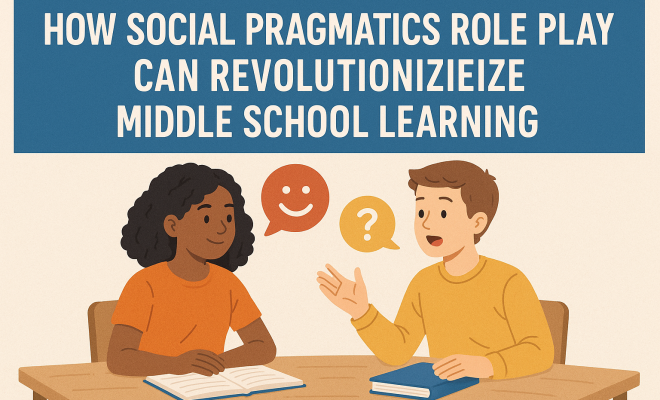
“`html
In the dynamic world of middle school, where social interactions are pivotal to learning and development, teaching social pragmatics through role play has emerged as a groundbreaking educational strategy. These techniques not only enhance communication skills but also foster empathy and understanding among peers, making them essential components of a well-rounded education. As students navigate the complexities of adolescence, understanding social nuances becomes crucial. This article delves into what social pragmatics is, the role of role-playing in teaching these skills, and practical insights on implementation, all while emphasizing the importance of this approach in today’s educational landscape.
Understanding Social Pragmatics
Social pragmatics refers to the way individuals use language in social contexts, encompassing a range of behaviors including conversational skills, non-verbal communication, and the ability to interpret social cues. It’s not just about what you say; it’s about how you say it, when to say it, and how to respond appropriately in various situations. For middle school students, who are increasingly aware of peer dynamics, mastering these skills can significantly impact their social relationships and academic success.
The development of social pragmatics typically begins in early childhood but continues to evolve throughout adolescence. According to the National Center for Learning Disabilities, students with strong social pragmatic skills are better equipped to build friendships, collaborate in group projects, and navigate the often tumultuous waters of middle school social hierarchies. Yet, for many students—especially those on the autism spectrum or with social communication difficulties—these skills do not develop naturally. This makes structured teaching approaches vital.
The Role of Role Play in Teaching Social Pragmatics
Role play is a powerful tool in both educational settings and therapeutic environments. By simulating social interactions in a safe and controlled manner, students can practice and refine their social skills without the real-world consequences that often accompany social missteps. Role play allows students to experiment with different scenarios and perspectives, which is critical for developing empathy and understanding.
In the context of social pragmatics, role-playing exercises can include a variety of situations, such as initiating conversations, resolving conflicts, or interpreting non-verbal cues. This method encourages active participation and engages students in a way that traditional teaching methods often cannot. According to research published in the Journal of Educational Psychology, students who engage in role-play demonstrate improved communication skills and greater confidence in social interactions.
Practical Insights for Implementing Social Pragmatics Role Play
Implementing social pragmatics role play in the middle school curriculum can be both rewarding and challenging. Here are some practical insights for educators looking to incorporate this strategy effectively:
- Start Simple: Begin with straightforward scenarios that students can relate to. For example, practicing greetings or sharing personal stories can help them feel comfortable.
- Create a Safe Space: Establish ground rules that promote respect and support. Ensure students know that making mistakes is part of the learning process.
- Incorporate Varied Scenarios: Use a range of situations that reflect real-life interactions, such as navigating group projects or dealing with peer pressure.
- Encourage Reflection: After each role-play session, facilitate discussions about what worked, what didn’t, and how students felt during the exercise. This helps reinforce learning.
- Integrate Technology: Use video recordings of role plays to provide visual feedback, allowing students to observe their own body language and communication styles.
Addressing Challenges in Social Pragmatics Role Play
While the benefits of role play in teaching social pragmatics are clear, educators may face several challenges in its implementation. Some students may feel anxious about participating, while others might struggle to engage in the exercises.
To address anxiety, it’s essential to foster a supportive environment where students feel safe. Consider starting with smaller, more manageable group settings before moving on to larger audiences. For those who struggle with engagement, pairing them with more socially adept peers can provide modeling and encouragement. Additionally, providing clear instructions and expectations can help demystify the process and make participation less intimidating.
Incorporating Role Play Across the Curriculum
Social pragmatics role play doesn’t have to be limited to designated social skills classes. Teachers can incorporate it across various subjects to reinforce communication skills in diverse contexts. In a language arts class, for instance, students could role-play characters from a novel, exploring their motivations and relationships. In science, they might simulate a debate on environmental issues, honing their argumentation and persuasive speaking skills.
Moreover, using role play in different contexts allows students to see the practicality of these skills in real-life situations. It helps bridge the gap between academic learning and social understanding, making education more holistic and relevant. (See: Teaching communication skills.)
Real-World Applications of Social Pragmatics Role Play
Beyond the classroom, the skills developed through social pragmatics role play can have far-reaching implications for students’ lives. As they become adept at navigating social situations, they are better prepared for future challenges, whether in high school settings, the workforce, or personal relationships.
For instance, students who practice conflict resolution through role play are more likely to apply those skills in real-world disagreements, reducing potential escalations and fostering healthier relationships. Similarly, by learning to interpret non-verbal cues, they can enhance their ability to connect with others, opening doors to new friendships and collaborations.
Current Relevance of Social Pragmatics Role Play
In today’s increasingly digital environment, teaching social pragmatics through role play is more relevant than ever. With the rise of social media and online communication, many students struggle with face-to-face interactions and reading social cues. Role play can be a bridge to help students regain confidence in their in-person social skills.
The COVID-19 pandemic has further highlighted the need for effective communication skills. As students return to in-person learning after extended periods of isolation, many are experiencing social anxiety and uncertainty. Educators can use role play to ease these transitions, helping students re-establish their social circles and develop the necessary skills to thrive in group settings.
Expert Perspectives on Social Pragmatics Role Play
Experts in child development and education advocate for the incorporation of social pragmatics role play in schools. Dr. Emily C. Simmons, a clinical psychologist specializing in adolescent development, emphasizes the importance of social skills training, stating, “The ability to communicate effectively with peers is critical for success in both personal and academic contexts. Role play provides a unique opportunity for students to practice these skills in a supportive environment.”
Educational consultant Dr. Maria Gonzalez also highlights the adaptability of role play, noting that it caters to various learning styles. “Whether students are visual, auditory, or kinesthetic learners, role play engages them in a way that traditional methods often fail to do. It allows them to embody the learning experience, making it more impactful.”
Strategies for Enhancing Role Play Activities
To make role play activities more effective, educators can implement several strategies. One approach is to introduce themed role-play sessions where students can immerse themselves in a specific context, such as a school setting, a family gathering, or a community event. This can enhance their ability to relate to and understand various social dynamics.
Another useful strategy is to incorporate scriptwriting into role play. Students can work in pairs or small groups to write scripts that reflect realistic scenarios. This not only fosters creativity but also allows them to think critically about the language and social cues involved in different interactions. Once they have developed their scripts, they can perform them, bringing the role play to life.
Additionally, integrating cultural perspectives can enrich the experience. Discussing how different cultures approach communication and social interactions can broaden students’ understanding of social pragmatics. For instance, exploring greetings, body language, and communication styles from various cultures can provide a more comprehensive view of social interactions globally.
Empirical Evidence Supporting Role Play
Numerous studies support the effectiveness of role play in developing social pragmatics. A study by the University of California found that students who participated in structured role-playing exercises showed a 40% improvement in their ability to interpret non-verbal cues over a six-month period. This demonstrates how targeted practice can lead to significant gains in areas crucial for social interaction.
Furthermore, a meta-analysis published in the Review of Educational Research concluded that role play not only enhances social skills but also leads to improvements in academic performance, particularly in collaborative learning environments. The researchers noted that students who engaged in role play were more likely to participate actively in group discussions and demonstrate leadership qualities.
Common Concerns and Misconceptions
Despite the clear benefits, some educators may have reservations about implementing role play in their classrooms. A common concern is that role play may be perceived as unstructured or lacking in rigor. However, when designed thoughtfully, role play can be a highly structured learning activity with clear objectives and outcomes. (See: Mental health and social skills.)
Another misconception is that role play might not be suitable for all students, particularly those who are shy or introverted. In reality, role play can be adapted to accommodate varying comfort levels. For example, students can start by participating in smaller groups or even observing before they actively engage. Additionally, using scripts or guided scenarios can help ease students into role play, ensuring everyone can participate in a way that feels safe and manageable.
Frequently Asked Questions
What age group is best suited for social pragmatics role play?
Social pragmatics role play can be introduced as early as elementary school and can be beneficial throughout middle school and even into high school. The complexity of the scenarios can be adapted to suit the developmental level of the students you are working with.
Can role play help students with special needs?
Absolutely. Students with special needs, including those with autism spectrum disorder or social communication difficulties, can greatly benefit from role play. It provides them with a structured opportunity to practice social interactions in a low-pressure setting, helping them to develop essential skills.
How do I assess student progress in social pragmatics role play?
Assessment can be both formal and informal. Teachers can observe students during role play sessions and take notes on their use of language, ability to interpret cues, and engagement with peers. Additionally, self-assessment forms or peer feedback can provide insight into individual growth and areas for improvement.
How often should role play activities be conducted?
The frequency of role play activities can vary based on the class schedule and the specific goals of the curriculum. Regular, short sessions may be more effective than longer, infrequent ones. Incorporating role play into weekly lessons can help reinforce social skills consistently.
Can technology enhance social pragmatics role play?
Yes! Incorporating technology such as virtual simulations or role-playing apps can add depth to the learning experience. Additionally, video recordings of role play sessions can be used as a powerful reflection tool, enabling students to analyze their own interactions and identify areas for improvement.
Expanding the Benefits of Role Play in Diverse Learning Environments
While role play is beneficial in regular classroom settings, its advantages can extend even further into diverse learning environments. In inclusive classrooms, where students with varied learning needs collaborate, role play can serve as an essential tool. It promotes peer interaction and understanding, breaking down barriers between students with and without disabilities.
For instance, when implementing role play in a mixed-ability group, students can take on different roles that highlight their strengths. A student who excels at storytelling might narrate scenarios, while another good at public speaking can present solutions. This collaborative approach not only builds confidence but also fosters a sense of community as students learn from one another.
Moreover, role play can be adapted to fit various instructional styles. Teachers can modify role-play scenarios to focus on conflict resolution, teamwork, negotiation skills, or emotional regulation, depending on the needs of their students. This versatility makes role play a valuable method in fostering social competencies across a wide range of topics.
Case Studies: Successful Implementation of Social Pragmatics Role Play
To illustrate the effectiveness of social pragmatics role play, several case studies highlight successful implementations in different educational settings. One notable case involved a middle school in California that instituted a comprehensive role-play program for its sixth-grade students. The school reported a significant decrease in bullying incidents and increased student engagement during group activities. Teachers noted that students became more adept at communicating and collaborating, leading to improved academic performance.
Another case study from a special education program in New York demonstrated the transformative power of role play for students with autism. By engaging in role-playing scenarios that mimicked real-life social situations, students began to develop their conversational skills and emotional understanding. Parents reported notable improvements in their children’s ability to initiate and maintain conversations with peers at home and in the community.
These success stories not only validate the effectiveness of role play but also provide a framework for other educators looking to implement similar strategies in their classrooms.
Future Trends in Social Pragmatics Education
The landscape of education continues to evolve, and social pragmatics education is no exception. As educators explore innovative methods to engage students, some key trends are emerging in the field. One such trend is the integration of social-emotional learning (SEL) with social pragmatics role play. Schools are beginning to recognize the importance of emotional intelligence and how it intersects with communication skills.
For instance, programs that combine SEL principles with role-playing exercises focus on developing self-awareness, self-regulation, and interpersonal skills. This holistic approach not only prepares students for academic challenges but also equips them with the social competencies needed to thrive in life.
Additionally, as technology continues to shape education, virtual and augmented reality tools are being explored for role play in social pragmatics. These technologies can create immersive environments where students can practice social interactions in a more lifelike setting. By simulating real-world scenarios, students can experience the consequences of their actions in a safe, controlled space.
Conclusion: Embracing the Future of Social Skills Education
As the educational landscape continues to evolve, embracing innovative strategies like social pragmatics role play is essential. These activities not only equip students with the necessary social skills but also promote a culture of empathy and understanding within classrooms. By recognizing the significance of these skills and actively integrating role play into the curriculum, educators can empower students to navigate their social worlds with confidence and grace.
In a time when interpersonal connections are more vital than ever, the role of social pragmatics and the tools to teach them cannot be underestimated. Through dedicated efforts and creative methodologies, we can ensure that the next generation is not only academically prepared but also socially adept, ready to meet the challenges of the future head-on.
“`
Trending Now
Frequently Asked Questions
What is social pragmatics in education?
Social pragmatics in education refers to the way individuals use language effectively in social contexts. It includes conversational skills, non-verbal communication, and interpreting social cues, which are crucial for middle school students as they navigate peer dynamics and build relationships.
How can role play improve social skills in middle school students?
Role play improves social skills by allowing students to practice real-life social interactions in a safe environment. This interactive method helps them develop empathy, refine communication skills, and understand social nuances, making it a valuable educational strategy.
Why is teaching social pragmatics important for middle schoolers?
Teaching social pragmatics is important for middle schoolers as it enhances their ability to form friendships, collaborate on projects, and navigate complex social hierarchies. These skills are essential for their overall social and academic success during adolescence.
What are the benefits of using role play in teaching social skills?
Using role play in teaching social skills offers numerous benefits, including increased engagement, improved understanding of social cues, and the ability to practice responses in various scenarios. This experiential learning fosters confidence and better prepares students for real-world interactions.
How can educators implement social pragmatics role play in the classroom?
Educators can implement social pragmatics role play by designing scenarios that reflect real-life situations students may encounter. Facilitating guided practice, providing feedback, and encouraging reflection can enhance the learning experience and reinforce the skills being taught.
What’s your take on this? Share your thoughts in the comments below — we read every one.