7 Essential Scaffolding Techniques for English Language Learners
“`html
Understanding Scaffolding in Education
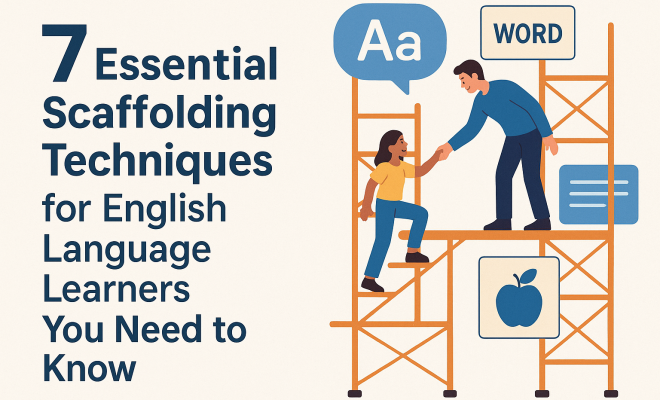
At its core, scaffolding refers to the support provided to students to help them achieve their learning goals. This term, borrowed from construction, emphasizes the idea of providing temporary support structures that enable learners to gradually build their skills and confidence. For English Language Learners (ELLs), scaffolding techniques are especially vital, as they bridge the gap between a student’s current knowledge and the new content being taught.
Scaffolding is not just about providing help; it’s about creating a learning environment where students can thrive. Research has shown that effective scaffolding can significantly enhance language acquisition and comprehension among ELLs. It allows teachers to tailor their instruction to meet the diverse needs of students, making learning both accessible and engaging. This article will delve into specific scaffolding techniques for English Language Learners at the elementary level, highlighting their implementation and impact on student learning.
The Importance of Scaffolding for English Language Learners
English Language Learners come from various backgrounds, often facing unique challenges as they acquire new language skills while also adjusting to a new educational environment. Scaffolding techniques are crucial in this context for several reasons:
- Targeted Support: These techniques allow teachers to provide support that is specifically tailored to individual students’ language proficiency levels.
- Encouragement of Independence: By gradually removing support as students gain confidence, scaffolding encourages learners to become more independent in their language use.
- Promoting Engagement: Scaffolding techniques often involve collaborative and interactive activities, which can be more engaging for students than traditional methods.
Ultimately, effective scaffolding can help ELLs not only understand academic content but also develop their language skills more robustly.
1. Visual Aids and Graphic Organizers
Visual aids, such as pictures, diagrams, and videos, play a significant role in enhancing comprehension for English Language Learners. When students can visualize concepts, they are more likely to grasp complex ideas. Graphic organizers are particularly effective tools for helping students categorize information and make connections between concepts.
For instance, using a Venn diagram to compare and contrast two characters from a story can help ELLs organize their thoughts visually. When introducing new vocabulary, images that represent the words can also enhance retention and understanding. Teachers might consider using interactive whiteboards to create dynamic presentations that incorporate visuals, making lessons more engaging and easier to understand.
2. Interactive and Cooperative Learning
Learning doesn’t have to be a solitary endeavor, especially for ELLs who may benefit from social interactions. Implementing cooperative learning strategies encourages students to work together in small groups, allowing them to practice language skills in a collaborative environment. This technique not only fosters peer learning but also builds a sense of community in the classroom.
For example, a teacher might structure a jigsaw activity where each student becomes an expert on a particular section of a text before teaching their peers. This not only reinforces understanding but also gives ELLs a chance to practice their language skills in a safe and supportive setting. Incorporating turn-and-talk activities, where students discuss topics with partners, can also increase language practice and build confidence.
3. Modeling and Think-Alouds
Modeling involves demonstrating a skill or process for students to observe and emulate. When teachers model tasks, they provide a clear example of what is expected. Think-alouds, where educators verbalize their thought processes while completing a task, can be particularly beneficial for ELLs.
For instance, during a reading lesson, a teacher might read a passage aloud while articulating their thought process — making predictions, asking questions, or summarizing — as they go. This strategy not only demonstrates comprehension strategies but also exposes students to the language structure and vocabulary used in academic discourse. By showing ELLs how to approach a task, teachers empower them to apply similar strategies independently.
4. Scaffolding Language Through Structured Conversations
Structured conversations are an effective scaffolding technique for developing language skills. By providing sentence frames or starters, teachers can guide ELLs in forming complete thoughts and expressing their ideas more clearly. This technique reduces the cognitive load on students, allowing them to focus on language production.
For example, during a science lesson, a teacher might provide sentence stems such as, “I observe that…” or “I predict that…” which students can use to construct their responses. This not only aids language development but also encourages participation from students who may otherwise feel intimidated to speak. Encouraging peer feedback and group discussions further enriches this learning experience. (See: Education Research from the U.S. Department of Education.)
5. Gradual Release of Responsibility
The gradual release of responsibility model is a strategic approach that involves shifting the ownership of learning from the teacher to the student. This model typically consists of four phases: I do (modeling), we do (guided practice), you do (independent practice), and you teach (students teaching peers).
For ELLs, this process can be incredibly beneficial. Initially, the teacher leads the learning, demonstrating tasks and providing support. As students gain confidence, they gradually take on more responsibility for their own learning. This might mean working with a partner to complete an assignment before tackling it independently. By the final phase, students may explain concepts to their peers, reinforcing their understanding while enhancing their language skills.
6. Culturally Relevant Teaching
Incorporating culturally relevant materials and perspectives into lessons helps ELLs connect their prior knowledge and experiences with new content. Understanding that students come from diverse backgrounds is crucial for effective teaching. Culturally relevant teaching not only validates students’ identities but also makes learning more relatable and meaningful.
Teachers can integrate stories, examples, and activities that reflect students’ cultures, creating a more inclusive classroom environment. For instance, when discussing family structures, a teacher might invite students to share their traditions or customs. This not only enriches the learning experience but also encourages ELLs to engage more actively in class discussions.
7. Ongoing Assessment and Feedback
Assessment is a critical component of the learning process, especially for English Language Learners. Ongoing assessment allows teachers to monitor student progress and tailor instruction to meet individual needs. Formative assessments, such as observations and informal quizzes, can provide insight into a student’s understanding and language proficiency.
Feedback is equally important. Providing constructive feedback that focuses on both language use and content comprehension helps students improve. Rather than solely correcting errors, teachers should highlight strengths and offer specific suggestions for improvement. This approach fosters a growth mindset and encourages ELLs to take risks in their language learning.
Putting It All Together: Creating a Scaffolding Plan
Implementing effective scaffolding techniques for English Language Learners requires thoughtful planning and flexibility. Teachers should consider each student’s background, language proficiency, and learning style when developing their scaffolding strategies. Here’s a basic plan to create a scaffolding framework:
- Assess Needs: Begin with assessments to understand each student’s language proficiency and academic needs.
- Choose Techniques: Select appropriate scaffolding techniques based on the content being taught and the specific needs of students.
- Plan Lessons: Design lessons that incorporate a variety of scaffolding methods, ensuring that students have opportunities to practice their language skills in various contexts.
- Monitor Progress: Continuously assess student understanding and adjust scaffolding strategies as needed.
- Provide Feedback: Share specific feedback with students to help them grow in both language and content areas.
By systematically integrating these elements, educators can create a robust scaffolding framework that empowers English Language Learners to succeed academically and linguistically.
The Current Relevance of Scaffolding Techniques for ELLs
As classrooms become increasingly diverse, the need for effective scaffolding techniques for English Language Learners cannot be overstated. With a growing number of ELLs entering U.S. schools, educators must be equipped with the right strategies to support these students effectively. Moreover, the COVID-19 pandemic has highlighted the importance of adaptable and inclusive teaching methods, as many students have faced disruptions to their learning environments.
Incorporating technology and innovative teaching practices into scaffolding strategies can further enhance language learning experiences for ELLs. Virtual classrooms and digital resources provide unique opportunities for interactive and visual learning, supporting language development even outside traditional settings.
Ultimately, the implementation of effective scaffolding techniques can transform the educational experience for English Language Learners. By understanding and applying these strategies, educators can help ELLs not only navigate their academic challenges but also thrive in their new environments.
Additional Scaffolding Techniques for Enhanced Learning
While the previously mentioned techniques are fundamental, several additional strategies can further enrich the scaffolding experience for ELLs. Here are some noteworthy methods:
8. Use of Technology
Integrating technology into lessons can provide a wealth of resources for English Language Learners. Platforms like Google Classroom or educational apps can foster interactive environments where students can engage with content at their own pace. For instance, tools such as Quizlet can help ELLs build vocabulary through interactive flashcards and games, while platforms like Padlet can encourage collaborative brainstorming and sharing of ideas. (See: Learning and Treatment from NIH.)
Furthermore, video conferencing tools allow for virtual language exchange partnerships with native speakers, providing authentic practice opportunities. This kind of interaction not only enhances language skills but also builds cultural understanding, which is invaluable for ELLs.
9. Differentiated Instruction
Understanding that students have varied learning styles and paces is essential in a diverse classroom. Differentiated instruction involves providing multiple avenues for students to engage with content based on their unique needs. For ELLs, this may mean offering texts at varying reading levels, providing audio versions of materials, or using simpler language structures in instruction.
For example, when teaching a historical event, a teacher might provide a video summary for visual learners, a timeline for those who benefit from sequential information, and a written narrative for those who prefer traditional reading. This method ensures all students receive the support they need to grasp complex concepts.
10. Explicit Vocabulary Instruction
Vocabulary acquisition is crucial for language development, especially for ELLs. Explicit vocabulary instruction involves teaching words in context and providing students with strategies to understand their meanings. Teachers can introduce new vocabulary through contexts, such as thematic units, allowing students to see how words function in different scenarios.
Additionally, employing techniques like word maps or semantic gradients can help ELLs grasp nuances in word meanings and usage. For instance, a semantic gradient can illustrate the differences between similar words, such as “happy,” “joyful,” and “ecstatic,” fostering a deeper understanding of language.
Statistics on ELL Performance and Scaffolding
Research supports the efficacy of scaffolding techniques in improving the performance of English Language Learners. A report from the National Center for Education Statistics found that ELLs who received structured support showed an increase in reading comprehension scores by up to 20% compared to those who did not. Furthermore, studies indicate that students who are provided with visuals and graphic organizers are 25% more likely to retain new vocabulary and concepts.
Additionally, a study published in the Journal of Educational Psychology highlighted that ELLs who participated in cooperative learning groups demonstrated higher levels of engagement and language proficiency than their peers in traditional settings. This empirical data emphasizes the importance of adopting varied scaffolding techniques to meet the diverse needs of ELLs.
Expert Perspectives on Scaffolding for ELLs
Educational experts advocate for the importance of scaffolding techniques in supporting English Language Learners. Dr. Jim Cummins, a prominent researcher in bilingual education, emphasizes that effective scaffolding not only aids language development but also supports cognitive growth. He states, “When students can connect their home language and culture to their learning, they are more likely to succeed academically.”
Similarly, Dr. Patricia Kuhl, a leading expert in language development, highlights the role of interaction in learning a new language. “Young children learn best through social interactions. By scaffolding their learning experiences, we empower them to engage and communicate effectively.” These insights reinforce the idea that scaffolding is not just beneficial but essential for the development of English Language Learners.
Frequently Asked Questions about Scaffolding Techniques
What are the most effective scaffolding techniques for ELLs?
Some of the most effective techniques include the use of visual aids, interactive learning, modeling, structured conversations, and culturally relevant teaching. These strategies help create a supportive environment where ELLs can develop both language skills and content knowledge.
How can teachers assess the effectiveness of their scaffolding techniques?
Teachers can assess the effectiveness of scaffolding techniques through ongoing formative assessments, student feedback, and observation. Monitoring student engagement and understanding during lessons can provide insights into which techniques work best and where adjustments may be needed. (See: Scaffolding in Education on ScienceDirect.)
Can scaffolding be implemented in remote or hybrid learning environments?
Absolutely! Scaffolding techniques can be adapted for remote or hybrid learning settings. Teachers can use digital tools to facilitate cooperative learning, provide visual aids through shared screens, and incorporate interactive activities that promote engagement even in a virtual space.
How can I make scaffolding more culturally responsive?
To make scaffolding more culturally responsive, educators should incorporate materials and examples that reflect the diverse backgrounds of their students. This can include using texts that represent various cultures, allowing students to share their own experiences, and creating lessons that connect to students’ backgrounds.
What role does assessment play in scaffolding for ELLs?
Assessment plays a crucial role in scaffolding for ELLs as it helps educators identify students’ strengths and areas for improvement. Ongoing assessments inform instructional decisions, allowing teachers to adapt their scaffolding techniques to meet the evolving needs of their learners.
Examples of Successful Scaffolding Techniques in Action
Real-world examples can help illustrate how scaffolding techniques can be effectively implemented in classrooms. Let’s take a look at a few successful case studies:
Case Study 1: Visual Aids in Action
A teacher in a multicultural classroom introduced a unit on ecosystems to her 3rd-grade ELLs. She began by using a variety of visual aids, including videos, infographics, and pictures of different ecosystems. After presenting the material, she utilized a Venn diagram to help students compare and contrast two ecosystems. The use of visuals helped students better understand vocabulary related to the topic and resulted in a significant improvement in their written responses, showcasing deeper comprehension of the subject matter.
Case Study 2: Cooperative Learning
In a 5th-grade classroom, a teacher organized students into small groups for a project on renewable energy sources. Each group was tasked with researching a specific source and presenting their findings. The teacher emphasized cooperative learning by assigning roles within each group—researcher, presenter, and designer of the poster. This structure not only encouraged collaboration but also allowed ELLs to practice English in a supportive group setting, ultimately leading to higher engagement and improved language skills.
Case Study 3: Gradual Release of Responsibility
In a middle school English class, a teacher applied the gradual release of responsibility model while teaching literary analysis. Initially, she modeled how to analyze a character in a text using guided questions. Next, students worked together in pairs, using the same questions to analyze a different character. Finally, individuals were tasked with analyzing a character independently. This approach enabled ELLs to build confidence progressively and enhanced their ability to express thoughts in writing, leading to marked improvements in their analytical essays.
Conclusion
Implementing effective scaffolding techniques for English Language Learners is not merely an instructional strategy; it’s a commitment to fostering an inclusive and supportive learning environment. By utilizing a variety of methods—ranging from visual aids and technology integration to culturally relevant teaching and ongoing assessment—educators can significantly enhance the educational experiences of ELLs. The journey of learning a new language is unique for each student, and scaffolding provides the necessary support to help them thrive academically and linguistically.
“`
Trending Now
Frequently Asked Questions
What are scaffolding techniques for English Language Learners?
Scaffolding techniques for English Language Learners (ELLs) are instructional strategies designed to provide support that helps students bridge the gap between their current knowledge and new content. These techniques encourage engagement, independence, and targeted support tailored to individual language proficiency levels.
Why is scaffolding important for ELLs?
Scaffolding is crucial for ELLs as it provides essential support in acquiring language skills while adjusting to a new educational environment. It helps students build confidence, promotes engagement through interactive activities, and allows for tailored instruction to meet diverse needs.
How can teachers implement scaffolding techniques?
Teachers can implement scaffolding techniques by gradually providing support, such as using visual aids, collaborative activities, and breaking tasks into manageable parts. As students gain confidence, teachers can slowly remove these supports, encouraging independent language use.
What is the role of scaffolding in language acquisition?
Scaffolding plays a vital role in language acquisition by creating a supportive learning environment that enhances comprehension and skill development. It allows ELLs to engage with academic content while gradually building their language proficiency through structured support.
How does scaffolding promote student independence?
Scaffolding promotes student independence by providing temporary support that gradually decreases as learners become more confident in their language use. This approach encourages ELLs to take ownership of their learning and develop the skills necessary for successful communication.
Have you experienced this yourself? We’d love to hear your story in the comments.