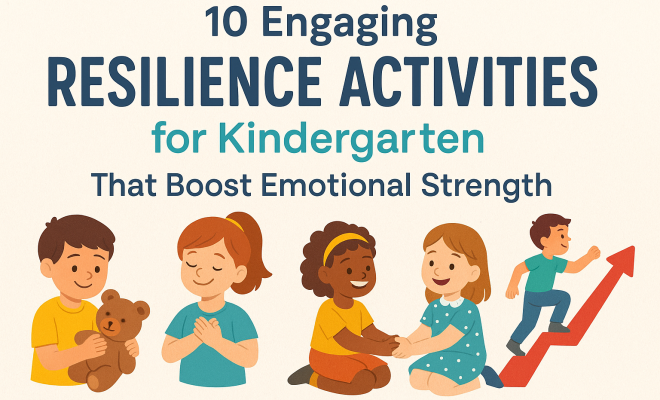
10 Engaging Resilience Activities for Kindergarten That Boost Emotional Strength
“`html
Building resilience in young children is crucial for their emotional development and overall well-being. As children navigate their formative years, the ability to cope with challenges, adapt to change, and bounce back from setbacks becomes increasingly important. In the context of kindergarten, integrating resilience activities for kindergarten can help foster these essential skills in a fun, age-appropriate way. In this article, we will explore ten engaging activities designed for kindergarteners that not only promote resilience but also create a nurturing learning environment.
The Importance of Resilience in Early Childhood
Resilience refers to the capacity to recover quickly from difficulties. In early childhood education, teaching resilience is about equipping children with the tools they need to handle life’s ups and downs. Research shows that children who develop resilience are better equipped to face challenges throughout their lives, leading to improved mental health, stronger relationships, and a greater sense of well-being.
According to the American Psychological Association, resilience can be nurtured through supportive relationships and positive experiences, which are abundant in the kindergarten setting. By actively engaging in resilience activities, children can learn to recognize their feelings, manage emotions, and develop problem-solving skills.
1. The Emotion Wheel
One effective way to help children identify and understand their emotions is through the use of an emotion wheel. This visual tool can be tailored to suit young learners, featuring a variety of facial expressions and corresponding emotions.
To conduct this activity, gather your students in a circle and present the emotion wheel. Ask each child to choose an emotion they’ve experienced during the day and describe a situation that triggered that feeling. This encourages children to articulate their feelings, fostering emotional intelligence and social awareness.
2. Storytime with a Twist
Reading stories that depict characters facing challenges allows children to relate to the narrative and understand the concept of resilience. Choose books that illustrate characters overcoming obstacles, such as The Little Engine That Could or Giraffes Can’t Dance.
After reading, engage the children by discussing the characters’ emotions and the strategies they used to solve their problems. Ask questions like, “How do you think the character felt? What could they have done differently?” This activity not only encourages critical thinking but also helps children recognize that everyone faces challenges.
3. The Resilience Garden
Creating a resilience garden can serve as a powerful metaphor for growth and strength. In this activity, children plant seeds in pots or a garden bed, symbolizing their potential for resilience. As they care for their plants, they learn about nurturing and patience.
You can integrate discussions about resilience by asking questions such as, “What do plants need to grow strong?” and “How do we keep our garden healthy?” This not only reinforces the concept of resilience but also teaches responsibility and teamwork.
4. Problem-Solving Scenarios
Role-playing problem-solving scenarios is an engaging way to help kindergarteners practice their resilience skills. Present age-appropriate challenges, such as sharing toys or dealing with a friend’s feelings.
In groups, let children role-play different outcomes and discuss how each character might feel in each scenario. This not only enhances their empathy but also encourages creative thinking in resolving conflicts. Additionally, this activity fosters collaboration, as they work together to find solutions.
5. The Gratitude Jar
Developing a sense of gratitude can significantly contribute to resilience. A gratitude jar allows children to focus on what they appreciate in their lives, even during tough times. Provide each child with a jar and colorful pieces of paper. (See: CDC resources for children's mental health.)
Encourage them to write or draw something they are grateful for daily and place it in the jar. Periodically, gather the children to share their entries, reinforcing the positive aspects of their lives and building a supportive community.
6. Mindfulness Moments
Teaching mindfulness can be an effective way to enhance resilience. Mindfulness activities help children focus on the present moment and manage stress. Simple practices such as deep breathing, stretching, or guided visualization can be incorporated into the daily routine.
For instance, conduct a breathing exercise where children take deep breaths while pretending to blow up a balloon. This not only calms their minds but also empowers them to handle difficult emotions when they arise.
7. The Failure Wall
Creating a failure wall allows kindergarteners to see that making mistakes is a natural part of learning. Provide a space in the classroom for children to share their mistakes or failures without judgment, followed by a discussion about what they learned from the experience.
Encourage them to think of how they might approach the situation differently next time. This activity promotes a growth mindset, helping children understand that setbacks can lead to personal growth and improved resilience.
8. Team-Building Games
Engaging in team-building games can foster collaboration and resilience among children. Activities like building a tower with blocks or completing an obstacle course require teamwork and problem-solving.
During these activities, emphasize the importance of encouraging one another and celebrating successes, no matter how small. This collective effort reinforces the idea that overcoming challenges together builds strength and resilience.
9. Journaling for Reflection
Introducing journaling as a reflective practice can help kindergarteners develop emotional awareness. Provide them with age-appropriate journals where they can draw or write about their feelings, experiences, or challenges.
Encourage them to reflect on what they learned from difficult situations and how they can apply those lessons in the future. This habit can promote emotional regulation and enhance resilience over time.
10. Celebrating Resilience
Finally, regularly celebrating resilience within the classroom can reinforce its importance. Create an end-of-week ritual where children share their achievements, no matter how big or small. This could be as simple as recognizing a child who helped a friend or worked hard on a project.
By highlighting these moments, you create a culture that values resilience and encourages children to appreciate their own strengths and the strengths of their peers.
Creating Connections: The Role of Caregivers and Educators
As caregivers and educators, fostering resilience in children goes beyond the activities themselves. The relationships you build with your students create a foundation for resilience. When children feel safe and supported, they’re more likely to take risks and embrace challenges.
Open communication is key. Encourage children to speak about their feelings and experiences openly. This can be done during circle time or through individual check-ins. Acknowledging their feelings helps them feel understood and valued, which is vital for developing resilience. (See: NIH on teaching resilience.)
Statistics on Resilience and Childhood Development
Understanding the impact of resilience on childhood development can reinforce the importance of integrating resilience activities into the kindergarten curriculum. Studies have shown that:
- Children with high resilience scores tend to have better social skills and academic performance.
- A study by the Harvard Graduate School of Education found that children who demonstrate resilience are more likely to succeed in school and later in life.
- Research indicates that teaching resilience can reduce the risk of developing behavioral and emotional issues.
Expert Perspectives on Resilience in Education
Experts in child psychology and education frequently emphasize the importance of resilience. Dr. Kenneth Ginsburg, a pediatrician and advocate for youth resilience, notes, “Resilience is not a trait that children either have or do not have. It’s a set of skills that can be taught.”
Furthermore, educational psychologist Dr. Carol Dweck highlights the significance of a growth mindset, stating, “When students believe they can grow and improve, they are more likely to take on challenges and persist in the face of setbacks.” Integrating resilience activities aligns with these principles, providing children with the tools to develop a positive outlook toward challenges.
Additional Activities to Promote Resilience
In addition to the ten activities mentioned earlier, there are many more ways to promote resilience in kindergarteners. Here are a few extra activities that can be easily implemented:
11. Creative Arts and Expression
Encouraging creative expression through art can be a powerful way for children to process feelings and build resilience. Set aside time for painting, drawing, or crafting where children can express their emotions visually. Discussing their artwork can also lead to meaningful conversations about challenges and successes.
12. Physical Challenges
Incorporating physical activities that present challenges, such as climbing or balancing, can help children develop resilience. By encouraging them to try new activities and supporting them as they overcome physical obstacles, you cultivate their ability to face challenges in all areas of life.
13. Collaborative Storytelling
Invite children to create a story together, where each child contributes a sentence or idea. This exercise promotes teamwork and teaches children to listen to one another while considering different perspectives. The end result is often a unique and sometimes humorous story, underscoring the value of collaboration and creativity in problem-solving.
Frequently Asked Questions about Resilience Activities for Kindergarten
What age is appropriate to start teaching resilience?
Teaching resilience can begin as early as preschool. Young children are capable of learning the basics of emotional regulation and problem-solving skills, making kindergarten a perfect time to introduce structured resilience activities.
How can I include parents in resilience-building activities?
Engaging parents in resilience-building activities can be done through workshops, newsletters, or take-home assignments. Providing parents with tips on how to reinforce resilience at home, such as encouraging risk-taking or discussing emotions, can help create a supportive environment for children.
What are some signs that a child may need help building resilience?
Signs that a child may need additional support in building resilience can include excessive worry, difficulty coping with changes or disappointments, and challenges in social interactions. If you notice these signs, it may be beneficial to work with parents and possibly seek guidance from a school counselor or child psychologist.
Can resilience be measured?
While resilience can be challenging to quantify, educators often look for indicators such as a child’s ability to cope with stress, their willingness to try new things, and their social interactions. Observations and conversations can provide valuable insights into a child’s resilience.
How do resilience activities fit into the overall curriculum?
Resilience activities can be seamlessly integrated into various subject areas, including social studies, language arts, and even science. For instance, discussing community helpers and their challenges can foster resilience while enhancing social studies lessons. The key is to ensure these activities align with learning objectives and support emotional development.
Creating a Supportive Environment for Resilience
It’s essential to understand that a child’s environment plays a significant role in building resilience. A supportive classroom atmosphere encourages children to express their emotions and take on challenges. This can be achieved through consistent routines, positive reinforcement, and structured feedback. When children know what to expect, they feel more secure, enabling them to take risks and confront difficulties with confidence.
The Role of Play in Developing Resilience
Play is a crucial part of childhood that naturally fosters resilience. Through play, children learn to navigate social dynamics, experience the consequences of their actions, and develop problem-solving skills. Activities such as cooperative games, pretend play, and structured group activities allow children to practice these skills in a safe environment. Encouraging free play, where children can explore their interests and face challenges of their choosing, is equally important in helping them build resilience.
Building Resilience through Community Involvement
Involving children in community activities can significantly enhance their resilience. Experiences such as visiting local parks, participating in community service, or collaborating with local organizations can broaden their perspectives and help them understand their role within a community. These activities teach children about empathy, teamwork, and the importance of supporting others, all of which contribute to a resilient mindset.
Statistics on Resilience in Childhood Development
Research emphasizes the critical role of resilience in childhood development. For instance, a study from the American Academy of Pediatrics indicated that children who engage in resilience-building activities show a 50% reduction in anxiety and depression symptoms. Furthermore, longitudinal studies suggest that resilient children are more likely to be academically successful and maintain healthy relationships into adulthood.
Expert Insights on Encouraging Resilience
When it comes to fostering resilience, many experts agree on the importance of a balanced approach. Psychologist Dr. Lisa Damour advises that educators should provide opportunities for children to experience manageable challenges. She states, “It’s not about protecting children from difficulties, but rather guiding them through the process of overcoming them.” This perspective reinforces the idea that resilience is built through experience and support.
Final Thoughts on Resilience Activities for Kindergarten
Incorporating resilience activities for kindergarten is a vital step toward fostering emotional well-being in young learners. As educators and caregivers, you play a critical role in shaping how children perceive challenges and setbacks. By engaging them in these activities, you help them build the resilience necessary for lifelong success.
Ultimately, teaching resilience is about creating a supportive environment where children feel safe to express their emotions and explore solutions. Through the activities outlined in this article, you can inspire a sense of strength and adaptability in your kindergarten classroom, ensuring that your students are well-equipped to face the future with confidence.
“`
Trending Now
Frequently Asked Questions
What are some resilience activities for kindergarten?
Resilience activities for kindergarten include using tools like the emotion wheel, storytelling, role-playing, and collaborative games. These activities help children identify emotions, manage challenges, and build social skills, fostering a supportive learning environment.
Why is resilience important in early childhood?
Resilience is crucial in early childhood as it equips children with the ability to cope with challenges and adapt to changes. Developing resilience leads to improved mental health, stronger relationships, and a greater sense of well-being throughout their lives.
How can teachers promote emotional resilience in children?
Teachers can promote emotional resilience in children by integrating engaging activities like the emotion wheel, encouraging open discussions about feelings, and fostering supportive relationships. These approaches help children learn to recognize and manage their emotions effectively.
What is the emotion wheel and how is it used?
The emotion wheel is a visual tool that helps children identify and articulate their emotions. In a classroom setting, teachers can use it by having students select an emotion and share related experiences, promoting emotional intelligence and social awareness.
What skills do resilience activities teach children?
Resilience activities teach children essential skills such as emotional recognition, problem-solving, and social interaction. By engaging in these activities, children learn to manage their emotions and develop coping strategies for future challenges.
Have you experienced this yourself? We’d love to hear your story in the comments.