Boost EI: Teachers’ 7 Conflict Resolution Strategies
“`html
Understanding Emotional Intelligence in Education
Emotional intelligence (EI) has become a buzzword in educational circles, often cited as a cornerstone for effective teaching and learning environments. But what does it really mean? At its core, emotional intelligence refers to the ability to recognize, understand, and manage our emotions as well as the emotions of others. In education, fostering emotional intelligence is essential as it not only enhances individual well-being but also contributes to a positive classroom atmosphere.
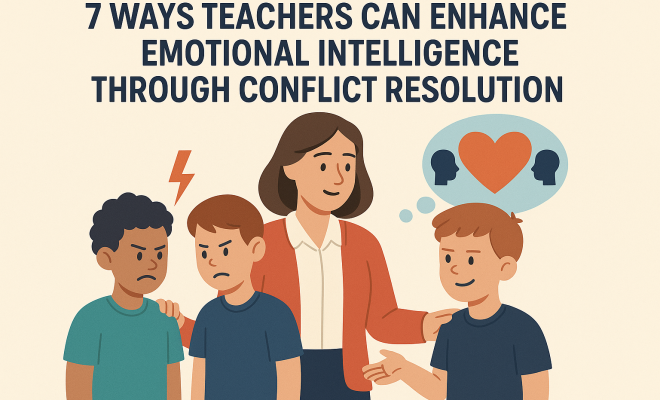
Teachers play a crucial role in developing EI among students, particularly through conflict resolution strategies. When conflicts arise, how they are managed can provide valuable opportunities for students to engage with their emotions and learn vital skills for interpersonal relationships. This article explores how teachers can foster emotional intelligence in the classroom by utilizing conflict resolution techniques.
The Importance of Conflict Resolution in Education
Conflict is a natural part of human interaction and can occur in any setting, including educational environments. In schools, conflicts can arise from differing opinions, competition, misunderstandings, or even bullying. While many educators might view conflict as a disruption, it can also serve as a catalyst for learning.
Conflict resolution is an essential skill that involves recognizing the problem, understanding the perspectives of all parties involved, and working collaboratively to find a solution. When teachers effectively guide students through these processes, they not only help resolve the immediate issue but also equip students with the tools they need to handle future conflicts independently. This promotes emotional intelligence, as students learn to navigate their emotions while empathizing with others.
Creating a Safe Environment for Conflict Resolution
One of the first steps in fostering emotional intelligence in education through conflict resolution is to create a safe and supportive classroom environment. Students must feel comfortable expressing their thoughts and emotions, which can be achieved through various strategies:
- Establish Ground Rules: Clearly outline acceptable behaviors during discussions and conflicts. Ensure students understand the importance of respect and active listening.
- Encourage Open Communication: Foster an atmosphere where students feel free to share their feelings without fear of judgment. This can be achieved through regular class discussions and activities designed to promote emotional sharing.
- Model Emotional Intelligence: Teachers should demonstrate their own emotional intelligence by handling conflicts calmly and constructively. This sets a powerful example for students to follow.
By creating a foundation of safety, teachers enable students to approach conflicts as opportunities for growth and learning rather than sources of anxiety or fear.
Teaching Empathy Through Role-Playing
Empathy is a fundamental component of emotional intelligence, and role-playing can be an effective method for teaching this skill. In conflict resolution scenarios, role-playing allows students to step into others’ shoes and understand different perspectives. Here’s how teachers can implement this technique:
- Design Scenarios: Create realistic conflict situations that students might encounter, such as disagreements over group projects or feelings of exclusion during lunch.
- Assign Roles: Have students take on different roles in the scenarios. This could include the parties involved in the conflict, bystanders, or even teachers.
- Debrief: After the role-play, conduct a discussion about the feelings experienced by each character. Ask guiding questions to help students reflect on how they would feel in those situations and the importance of empathy in resolving conflicts.
Role-playing not only enhances emotional intelligence but also builds a sense of community in the classroom as students learn to trust and support each other.
Encouraging Self-Reflection
Self-reflection is a significant part of developing emotional intelligence. When students take the time to think about their feelings and actions, they become more aware of their emotional states and how they affect others. Teachers can promote self-reflection in several ways:
- Journaling: Encourage students to keep journals where they can express their emotions and reflect on conflicts they’ve experienced, whether personal or in the classroom.
- Guided Reflection Questions: After a conflict resolution session, ask students to respond to questions like “How did I feel during the conflict?” or “What could I have done differently?”
- Class Discussions: Facilitate group discussions where students can share their reflections on conflicts. This creates a platform where they can learn from each other’s experiences.
By encouraging self-reflection, teachers help students build a deeper understanding of their emotional processes and develop greater empathy for others.
Implementing Conflict Resolution Strategies
Teachers can employ various conflict resolution strategies to cultivate emotional intelligence in students. Here are some practical methods: (See: Emotional and Mental Health Resources.)
- The Interest-Based Relational Approach: Focus on building relationships rather than assigning blame. This approach emphasizes understanding each party’s interests and finding common ground.
- Active Listening: Teach students to listen actively during conflicts, ensuring that they truly understand the other person’s perspective before responding. This can include paraphrasing what the other person has said to confirm understanding.
- Mediation Techniques: Train students in basic mediation skills, allowing them to facilitate discussions between conflicting parties. This empowers them and reinforces the importance of collaborative solutions.
By incorporating these strategies into the classroom, teachers can help students learn to manage their emotions effectively and resolve conflicts in a constructive manner.
Integrating Emotional Intelligence into the Curriculum
Embedding emotional intelligence into the curriculum can significantly enhance its impact on students. Teachers can infuse EI concepts across subjects, providing a more holistic approach to education:
- Literature Studies: Use literature to explore complex emotional themes and character conflicts. Discuss how characters handle their emotions and the repercussions of their choices.
- Social Studies: Examine historical conflicts and the emotional dynamics involved. This can lead to conversations about empathy, decision-making, and the importance of understanding diverse perspectives.
- Physical Education: During team sports or games, emphasize the importance of teamwork, communication, and conflict resolution skills. Encourage students to reflect on their emotions during competitions.
By integrating emotional intelligence into various disciplines, teachers can create a richer learning experience that prepares students for real-world interactions.
Assessing Emotional Intelligence Development
Measuring the development of emotional intelligence in students can be challenging. However, there are several methods teachers can use to assess progress:
- Peer Feedback: Encourage students to provide feedback to one another on their emotional intelligence skills, such as empathy and active listening.
- Self-Assessments: Create self-assessment tools where students can evaluate their emotional intelligence skills and set personal goals for improvement.
- Behavioral Observations: Observe students during conflicts and interactions, taking note of their emotional responses and conflict resolution skills.
These assessments not only provide insight into students’ emotional intelligence but also help teachers adjust their approaches to meet individual needs.
The Current Relevance of Emotional Intelligence in Education
In today’s fast-paced and often stressful educational landscape, emotional intelligence has never been more relevant. As schools grapple with challenges such as bullying, mental health issues, and diverse student populations, fostering emotional intelligence through conflict resolution can create a more harmonious school environment.
Moreover, employers increasingly value emotional intelligence in the workforce. By equipping students with these skills, educators prepare them for success in their careers and personal lives. Emotional intelligence in education is not just an academic focus; it’s a lifelong asset.
Final Thoughts
Teachers have a profound opportunity to foster emotional intelligence in education through conflict resolution strategies. By creating safe environments, encouraging empathy, implementing effective conflict resolution techniques, and integrating emotional intelligence into the curriculum, educators can empower students to navigate their social worlds with confidence and compassion.
In a time where emotional well-being is paramount, the role of teachers in shaping emotionally intelligent individuals is more critical than ever. By investing in emotional intelligence, we cultivate a future generation that not only excels academically but also connects deeply with themselves and others.
New Perspectives on Emotional Intelligence in Education
While emotional intelligence is increasingly recognized in education, there are still various dimensions that deserve attention. For instance, how does cultural background influence emotional intelligence development? Studies show that children from collectivist cultures may exhibit different emotional responses compared to those from individualistic cultures. Understanding these differences can significantly enhance how teachers approach emotional intelligence in diverse classrooms.
Furthermore, the role of technology in emotional intelligence cannot be overlooked. With the rise of social media and digital communication, students are often engaging with their peers online. This new environment poses unique challenges for emotional intelligence, such as the potential for miscommunication or cyberbullying. Teachers can explore how digital interactions affect emotional intelligence and guide students in navigating these new social landscapes effectively.
Statistics on Emotional Intelligence in Education
Research supports the positive impact of emotional intelligence on academic performance and social interactions. For instance, a study published in the Journal of Educational Psychology found that students with higher emotional intelligence tend to perform better academically. They are also more likely to engage in positive social behaviors, such as cooperation and empathy.
According to a report from the Collaborative for Academic, Social, and Emotional Learning (CASEL), schools that integrate social and emotional learning (SEL) into their curriculum see an average increase of 11 percentile points in academic achievement. These statistics strongly indicate that emotional intelligence is not just a soft skill but a critical factor in educational success. (See: Mental Health and Emotional Intelligence.)
Expert Insights on Emotional Intelligence
Experts in education emphasize the necessity of fostering emotional intelligence. Dr. Daniel Goleman, a psychologist and author of “Emotional Intelligence,” highlights that emotional intelligence can be cultivated through targeted interventions. According to him, integrating emotional learning into everyday teaching practices can significantly improve student outcomes.
Additionally, educational psychologists advocate for teacher training in emotional intelligence. They argue that when teachers understand their emotions and those of their students, they can create more effective learning environments. Training programs focused on emotional intelligence can equip educators with the tools needed to support their students effectively.
The Benefits of Emotional Intelligence for Students
Emotional intelligence has far-reaching benefits that extend beyond the classroom. Students who develop strong emotional intelligence skills are often better equipped to handle stress, manage their emotions, and interact positively with peers. These capabilities lead to improved mental health outcomes and lower instances of anxiety and depression.
Additionally, emotional intelligence fosters resilience. Students who can understand and manage their emotions are more likely to bounce back from setbacks and challenges. This resilience is crucial not only for academic success but for navigating life’s ups and downs.
Practical Activities to Enhance Emotional Intelligence
Teachers looking to foster emotional intelligence can implement specific activities in their classroom. Here are some practical ideas:
- Emotion Charades: Have students act out different emotions without using words. This activity encourages them to recognize and express their feelings.
- Feelings Wheel: Create a feelings wheel that students can reference to articulate their emotions better. This can be particularly helpful in discussions about conflict resolution.
- Mindfulness Exercises: Introduce mindfulness practices, such as deep breathing or meditation, to help students become more aware of their emotions and reduce stress.
These activities can make emotional intelligence development engaging and interactive, ensuring students learn to recognize and manage their emotions effectively.
Frequently Asked Questions
1. What is emotional intelligence (EI) in education?
Emotional intelligence in education refers to the ability of students and educators to recognize, understand, and manage their emotions and the emotions of others. It emphasizes skills such as empathy, self-regulation, and interpersonal skills, which are essential for a positive learning environment.
2. Why is emotional intelligence important for students?
Emotional intelligence is vital for students as it contributes to better academic performance, improved relationships with peers and teachers, and enhanced mental well-being. It equips students with the skills they need to navigate social interactions and handle challenges effectively.
3. How can teachers promote emotional intelligence in the classroom?
Teachers can promote emotional intelligence by creating a safe and supportive environment, integrating emotional learning into the curriculum, encouraging self-reflection, and using conflict resolution strategies. Activities like role-playing, journaling, and group discussions can also enhance emotional intelligence.
4. Can emotional intelligence be taught?
Yes, emotional intelligence can be taught and developed through specific strategies and interventions. Programs focusing on social-emotional learning (SEL) have shown success in enhancing students’ emotional intelligence.
5. What role does emotional intelligence play in a student’s future career?
Emotional intelligence plays a significant role in a student’s future career. Employers increasingly seek individuals with strong emotional intelligence skills, as they contribute to effective teamwork, leadership, and conflict resolution in the workplace.
6. Are there any assessments for measuring emotional intelligence?
Yes, several assessments measure emotional intelligence, including self-report questionnaires and peer evaluations. Tools like the Emotional Quotient Inventory (EQ-i) or the Mayer-Salovey-Caruso Emotional Intelligence Test (MSCEIT) are commonly used in educational settings.
7. How does emotional intelligence impact mental health?
Emotional intelligence can significantly impact mental health by helping individuals manage stress, regulate their emotions, and develop coping strategies. Higher emotional intelligence is associated with lower levels of anxiety and depression.
Challenges in Implementing Emotional Intelligence Programs
While integrating emotional intelligence into the education system has many benefits, there are also challenges educators may face. One major obstacle is the lack of training for teachers on how to effectively teach emotional intelligence. Many educators may not feel equipped to manage emotional learning in the classroom, leading to inconsistent implementation of these programs.
Additionally, some school districts may prioritize traditional academic subjects over social-emotional learning initiatives. This can result in limited funding and resources dedicated to emotional intelligence programs, making it difficult for schools to integrate these vital skills into the curriculum.
Another challenge is the varying levels of emotional intelligence among students. Students come from different backgrounds and experiences, which can influence their emotional development. Teachers need to be adaptable and sensitive to these differences to effectively teach and promote emotional intelligence across a diverse classroom.
Future Directions for Emotional Intelligence in Education
Looking ahead, the future of emotional intelligence in education appears promising yet requires ongoing commitment. Schools are beginning to recognize the importance of emotional intelligence and its role in fostering a well-rounded education. As more research highlights its benefits, it’s likely that emotional intelligence will become a more central focus in teacher training programs.
Additionally, the incorporation of technology can enhance emotional intelligence training. Online platforms could provide interactive resources and tools for students and teachers, making emotional learning more engaging. Virtual reality and simulations might also offer innovative ways for students to practice emotional intelligence skills in real-time scenarios.
Ultimately, as the education landscape evolves, a stronger emphasis on emotional intelligence will not only enhance student learning but also prepare them for the complexities of modern life. By equipping students with these vital skills, educators can help cultivate a generation that is emotionally aware, resilient, and capable of thriving in diverse environments.
“`
Trending Now
Frequently Asked Questions
How can teachers improve emotional intelligence in students?
Teachers can enhance emotional intelligence in students by implementing conflict resolution strategies. By guiding students through conflicts, they help them recognize and manage their emotions, understand different perspectives, and develop empathy, ultimately fostering a supportive classroom environment.
What is the role of conflict resolution in emotional intelligence?
Conflict resolution plays a vital role in emotional intelligence as it provides opportunities for students to engage with their emotions and learn vital interpersonal skills. By effectively managing conflicts, students develop empathy and the ability to navigate their emotions, which are key components of emotional intelligence.
Why is emotional intelligence important in education?
Emotional intelligence is crucial in education because it enhances individual well-being and contributes to a positive classroom atmosphere. It helps students manage their emotions, build relationships, and resolve conflicts, which are essential skills for academic and personal success.
What strategies can teachers use for conflict resolution?
Teachers can use several strategies for conflict resolution, including facilitating open discussions, encouraging active listening, guiding students to express their feelings, and helping them find collaborative solutions. These strategies not only resolve conflicts but also promote emotional intelligence among students.
How does a safe environment impact conflict resolution?
Creating a safe environment is essential for effective conflict resolution. When students feel secure and respected, they are more likely to express their emotions and engage in constructive dialogue. This fosters a culture of empathy and understanding, which enhances emotional intelligence in the classroom.
Have you experienced this yourself? We’d love to hear your story in the comments.