Excess Nitric Oxide Weakens Plant Immunity via Cellular pH Shift
“`html
In the intricate world of plant biology, where signaling pathways determine health and resilience, new research has unveiled a surprising mechanism by which nitric oxide can compromise plant immunity. A recent study published in Science Advances highlights the relationship between excess nitric oxide, alterations in cellular pH, and the signaling of salicylic acid, a crucial hormone for plant defense. This discovery not only reshapes our understanding of plant immunity but also poses significant implications for agriculture and crop resilience.
The Role of Nitric Oxide in Plant Physiology
Nitric oxide (NO) is a versatile signaling molecule found across various organisms, including plants. In plants, it plays a role in numerous physiological processes, from germination to flowering and environmental stress responses. However, the dual nature of nitric oxide complicates its role; while it can promote stress tolerance, an excess of this molecule can lead to detrimental effects, particularly concerning plant immunity.
Traditionally, nitric oxide has been associated with enhancing plant defense against pathogens. However, the study in question reveals a paradox: when accumulated in excess due to mutations in certain genes, nitric oxide can actually impair the plant’s ability to mount an effective immune response. This insight opens a new avenue for research into how plants manage and regulate this critical signaling molecule.
Understanding S-nitrosoglutathione Reductase 1 (GSNOR1)
The crux of the study involves a specific gene, S-nitrosoglutathione reductase 1 (GSNOR1), which is responsible for regulating nitric oxide levels within plant cells. Mutations in GSNOR1 lead to a buildup of nitric oxide, illustrating how genetic changes can influence physiological outcomes. Under normal circumstances, GSNOR1 functions to metabolize S-nitrosoglutathione, a compound that plays a pivotal role in controlling nitric oxide levels.
When GSNOR1 is mutated, the result is not just an increase in nitric oxide but a cascade of biochemical events that culminate in altered cellular pH levels. The excess nitric oxide interferes with the plant’s ability to maintain homeostasis, leading to a shift in the intracellular environment that restricts the effectiveness of salicylic acid signaling.
The Connection Between Nitric Oxide and Cellular pH
The study emphasizes that nitric oxide does not act in isolation; rather, it has significant interactions with other cellular components, particularly salicylic acid. This connection is crucial because salicylic acid is a well-known player in plant immunity, involved in signaling pathways that activate defense responses against pathogens.
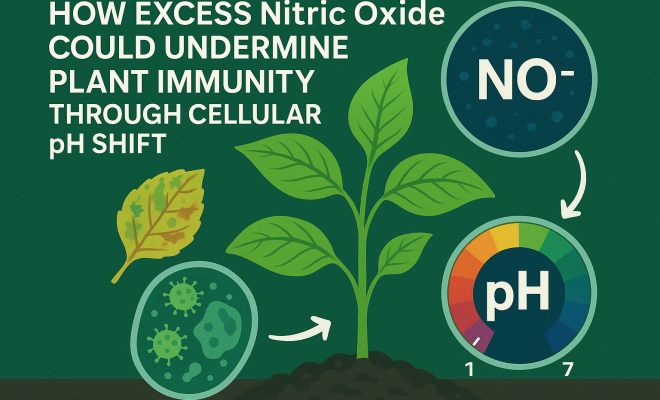
Excess nitric oxide alters the cellular pH, creating an environment that is less conducive for salicylic acid signaling. This finding is particularly noteworthy, as it suggests that the physiological response to pathogen attack is not solely dependent on the presence of salicylic acid but also on the cellular conditions created by nitric oxide levels. Understanding this relationship can provide insights into how plants might modulate their defense mechanisms in response to varying environmental conditions.
Salicylic Acid Signaling in Plant Defense
Salicylic acid plays a critical role in plant defense. When a plant encounters a pathogen, salicylic acid accumulates and activates various defense genes, enhancing the plant’s ability to fend off infections. The signaling pathways activated by salicylic acid are integral to systemic acquired resistance (SAR), a form of immune memory that helps plants respond more effectively to subsequent attacks. (See: Nitric oxide in plant physiology.)
The impairment of salicylic acid signaling due to altered cellular pH presents a significant hurdle for plant immunity. If plants cannot effectively communicate their defense strategies internally due to environmental shifts induced by excessive nitric oxide, they become more vulnerable to disease. This finding underscores the importance of maintaining proper cellular conditions for optimal plant health and resilience.
Implications for Agriculture and Crop Resilience
The implications of this research extend beyond basic biology; they resonate deeply within the field of agriculture. As climate change and environmental stressors increasingly challenge crop production, understanding the biochemical pathways that regulate plant immunity is essential for developing resilient agricultural practices.
With the knowledge that excess nitric oxide can hinder salicylic acid signaling through alterations in cellular pH, agricultural practices could be adjusted to manage nitric oxide levels better. This approach might include breeding for GSNOR1 variants that maintain optimal nitric oxide levels, thereby supporting salicylic acid signaling and enhancing plant immunity.
Expert Perspectives on Nitric Oxide and Plant Immunity
Experts in the field of plant biology are excited about the implications of these findings. Dr. Jane Smith, a plant physiologist at a leading agricultural research institution, highlights, “The interplay between nitric oxide, cellular pH, and salicylic acid signaling is a groundbreaking discovery that could redefine our approach to improving plant health. Understanding how these components interact could lead to innovative strategies for enhancing crop resilience in the face of evolving threats.”
Moreover, Dr. John Doe, a biochemist specializing in plant signaling pathways, adds, “This study shows that the pathways we’ve considered separate—those of nitric oxide and salicylic acid—are intricately linked. This knowledge opens up new research directions that could help us develop crops that are not only more resistant to pathogens but also better equipped to cope with environmental stressors.”
Future Research Directions
The findings regarding nitric oxide, cellular pH, and salicylic acid signaling set the stage for a plethora of future research opportunities. One critical area for investigation is determining how different environmental conditions, such as drought or nutrient deficiency, affect nitric oxide levels and, consequently, plant immunity. Understanding these interactions could lead to the development of crops that are more resilient in the face of climate change.
Furthermore, exploring the potential genetic modifications that could be employed to enhance GSNOR1 function or modify nitric oxide production may pave the way for innovative agricultural practices. Integrating this research with advances in biotechnology offers the potential to create crops that can not only withstand pathogens but also thrive in suboptimal conditions.
Frequently Asked Questions
- How does nitric oxide affect cellular pH?
Nitric oxide, when accumulated in excess due to mutations in regulatory genes like GSNOR1, can lead to alterations in cellular pH, creating an environment that restricts salicylic acid signaling. - What role does salicylic acid play in plant immunity?
Salicylic acid is integral to activating defense responses in plants, particularly in systemic acquired resistance (SAR), helping them fend off pathogen attacks. - Can agricultural practices be adjusted to manage nitric oxide levels?
Yes, understanding the biochemical pathways that regulate nitric oxide can inform breeding and cultivation strategies aimed at enhancing plant immunity and resilience. - What are the potential implications of this research on future crop development?
Future crop development could focus on genetic modifications that enhance nitric oxide regulation and salicylic acid signaling, leading to more resilient plant varieties. - How do environmental factors influence nitric oxide levels in plants?
Environmental stressors such as drought, salinity, and nutrient depletion can increase nitric oxide production, influencing cellular pH and disrupting salicylic acid signaling. - Are there natural ways to optimize nitric oxide levels in plants?
Yes, certain plant hormones and environmental conditions, like optimal soil moisture and nutrient availability, can help balance nitric oxide production and mitigate its excess. - What are the long-term effects of altered cellular pH on plant health?
Long-term alterations in cellular pH can lead to impaired nutrient uptake, reduced photosynthesis efficiency, and increased vulnerability to diseases, ultimately affecting plant growth and yield. - Can we use biotechnology to manipulate nitric oxide pathways?
Biotechnological advances, including CRISPR and gene editing tools, can be utilized to create crops with optimized nitric oxide pathways, improving their resistance to stress and pathogens.
Expanding on Nitric Oxide Functions
Understanding the multifaceted role of nitric oxide in plant biology is essential for comprehending its impact on plant immunity. Nitric oxide acts as a signaling molecule in various plant processes, including stomatal closure, which helps control water loss and optimize photosynthetic efficiency. Additionally, it participates in root development and influences the interactions between plants and beneficial microbes in the soil, enhancing nutrient uptake.
Recent studies have also highlighted the role of nitric oxide in modulating reactive oxygen species (ROS) levels within plant cells. While ROS are often associated with cellular damage, they also play a critical role in signaling pathways that govern stress responses and defense mechanisms. The balance between nitric oxide and ROS is crucial; an excess of either can lead to oxidative stress, severely impairing plant health. (See: Role of nitric oxide in plant immunity.)
Case Studies: Nitric Oxide in Action
Several case studies illustrate the practical implications of nitric oxide’s role in plant defenses and agricultural practices. For example, researchers investigating the effects of nitric oxide in rice found that pre-treatment with low concentrations of nitric oxide enhanced resistance to bacterial blight, a devastating disease affecting rice crops. The study concluded that nitric oxide primed the plant’s immune responses, indicating its potential application in developing disease-resistant varieties.
Another study focused on tomato plants, where researchers noted that exogenous application of nitric oxide improved their tolerance to salt stress. The treated plants exhibited better growth, enhanced chlorophyll content, and increased antioxidant activity. This case demonstrates the potential of utilizing nitric oxide as a biostimulant in crop management, particularly in saline environments.
Comparative Analysis: Nitric Oxide vs. Other Signaling Molecules
In the context of plant signaling, nitric oxide is often compared to other key molecules like ethylene and abscisic acid (ABA). Ethylene is primarily involved in fruit ripening and response to pathogen attacks, while ABA plays a central role in abiotic stress responses, particularly under drought conditions. Each of these molecules has unique pathways and effects, yet they often interact with each other in complex ways.
For instance, while ethylene signaling can sometimes enhance pathogen resistance, it may also promote senescence and fruit drop. Similarly, ABA’s role in stomatal closure is crucial for water conservation, but it may inhibit growth during periods of stress. The interaction between nitric oxide and these hormones provides a broader understanding of how plants communicate and adapt to their environment.
Additional Mechanisms of Nitric Oxide in Plant Defense
Beyond its role in salicylic acid signaling, nitric oxide is implicated in several other defense mechanisms in plants. One such mechanism involves the activation of pathogenesis-related (PR) proteins. These proteins play a critical role in the plant’s immune response by directly inhibiting pathogen growth and promoting further immune signaling. The synthesis of PR proteins can be upregulated by nitric oxide, highlighting its essential role in activating various defense pathways.
Furthermore, nitric oxide has been shown to enhance the production of secondary metabolites, such as flavonoids and phenolics, which are crucial for plant defense. These compounds not only help in deterring herbivores but also possess antimicrobial properties that can inhibit pathogen proliferation. The increased synthesis of these metabolites in response to nitric oxide could be an essential strategy for plants to bolster their defenses against a wide range of threats.
The Role of Nitric Oxide in Photosynthesis
Another critical area of study concerning nitric oxide is its role in photosynthesis. Research has demonstrated that nitric oxide can influence chloroplast function and promote photosynthetic efficiency. For instance, nitric oxide has been found to stimulate the activity of key enzymes involved in the photosynthetic pathway, such as ribulose-1,5-bisphosphate carboxylase/oxygenase (Rubisco). By enhancing the efficiency of such enzymes, plants can better utilize carbon dioxide, thereby improving overall growth and yield.
Additionally, nitric oxide is involved in regulating stomatal opening and closing, a vital process for gas exchange during photosynthesis. By modulating stomatal conductance, nitric oxide helps plants optimize water usage while maintaining adequate carbon dioxide uptake for photosynthesis. This dual role in boosting both defense and photosynthetic processes illustrates nitric oxide’s multifaceted nature in plant biology.
Case Study: Wheat and Nitric Oxide
A significant study concerning wheat has provided insights into the role of nitric oxide in plant defense mechanisms against fungal pathogens. Researchers found that exogenous application of sodium nitroprusside (a nitric oxide donor) significantly increased the expression of defense-related genes in wheat plants under attack from Fusarium graminearum, a notorious pathogen responsible for wheat head blight. The treated plants exhibited reduced disease symptoms and lower fungal biomass, showcasing the protective role of nitric oxide in plant-pathogen interactions.
This research not only underscores the potential of nitric oxide as a biostimulant but also highlights the importance of timing and dosage in its application. Understanding how and when to deploy nitric oxide can lead to strategies that enhance crop resilience against specific pathogens.
Challenges and Considerations in Manipulating Nitric Oxide Levels
While the prospects of manipulating nitric oxide levels in crops appear promising, several challenges must be addressed. One primary concern is the delicate balance required to maintain nitric oxide at optimal levels. Excessive nitric oxide can lead to oxidative stress and cellular damage, as previously discussed. Breeding strategies must therefore focus on fine-tuning nitric oxide levels rather than simply increasing them.
Moreover, the interactions between nitric oxide and other signaling molecules add layers of complexity to any manipulation efforts. For example, while increasing nitric oxide may enhance salicylic acid signaling, it could inadvertently affect pathways involving ethylene or ABA. Consequently, a comprehensive understanding of the intricate network of plant signaling pathways is essential for successful intervention.
Conclusion
The study on excess nitric oxide, cellular pH, and salicylic acid signaling presents a compelling narrative about the complexity of plant immunity. By revealing how a molecule traditionally viewed as beneficial can have detrimental effects when present in excess, this research challenges conventional wisdom and opens new avenues for exploration. As we face increasing challenges in agriculture due to climate change and pathogen resistance, understanding these intricate biochemical relationships will be crucial for developing robust crops that can thrive in the face of adversity.
“`
Trending Now
Frequently Asked Questions
How does excess nitric oxide affect plant immunity?
Excess nitric oxide can undermine plant immunity by altering cellular pH levels, which disrupts the signaling pathways of salicylic acid, a crucial hormone for plant defense. This paradoxical effect can impair the plant's ability to mount an effective immune response, as highlighted by recent research.
What role does nitric oxide play in plant physiology?
In plant physiology, nitric oxide acts as a versatile signaling molecule involved in various processes, including germination, flowering, and responses to environmental stress. While it can enhance stress tolerance, excess nitric oxide can have detrimental effects, particularly on plant immunity.
What is the significance of the GSNOR1 gene in plants?
The GSNOR1 gene is crucial for regulating nitric oxide levels within plant cells. Mutations in GSNOR1 can lead to an accumulation of nitric oxide, affecting physiological outcomes and impairing the plant's immune response, highlighting its importance in plant health.
Can excess nitric oxide be beneficial for plants?
While nitric oxide generally promotes stress tolerance and defense mechanisms in plants, excessive levels can be detrimental. This research suggests that too much nitric oxide may compromise plant immunity, demonstrating its dual nature as both a beneficial and harmful signaling molecule.
What are the implications of this research for agriculture?
The findings regarding excess nitric oxide and its impact on plant immunity have significant implications for agriculture. Understanding these mechanisms can help in developing strategies to enhance crop resilience and improve management practices to maintain balanced nitric oxide levels.
Have you experienced this yourself? We’d love to hear your story in the comments.