Jupiter’s Moons: 101 Celestial Wonders That Will Astound You
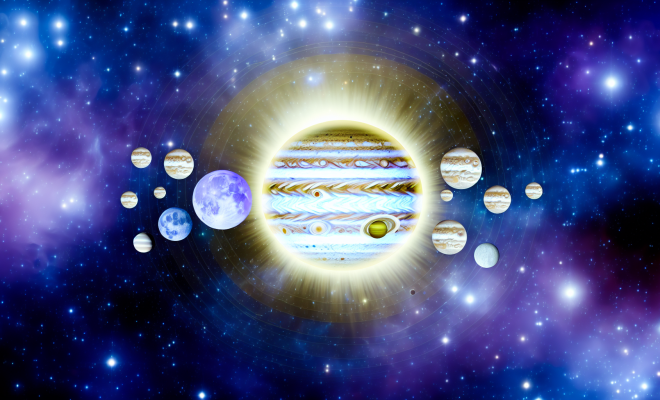
As of March 2026, Jupiter has officially been recognized to host a staggering 101 moons by the International Astronomical Union. This significant increase from previous counts of 80 to 95 highlights the complex and ever-expanding nature of the gas giant’s intricate system of moons, rings, and asteroids. The rapid discovery of these celestial bodies underscores our ongoing exploration and understanding of the solar system’s largest planet.
The Growing Family of Jupiter Moons
The latest findings from NASA and astronomers at the Jet Propulsion Laboratory (JPL) reveal that Jupiter’s moon count is not only increasing, but its diversity is becoming more apparent. Each new moon discovered adds layers to the rich narrative of one of the most fascinating planetary systems in our solar system.
Understanding the Discovery Process
With advancements in technology and continuous observation efforts, astronomers have been able to spot smaller, irregular satellites that have been captured by Jupiter’s immense gravitational pull. The process involves extensive monitoring of Jupiter’s surroundings and utilizing sophisticated telescopes capable of detecting distant and dim objects.
- Observational Techniques: Enhanced imaging technology plays a crucial role in identifying these moons. Astronomers utilize both ground-based and space-based telescopes that can detect the faint light reflected by these objects.
- Cataloging and Validation: Once potential moons are identified, they undergo a rigorous validation process before being officially recognized by the International Astronomical Union.
- Public Interest: Each new discovery generates excitement among the public, prompting discussions and debates about potential habitability, geological features, and even the possibility of hidden ocean worlds.
The Intriguing Characteristics of Jupiter’s Moons
Among the 101 moons, a mix of large and small celestial bodies provides insights into the formation and evolution of Jupiter’s moon system. These moons vary widely in size, composition, and characteristics.
Major Moons and Their Mysteries
Jupiter hosts several well-known moons, including:
- Io: Renowned for its volcanic activity, Io is the most geologically active body in the solar system. Its surface is a tapestry of colorful sulfuric and silicate materials.
- Europa: This moon is particularly intriguing due to its smooth, icy surface that scientists believe may conceal a subsurface ocean, leading to speculation about potential habitability.
- Ganymede: The largest moon in the solar system, Ganymede is unique for its magnetic field and potential water beneath its icy crust.
- Callisto: One of the most heavily cratered bodies, Callisto’s ancient surface provides a window into the early solar system.
Smaller Moons and Their Significance
In addition to these major moons, the smaller and irregular moons of Jupiter present unique opportunities for study:
- Small and Irregular Moons: Many of these recently discovered moons are smaller and are often captured asteroids with irregular orbits, providing clues about the interactions between gravitational forces in the vicinity of Jupiter.
- Potential for Future Exploration: Each newly cataloged moon raises questions about their origins and whether they could harbor unique geological or chemical processes.
Impact on Scientific Research
The increase in the number of recognized Jupiter moons signifies more than just a statistic; it represents a wealth of opportunities for scientific research and discovery. Understanding these celestial bodies can lead to breakthroughs in our knowledge of the solar system.
Insights into Planetary Formation
Research on Jupiter’s moons can provide valuable insights into the processes that shaped not only the gas giant itself but also the formation of other celestial bodies throughout the solar system.
- Formation Theories: The characteristics of these moons may offer clues about the materials and conditions present in the early solar system.
- Comparative Planetology: By studying these moons, scientists can draw comparisons with the moons of other gas giants, enhancing our understanding of planetary systems.
The Search for Life
Perhaps one of the most exciting aspects of exploring the Jupiter moons is the ongoing search for extraterrestrial life. Notably, moons like Europa are prime candidates in the hunt for signs of life beyond Earth.
- Subsurface Oceans: The potential for liquid water beneath Europa’s icy surface fuels speculation about the moon’s capacity to support life.
- Astrobiology Research: Missions targeting these moons are planned, focusing on understanding their environments and assessing habitability.
The Role of Technology in Discovering Jupiter’s Moons
Advancements in technology have played a pivotal role in the discovery and exploration of Jupiter’s moons. The combination of enhanced observational techniques and computational models allows astronomers to infer the presence of moons that might have remained undetected in earlier studies.
Modern Telescopes and Observational Tools
Modern telescopes have revolutionized the way we view the cosmos, enabling astronomers to detect faint objects more effectively.
- Space Telescopes: Instruments like the Hubble Space Telescope have provided invaluable data regarding the atmosphere and surface conditions of Jupiter and its moons.
- Ground-based Observatories: Telescopes on Earth, equipped with adaptive optics, allow for clearer images and the ability to observe distant celestial bodies.
Software and Data Analysis
The analysis of astronomical data has benefited significantly from advances in software and data processing capabilities.
- Image Processing: Enhanced image processing techniques help astronomers distinguish between moons and other celestial objects.
- Data Mining: The ability to sift through vast amounts of data has made it easier to identify and confirm new moons and other celestial phenomena.
The Cultural Impact of Jupiter Moons
The discovery of new moons around Jupiter resonates beyond the scientific community, influencing popular culture and societal interest in space exploration.
Public Fascination with Jupiter and Its Moons
The rapid increase in the number of Jupiter moons has sparked widespread fascination, prompting discussions on social media platforms and generating memes that capture the public’s imagination.
- Social Media Buzz: With each announcement of a new moon, users take to social media to express their awe, leading to vibrant discussions about their characteristics and potential.
- Inspiration for Art and Literature: The mysteries of Jupiter’s moons have inspired a plethora of artistic works, from literature to visual arts, reflecting humanity’s enduring curiosity about the cosmos.
Debates on Habitability
As the number of moons increases, so do the debates surrounding their potential for supporting life. The discussions often lead to a broader examination of what constitutes a habitable environment.
- Public Interest in Space Exploration: The possibility of life on moons like Europa has intensified the call for more exploratory missions, capturing public interest and support for space programs.
- Future Missions:** As scientists advocate for missions targeting these intriguing worlds, public interest continues to grow, underscoring the need for sustained investment in space exploration.
The Future of Jupiter Moon Exploration
With the increasing number of Jupiter moons, the future of exploration is looking promising. Several planned missions aim to delve deeper into the mysteries of these celestial bodies.
Missions on the Horizon
Upcoming missions to explore Jupiter and its moons are poised to provide unprecedented insights:
- Europa Clipper: Scheduled for launch in the 2020s, this mission aims to study Europa’s ice shell and subsurface ocean, focusing on its potential for habitability.
- JUICE (JUpiter ICy moons Explorer): Set to launch in the early 2030s, JUICE will explore Ganymede, Callisto, and Europa, aiming to understand the moons’ potential for supporting life.
Advancements in Spacecraft Technology
As technology continues to evolve, the capabilities of spacecraft improve, allowing for more sophisticated exploration of Jupiter’s moons:
- Better Instruments: Upgraded scientific instruments will provide more detailed information regarding the surface and atmospheric conditions of these moons.
- Autonomous Navigation: Future spacecraft may utilize enhanced autonomous navigation systems to conduct more efficient explorations of the complex environments surrounding Jupiter.
The Thrill of Discovery
The discovery of 101 officially recognized Jupiter moons is a remarkable milestone that illustrates the dynamic nature of our solar system. As our technology and understanding of the cosmos evolve, the excitement surrounding each new discovery captures the imagination of people worldwide.
In conclusion, the moons of Jupiter serve as a reminder of the mysteries that still lie beyond our planet. With every new revelation, humanity inches closer to answering fundamental questions about our place in the universe and the potential for life beyond Earth. As we look to the future, the exploration of these celestial wonders continues to inspire generations to dream about the vast possibilities that await us in the cosmos.