AI Citation Help: Why It Could Disqualify Your Science Project
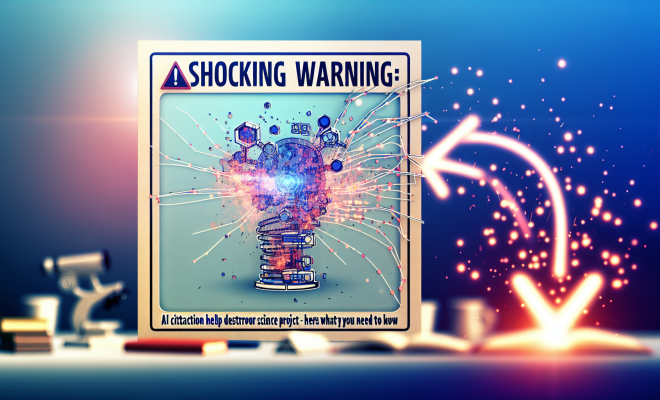
In an era dominated by technology, the reliance on artificial intelligence (AI) for academic tasks has surged dramatically. Tools like ChatGPT provide students with quick access to information and assistance, including AI citation help. However, recent developments have unveiled a troubling trend: science fair judges are disqualifying projects due to the use of questionable, AI-generated citations. This alarming issue raises significant concerns about academic integrity and the trustworthiness of AI-generated content.
The Rise of Ghost References
At recent science fairs, judges have reported a disturbing increase in the number of projects that feature ‘ghost references’—citations that appear legitimate on the surface but are fundamentally flawed. Some projects included titles and journal names that seemed correct, yet the authors listed were incorrect or completely fabricated. These instances highlight a growing problem where students, eager to impress and streamline their research processes, unwittingly rely on AI tools for citation support without proper verification.
What Are Ghost References?
Ghost references refer to citations that do not exist or misrepresent actual research materials. Typically, these are generated by AI systems that can produce plausible-looking information, but upon closer inspection, turn out to be entirely inaccurate. Such citations can mislead students and undermine the credibility of their work. The issue is becoming more prevalent as students increasingly seek AI citation help, often without understanding the importance of verifying sources.
The Impact on Students
The ramifications of using AI-generated citations can be severe. In many cases, students have faced disqualification from competitions due to reliance on these unreliable sources. For instance, in one recent science fair, a teen’s project was disqualified after judges discovered citations that included fictitious research papers. This not only impacted the student’s chances of recognition but also served as a cautionary tale for others. The pressures of academic performance can lead students to take shortcuts, and the consequences can be dire.
Judges Speak Out
Science fair judges have been vocal in their concerns regarding the use of AI for citation help. Many express frustration over the growing trend, warning that the integrity of academic competitions is at risk. The judges emphasize the need for students to engage critically with their research and verify their sources rather than relying on AI-generated content. This sentiment resonates among educators and parents alike, who are becoming increasingly aware of the pitfalls associated with AI tools.
The Dark Side of AI in Education
The growing reliance on AI for educational tasks brings forth a darker side that cannot be ignored. While AI technologies can offer efficiency and convenience, they can also propagate misinformation and exacerbate academic dishonesty. The use of AI citation help is just one aspect of a broader issue where automation in education may lead to a decline in critical thinking skills among students.
AI’s Influence on Learning
As students gravitate towards AI tools to ease their workload, there is a risk that they may not fully engage with the material they are studying. The ease of obtaining information through AI could lead to a superficial understanding of complex topics. Furthermore, a reliance on AI for citations can stifle students’ research skills, leaving them ill-prepared for higher academic pursuits where rigorous research methodologies are essential.
Educators’ Perspectives
Educators are increasingly grappling with the implications of AI in the classroom. As AI tools become more integrated into academic environments, teachers are tasked with finding ways to guide students in using these resources responsibly. Many educators advocate for a balanced approach to AI, emphasizing the importance of verification and critical thinking in conjunction with technological assistance.
Promoting Academic Integrity
To combat the misuse of AI citation help, educators are implementing strategies to promote academic integrity. These strategies include teaching students how to evaluate sources, the importance of proper citation practices, and the dangers of relying solely on AI-generated content. Schools are also encouraging students to engage in discussions about the ethical implications of using AI in their research.
Parent and Student Concerns
The controversies surrounding AI citation help have sparked significant conversations among parents, teachers, and students. Many parents are concerned about the potential for academic dishonesty and the long-term effects of AI reliance on their children’s education. Parents are often left asking how they can best support their children in navigating these new challenges while instilling a sense of responsibility towards their academic work.
Addressing the Fear of Missing Out (FOMO)
The rapid rise of AI tools in education has created a phenomenon known as FOMO—fear of missing out—among students and parents alike. With the knowledge that peers are using AI to enhance their projects, some feel pressured to adopt similar practices without fully grasping the risks involved. This sense of urgency can lead to hasty decisions when it comes to research and citation practices.
The Future of AI in Academia
The integration of AI into educational settings is likely to continue evolving, creating both opportunities and challenges. As technological advancements reshape the landscape of learning, it is essential for students, educators, and parents to remain informed about the implications of these changes. The potential for improving efficiency and access to knowledge must be balanced with the need to uphold academic integrity and foster critical thinking skills.
Finding a Middle Ground
To navigate the complicated relationship between AI and education, stakeholders must find a middle ground that allows for the beneficial use of AI while minimizing risks. This includes developing guidelines for responsible AI use, enhancing educational curricula to address AI-related topics, and fostering an open dialogue about the ethical considerations of AI in academic contexts. By doing so, the educational community can work towards a future where AI serves as a helpful ally rather than a source of misinformation.
Conclusion
The warning from science fair judges about the pitfalls of using AI citation help serves as a crucial reminder for students to engage in their research responsibly. The emergence of ghost references highlights the importance of verifying sources and maintaining academic integrity. As AI technology continues to evolve, it is imperative for students, educators, and parents to work together in ensuring that the benefits of AI do not come at the cost of critical thinking and ethical scholarship.
In an increasingly complex academic landscape, understanding the limitations of AI tools is vital. As this dialogue continues, the educational community has an opportunity to harness the power of AI in ways that enhance learning while safeguarding the values that underpin scholarly work.