SCOTUS & Birthright Citizenship: Education Access at Risk
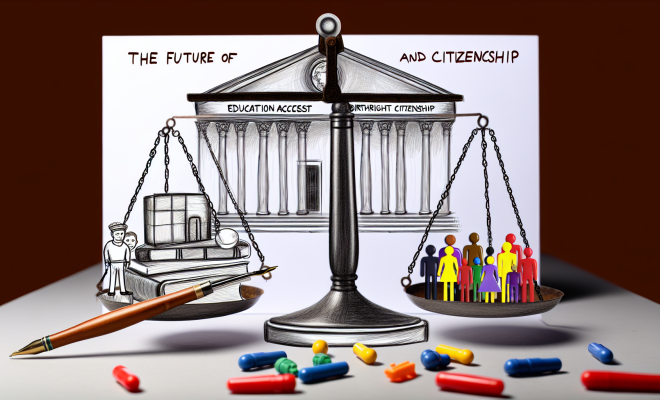
The potential ramifications of a Supreme Court ruling on birthright citizenship could reshape access to education for countless children across the United States. As the conservative movement gathers momentum to challenge established precedents, particularly the landmark case Plyler v. Doe, the landscape of K-12 education for undocumented students hangs in the balance.
The Legal Precedent of Plyler v. Doe
Decided in 1982, Plyler v. Doe is a seminal Supreme Court case that guarantees free public education to all children, regardless of their immigration status. The ruling emphasized that denying access to education based on immigration status not only violated the Equal Protection Clause of the Fourteenth Amendment but also had detrimental effects on society as a whole.
In the years since, this decision has served as a critical foundation for educational access for undocumented children. However, recent political shifts and the Supreme Court’s conservative leanings have ignited discussions about revisiting this ruling.
Current Legislative Trends
In the wake of increasing scrutiny over immigration policies, several states, including Tennessee, are actively pursuing legislation that could limit educational access for undocumented students. Lawmakers in Tennessee have proposed measures that would not only track students’ legal status but also empower schools to deny enrollment to those who cannot provide proof of citizenship.
- Tennessee lawmakers are drafting legislation aimed at tracking student legal status.
- Proposals that would allow schools to refuse enrollment to undocumented students are gaining traction.
- Similar initiatives are being considered in various other states, raising concerns about widespread implications.
The Implications of Ending Birthright Citizenship
A key aspect of the discussions surrounding birthright citizenship is the potential timeline for its repeal. If the Supreme Court were to end or narrow the scope of birthright citizenship, it would likely apply only to children born after a specified date—potentially February 20, 2025. This change could have profound implications for millions of children who would be affected by new legal frameworks prioritizing taxpayer dollars for citizens and lawful immigrants.
This shift could lead to increased disparities in education funding and resources, as states may begin to allocate public money differently, favoring students with legal status over those without. Such a scenario raises critical questions about equity and fairness in public education.
Challenges Ahead
The potential overturning of Plyler v. Doe and the shifting landscape of birthright citizenship could lead to several challenges:
- Access to Basic Educational Resources: If schools are allowed to refuse enrollment to undocumented students, many children could be left without access to basic educational resources.
- Increased Segregation: The division of students based on legal status could lead to increased segregation within schools, further exacerbating social inequalities.
- Legal Battles: A wave of legal challenges is likely to emerge as states pursue laws that contradict established precedents, resulting in prolonged litigation.
The Broader Impact on Society
The implications of these legal shifts extend beyond the individual child; they affect society as a whole. Education is a critical driver of economic opportunity and social mobility. Undermining access to education for undocumented children not only limits their potential but also hampers the growth and productivity of future generations.
Moreover, the ripple effects of such decisions could strain public resources and increase societal disparities. A less educated population may lead to higher crime rates, reduced economic contributions, and greater dependency on social services.
A Call to Action
As discussions surrounding birthright citizenship and educational access continue, stakeholders—including educators, parents, and community leaders—must advocate for the rights of all children to receive a quality education. The legal landscape may be shifting, but the moral imperative to educate every child remains unchanged.
It is essential for communities to unite in support of legislation that preserves access to education for all children, regardless of their immigration status. Engaging in advocacy and dialogue can help protect the foundational right to education, as enshrined in Plyler v. Doe, and ensure that every child has the opportunity to succeed, irrespective of their circumstances.
Ultimately, the decisions made in the coming years will shape not only the future of education but the very fabric of American society, emphasizing the importance of ensuring that every child has a chance to learn, grow, and contribute to their communities.