The Edvocate

Top Menu

Main Menu

  • Start Here
    • Our Brands
    • Governance
      • Lynch Education Consulting, LLC.
      • Dr. Lynch’s Personal Website
      • Careers
    • Write For Us
    • Books
    • The Tech Edvocate Product Guide
    • Contact Us
    • The Edvocate Podcast
    • Edupedia
    • Pedagogue
    • Terms and Conditions
    • Privacy Policy
  • PreK-12
    • Assessment
    • Assistive Technology
    • Best PreK-12 Schools in America
    • Child Development
    • Classroom Management
    • Early Childhood
    • EdTech & Innovation
    • Education Leadership
    • Equity
    • First Year Teachers
    • Gifted and Talented Education
    • Special Education
    • Parental Involvement
    • Policy & Reform
    • Teachers
  • Higher Ed
    • Best Colleges and Universities
    • Best College and University Programs
    • HBCU’s
    • Diversity
    • Higher Education EdTech
    • Higher Education
    • International Education
  • Advertise
  • The Tech Edvocate Awards
    • The Awards Process
    • Finalists and Winners of The 2026 Tech Edvocate Awards
    • Finalists and Winners of The 2025 Tech Edvocate Awards
    • Finalists and Winners of The 2024 Tech Edvocate Awards
    • Finalists and Winners of The 2023 Tech Edvocate Awards
    • Finalists and Winners of The 2021 Tech Edvocate Awards
    • Finalists and Winners of The 2022 Tech Edvocate Awards
    • Finalists and Winners of The 2020 Tech Edvocate Awards
    • Finalists and Winners of The 2019 Tech Edvocate Awards
    • Finalists and Winners of The 2018 Tech Edvocate Awards
    • Finalists and Winners of The 2017 Tech Edvocate Awards
    • Award Seals
  • Apps
    • GPA Calculator for College
    • GPA Calculator for High School
    • Cumulative GPA Calculator
    • Grade Calculator
    • Weighted Grade Calculator
    • Final Grade Calculator
  • The Tech Edvocate
  • Post a Job
  • AI Powered Personal Tutor

logo

The Edvocate

  • Start Here
    • Our Brands
    • Governance
      • Lynch Education Consulting, LLC.
      • Dr. Lynch’s Personal Website
        • My Speaking Page
      • Careers
    • Write For Us
    • Books
    • The Tech Edvocate Product Guide
    • Contact Us
    • The Edvocate Podcast
    • Edupedia
    • Pedagogue
    • Terms and Conditions
    • Privacy Policy
  • PreK-12
    • Assessment
    • Assistive Technology
    • Best PreK-12 Schools in America
    • Child Development
    • Classroom Management
    • Early Childhood
    • EdTech & Innovation
    • Education Leadership
    • Equity
    • First Year Teachers
    • Gifted and Talented Education
    • Special Education
    • Parental Involvement
    • Policy & Reform
    • Teachers
  • Higher Ed
    • Best Colleges and Universities
    • Best College and University Programs
    • HBCU’s
    • Diversity
    • Higher Education EdTech
    • Higher Education
    • International Education
  • Advertise
  • The Tech Edvocate Awards
    • The Awards Process
    • Finalists and Winners of The 2026 Tech Edvocate Awards
    • Finalists and Winners of The 2025 Tech Edvocate Awards
    • Finalists and Winners of The 2024 Tech Edvocate Awards
    • Finalists and Winners of The 2023 Tech Edvocate Awards
    • Finalists and Winners of The 2021 Tech Edvocate Awards
    • Finalists and Winners of The 2022 Tech Edvocate Awards
    • Finalists and Winners of The 2020 Tech Edvocate Awards
    • Finalists and Winners of The 2019 Tech Edvocate Awards
    • Finalists and Winners of The 2018 Tech Edvocate Awards
    • Finalists and Winners of The 2017 Tech Edvocate Awards
    • Award Seals
  • Apps
    • GPA Calculator for College
    • GPA Calculator for High School
    • Cumulative GPA Calculator
    • Grade Calculator
    • Weighted Grade Calculator
    • Final Grade Calculator
  • The Tech Edvocate
  • Post a Job
  • AI Powered Personal Tutor
  • Why This Teacher Gave Up Work-Life Balance

  • The Quiet Revolution: How AI Prompt Engineering is Reshaping Edtech Careers

  • 8 Crucial Skills Separating AI Prompt Engineers from Traditional Educators

  • 7 Courses That Could Catapult Your Edtech Career into AI Prompt Engineering

  • This One Role Is Quietly Revolutionizing EdTech — And You Won’t Believe the Salary

  • The Brutal Truth: Why Your AI Master’s Degree Is Worth Millions – And How to Get It

  • The AI Professor Salary Comparison 2026: Why These Roles Are Outpacing All Others

  • The Unseen Force Behind AI’s Salary Boom: What You Need to Know

  • This Crucial Factor Is Redefining the AI Master’s Degree Salary Landscape

  • San Francisco’s Housing Nightmare: 10 Ways Essential Workers Can Survive

Matthew LynchPolicy & Reform
Home›Matthew Lynch›Wasted Data: Student Information Should be Shared

Wasted Data: Student Information Should be Shared

By Matthew Lynch
September 30, 2016
0
Spread the love

It’s no secret that technology implementation in P-12 schools comes with some serious red tape. While American colleges and universities tend to be at the forefront of innovative ways of learning, childhood education lags seriously behind. A recent PBS study found that while 90 percent of P-12 classrooms have at least one computer, only 35 percent have tablets or electronic readers. The amount of policy writing that goes into allowing “new” technology like tablets, let alone the budget for them, makes it prohibitive for most schools to implement the equipment in reasonable time frames.

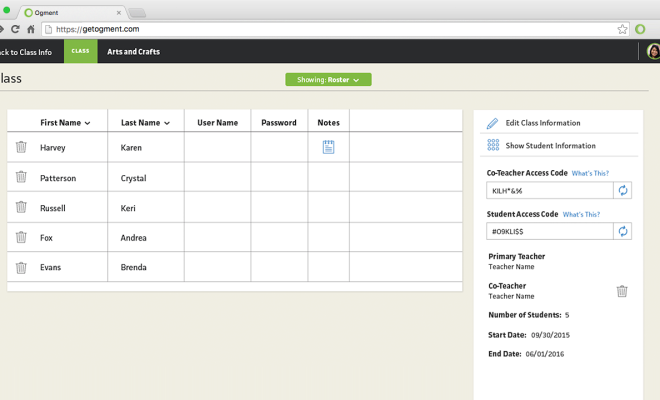
But what about technology that already exists in P-12 classrooms, but in less-flashy ways? Consider the database technology behind virtually every school system in the country. Schools have electronic storage of everything from basic address information of students to their in-class progress in an array of subjects. Schools often track other factors too like socioeconomic status and other defining features like racial background and family circumstances. This private data collection on students starts long before the traditional start of school. Early childhood programs in every state keep track of student information and progress too.

The problem with all of this data keeping is that the numbers are usually kept in isolation. Beginning with early childhood education, individual schools do not reach out to each other or across state lines when it comes to student progress and innovative teaching methods. In fact, a recent study released by The Early Childhood Collaboration found that Pennsylvania is the only state in the nation with a system for linking student data across all education programs, from early childhood learning through grade 12. Progressive California has absolutely no data linking programs in place and no plans to start one. As the report points out:

“Comprehensive and connected data on children, programs, and the workforce are used to track progress over time, pinpoint problems, identify underserved groups, and allocate limited resources.”

Despite such a treasure trove of data, student information seems to be recorded simply for posterity. It’s clearly not impossible to share the information (Pennsylvania does it) but states do not seem to be rushing to do it. Such an undertaking would certainly require an upfront cost which could be behind the hesitancy – but I wonder how much of the delay is simply the convenience of the status quo. Student data has always been collected for internal use, or to satisfy specific state requirements, so going above and beyond that is scary territory. How will schools find the manpower for the extra steps of sharing, and analyzing? Who will be in charge of storing the data? What about student privacy?

I understand the logic behind these questions but to me, these are all minor impositions. It has never been easier to connect all of the nation’s student data sets in order to build a better picture of what America’s P-12 student body looks like today, and set goals for improvement based on actual statistics. Like these databases, many education policies are created in isolation. What if the people who wrote those policies had a complete data set to inform their choices? How quickly would education legislation transform from theory to actionable plans based on fact?

The ECDC report recommends that states strengthen their abilities to securely link to student data amongst their schools, and to expand the information that is screened and collected. Some less tangible advice would be for educators and policymakers to realize the value of interconnected student information and begin to consider the true possibilities of combining that knowledge.

Would you support greater sharing of student data across schools, systems and states?

TagsEdpolicyedreformput kids firstschool reform
Previous Article

Talented and Gifted Learning: Where’s the Diversity?

Next Article

High Student Debt Linked to Long-Term Health ...

Matthew Lynch

Related articles More from author

  • Ask An ExpertEducation Leadership

    There’s more than practice to becoming a world-class expert

    January 21, 2017
    By Matthew Lynch
  • listMatthew Lynch

    3 Leadership Styles Similar to Transformational Leadership

    March 15, 2016
    By Matthew Lynch
  • EquityMatthew LynchPolicy & Reform

    Unpacking the ‘Superstar Teacher’ Myth in P-12 Education

    February 18, 2016
    By Matthew Lynch
  • Matthew LynchPolicy & Reform

    3 Ways to Improve U.S. Students’ Standing Worldwide

    November 4, 2015
    By Matthew Lynch
  • Matthew LynchPolicy & Reform

    Texting, Tweeting and Terrible Grammar in K-12 Schools

    April 8, 2016
    By Matthew Lynch
  • EquityHigher Education

    Why Are Girls Surpassing Boys in College Achievement?

    November 7, 2015
    By Matthew Lynch

Search

Registration and Login

  • Log in
  • Entries feed
  • Comments feed
  • WordPress.org

Newsletter

Signup for The Edvocate Newsletter and have the latest in P-20 education news and opinion delivered to your email address!

RSS feed: Matthew on Education Week Matthew on Education Week

  • Au Revoir from Education Futures November 20, 2018 Matthew Lynch
  • 6 Steps to Data-Driven Literacy Instruction October 17, 2018 Matthew Lynch
  • Four Keys to a Modern IT Approach in K-12 Schools October 2, 2018 Matthew Lynch
  • What's the Difference Between Burnout and Demoralization, and What Can Teachers Do About It? September 27, 2018 Matthew Lynch
  • Revisiting Using Edtech for Bullying and Suicide Prevention September 10, 2018 Matthew Lynch

About Us

The Edvocate was created in 2014 to argue for shifts in education policy and organization in order to enhance the quality of education and the opportunities for learning afforded to P-20 students in America. What we envisage may not be the most straightforward or the most conventional ideas. We call for a relatively radical and certainly quite comprehensive reorganization of America’s P-20 system.

That reorganization, though, and the underlying effort, will have much to do with reviving the American education system, and reviving a national love of learning.  The Edvocate plans to be one of key architects of this revival, as it continues to advocate for education reform, equity, and innovation.

Newsletter

Signup for The Edvocate Newsletter and have the latest in P-20 education news and opinion delivered to your email address!

Contact

The Edvocate
910 Goddin Street
Richmond, VA 23230
(601) 630-5238
[email protected]
  • situs togel online
  • dentoto
  • situs toto 4d
  • situs toto slot
  • toto slot 4d
Copyright (c) 2026 Matthew Lynch. All rights reserved.