The Edvocate

Top Menu

Main Menu

  • Start Here
    • Our Brands
    • Governance
      • Lynch Education Consulting, LLC.
      • Dr. Lynch’s Personal Website
      • Careers
    • Write For Us
    • Books
    • The Tech Edvocate Product Guide
    • Contact Us
    • The Edvocate Podcast
    • Edupedia
    • Pedagogue
    • Terms and Conditions
    • Privacy Policy
  • PreK-12
    • Assessment
    • Assistive Technology
    • Best PreK-12 Schools in America
    • Child Development
    • Classroom Management
    • Early Childhood
    • EdTech & Innovation
    • Education Leadership
    • Equity
    • First Year Teachers
    • Gifted and Talented Education
    • Special Education
    • Parental Involvement
    • Policy & Reform
    • Teachers
  • Higher Ed
    • Best Colleges and Universities
    • Best College and University Programs
    • HBCU’s
    • Diversity
    • Higher Education EdTech
    • Higher Education
    • International Education
  • Advertise
  • The Tech Edvocate Awards
    • The Awards Process
    • Finalists and Winners of The 2026 Tech Edvocate Awards
    • Finalists and Winners of The 2025 Tech Edvocate Awards
    • Finalists and Winners of The 2024 Tech Edvocate Awards
    • Finalists and Winners of The 2023 Tech Edvocate Awards
    • Finalists and Winners of The 2021 Tech Edvocate Awards
    • Finalists and Winners of The 2022 Tech Edvocate Awards
    • Finalists and Winners of The 2020 Tech Edvocate Awards
    • Finalists and Winners of The 2019 Tech Edvocate Awards
    • Finalists and Winners of The 2018 Tech Edvocate Awards
    • Finalists and Winners of The 2017 Tech Edvocate Awards
    • Award Seals
  • Apps
    • GPA Calculator for College
    • GPA Calculator for High School
    • Cumulative GPA Calculator
    • Grade Calculator
    • Weighted Grade Calculator
    • Final Grade Calculator
  • The Tech Edvocate
  • Post a Job
  • AI Powered Personal Tutor

logo

The Edvocate

  • Start Here
    • Our Brands
    • Governance
      • Lynch Education Consulting, LLC.
      • Dr. Lynch’s Personal Website
        • My Speaking Page
      • Careers
    • Write For Us
    • Books
    • The Tech Edvocate Product Guide
    • Contact Us
    • The Edvocate Podcast
    • Edupedia
    • Pedagogue
    • Terms and Conditions
    • Privacy Policy
  • PreK-12
    • Assessment
    • Assistive Technology
    • Best PreK-12 Schools in America
    • Child Development
    • Classroom Management
    • Early Childhood
    • EdTech & Innovation
    • Education Leadership
    • Equity
    • First Year Teachers
    • Gifted and Talented Education
    • Special Education
    • Parental Involvement
    • Policy & Reform
    • Teachers
  • Higher Ed
    • Best Colleges and Universities
    • Best College and University Programs
    • HBCU’s
    • Diversity
    • Higher Education EdTech
    • Higher Education
    • International Education
  • Advertise
  • The Tech Edvocate Awards
    • The Awards Process
    • Finalists and Winners of The 2026 Tech Edvocate Awards
    • Finalists and Winners of The 2025 Tech Edvocate Awards
    • Finalists and Winners of The 2024 Tech Edvocate Awards
    • Finalists and Winners of The 2023 Tech Edvocate Awards
    • Finalists and Winners of The 2021 Tech Edvocate Awards
    • Finalists and Winners of The 2022 Tech Edvocate Awards
    • Finalists and Winners of The 2020 Tech Edvocate Awards
    • Finalists and Winners of The 2019 Tech Edvocate Awards
    • Finalists and Winners of The 2018 Tech Edvocate Awards
    • Finalists and Winners of The 2017 Tech Edvocate Awards
    • Award Seals
  • Apps
    • GPA Calculator for College
    • GPA Calculator for High School
    • Cumulative GPA Calculator
    • Grade Calculator
    • Weighted Grade Calculator
    • Final Grade Calculator
  • The Tech Edvocate
  • Post a Job
  • AI Powered Personal Tutor
  • Staggering: Millions of Parents Are Deleting Their Kids’ Photos Online — Here’s Why

  • Outrageous: The Texas Social Studies Curriculum Just Got a Radical Overhaul

  • Amazing Ways That Principals Celebrate Teachers

  • Stop Counting Screen Minutes. Let’s Study Whether Technology Helps Or Hurts Instead.

  • Unprecedented: Why Michigan’s Cell Phone Ban is Just the Beginning for Student Success

  • This $75,000 Private School Wants Your Kid to Go Viral – Here’s Why It’s Genius (or Madness)

  • Why I Love the Middle School Talent Show

  • Unbelievable: This New Law Reveals the REAL Culprit Behind Kids’ Screen Addiction

  • The Troubling Truth Behind That Viral Nassau County Volleyball Match Incident

  • Explosive Ruling: California Judge Redefines Student Gender Identity Rights

Higher Education
Home›Higher Education›College Accreditation: How It Works & Why It Matters

College Accreditation: How It Works & Why It Matters

By Matthew Lynch
September 14, 2017
0
Spread the love

A diverse group of students in graduation caps and gowns celebrate. It doesn’t matter whether you are researching for your first-ever college program or hunting for a practical advanced degree; there is one piece of advice that always rings true: Look for accreditation.

Because higher education in America is such a profitable enterprise, there are thousands of schools trying to convince you to enroll, and accreditation helps you sort the institutions providing high-quality educations from those just after your money. Yet, even as most prospective students recognize the need for accreditation, many don’t understand how the process works. Thus, plenty of students accept any and all accreditations without a second thought.

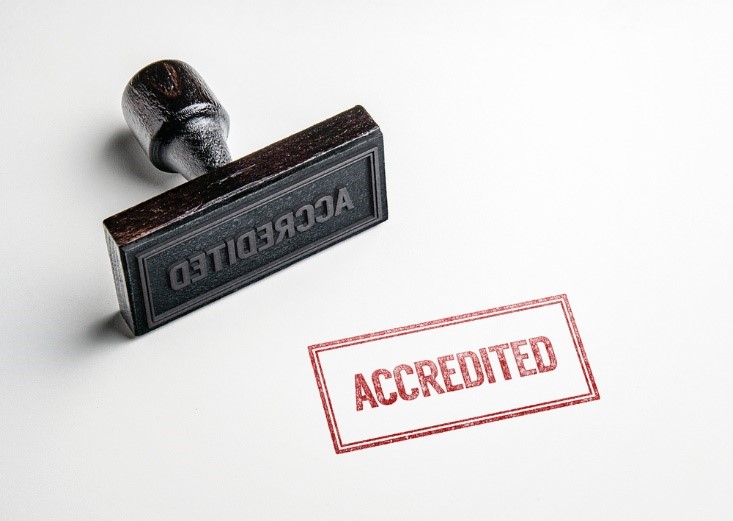
The accreditation process is a rigorous test for universities looking to be branded as legitimate institutions of higher learning. To help you find the best possible school where you can gain the best possible degree, this guide should tell you all you need to know about accreditation.

What Is Accreditation?

At its simplest, accreditation is recognition that a school’s programs contain valid education fit for preparing students for professional practice or else admission into other reputable institutions of learning. Organizations that evaluating universities and colleges are working on behalf of the U.S. Department of Education, endorsing credentials based on national standards.

As there are different types of education, there are different types of accreditation. Institutional accreditation recognizes an entire university or educational organization, asserting that each of the institution’s parts contributes effectively to the qualitative achievement of that institution’s goals. For example, the Higher Learning Commission (HLC) — one of the more common U.S. accrediting agencies — provides institutional accreditation.

Additionally, organizations can award specialized accreditation, which recognizes individual programs, departments, or schools within a broader institution of learning. For example, you might find an AACSB-accredited online MBA program, which is at a business school that has received international recognition for specialized quality. This often applies to programs that require licensing or certification on a state or national basis, but some programs receive specialized accreditation to make distinct their high quality within their field.

Who Does the Accrediting?

A student works on a laptop in a modern university library.Accrediting agencies are private associations dedicated to the enhancement of education. While the standards they set and the types of institutions they accredit are their decision, they ultimately report to the Department of Education (DOE), which can choose to accept or reject their reviews. There is also a private, non-governmental organization, the Council for Higher Education Accreditation (CHEA), that distinguishes legitimate accreditation agencies. The difference between the DOE and CHEA is that the DOE limits official recognition to agencies reviewing schools that participate in federal programs, like the Federal Student Financial Aid Program.

Few accrediting agencies are familiar enough with all industries to provide reliable ratings for all programs. Therefore, individual agencies tend to be expert in precise areas of learning. For example, there are national agencies specializing in trade and technical colleges and religious colleges and there are regional agencies that review all colleges within a certain boundary. As a result, there are dozens of accrediting agencies active in the United States, and you might find it difficult to keep legitimate organizations straight.

Fortunately, both the DOE and CHEA offer online lists of accreditation agencies to help you parse the respectable from the disreputable. Because their recognition can change from year to year, it is wise to check this list every time you apply to a new school or enroll in a new program.

How Do Schools Become Accredited?

The path to accreditation isn’t easy, but it is relatively straightforward. Before an institution is considered for evaluation, it must submit to a candidacy period, during which time, the agency will observe the instruction and determine whether it is eligible for accreditation. The candidacy period typically lasts four years, and it must prove itself eager to comply with the agency’s standards before the true evaluation may begin.

Though the precise accreditation process will vary from agency to agency, there are a few steps that are similar throughout the industry. For example, schools typically must prove that they are financially sound and that they plan to continue operating continuously into the future. Additionally, schools must submit to on-site assessments of courses and curricula, which will primarily influence most agencies’ criteria for accreditation. Often, the results of an accreditation evaluation will be made public, so you can learn whether a potential program has failed accreditation efforts in the past.

Accreditation matters, but who provides what accreditation matters more. Before you start paying tuition to any institution, you must research that school’s accreditations thoroughly to ensure you are getting the education you deserve.

TagsEducationHigher Education
Previous Article

Boost Gross Motor Skills: Activities for Ages ...

Next Article

10 ed-tech resources for school administrators

Matthew Lynch

Related articles More from author

  • EdTech Startups & Businesses

    EdTech’s Past: Learn History, Avoid Repeating Mistakes

    February 28, 2018
    By Matthew Lynch
  • EquityHigher EducationMatthew Lynch

    3 Startling Facts about Ivy League Schools

    January 26, 2017
    By Matthew Lynch
  • Diversity

    4 ways to get long-term English learners back on track

    September 21, 2016
    By Matthew Lynch
  • Higher Education

    Top Universities in South America for 2018

    November 20, 2017
    By Matthew Lynch
  • Higher Education

    Should writing for the public count toward tenure?

    September 23, 2016
    By Matthew Lynch
  • Equity

    Civil Rights groups caution against watering down ESEA

    August 3, 2015
    By Matthew Lynch

Search

Registration and Login

  • Log in
  • Entries feed
  • Comments feed
  • WordPress.org

Newsletter

Signup for The Edvocate Newsletter and have the latest in P-20 education news and opinion delivered to your email address!

RSS feed: Matthew on Education Week Matthew on Education Week

  • Au Revoir from Education Futures November 20, 2018 Matthew Lynch
  • 6 Steps to Data-Driven Literacy Instruction October 17, 2018 Matthew Lynch
  • Four Keys to a Modern IT Approach in K-12 Schools October 2, 2018 Matthew Lynch
  • What's the Difference Between Burnout and Demoralization, and What Can Teachers Do About It? September 27, 2018 Matthew Lynch
  • Revisiting Using Edtech for Bullying and Suicide Prevention September 10, 2018 Matthew Lynch

About Us

The Edvocate was created in 2014 to argue for shifts in education policy and organization in order to enhance the quality of education and the opportunities for learning afforded to P-20 students in America. What we envisage may not be the most straightforward or the most conventional ideas. We call for a relatively radical and certainly quite comprehensive reorganization of America’s P-20 system.

That reorganization, though, and the underlying effort, will have much to do with reviving the American education system, and reviving a national love of learning.  The Edvocate plans to be one of key architects of this revival, as it continues to advocate for education reform, equity, and innovation.

Newsletter

Signup for The Edvocate Newsletter and have the latest in P-20 education news and opinion delivered to your email address!

Contact

The Edvocate
910 Goddin Street
Richmond, VA 23230
(601) 630-5238
[email protected]
  • situs togel online
  • dentoto
  • situs toto 4d
  • situs toto slot
  • toto slot 4d
Copyright (c) 2026 Matthew Lynch. All rights reserved.