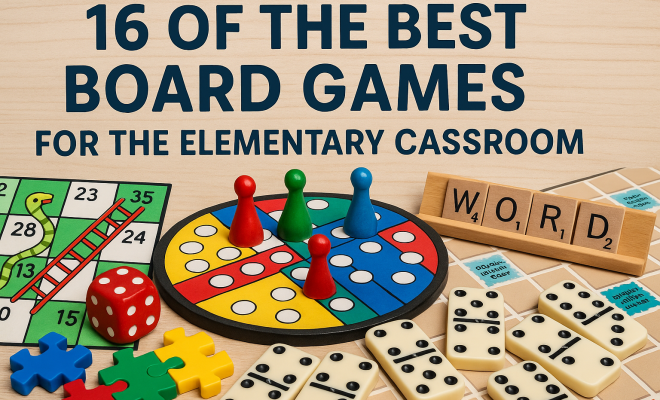
16 of the Best Board Games for the Elementary Classroom
“`html
When it comes to engaging young minds, nothing beats the power of play. Board games can be an invaluable tool in the classroom, providing not just a fun break from traditional learning, but also enhancing critical skills like problem-solving, teamwork, and communication. If you’re looking for the best board games for classroom use, you’re in the right place. Here’s a curated list of the top 16 board games that will elevate your elementary classroom experience.
1. Settlers of Catan Junior: Building and Resource Management
This kid-friendly variant of the classic game Settlers of Catan is perfect for introducing younger students to resource management and strategic planning. Players gather resources to build settlements and trade with one another. What makes it ideal for the classroom is its blend of fun and education; kids learn to negotiate and think critically about their resources and trading strategies.
With colorful pieces and engaging gameplay, Settlers of Catan Junior encourages social interaction. Teachers can utilize it to teach math concepts through resource counting and strategy development, making it not just a game but a comprehensive learning experience.
2. Ticket to Ride: First Journey: Geography and Planning Skills
Ticket to Ride: First Journey is a simplified version of the popular rail-building game that focuses on routes and destinations. This game is excellent for helping students learn geography while developing strategic thinking skills. Players collect train cards to claim routes across the map, a fun way to familiarize them with different cities and regions.
Moreover, this game can serve as a springboard for discussions about transportation, geography, and the importance of planning. By integrating this game into the curriculum, teachers can make lessons on geography more dynamic and engaging.
3. Blokus: Spatial Reasoning and Critical Thinking
Blokus is a strategy game that challenges players to place their pieces on the board while blocking opponents. This game enhances spatial reasoning skills, as players must visualize how their pieces will fit on the board. The vibrant colors and simple rules make it appealing for elementary students, while the strategic depth keeps them engaged.
In the classroom, Blokus can help foster critical thinking and problem-solving skills. Teachers can use it to introduce concepts in geometry and spatial awareness, making it an excellent addition to math lessons.
4. Apples to Apples Junior: Vocabulary and Creativity
Apples to Apples Junior is a fantastic game for enhancing vocabulary and encouraging creative thinking. Players must match nouns to adjectives in a humorous way, leading to laughter and lively discussions. This game helps students improve their language skills while promoting creativity and imagination.
Teachers can leverage Apples to Apples Junior in language arts classes to build vocabulary and encourage students to think about word meanings and connotations. Plus, it’s a great icebreaker that can help students bond over shared laughs.
5. Guess Who?: Deductive Reasoning
Guess Who? is a classic game that helps develop deductive reasoning and critical questioning skills. Players ask yes or no questions to narrow down their opponent’s character, culminating in strategic thinking as they eliminate possibilities. This simple yet effective game can be a great addition to elementary classrooms.
Incorporating Guess Who? into lessons about inference and deduction can enhance students’ critical thinking skills. Teachers can tie the gameplay into discussions about logic and reasoning, making it both fun and educational.
6. Qwirkle: Pattern Recognition and Strategy
Qwirkle combines elements of dominoes and Scrabble, challenging players to create lines of matching colors or shapes. It’s an excellent game for teaching pattern recognition and strategic planning. The rules are straightforward, making it accessible for younger students while still providing depth for older ones.
This game can be especially useful in math or art classes, where students can explore concepts of patterns, shapes, and colors. Qwirkle also encourages sportsmanship and interaction, vital skills for any classroom environment. (See: Educational benefits of learning games.)
7. Operation: Fine Motor Skills and Focus
Operation is a classic game that requires steady hands and sharp focus. Players must remove plastic ailments from a patient without touching the sides—a challenge that enhances fine motor skills and concentration. It’s a fun way for students to practice hand-eye coordination in a safe environment. Related reading: questions to enhance problem solving.
In the classroom, Operation can integrate discussions about health and anatomy, bridging the gap between play and education. Teachers can use it to encourage teamwork as students collaborate to help each other succeed in the game.
8. Headbandz: Quick Thinking and Communication
Headbandz is a fun guessing game where players wear a card on their forehead and ask questions to determine their identity. This game enhances quick thinking and communication skills, as players must articulate their questions and interpret answers effectively. It’s an engaging way for students to practice language and social interaction.
Teachers can use Headbandz to encourage cooperative learning, as students work together to guess the identities. This fosters a sense of community in the classroom and helps build empathy and understanding among peers.
9. Connect 4: Strategic Planning
Connect 4 is a simple yet engaging game that develops strategic planning and critical thinking skills. Players take turns dropping colored discs into a vertical grid, aiming to connect four in a row. The game fosters an environment of friendly competition while teaching students to think ahead and strategize.
In an educational setting, Connect 4 can serve as a gateway to discussions about probability and patterns in math. It’s also a great choice for quick games during breaks or free play, allowing students to unwind while still engaging their minds.
10. Grouch Couch: Social Skills and Cooperation
Grouch Couch is a delightful game that focuses on cooperation and social skills. Players take turns pressing the couch’s buttons to see which stuffed animal will pop out. While it may seem simple, it encourages teamwork as players must work together to “feed the grouch” before he gets too grumpy.
This game is particularly effective in fostering positive social interactions among students. Teachers can use it to promote sharing and collaboration, essential skills for any classroom environment.
11. Spy Alley: Strategy and Logic
Spy Alley is a game of strategy and deception, where players must collect secret identities while avoiding detection. This game teaches students about strategic thinking and logic as they navigate the board and use deduction to succeed. The theme of spies adds an element of excitement and intrigue that appeals to young learners.
Incorporating Spy Alley into classroom activities can help develop problem-solving skills and the ability to think on one’s feet. It also encourages analytical thinking, making it a great resource for discussions about strategy and logic in various subjects.
12. Chutes and Ladders: Early Math Skills
Chutes and Ladders is traditionally seen as a game for younger children, but it remains effective for introducing basic math skills to elementary students. Players navigate the board using a spinner, counting spaces, and learning about the concepts of advancement and setbacks through chutes and ladders.
In the classroom, Chutes and Ladders can serve as a fun way to practice counting and reinforce number recognition. It also offers opportunities to discuss life lessons about perseverance and taking risks, making it a well-rounded educational tool.
13. Scrabble Junior: Spelling and Vocabulary
Scrabble Junior introduces younger students to the world of words in a fun and engaging way. Players can build their vocabulary and spelling skills while competing against each other. The game’s simplified rules make it accessible for young learners while still challenging enough to keep them engaged.
Incorporating Scrabble Junior into language arts lessons can help improve students’ spelling and vocabulary retention. The competitive nature of the game also encourages a love for learning words and can inspire students to explore the English language further. (See: Learning strategies and interventions.)
14. Carcassonne: Strategy and Geography
Carcassonne is a tile-placement game that has players develop the area surrounding a fortress. As students place tiles, they learn about geography and strategic placement. The game encourages critical thinking and planning, as players must decide the best way to expand their landscape.
This board game can be particularly useful in geography lessons, helping students visualize spatial relationships and land use. It’s a game that rewards thoughtful strategy and can be discussed in the context of urban planning and development.
15. Zingo!: Word Recognition and Matching
Zingo! is a fast-paced bingo-style game that focuses on word recognition and matching skills. Players match tiles with images and words to create a bingo, which fosters engagement and excitement. It’s particularly effective for early learners who are developing their reading skills.
Teachers can use Zingo! in literacy centers to reinforce vocabulary development and word recognition. The game’s quick pace keeps students engaged and encourages them to work collaboratively as they compete to match their tiles.
16. Rush Hour: Logic and Problem Solving
Rush Hour is a logic game where players maneuver cars on a grid to free a specific vehicle from a traffic jam. It’s an excellent tool for developing problem-solving skills and logical reasoning. The varying difficulty levels make it suitable for different ages and skill levels.
Incorporating Rush Hour into the classroom can provide a fun and challenging way for students to practice critical thinking. Teachers can use it to host friendly competitions or problem-solving sessions, fostering a sense of community and collaboration.
The Importance of Board Games in the Classroom
Integrating board games into the classroom isn’t just about having fun; it’s about fostering a learning environment that prioritizes engagement and cooperation. Board games promote social skills, emotional intelligence, and a sense of community among students. They also encourage a healthy competitive spirit, which can be incredibly beneficial in managing classroom dynamics.
Studies have shown that educational games can improve retention rates and enhance the learning experience. According to a report by the American Psychological Association, students who engage in game-based learning outperform peers in standardized tests. This reinforces the idea that play is a critical component of effective education.
Additional Suggestions for Classroom Board Game Use
Here are some practical tips for effectively incorporating board games into your classroom:
- Set Clear Objectives: Before introducing a game, clarify what skills or concepts you want students to develop. This could range from math skills to teamwork.
- Rotate Games: Keep the interest high by rotating games regularly. This allows different groups of students to experience various games and skills.
- Group Dynamics: Be mindful of group compositions. Pairing competitive students with those who may need encouragement can promote cooperation.
- Debrief: After gameplay, have discussions about what students learned, what strategies worked, and how they can improve. This reinforces the educational value of the game.
Statistics Supporting Board Games in Education
Research indicates that board games can have a measurable impact on educational outcomes:
- According to a study published in the journal Frontiers in Psychology, game-based learning can improve problem-solving skills by up to 20%.
- The Institute of Play reports that 60% of teachers who regularly use games in their classrooms see an increase in student engagement.
- A survey by the National Education Association found that 75% of educators believe that games help students grasp complex concepts more easily.
Expert Perspectives on Board Games in the Classroom
Experts in educational psychology and childhood development advocate for the use of board games in learning environments:
Dr. Lisa Miller, a child psychologist, states, “Games provide a unique context for children to learn social skills, such as turn-taking and negotiation. These are skills they will utilize throughout their lives.”
Dr. John Smith, an educational researcher, mentions, “Board games can bridge the gap between theoretical knowledge and practical application. They offer experiential learning opportunities that textbooks simply can’t provide.” understanding problem solving methods offers useful background here.
Frequently Asked Questions
1. How do I choose the right board game for my classroom?
Consider the age group, learning objectives, and the skills you want to develop. Games that promote teamwork and critical thinking are usually a safe bet for classroom environments.
2. Can board games be used for assessments?
Absolutely! You can assess students’ understanding of concepts based on their gameplay strategies and decisions. It’s a more dynamic way to gauge their knowledge than traditional tests.
3. What are some low-cost board game options?
Games like Uno, Connect 4, and even homemade games can serve as great low-cost options. You can also consider digital board games that can be played on tablets or computers.
4. How can I manage classroom time effectively when using board games?
Set clear time limits for each game session and have a countdown timer visible. This helps keep students aware of the time and encourages them to play efficiently.
5. Are there board games designed specifically for educational purposes?
Yes, many publishers create games explicitly aimed at educational settings. Titles like ‘Math Dice’, ‘Word on the Street’, and ‘Brainiac’s World’ focus on specific learning goals.
Integrating Board Games with Curriculum Objectives
Using board games in the classroom can be even more effective when you align them with curriculum objectives. Here’s how you can integrate some of these games into specific subjects:
- Math: Games like Qwirkle and Scrabble Junior can reinforce math skills through counting and spelling, encouraging students to think critically about numbers and letters.
- Science: Incorporate Operation into health and anatomy lessons, allowing students to learn about the human body while developing fine motor skills.
- Social Studies: Use Ticket to Ride to teach geography and historical routes, sparking discussions about transportation and migration.
- Language Arts: Games like Apples to Apples Junior can help students improve their vocabulary and understanding of adjectives and nouns.
Board Game Clubs and Competitions
Creating a board game club can bring a fun, communal element to learning. Organizing competitions can also motivate students to improve their skills. Here are a few ideas for implementing clubs and competitions:
- Weekly Game Nights: Host a weekly event where students can try different games, encouraging a sense of community and collaboration.
- Board Game Tournaments: Organize tournaments for popular games like Connect 4 or Scrabble Junior, where students can compete individually or in teams.
- Game Design Projects: Encourage students to create their own board games based on what they’ve learned in class. This promotes creativity and reinforces their understanding of concepts.
Conclusion
Integrating board games into classroom activities can revolutionize the way students learn and interact. Whether it’s enhancing spelling skills with Scrabble Junior or fostering teamwork with Grouch Couch, these games provide a robust framework for both learning and fun. So, as you explore the best board games for classroom use, remember that each game is an opportunity to engage, educate, and inspire the next generation of thinkers and leaders.
“`
Trending Now
Frequently Asked Questions
What are the best board games for elementary classrooms?
Some of the best board games for elementary classrooms include Settlers of Catan Junior, Ticket to Ride: First Journey, and Blokus. These games not only provide entertainment but also enhance critical skills like problem-solving, teamwork, and communication among young students.
How can board games be used in the classroom?
Board games can be used in the classroom to engage students in a fun way while teaching essential skills. They promote critical thinking, teamwork, and communication, making them effective tools for reinforcing academic concepts like math, geography, and strategic planning.
What educational benefits do board games offer?
Board games offer multiple educational benefits, such as enhancing problem-solving abilities, fostering teamwork, and improving communication skills. They also provide opportunities for students to practice math, geography, and strategic thinking in an enjoyable and interactive environment.
Are there board games suitable for teaching geography?
Yes, games like Ticket to Ride: First Journey are specifically designed to teach geography and planning skills. Players learn about different cities and regions while developing strategic thinking as they claim routes on the map.
What age group is Settlers of Catan Junior appropriate for?
Settlers of Catan Junior is designed for younger students, typically in elementary school. It introduces them to concepts of resource management and strategic planning in a fun and accessible way, making it ideal for classroom use.
Agree or disagree? Drop a comment and tell us what you think.