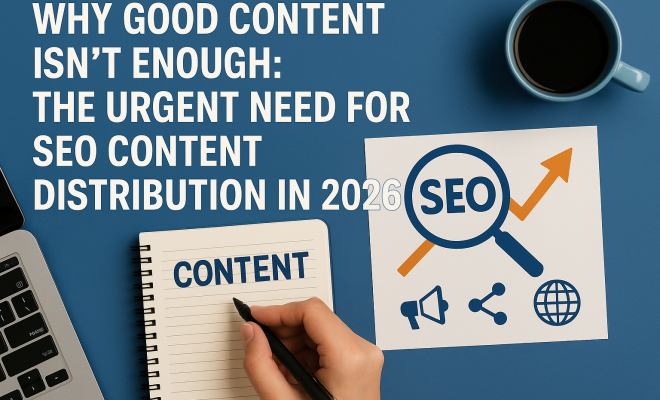
SEO Content Distribution: Why Good Content Isn’t Enough in 2026
“`html
The competitive landscape for startups is evolving rapidly, and the traditional belief that producing great content is sufficient to capture audience attention is becoming increasingly outdated. In 2026, the emphasis has shifted from content creation alone to the necessity of SEO content distribution. This article explores why the effective distribution of content is crucial for achieving visibility, engaging audiences, and ultimately driving growth for startups.
1. The Shift in Discovery Channels
Today’s consumers do not rely solely on Google to discover content; they traverse a myriad of platforms including ChatGPT, Reddit, LinkedIn, and YouTube. This fragmentation means that startups must position their content where potential customers are most likely to interact with it. The traditional SEO model focused on keyword optimization and high-quality content is no longer sufficient. Businesses must now develop a comprehensive SEO content distribution strategy that ensures their content reaches target audiences across multiple channels.
For example, leveraging platforms like LinkedIn allows startups to engage with professionals directly, while Reddit offers niche communities that can provide valuable feedback and visibility. Each platform has its unique audience dynamics, making it crucial for startups to diversify their content distribution efforts to maximize reach and engagement.
2. Understanding Multi-Channel Presence
Multi-channel presence has become a buzzword, but it is vital for startups to understand the nuances involved. A holistic approach to distribution entails more than just being present on multiple platforms; it involves tailoring content for each specific channel. Content that performs well on LinkedIn may not resonate on YouTube, for instance.
A well-structured distribution strategy incorporates not only textual content but also various media formats—videos, infographics, podcasts, and social media posts. This variation in format not only caters to different audience preferences but also boosts overall SEO performance by generating more backlinks and social signals, which are crucial for improving search rankings.
3. The Importance of Structured Pages
Structured pages are essential for both user experience and SEO. They allow search engines to crawl and index content more effectively while providing clear navigation for users. In 2026, brands must invest in creating well-structured landing pages that highlight key content while ensuring fast load times and mobile optimization.
Startups can leverage structured data markup to improve visibility in search results. This markup helps search engines understand the context of the content, making it more likely to appear in rich snippets and other enhanced search features. A focus on structured pages can lead to increased click-through rates, enhancing the effectiveness of the entire SEO content distribution strategy.
4. Securing Third-Party Mentions
In the digital age, mentions by credible third parties can significantly enhance a brand’s authority and visibility. Startups that prioritize earning citations from well-respected industry figures or media outlets can bolster their credibility and reach a wider audience. This strategy is particularly crucial in an environment where consumers are more skeptical and discerning about the sources they trust.
Establishing relationships with influencers and industry thought leaders can yield powerful results. For example, guest blogging or collaborating on content with established names can expose startups to their followers, thus amplifying their reach. As the SEO landscape evolves, these third-party mentions become a vital component of content distribution, directly impacting search engine rankings and audience perception.
5. Adapting to AI-Driven Search Behavior
The rise of AI technologies, such as generative AI and chatbots, has transformed the way users search for and consume information. Understanding this shift is imperative for startups aiming to maintain visibility. AI-driven search engines prioritize context and relevance, which means that companies must adapt their content accordingly to ensure it meets the evolving needs of their audiences.
By embracing AI tools for content analysis and distribution, startups can optimize their content strategies based on real-time data. This includes identifying trending topics, analyzing user engagement patterns, and adjusting distribution tactics to align with audience interests. Ignoring these developments could mean falling behind competitors who are leveraging AI to enhance their visibility and engagement. (See: CDC Healthy Youth resources.)
6. The Role of Social Media in Content Distribution
Social media platforms are no longer just networking sites; they are now powerful engines for content distribution. Startups must engage with their audiences through social media by creating shareable content that resonates with users on a personal level. This engagement can lead to organic shares, expanding reach beyond the startup’s immediate follower base.
Employing targeted paid advertising on platforms such as Facebook and Instagram can also enhance SEO content distribution. By utilizing audience segmentation, startups can ensure their content reaches the right people at the right time, driving traffic back to their websites and boosting SEO efforts by increasing user engagement metrics.
7. Measuring Success: Analytics and KPIs
To ensure the effectiveness of an SEO content distribution strategy, startups must implement robust analytics tools to track performance. Key performance indicators (KPIs) such as traffic sources, engagement rates, conversion rates, and audience retention should be monitored closely. These metrics offer insights into which distribution channels are performing well and which require adjustments.
Regularly analyzing this data allows startups to pivot their strategies quickly, ensuring that resources are being allocated to the most effective channels. A data-driven approach to content distribution not only enhances the effectiveness of marketing efforts but also ensures that startups remain agile in a rapidly changing landscape.
8. The Consequences of Ignoring Distribution
Startups that underestimate the importance of SEO content distribution risk becoming invisible in a crowded marketplace. Exceptional content alone is not enough; without a strategic distribution plan, such content may never reach its intended audience. This oversight can have devastating effects on brand visibility and growth potential.
In 2026, as search behaviors become increasingly fragmented and AI continues to shape content consumption, startups that adhere to outdated beliefs about content creation will be left behind. The urgency to adapt is real, and those who fail to embrace comprehensive distribution strategies may find themselves struggling to keep pace with competitors.
9. Conclusion: Embrace Change or Fall Behind
The landscape for startups in 2026 is defined by change, and understanding the new rules of SEO content distribution is imperative for success. By acknowledging that content alone is not enough and embracing a multi-channel distribution strategy, startups can enhance their visibility, engage their audiences, and ultimately drive growth. The time for action is now; those who adapt will thrive, while those who don’t risk becoming obsolete in an ever-evolving digital ecosystem.
10. Developing an Effective Content Distribution Plan
Creating an effective content distribution plan involves several critical steps. Startups should identify their target audience and understand their preferences. This knowledge enables startups to tailor their content for different platforms. For instance, a piece of content might be presented as an infographic for Instagram, a blog post for LinkedIn, and a video for YouTube, all targeting the same message but crafted to fit the medium.
Additionally, setting clear goals for what the distribution should achieve is paramount. Whether it’s increasing brand awareness, generating leads, or enhancing customer engagement, each goal should be measurable, such as aiming for a specific number of shares or clicks within a defined timeframe. By aligning content distribution activities with measurable goals, startups can better assess their success and make informed adjustments as necessary.
11. Examples of Effective Content Distribution
Looking at successful startups can offer valuable lessons in content distribution. For example, HubSpot has mastered content distribution by utilizing a mix of blogs, social media, and email marketing to share their insights and resources. They segment their audience and tailor content based on the buyer’s journey, ensuring that potential customers receive the right content at the right time.
Another notable example is Buffer, a social media management platform that effectively distributes content through engaging visual media and relatable blog posts. Buffer frequently repurposes its content across different platforms, maximizing reach and ensuring that their messaging is consistently reinforced. By analyzing their audience’s preferences and engagement patterns, Buffer continuously refines its distribution strategy.
12. Statistics on Content Distribution Efficiency
Statistics underscore the importance of effective content distribution. According to a report by the Content Marketing Institute, 70% of B2B marketers say that content marketing is more effective than traditional marketing methods. Moreover, research indicates that 72% of marketers believe that content creation is the most effective SEO tactic, but only 48% of those marketers have a documented content strategy for distribution. (See: New York Times on content distribution.)
Additionally, a study from eMarketer found that distributed content can result in a 3.5 times increase in engagement compared to content that is not shared across multiple channels. This highlights the necessity for startups to not only create content but also actively distribute it to see tangible results in engagement and visibility.
13. Expert Perspectives on SEO Content Distribution
Industry experts agree on the importance of adapting content distribution strategies to current trends. Neil Patel, a leading digital marketing expert, emphasizes that “the distribution of content is as crucial as its creation.” He argues that without proper distribution, even the most well-crafted content can go unnoticed.
Another expert, Rand Fishkin, suggests that “startups should treat their content distribution strategy as a continuous process that evolves with changing audience preferences.” He notes that staying ahead of trends and being flexible with distribution methods is critical for maintaining visibility in the digital space.
14. Common Mistakes in Content Distribution
Startups often make several common mistakes when it comes to content distribution. One prevalent error is failing to tailor content for specific platforms, leading to generic messaging that does not resonate with diverse audiences. Another misstep is neglecting to analyze performance metrics regularly; without proper analysis, startups cannot determine the effectiveness of their strategies or make necessary adjustments.
Additionally, many startups underestimate the power of repurposing content. Instead of sharing the same piece of content across various platforms, they may create entirely new content for each channel, which can be time-consuming and inefficient. Learning to repurpose and adapt existing content can save time and enhance overall distribution efficiency.
15. FAQs about SEO Content Distribution
What is SEO content distribution?
SEO content distribution refers to the strategic dissemination of content across various online platforms to enhance visibility and engagement while optimizing it for search engines. This involves tailoring content to suit different channels and audiences.
Why is content distribution important for startups?
Content distribution is vital for startups as it directly affects their visibility and reach. In a crowded market, having a well-executed distribution strategy ensures that potential customers can discover and engage with the brand’s content.
How can startups measure their content distribution success?
Startups can measure success by analyzing key performance indicators (KPIs) such as website traffic, social media shares, engagement rates, lead generation, and conversion rates. This data helps inform adjustments to the distribution strategy.
What platforms should startups focus on for content distribution?
The choice of platforms depends on the target audience. Popular options include social media networks like LinkedIn, Facebook, and Instagram, as well as blogging platforms and content-sharing sites like Medium and Reddit. Each platform serves different demographics and content types, so it’s essential to choose wisely.
How often should content be distributed?
The frequency of content distribution should be based on the platform and audience engagement levels. Regularly sharing content, with optimal timing based on analytics, can help maintain visibility. However, quantity should not compromise quality; distributing valuable content consistently is key.
Can repurposing content help with distribution?
Absolutely! Repurposing content allows startups to reach different audiences on various platforms. By adapting the same core content into different formats, such as turning a blog post into an infographic or video, startups can broaden their reach and enhance engagement.
16. Innovative Strategies for SEO Content Distribution
To stand out in a crowded digital space, startups should consider innovative strategies for distributing their content. These strategies can enhance engagement and lead to greater visibility. Here are several tactics to consider:
- Utilizing Interactive Content: Engaging formats such as quizzes, polls, and interactive infographics can enhance user interaction. By offering fun and insightful experiences, startups can encourage users to share their results on social media, amplifying reach.
- Leveraging User-Generated Content: Encouraging customers to share their own experiences related to the startup’s products or services can create a wealth of authentic content. This not only fosters community but also provides additional promotional material that can be showcased across various channels.
- Podcasting and Webinars: Hosting podcasts or webinars can position startups as thought leaders in their industry. These formats allow for in-depth discussions on relevant topics, and they can be shared across multiple platforms, from social media to podcast directories.
- Creating a Content Distribution Calendar: A well-planned content calendar outlines when and where content will be published. This strategy ensures that content is not only created consistently but also optimized for peak engagement times across each platform.
- Participating in Online Communities: Engaging in forums and niche communities relevant to the startup’s industry can boost visibility. By sharing expertise and insights, startups can build credibility and attract attention to their primary content.
17. Case Studies of Successful Content Distribution
Case studies provide real-world examples of how effective content distribution strategies can drive success. Companies like Airbnb and Nike have employed unique distribution strategies to expand their reach:
- Airbnb: Airbnb utilizes unique storytelling through its “Airbnb Experiences” campaign by promoting local hosts and their offerings. They share these stories through blogs and social media, inviting travelers to explore new ways to travel. This not only highlights the brand’s offerings but also connects emotionally with their audience.
- Nike: Nike’s content distribution strategy includes powerful video marketing that inspires and engages their community. They effectively use social media platforms to share motivational content, collaborate with athletes, and create viral challenges that encourage user participation and sharing.
18. Future Trends in SEO Content Distribution
As the digital landscape continues to evolve, several trends are likely to shape the future of SEO content distribution:
- Personalization: The future of content distribution will see heightened personalization. Leveraging AI and machine learning, startups can deliver highly tailored content to users based on their preferences, improving engagement rates.
- Voice Search Optimization: With the rise of voice-activated devices, optimizing content for voice search will become crucial. Startups need to consider conversational keywords and natural language in their content strategy to align with how users search through voice technology.
- Augmented and Virtual Reality: As AR and VR technology become more accessible, they will offer new avenues for content distribution. Startups can create immersive experiences that captivate audiences, enhancing brand engagement.
- Content Distribution Automation: Automating content distribution processes using AI tools can save time and ensure that the right content reaches the right audience at the right moment, ultimately increasing efficiency.
19. The Role of SEO Content Distribution in Brand Building
An effective SEO content distribution strategy goes beyond just visibility; it plays a critical role in brand building. By consistently distributing valuable content, startups can establish authority in their niche and foster trust among their audience. A well-crafted brand narrative that resonates across all platforms helps create a cohesive identity.
For instance, brands that maintain consistency in messaging while adapting their content for different platforms can reinforce their core values and mission. This approach not only enhances brand recognition but also fosters loyalty among customers, leading to sustained growth.
20. Conclusion: The Path Forward for Startups
In conclusion, mastering SEO content distribution is imperative for startups striving for visibility and growth in an increasingly complex digital ecosystem. By employing innovative strategies, leveraging data analytics, and embracing emerging trends, startups can effectively enhance their brand presence. The future is bright for those willing to adapt and invest in their content distribution efforts. Startups that prioritize a robust distribution strategy will not only survive but thrive in a competitive market.
“`
Trending Now
- 7 Exciting Trends in Remote Higher…
- this guide on shocking new insights into cellular neuropathology of hearing loss you didn’t know about
- How Google Gemini Education Is Transforming Classrooms and Redefining Learning Outcomes
- this guide on why investors are flocking to bmnr stock: the ethereum connection explained
Frequently Asked Questions
Why is good content not enough for startups?
In 2026, simply creating great content is inadequate for startups. The competitive landscape demands effective SEO content distribution to ensure visibility and audience engagement. Without a strategic distribution plan, even the best content may go unnoticed.
What are the best platforms for content distribution?
Startups should consider multiple platforms for content distribution, including LinkedIn for professional engagement, Reddit for niche communities, and YouTube for video content. Each platform has distinct audience dynamics, making it essential to diversify distribution strategies.
How does multi-channel presence benefit startups?
A multi-channel presence allows startups to reach diverse audiences and engage with them where they are most active. It enhances visibility and provides opportunities for feedback, ultimately driving growth when content is tailored for each specific channel.
What should a comprehensive SEO content distribution strategy include?
A comprehensive SEO content distribution strategy should encompass a variety of media formats, including videos, infographics, podcasts, and social media posts. Tailoring content for each platform ensures better engagement and maximizes reach.
How can startups tailor content for different platforms?
To tailor content effectively, startups must understand the unique audience dynamics of each platform. For instance, professional insights work well on LinkedIn, while entertaining or informative videos may be more suitable for YouTube, enhancing audience engagement.
Have you experienced this yourself? We’d love to hear your story in the comments.