Unbelievable: The True Cost of Raising a Child Will Leave You Stunned
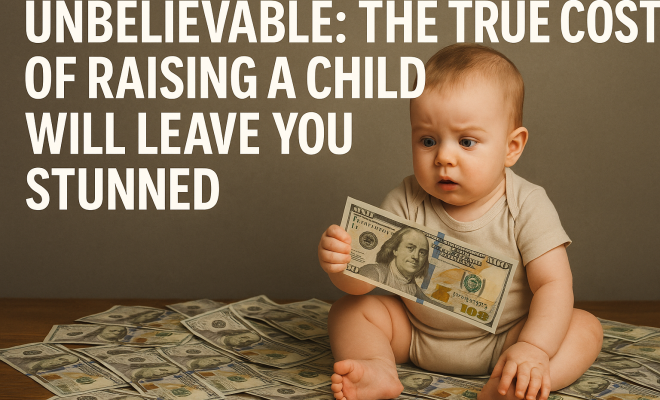
If you’re a parent, or even just thinking about becoming one, you’ve probably heard the whispers about how expensive it is to raise kids these days. But let me tell you, the latest numbers aren’t just whispers anymore – they’re a full-blown shout, and they’re going to make you sit up and pay attention. A new analysis from LendingTree has dropped a bombshell: the average cost of raising a child to age 18 in the United States has officially breached the $300,000 mark. We’re talking about an eye-watering $303,418, or roughly $16,857 every single year, just to get them to adulthood. And that’s before they even think about college.
This isn’t just a slight bump; it’s a significant leap, up about 2% from last year and a staggering 28% in just three years. When you consider that 77% of Americans already feel it’s harder to raise a family now than ever before, these figures aren’t just statistics – they’re a stark reflection of a growing crisis for many households. What’s driving this relentless climb in the cost of raising a child? And what can parents do to prepare for such a monumental financial undertaking? Let’s break down where all that money goes and what it means for families across the country.
1. The $300,000 Milestone: A New Reality for Parents
For years, financial experts have been tracking the ever-increasing expense of bringing up children. But the psychological barrier of $300,000 feels different, doesn’t it? It’s a number that truly puts into perspective the long-term financial commitment involved in parenthood. This figure, $303,418, isn’t some abstract calculation; it’s based on a typical two-earner couple earning a median income of $100,000 annually. It covers everything from food and housing to transportation, healthcare, and clothing – the essentials that every child needs to thrive.
What’s particularly startling is the pace of this increase. A 28% jump in just three years isn’t gradual inflation; it’s a rapid acceleration that outstrips wage growth for many families. This means that even if your income has risen, the purchasing power of that income for child-related expenses might actually be shrinking. It forces parents to confront a new financial reality, one where careful planning and often significant sacrifices become not just advisable, but absolutely essential from day one.
2. Childcare Costs: The Primary Financial Black Hole
If there’s one villain in this story, it’s childcare. The LendingTree report specifically points to escalating childcare expenses as the main culprit behind this dramatic increase in the cost of raising a child. Think about it: for many families, especially those with two working parents, quality childcare isn’t a luxury; it’s a necessity. And the price tag for that necessity has become exorbitant.
We’re talking about costs that, in some states, can rival or even exceed college tuition. Daycare centers, nannies, after-school programs – these services are vital for parents to maintain their careers and provide for their families, yet they often consume a massive chunk of their income. This isn’t just about paying for supervision; it’s about paying for early childhood education, safe environments, and often, the peace of mind that comes with knowing your child is well cared for while you’re at work. Without meaningful policy changes or more affordable options, childcare will continue to be the biggest hurdle for families trying to manage the cost of raising a child.
3. Beyond 18: The Hidden College Costs
Here’s where the numbers get even more sobering: the $303,418 estimate does not include college costs. Let that sink in for a moment. Once your child turns 18, the financial spigot doesn’t magically turn off. In fact, for many, it opens wider. The report estimates that adding college expenses could tack on another $152,000 to the total bill. We’re talking about an average, mind you, not the sticker price for an Ivy League education.
So, if you’re planning for your child’s entire financial journey, from birth through a four-year degree, you’re looking at a grand total that easily approaches half a million dollars. This figure often becomes the greatest financial stressor for parents as their children approach high school graduation. It prompts crucial questions about savings strategies, student loans, and whether a traditional four-year degree is even the most financially prudent path for every young adult. The decision to save for college, and how much, becomes a critical part of the overall financial plan when considering the true cost of raising a child.
4. State-by-State Differences: Where Your Money Goes Further (or Not)
While $303,418 is the national average, the reality on the ground varies wildly depending on where you live. Just like with housing or groceries, the cost of raising a child is heavily influenced by your state and even your specific city. Places with a higher cost of living, particularly those with expensive housing markets and scarce, pricey childcare options, will naturally see parents shelling out significantly more than the national average.
For instance, states like Massachusetts, Hawaii, and New York consistently rank among the most expensive places to raise a family, largely due to astronomical housing and childcare costs. On the flip side, states in the Midwest or South might offer a bit more breathing room financially. Understanding these regional differences is crucial for families considering relocation or simply trying to budget effectively within their current locale. A ‘cost of raising a child calculator’ that factors in your specific zip code can be an invaluable tool here. (See: Positive Parenting Resources from CDC.)
5. The Broader Economic Picture: Inflation and Stagnant Wages
It’s not just childcare; a confluence of economic factors is contributing to the soaring cost of raising a child. Persistent inflation, which has impacted everything from groceries to gasoline, means that the everyday expenses of feeding, clothing, and transporting children have all gone up. While inflation has cooled slightly, the cumulative effect of several years of high price increases means that budgets are stretched thin.
Compounding this issue is the reality that for many families, wage growth simply hasn’t kept pace. If your income isn’t rising at least as fast as the cost of living, your family’s financial position is effectively eroding. This creates a challenging environment where parents are constantly trying to do more with less, or working longer hours just to maintain the same standard of living. It’s a fundamental economic squeeze that makes the dream of a comfortable middle-class family life feel increasingly out of reach for many. For more context, see hidden student loan interest rate discount.
6. Beyond the Numbers: The Impact on Family Planning and Well-being
These daunting financial figures aren’t just abstract numbers on a spreadsheet; they have profound real-world implications for how families are formed and how they live. We’re seeing more couples delaying parenthood, having fewer children than they might have desired, or even opting out of having children altogether, purely for financial reasons. The pressure to provide can also lead to increased stress, longer work hours, and less time for parents to spend with their children, creating a vicious cycle.
The mental and emotional toll of constantly worrying about money is immense. Parents often feel a deep sense of guilt if they can’t provide every opportunity they wish for their children. This financial strain can impact marital satisfaction, parental well-being, and ultimately, the overall quality of family life. It’s a societal problem that extends far beyond individual household budgets, influencing demographics and the future workforce.
7. Budgeting Strategies: Making Every Dollar Count
Given the challenging landscape, what’s a parent to do? The first step is to get brutally honest about your finances. Creating a detailed budget that tracks every penny spent on child-related expenses is non-negotiable. This means not just tallying up the obvious costs like daycare, but also the less obvious ones: extracurricular activities, birthday parties, school supplies, and even the hidden ‘kid tax’ on things like larger homes or bigger cars.
Look for areas where you can cut back without compromising your child’s well-being. Can you buy second-hand clothes or toys? Are there free community activities instead of expensive private lessons? Can you meal plan more effectively to reduce grocery waste? Every little bit adds up over 18 years. Tools like a ‘cost of raising a child calculator’ can help you visualize where your money is going and identify potential savings.
8. Exploring Affordable Childcare and Education Options
Since childcare is such a significant expense, it deserves special attention. Research all your options: home-based daycares, co-op programs where parents volunteer, employer-sponsored childcare benefits, or even staggering work schedules with a partner to reduce full-time care needs. Don’t be afraid to explore government subsidies or assistance programs if your income qualifies. These programs exist precisely to help alleviate the burden of the cost of raising a child.
For education, think creatively beyond the traditional university path. Community colleges, vocational schools, and apprenticeships can offer excellent, more affordable alternatives to a four-year university degree. Starting a 529 college savings plan early is also crucial, even if you can only contribute a small amount initially. The power of compound interest over 18 years can make a substantial difference in easing the future financial load.
9. Advocacy and Systemic Change: Beyond Individual Solutions
While individual budgeting and planning are essential, it’s also clear that the problem of the rising cost of raising a child isn’t solely on the shoulders of parents. This is a societal issue that requires systemic solutions. Advocacy for more affordable and accessible childcare, increased government support for families, and policies that address wage stagnation are critical.
Things like universal pre-kindergarten programs, expanded child tax credits, and investments in early childhood education infrastructure could significantly reduce the financial burden on families. As citizens and parents, demanding these changes from our elected officials is not just about making our own lives easier; it’s about ensuring that the next generation has the opportunity to thrive, regardless of their parents’ income. The discussion around the cost of raising a child needs to move from individual struggle to collective action.
10. The “Opportunity Cost” of Parenthood: What You Give Up
When we talk about the cost of raising a child, it’s easy to focus solely on the direct expenses – the tangible dollars leaving your bank account. But there’s a significant, often overlooked, component: the opportunity cost. This refers to the benefits you miss out on when you choose to have children instead of pursuing other financial or personal goals. (See: New York Times on the Cost of Raising Kids.)
For many, this means a parent, usually the mother, reducing work hours or leaving the workforce entirely to care for young children. This decision has a cascading financial impact: lost income, stalled career progression, reduced contributions to retirement accounts, and a diminished earning potential over a lifetime. Even if both parents continue to work full-time, the need for extensive childcare eats into potential savings or investments. That money could have gone toward a larger down payment on a house, an early retirement, or funding other passions. Understanding this opportunity cost helps paint a more complete picture of the financial commitment involved in parenthood, making the true cost of raising a child even higher than the direct expenses suggest.
11. Unexpected Expenses: The “Oops” Moments
No budget, no matter how meticulously planned, can account for every curveball life throws. Kids, bless their hearts, are masters of unexpected expenses. Think about the emergency room visit for a swallowed coin, the sudden need for braces, a growth spurt that requires an entire new wardrobe overnight, or the laptop that mysteriously breaks right before a school project is due. These aren’t annual line items you can easily predict. They’re the “oops” moments that can quickly derail a carefully constructed family budget. For more context, see retirement choices for educators.
Building an emergency fund becomes even more critical for parents. Aim for at least six months’ worth of living expenses, but consider a “kid-specific” emergency fund for those unforeseen needs. Having this buffer can prevent you from dipping into retirement savings or racking up credit card debt when these inevitable surprises pop up. It’s part of the comprehensive strategy to manage the cost of raising a child effectively.
12. The Psychological and Emotional Toll on Parents
Beyond the raw financial strain, the constant pressure of providing for children in an expensive world takes a significant psychological and emotional toll on parents. There’s the pervasive guilt of not being able to afford certain experiences or opportunities for your kids. Parents often feel they are constantly sacrificing their own needs and desires, leading to burnout and resentment. The mental load of managing finances, alongside all the other responsibilities of parenting, can be overwhelming.
This stress can manifest in various ways: sleep deprivation, increased anxiety, marital tension, and even health issues. It’s important for parents to acknowledge this aspect of the cost of raising a child and actively seek ways to manage it, whether through support groups, therapy, or simply carving out small moments for self-care. Prioritizing mental well-being isn’t selfish; it’s essential for sustainable parenting.
13. The Shifting Landscape of Parental Support and Benefits
While the overall trends point to increasing costs, it’s worth noting that the landscape of parental support is slowly evolving, though perhaps not fast enough. Some companies are beginning to offer more robust parental leave policies, childcare subsidies, or flexible work arrangements. Certain states are experimenting with universal pre-kindergarten initiatives or expanded child tax credits.
However, these benefits are often fragmented and vary widely. What’s available to a family in one state or at one company might be completely absent for another. This disparity highlights the need for broader, more consistent policy changes at the federal level to truly address the systemic issues contributing to the high cost of raising a child. Staying informed about available benefits, both public and private, can provide some relief, but a more comprehensive safety net is still sorely needed.
Frequently Asked Questions About the Cost of Raising a Child
Let’s tackle some common questions parents often have when grappling with these substantial figures.
Q1: Is the $303,418 estimate accurate for all families?
No, it’s an average based on a specific demographic: a middle-income, two-parent household. Your actual costs will vary significantly based on your income, where you live (state-by-state differences are huge!), the number of children you have, and your lifestyle choices. Families with higher incomes often spend more, while lower-income families naturally spend less, often making greater sacrifices along the way. Think of it as a baseline to start your own calculations. For more context, see maximize your retirement accounts.
Q2: What are the biggest cost categories for raising a child?
The top three categories consistently absorbing the most money are housing, childcare/education, and food. Housing costs are often inflated by the need for more space or living in good school districts. Childcare, as discussed, is a massive expense for working parents. Food costs increase with age and activity levels. Transportation, healthcare, and clothing follow these major categories.
Q3: How much does it cost to raise a child per month?
Dividing the annual average of $16,857 by 12 months gives you roughly $1,405 per month. Again, this is an average. In high-cost-of-living areas or during periods of intensive childcare needs (like toddler years), this monthly figure can easily be much higher. Conversely, it might be lower in more affordable regions or once children are older and in public school.
Q4: Does having more children mean a proportional increase in cost?
Not necessarily a linear increase. There are some economies of scale. For example, a larger car might already be needed for one child, and hand-me-down clothes and toys can save money. However, childcare costs will multiply for each child, and food expenses will certainly increase. The more children you have, the greater the overall financial commitment, even if the per-child average might slightly decrease due to shared resources.
Q5: How can I save money on child-related expenses?
Lots of ways! Prioritize needs over wants. Buy second-hand clothes, gear, and toys. Utilize public libraries and free community events. Meal plan to reduce grocery waste. Explore co-op childcare options or family help. Consider public school over private. If you have flexibility, living in a lower cost-of-living area can make a huge difference. Starting a college fund early, even with small amounts, leverages compound interest.
Q6: Should I delay having children because of the cost?
This is a deeply personal decision. While the financial figures are intimidating, many parents find ways to make it work, often through creative budgeting, lifestyle adjustments, and tapping into support networks. Delaying parenthood can allow you more time to save and advance your career, but it also has implications for fertility and energy levels. It’s about balancing financial readiness with your personal desires and biological clock.
Q7: What government assistance is available to help with child costs?
Government assistance varies widely by state and income level. Federally, programs like the Child Tax Credit (which changes periodically), the Child and Dependent Care Credit, and SNAP (food assistance) can provide some relief. Many states offer childcare subsidies, pre-kindergarten programs, and healthcare assistance for children. Research what’s available in your specific state and local area, and don’t hesitate to apply if you qualify.
The $300,000 figure is a wake-up call, no doubt about it. It forces us to confront the immense financial responsibility that comes with raising children in the modern era. But it also highlights the resilience of parents and the enduring value we place on family. While the numbers are daunting, with careful planning, smart choices, and a collective push for better societal support, we can still navigate this challenging landscape and give our children the best possible start in life.
Trending Now
Frequently Asked Questions
What is the average cost of raising a child in the US?
The average cost of raising a child to age 18 in the United States is approximately $303,418. This breaks down to about $16,857 per year, covering essential expenses such as food, housing, transportation, healthcare, and clothing.
How much has the cost of raising a child increased recently?
The cost of raising a child has seen a significant increase of about 2% from last year and a staggering 28% over the past three years, highlighting a growing financial challenge for many families.
What factors contribute to the high cost of raising children?
Several factors contribute to the high cost of raising children, including rising expenses for housing, healthcare, education, and childcare, which all significantly impact family budgets.
How can parents prepare for the financial burden of raising a child?
Parents can prepare for the financial burden of raising a child by budgeting effectively, exploring savings options, and considering the long-term financial implications of expenses that arise from childbirth to adulthood.
Is it harder to raise a family now than in the past?
Yes, 77% of Americans believe it is harder to raise a family now than in previous years, largely due to increasing costs of living and the rising expenses associated with child-rearing.
Agree or disagree? Drop a comment and tell us what you think.