AI Predicts Alzheimer’s 10 Years Early with 95% Accuracy (2026)
As an educator and someone deeply invested in how innovation can improve lives, I’ve always been fascinated by technology’s potential to solve some of humanity’s most pressing problems. We’ve seen AI transform everything from how we teach our children to how we manage our finances. But what if it could give us the ultimate gift: time? Specifically, time to prepare for, and perhaps even mitigate, the devastating impact of Alzheimer’s disease.
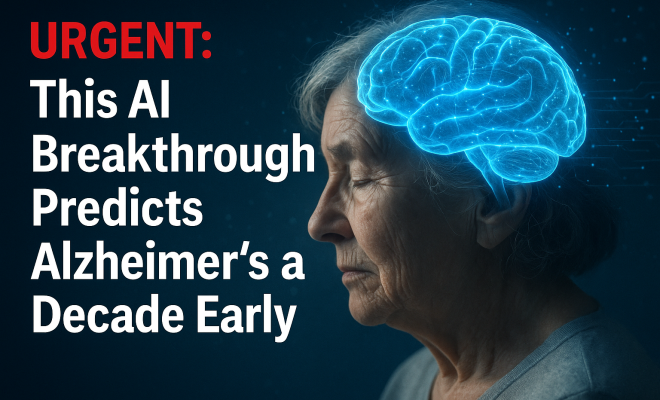
A recent study, hot off the presses from the Global Institute for Neuro-AI Research on July 24, 2026, has unveiled something truly groundbreaking. They’ve developed an artificial intelligence model that can predict the onset of Alzheimer’s disease up to a full decade in advance, with an astonishing accuracy rate of over 95%. This isn’t science fiction anymore; it’s a tangible reality that could fundamentally change how families approach neurological health. For anyone asking how to use AI to predict Alzheimer’s risk, this development isn’t just a step forward; it’s a giant leap.
This isn’t just about a fancy algorithm; it’s about leveraging routine blood markers and genetic data – information that, in many cases, is already being collected during standard medical check-ups. Imagine the implications: knowing you or a loved one might be at high risk years before symptoms even begin to surface. It opens up an unprecedented window for early intervention, for lifestyle adjustments, and for personalized treatment strategies that simply weren’t possible before. But like any powerful tool, it comes with its own set of complexities and ethical considerations. Let’s delve into what this means for families and how we can all engage with this revolutionary technology responsibly.
1. Understanding the AI Breakthrough: A New Era of Predictive Medicine
The core of this monumental discovery lies in an advanced AI model developed by researchers at the Global Institute for Neuro-AI Research. What makes this particular algorithm so powerful isn’t just its predictive accuracy, which is truly remarkable at over 95%, but its ability to analyze readily available data points. We’re talking about routine blood tests – the kind you might get during an annual physical – combined with genetic information. This isn’t some invasive or prohibitively expensive diagnostic procedure; it’s about making sense of data that’s often already sitting in medical records.
The AI model identifies subtle patterns and biomarkers that, individually, might seem insignificant but, when combined and analyzed by this sophisticated algorithm, paint a clear picture of future Alzheimer’s risk. Think of it like a detective piecing together tiny clues that, on their own, don’t mean much, but together reveal a compelling narrative. This allows for a prediction window of up to ten years before clinical symptoms manifest. This extended foresight is what truly sets this apart, moving us from reactive treatment to proactive prevention and management. It’s truly a game-changer in how to use AI to predict Alzheimer’s risk. AI detection tools offers useful background here.
To really appreciate this breakthrough, it helps to understand a bit about what these “biomarkers” are. Traditionally, diagnosing Alzheimer’s in its early stages has been a challenge because the brain changes happen long before obvious symptoms appear. We’re talking about things like amyloid plaques and tau tangles, which are abnormal protein buildups in the brain. Current methods to detect these often involve expensive PET scans or invasive spinal taps. This new AI model, however, looks for more accessible indicators in the blood. These could be specific proteins, metabolites, or even subtle changes in cell-free DNA that signal the early stages of the disease process. The genius of the AI is its ability to find the tiny correlations within this vast sea of data that human researchers might miss. It’s like having a super-powered microscope for your blood, showing you the future of your brain’s health.
2. The Unprecedented Value of Early Detection: Gaining a Decade
Ten years. Let that sink in. A decade of knowing what might be on the horizon. For families facing the specter of Alzheimer’s, this isn’t just information; it’s a profound gift of time. Early detection transforms the entire narrative around the disease. Instead of waiting for memory loss, confusion, or personality changes to become undeniable, families can now act with purpose and foresight.
What can you do with a decade? A lot, as it turns out. This window allows individuals and their families to explore preventative measures, engage in lifestyle modifications known to support brain health, and even participate in clinical trials for emerging treatments years before they might have otherwise qualified. It provides an opportunity to put affairs in order, make crucial life decisions with full cognitive capacity, and build a robust support system. This proactive approach can significantly impact the quality of life for both the individual and their caregivers, potentially delaying onset or slowing progression in ways we could only dream of before.
Think about the practical impact. With a ten-year heads-up, someone could prioritize a Mediterranean diet, known for its brain-protective qualities, with renewed vigor. They could commit to a regular exercise routine, which studies consistently link to better cognitive health. They might also engage in more mentally stimulating activities, like learning a new language or skill, which builds cognitive reserve. Beyond lifestyle, this window allows for crucial legal and financial planning. Imagine the peace of mind knowing you’ve made decisions about your estate, power of attorney, and healthcare directives while fully capable. This isn’t just about managing a diagnosis; it’s about reclaiming autonomy and ensuring your wishes are honored, reducing immense stress for both the individual and their loved ones down the line. It’s truly about living well, even with foreknowledge of a potential challenge.
3. Personalized Healthcare Strategies: Tailoring the Approach
One of the most exciting aspects of this AI-driven prediction is the potential for truly personalized healthcare. Alzheimer’s isn’t a one-size-fits-all disease; its progression and even its underlying causes can vary significantly from person to person. Knowing an individual’s specific risk profile – derived from their unique genetic makeup and blood markers – allows healthcare providers to craft highly individualized prevention and intervention plans.
This could mean dietary recommendations tailored to specific metabolic pathways, exercise regimens designed to target areas of potential vulnerability, or even targeted pharmaceutical interventions that are most likely to be effective for that particular individual. Instead of broad, generic advice, we can now move towards precision medicine, where every recommendation is informed by a deep understanding of the individual’s biological predisposition. This level of personalization promises a more effective and efficient fight against the disease, moving beyond guesswork to data-driven strategies for how to use AI to predict Alzheimer’s risk and then act on that information. (See: NIH identifies blood markers for Alzheimer's.)
To put this into perspective, consider the varying genetic risk factors for Alzheimer’s. For instance, the APOE4 gene is a well-known risk factor, but its presence doesn’t guarantee the disease, nor does its absence guarantee immunity. However, combining APOE4 status with other genetic markers and specific blood biomarkers creates a much more nuanced risk picture. An AI can identify if a person’s profile suggests a higher risk due to inflammation, insulin resistance, or specific protein processing issues. For someone with an inflammatory predisposition, a doctor might recommend anti-inflammatory diets or specific supplements. For another, whose risk points to metabolic dysregulation, interventions focusing on blood sugar control could be paramount. This targeted approach is a stark contrast to the general “eat healthy, exercise” advice often given, making interventions far more potent and meaningful for the individual. It’s about getting the right intervention to the right person at the right time.
4. Practical Steps for Families: Engaging with Healthcare Providers
So, you’re aware of this incredible breakthrough and want to explore how it might apply to your family. What are the practical steps you can take? First and foremost, open a dialogue with your primary care physician or a neurologist. This isn’t something you can simply order online; it requires medical interpretation and guidance. Be prepared to discuss your family history of Alzheimer’s, any personal concerns you might have, and your interest in this new predictive AI technology. For more context, see AI's potential to revolutionize healthcare.
It’s important to understand that while the technology exists, its integration into standard clinical practice will take time. Your doctor might not be immediately familiar with the specific algorithm from the Global Institute for Neuro-AI Research, but they should be able to guide you on current best practices for Alzheimer’s risk assessment and discuss how emerging technologies like this one are being evaluated for broader use. Ask about genetic testing options and routine blood panels that could provide the data necessary for such AI analysis in the future. Educating yourself, and then educating your doctor, can be a powerful first step.
When you talk to your doctor, come prepared with specific questions. Ask about current recommendations for cognitive health, regardless of this new AI. Inquire if they are aware of any local or national clinical trials for early Alzheimer’s detection or prevention. Many medical professionals are eager to learn about new advancements, so sharing information about this study can be a collaborative effort. You might also ask about what specific blood tests they typically run during an annual physical and if those could potentially contribute to future AI models. Remember, even if this exact AI model isn’t yet widely available, discussing your concerns and interest helps move the conversation forward in the medical community. Your proactive engagement can help accelerate the adoption of such crucial technologies.
5. Navigating the Ethical Minefield: Privacy, Discrimination, and Psychological Impact
While the promise of this AI breakthrough is immense, we can’t ignore the significant ethical considerations it brings to the forefront. As an educator, I’ve always stressed the importance of critical thinking and looking at all sides of an issue, and this is no different. The potential for patient privacy breaches is a major concern. Genetic and health data are incredibly sensitive, and ensuring their security against hacking or misuse is paramount. How will this data be stored? Who will have access? These are not trivial questions.
Then there’s the specter of discrimination. Could health or life insurance providers use this predictive information to deny coverage or dramatically increase premiums for individuals identified as high-risk? This isn’t just a hypothetical; it’s a very real fear that needs robust legislative and regulatory safeguards. Furthermore, consider the psychological impact of receiving such a diagnosis a decade in advance. While some might find it empowering, others could find it deeply distressing, leading to anxiety, depression, or a diminished quality of life. We need to develop comprehensive support systems and counseling services to help individuals navigate such profound news, ensuring that the benefits of early prediction don’t come at an unbearable human cost.
The privacy concern extends beyond just hacking. We need clear guidelines on data ownership and sharing. If your genetic and blood biomarker data are used to train these AI models, do you retain any rights over that derived information? What if aggregated, anonymized data is sold to pharmaceutical companies for research? While beneficial for science, individuals should have transparency and control over how their biological information contributes to these broader initiatives. On the discrimination front, the Genetic Information Nondiscrimination Act (GINA) in the U.S. currently protects individuals from discrimination in health insurance and employment based on genetic information. However, GINA doesn’t apply to life insurance, disability insurance, or long-term care insurance. This gap creates a critical vulnerability for individuals identified as high-risk for Alzheimer’s, making legislative updates essential. The psychological burden can’t be overstated. Imagine living with the knowledge that a devastating disease is likely in your future. This requires not just medical support, but robust psychological counseling, support groups, and mental health resources readily available from the moment of disclosure. We need to ensure that the gift of time doesn’t become a burden of dread.
6. The Financial Landscape: Costs and Insurance Implications
Let’s talk about the practicalities, specifically the financial ones. ‘Alzheimer’s early detection cost’ is a search term I imagine is exploding right now. While the AI model itself leverages routine data, the specialized analysis, genetic testing (if not already done), and subsequent personalized care plans could incur significant costs. Who bears this burden? Will insurance companies cover these predictive tests and the preventative interventions that follow? This is where the ‘medical/healthcare’ and ‘insurance’ niches collide with very real commercial implications.
The health insurance industry will undoubtedly be grappling with how to integrate this new predictive capability. On one hand, early detection and prevention could, in the long run, reduce the overall cost of managing late-stage Alzheimer’s. On the other hand, the immediate cost of testing and preventative care for a larger population, coupled with the potential for increased payouts for long-term care, presents a complex actuarial challenge. Families need to be vigilant, advocating for coverage and understanding their rights as these policies evolve. This debate about ‘health insurance implications for genetic predispositions’ is only just beginning, and it will shape how broadly accessible this life-changing technology truly becomes.
Consider the economic model here. If millions of people are identified as high-risk, the demand for preventative therapies, specialized diets, cognitive training programs, and regular monitoring will skyrocket. The healthcare system, already strained, would need to adapt significantly. From an insurance perspective, they might argue that covering early predictive tests and preventative measures could save them money on costly late-stage care, which can run into hundreds of thousands of dollars per patient. However, they’ll also weigh the cost of covering a potentially vast population of “at-risk” individuals for a decade or more. This tension will likely lead to intense negotiations and policy changes. It’s crucial for patient advocacy groups and policymakers to push for broad coverage, ensuring that financial barriers don’t prevent people from accessing these potentially life-saving tools. If only the wealthy can afford early prediction and intervention, we risk exacerbating existing health inequities, which is something we absolutely must avoid.
7. Beyond Prediction: Lifestyle, Research, and Future Directions
While predicting Alzheimer’s risk is a monumental achievement, it’s just one piece of a larger puzzle. The goal isn’t just to know, but to act. This breakthrough fuels the urgency for ongoing research into preventative neurological care. What specific lifestyle changes – diet, exercise, cognitive stimulation, stress reduction – have the most profound impact on those identified as high-risk? The data from this AI model can help researchers target specific populations for intervention studies, leading to more conclusive answers.
Moreover, this AI model itself is likely just the beginning. Future iterations could become even more accurate, integrate additional data points (like neuroimaging or even wearable tech data), and potentially predict other neurological conditions. The intersection of AI and medical research is an ‘ever-evolving’ field, and we should expect continuous advancements. For families, staying informed about these developments, engaging with patient advocacy groups, and supporting ethical research will be crucial in harnessing the full potential of this technology.
The ability of AI to stratify risk also opens doors for more efficient clinical trials. Instead of recruiting a broad population, researchers can now focus on individuals with a very high, AI-predicted risk, making it easier to see if new drugs or interventions are truly effective. This could significantly accelerate the development of treatments. Imagine an AI that not only predicts risk but also suggests the most effective combination of lifestyle changes and potential medications based on your unique biological profile. This takes personalized medicine to an entirely new level. We’re also seeing the rise of digital biomarkers – data collected from smartphones, smartwatches, or other wearables – that could provide continuous, real-time insights into cognitive function, sleep patterns, and activity levels. Integrating this passive data with genetic and blood biomarker data could refine AI predictions even further, offering an unprecedented, holistic view of an individual’s neurological health trajectory. (See: CDC information on Alzheimer's disease.)
9. The Role of Public Health and Education: Widespread Impact
Beyond individual healthcare, this AI breakthrough has massive implications for public health. As an educator, I believe knowledge is power. If we can identify a significant portion of the population at risk years in advance, public health initiatives can shift from general awareness to targeted prevention campaigns. Imagine widespread educational programs on brain health, tailored to different risk profiles. These could be disseminated through community centers, schools, and employer wellness programs.
Public health bodies could also play a critical role in standardizing the collection of relevant data, ensuring data privacy and security across the board, and advocating for equitable access to these predictive tools. They would be instrumental in developing guidelines for doctors on how to communicate risk and support patients effectively. This shift requires a coordinated effort between medical researchers, public health officials, educators, and community leaders to build a robust infrastructure that supports widespread early detection and intervention. It’s about creating a societal safety net that leverages this technology for the greater good. For more context, see AI spending and its impact on innovation.
10. Comparative Analysis: AI vs. Traditional Diagnostic Methods
It’s helpful to understand how this AI model stacks up against what we’ve traditionally used to assess Alzheimer’s risk. For decades, diagnosis primarily relied on clinical observation of symptoms, cognitive tests, and ruling out other conditions. Definitive diagnosis often only came post-mortem. More recently, advancements like amyloid PET scans and CSF (cerebrospinal fluid) analysis have allowed for earlier detection of the biological hallmarks of Alzheimer’s, but these are invasive, expensive, and often only performed when symptoms are already present.
The key differentiator for the AI model is its ability to predict before symptoms manifest, using readily available, less invasive data. Traditional methods are largely reactive; the AI is proactive. While a PET scan can confirm amyloid plaques, the AI can suggest the likelihood of their development years in advance based on a blood test. This isn’t to say traditional methods become obsolete, but rather that AI provides a powerful pre-screening and early warning system, allowing for interventions long before the disease takes hold and potentially making traditional diagnostic tools more targeted and effective when they are eventually needed. It’s about moving from a “wait and see” approach to a “know and act” paradigm.
11. Future Ethical Debates: The Slippery Slope of Prediction
As revolutionary as this is, we need to remain vigilant about the future ethical dilemmas. What happens when AI becomes even more accurate, predicting not just risk, but the exact age of onset or the severity of cognitive decline? This level of determinism, even if statistically probable, could have profound psychological and societal effects. How do we ensure individuals retain autonomy and hope when faced with such precise predictions?
Another area of concern is the potential for “genetic exceptionalism” – treating genetic information differently than other health data. While some protections exist, the unique, immutable nature of genetic data warrants extreme caution. Will there be pressure to genetically screen entire populations? What are the implications for reproductive decisions if parents can predict their child’s future risk for a range of neurological conditions? These are not easy questions, and they require ongoing societal dialogue, ethical frameworks, and legislative action to ensure that technological progress serves humanity without eroding fundamental rights or well-being.
12. The Hope and the Challenge Ahead: A Call to Action for Families
This breakthrough from the Global Institute for Neuro-AI Research offers a beacon of hope for millions of families worldwide. The ability to predict Alzheimer’s onset a decade in advance is nothing short of revolutionary. It empowers individuals and their loved ones with precious time – time to prepare, time to intervene, and time to live more fully. This isn’t just about avoiding a disease; it’s about reclaiming agency in the face of a condition that often feels uncontrollable.
However, this hope comes with significant challenges that we, as a society, must address head-on. We need robust frameworks to protect patient privacy, prevent discrimination, and provide comprehensive psychological support. We must advocate for equitable access to this technology, ensuring that its benefits aren’t limited to a privileged few. For families, the call to action is clear: educate yourselves, engage with your healthcare providers, and advocate for policies that prioritize both innovation and human well-being. The future of Alzheimer’s care is being written right now, and every one of us has a role to play in shaping it for the better. We truly need to understand how to use AI to predict Alzheimer’s risk, but more importantly, how to use that knowledge responsibly and compassionately.
Frequently Asked Questions About AI and Alzheimer’s Prediction
Q1: How accurate is this new AI model?
A1: The study reports an astonishing accuracy rate of over 95% in predicting Alzheimer’s disease onset up to a full decade in advance. This means it’s highly reliable in identifying individuals who are likely to develop the disease, giving them a significant head start on preventative measures.
Q2: What kind of data does the AI use for prediction?
A2: The model primarily leverages routine blood markers and genetic data. These are types of information often collected during standard medical check-ups, making the predictive process less invasive and potentially more accessible than other advanced diagnostic methods. For more context, see critical risks of AI in everyday life. (See: New York Times on Alzheimer's blood tests.)
Q3: Is this AI prediction available to the public right now?
A3: While the technology has been developed and validated in a research setting, its widespread integration into standard clinical practice will take time. This involves regulatory approvals, further validation across diverse populations, and the development of clear protocols for its use. It’s best to discuss with your doctor about current Alzheimer’s risk assessment options and the timeline for such advanced technologies becoming available.
Q4: What are the main benefits of early Alzheimer’s prediction?
A4: Early prediction offers a crucial window of up to ten years for proactive intervention. This allows individuals and families to explore lifestyle modifications, engage in clinical trials, make informed legal and financial decisions, and build a strong support system, potentially delaying onset or slowing progression of the disease.
Q5: What are the ethical concerns associated with this technology?
A5: Key ethical considerations include patient privacy and data security for sensitive genetic and health information, the potential for discrimination by insurance companies based on predictive diagnoses, and the psychological impact of receiving such life-altering news a decade in advance. Robust safeguards and support systems are critical to address these concerns.
Q6: Will my insurance cover the cost of these predictive tests and subsequent care?
A6: The landscape of insurance coverage for predictive tests and preventative care related to Alzheimer’s is still evolving. While early detection could reduce long-term costs, the immediate financial implications for insurance providers are complex. Families should advocate for coverage and stay informed about policy changes in health, life, and long-term care insurance.
Q7: Can lifestyle changes truly make a difference if I’m predicted to be at high risk?
A7: Absolutely. While genetics play a role, lifestyle factors like diet, regular exercise, cognitive stimulation, and stress management are known to significantly impact brain health. With a decade of foresight, individuals can aggressively implement these changes, potentially delaying onset or mitigating the severity of the disease’s progression. The personalized insights from AI can even help tailor these recommendations for maximum effect.
Q8: What should I do if I have a family history of Alzheimer’s?
A8: If you have a family history, it’s particularly important to discuss your concerns with your primary care physician or a neurologist. They can assess your current risk based on established factors, discuss existing genetic testing options, and inform you about emerging technologies like this AI model as they become more widely available. Being proactive and informed is key.
Q9: How will this AI model affect current Alzheimer’s research and drug development?
A9: This AI breakthrough is expected to significantly accelerate research and drug development. By identifying high-risk individuals before symptoms appear, clinical trials can become more targeted and efficient, making it easier to test the efficacy of new preventative treatments and interventions. This could lead to faster development of effective therapies.
Q10: What is the long-term vision for AI in neurological health?
A10: The long-term vision involves AI becoming an integral part of precision medicine for neurological health. This includes even more accurate and earlier prediction of various conditions, personalized intervention strategies based on an individual’s unique biological profile, integration with wearable tech for continuous monitoring, and ultimately, a shift towards proactive prevention rather than reactive treatment across a spectrum of brain disorders.
Trending Now
Frequently Asked Questions
How does AI predict Alzheimer's disease?
AI predicts Alzheimer's disease by analyzing routine blood markers and genetic data, which can identify risk factors years before symptoms appear. A recent study revealed an AI model that achieves over 95% accuracy in forecasting the onset of the disease up to a decade in advance.
What are the benefits of early Alzheimer's prediction?
Early prediction of Alzheimer's allows individuals and families to prepare for potential challenges. It enables proactive lifestyle changes, personalized treatment strategies, and early interventions that can significantly impact quality of life and possibly mitigate the disease's effects.
What ethical considerations are involved in AI predicting Alzheimer's?
The ethical considerations include concerns about privacy, consent, and the potential psychological impact of knowing one's risk. It's crucial to engage with this technology responsibly, ensuring that individuals are informed and supported throughout the process.
What is the accuracy of the AI model for predicting Alzheimer's?
The AI model developed by the Global Institute for Neuro-AI Research boasts an astonishing accuracy rate of over 95% in predicting Alzheimer's disease, marking a significant advancement in predictive medicine and neurological health management.
How can families prepare for Alzheimer's using AI predictions?
Families can prepare for Alzheimer's by utilizing AI predictions to understand potential risks. This knowledge can guide them in making informed decisions regarding lifestyle adjustments, seeking early interventions, and exploring personalized treatment options to enhance overall well-being.
What did we miss? Let us know in the comments and join the conversation.