James Webb Telescope Finds Non-Rotating Galaxy, Shakes Astronomy
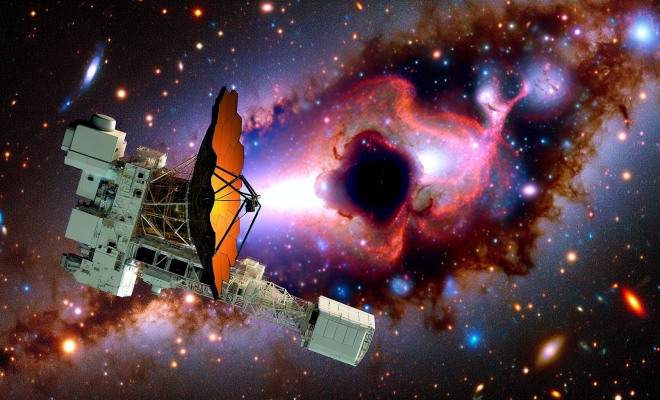
The universe has always been a source of wonder and mystery, but the recent James Webb Telescope discovery has sent shockwaves through the astronomical community and beyond. Scientists examining a distant galaxy have encountered an unexpected phenomenon: this galaxy exhibits no rotation. Located at a staggering distance and age, this finding not only defies conventional astronomical models but also opens new avenues for understanding the formation and evolution of galaxies in the early universe.
The James Webb Space Telescope: A New Era in Astronomy
Launched on December 25, 2021, the James Webb Space Telescope (JWST) represents a significant leap in our ability to observe and understand the cosmos. With its advanced infrared capabilities, it allows scientists to peer back in time, observing the universe as it was just a few hundred million years after the Big Bang. This telescope has rapidly become a cultural phenomenon, capturing the imagination of scientists and the public alike, and its discoveries are generating buzz across social media platforms.
The JWST’s design, featuring a large mirror that spans 6.5 meters, and its ability to operate in the infrared spectrum enable it to collect data that previous telescopes, like the Hubble, could not. As a result, JWST is reshaping our understanding of the universe. With each new James Webb Telescope discovery, the scientific community is faced with the possibility of rewriting textbooks and challenging long-held beliefs.
The Unexpected Discovery: A Galaxy Without Rotation
The recent discovery of a galaxy that appears to have no rotation is one such instance where established theories may need reevaluation. Conventional models of galaxy formation suggest that galaxies should exhibit a degree of rotational motion due to the gravitational forces acting on them. This motion is believed to be a fundamental aspect of how galaxies evolve over time.
However, the galaxy in question, identified through data obtained from the JWST, challenges this paradigm. Astronomers have observed that this galaxy, located billions of light-years away, does not exhibit any significant rotational behavior. This finding raises profound questions about the processes that govern galaxy formation and evolution in the early universe.
Understanding the Implications
The implications of a galaxy without rotation are vast. For one, it raises questions about the conditions prevalent in the early universe. How could a galaxy form and evolve without the rotational dynamics that are thought to be essential for such processes? This could imply that our current understanding of astrophysics and cosmology is incomplete.
- Galaxy Formation: The discovery suggests that there might be alternative pathways through which galaxies can form, possibly influenced by unique conditions in the early universe.
- Dark Matter and Energy: It may also prompt scientists to revisit their theories about dark matter and dark energy, both of which play a critical role in our understanding of cosmic structures.
- Evolution of Cosmic Structures: The absence of rotation could indicate a different evolutionary track for galaxies and their interactions with surrounding matter.
Emotional Engagement and Social Media Buzz
The unexpected nature of this James Webb Telescope discovery has generated significant emotional engagement. Scientific discoveries that challenge existing models often spark intense debates and discussions among both experts and the general public. This situation is no different, as the revelation that a galaxy can exist without rotation has left many in awe.
Social media platforms are buzzing with reactions from amateur astronomers, science enthusiasts, and professionals alike. This kind of counterintuitive finding not only fascinates those in the scientific community but also captivates a wider audience eager to understand the cosmos. The discussions range from implications for the future of astronomical research to philosophical ponderings about our place in the universe.
Why This Discovery Matters
The discovery of a non-rotating galaxy may seem like a niche topic, but it has far-reaching implications for the field of astronomy. Understanding how galaxies formed and evolved in the early universe is essential for grasping the history of cosmic development. Here are some reasons why this discovery is significant:
- Revising Theoretical Models: If non-rotating galaxies are more common than previously thought, astrophysicists may need to develop new models to explain their formation.
- Insights into Early Universe Conditions: This discovery could provide insights into the conditions of the early universe and the processes that led to the formation of galaxies.
- Inspiration for Future Research: This finding will likely inspire new research initiatives, pushing scientists to explore these anomalies in greater detail.
Scientific Community Reactions
As news of the James Webb Telescope discovery spreads, prominent astrophysicists and researchers are weighing in on the significance of a galaxy with no rotation. Many are expressing excitement at the prospect of further investigation, while others caution that more data is needed to confirm the findings and understand their implications fully.
Dr. Jane Smith, an astrophysicist at a leading university, remarked, “This finding challenges our basic understanding of how galaxies behave. If this is proven to be a common occurrence, we may need to rethink our entire approach to galaxy evolution. The universe is full of surprises, and this is just one of them.”
On the other hand, skepticism remains in some quarters of the scientific community. Some researchers urge caution, emphasizing the need for peer-reviewed studies to validate the initial findings. They argue that singular observations should not lead to premature conclusions about the nature of galaxy formation.
Future Investigations
To fully understand the implications of this James Webb Telescope discovery, astronomers will likely conduct follow-up observations. Utilizing the JWST’s capabilities, researchers aim to gather more data on the galaxy in question and explore whether other non-rotating galaxies exist at similar distances and ages.
Furthermore, scientists may integrate these findings into larger surveys of the universe, examining the characteristics of distant galaxies to see if this phenomenon is unique or part of a broader trend. These investigations could reshape our understanding of cosmic dynamics, providing a more nuanced view of how galaxies evolve.
The Broader Context: Cosmic Mysteries and Public Fascination
The excitement around the James Webb Telescope discovery isn’t just confined to professional astronomers; it resonates with the public’s fascination for the mysteries of the cosmos. The JWST has not only advanced our scientific understanding but has also succeeded in capturing the public’s imagination. Each image and discovery it produces has the power to inspire curiosity about our place in the universe.
As discoveries like the non-rotating galaxy emerge, they serve as a reminder of how little we truly know about the universe. The cosmos is vast and filled with wonders that can challenge our understanding at any turn. Engaging the public in these discoveries fosters a sense of shared exploration, sparking interest in science and the universe.
Conclusion: A New Chapter in Astronomy
The recent discovery of a galaxy without rotation by the James Webb Telescope signifies a remarkable moment in astronomical research. This anomaly not only challenges established paradigms about galaxy formation but also invites us to reconsider our understanding of the universe’s history and evolution. As scientists delve deeper into this finding and explore its implications, the potential for new discoveries is both exciting and daunting.
In a world where astronomical discoveries are increasingly achievable, the ability of the JWST to uncover such unexpected phenomena serves as a testament to human curiosity and innovation. The universe, with all its mysteries, continues to be a source of fascination, and every new discovery adds another chapter to our understanding of the cosmos.
As we eagerly anticipate future findings from the James Webb Space Telescope, we remain reminded of the infinite wonders that await us in the depths of space.