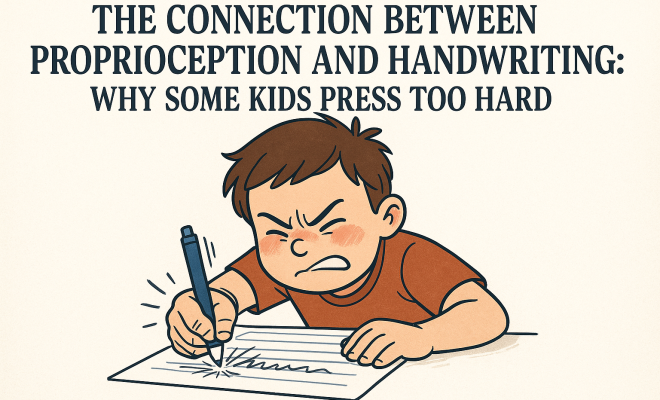
Proprioception & Handwriting: Why Kids Press Too Hard
“`html
When you watch a child struggle with their handwriting, you might think it’s a simple issue of motor skills or lack of practice. However, there’s a deeper, often overlooked factor at play: proprioception. This sensory phenomenon plays a crucial role in how children control their movements, particularly when it comes to writing. Understanding the connection between proprioception and handwriting can unlock insights into why some kids press too hard on their writing instruments, leading to frustration and poor penmanship.
What is Proprioception?
Proprioception is the body’s ability to sense its position in space. It’s a complex sensory system that allows you to know where your limbs are, even when your eyes are closed. This skill is crucial for coordinating movements, maintaining balance, and performing tasks that require fine motor skills, such as handwriting.
Proprioceptive input comes from receptors in the muscles, joints, and tendons, which send signals to the brain about the position and movement of body parts. For children, especially those who are still developing these skills, proprioception is vital in everyday activities, from walking to playing sports, and critically, in writing.
The Importance of Proprioception in Writing
Handwriting requires a combination of gross motor skills, fine motor skills, and proprioception. When children write, they need to use their muscles to control the pen or pencil accurately, apply the right amount of pressure, and maintain a consistent grip. Insufficient proprioceptive feedback can lead to problems like pressing too hard or too lightly on the paper, which can result in frustration, fatigue, and illegible handwriting.
Research indicates that children who struggle with proprioception may exhibit excessive force when writing, which can cause discomfort in their hands and arms. This issue can further hinder their motivation to write, creating a cycle that negatively affects their academic performance and self-esteem.
Why Some Kids Press Too Hard
Several factors can contribute to why some kids press too hard when writing. Let’s explore these factors more deeply:
- Neurological Development: Children’s neurological systems, which include proprioception, are still developing. In some cases, children may not have fully integrated their proprioceptive and tactile feedback systems, leading them to exert excessive pressure when writing.
- Motor Planning Issues: Children with motor planning difficulties may struggle to coordinate the movements required for writing, causing them to apply more force to achieve the desired mark on paper.
- Sensory Processing Disorders: Kids with sensory processing issues may have a heightened sensitivity to touch, causing them to press harder on the paper as a compensatory behavior.
- Fatigue: If children are fatigued or stressed, they might apply excessive force as a way to compensate for their decreased control.
Identifying Proprioceptive Challenges
Recognizing the signs of proprioceptive challenges in children is crucial for addressing handwriting issues effectively. Parents and educators can look for the following indicators:
- Excessive pressure on the writing instrument, leading to tears in the paper or discomfort in the hand.
- Inconsistent handwriting style, with variations in size, slant, and pressure.
- Poor posture while writing, with a tendency to lean excessively forward or backward.
- Frequent complaints of hand fatigue or pain during writing tasks.
- A tendency to avoid writing activities altogether.
If you observe these signs in a child, it may be helpful to consult with an occupational therapist who specializes in sensory integration and motor skills. They can provide a comprehensive assessment and recommend targeted interventions.
Practical Strategies to Improve Proprioception
Once you’ve identified proprioceptive challenges, several practical strategies can help improve a child’s handwriting by enhancing their proprioceptive input:
1. Use Various Writing Tools
Experimenting with different writing instruments can provide valuable proprioceptive feedback. Consider using:
- Thicker pencils or grips: These can help children feel more control and reduce excessive pressure.
- Weighted pens or pencils: These can provide additional feedback and encourage a lighter grip.
- Chunky crayons or markers: Larger tools can help develop grip strength and encourage better pressure control.
2. Engage in Proprioceptive Activities
Activities that provide proprioceptive input can enhance a child’s motor skills and coordination. Some helpful activities include: (See: Understanding proprioception.)
- Playing with clay or playdough: This strengthens hand muscles and improves tactile feedback.
- Jumping on a trampoline: This engages the whole body and enhances spatial awareness.
- Animal walks (bear crawls, crab walks): These activities develop body awareness and coordination.
- Obstacle courses: Setting up challenges that require climbing, crawling, or balancing can also improve proprioceptive skills.
3. Incorporate Sensory Breaks
Regular sensory breaks during writing tasks can help children reset and refocus their proprioceptive systems. Encourage short, active breaks that involve movement, stretching, or deep pressure activities (like squeezing a stress ball) to help them regain control over their handwriting skills.
The Role of Occupational Therapy
Occupational therapy can play a significant role in addressing handwriting difficulties related to proprioceptive issues. An occupational therapist can work with children to:
- Assess their sensory processing skills and provide targeted interventions to improve coordination.
- Teach specific techniques to control grip pressure and improve handwriting legibility.
- Offer personalized strategies to cope with sensory overload and enhance focus during writing tasks.
Parents and teachers should maintain open lines of communication with therapists to ensure a consistent approach to interventions at home and school.
Integrating Proprioceptive Strategies in the Classroom
Classroom teachers can also incorporate proprioceptive strategies to support children with handwriting difficulties. Here are some effective methods:
- Provide flexible seating arrangements that allow for movement, such as wobble stools or ball chairs.
- Incorporate writing warm-up exercises that engage hand muscles and improve coordination.
- Provide writing tasks that promote a relaxed grip, such as using large chalk on a chalkboard or writing in sand.
- Allow for the use of assistive technology, like tablets or voice-to-text devices, for students who struggle with traditional writing.
The Connection Between Proprioception and Handwriting: Current Research
Current research underscores the importance of proprioception in handwriting development. Studies have shown that children with proprioceptive deficits often experience writing difficulties, both in terms of legibility and the physical comfort of writing. As educational professionals gain awareness of these connections, interventions can become more targeted and effective.
For instance, a 2018 study published in the American Journal of Occupational Therapy found that children who received proprioceptive input through activities such as heavy work and gross motor tasks showed marked improvements in their handwriting skills. These findings highlight the need for a multidisciplinary approach that includes both educational and therapeutic strategies.
Understanding the Development of Proprioception in Children
To appreciate how proprioception affects handwriting, it’s essential to understand how proprioception develops in children. From infancy through school age, children engage in various activities that help build their proprioceptive skills. For example, crawling and walking are natural activities that enhance proprioceptive awareness as children learn to coordinate their body movements.
By the time children enter school, their proprioceptive skills should be fairly developed. However, individual differences mean that some children may still struggle with these skills. Factors like developmental delays, neurological disorders, or lack of exposure to certain physical activities can hinder this process. Recognizing these variations can help educators and parents tailor their approaches to meet each child’s needs.
Real-Life Examples of Proprioceptive Interventions
Let’s look at some real-life examples of how proprioceptive interventions have been successfully implemented to improve handwriting in children:
Case Study 1: The Use of Weighted Vests
A teacher noticed that a third-grader in her class had difficulty maintaining focus during writing assignments. After consulting with an occupational therapist, they decided to implement a weighted vest for the child during writing time. This intervention helped the child feel more grounded and improved their attention and handwriting quality. Research has shown that additional weight can provide calming proprioceptive input, which can enhance focus.
Case Study 2: Incorporating Movement Breaks
In another classroom, a teacher introduced short, frequent movement breaks for children who generally struggled with handwriting tasks. These breaks included jumping jacks, stretching, or even running in place. Teachers observed that these breaks significantly reduced frustration levels among students and improved their handwriting performance. The movement helped reset students’ sensory systems, enabling better focus on writing after the activity.
Statistics on Proprioception and Handwriting Difficulties
The prevalence of handwriting difficulties among school-aged children is alarming. According to the National Center for Learning Disabilities, about 10% of children struggle with handwriting due to fine motor skill issues or proprioceptive deficits. Understanding these statistics emphasizes the need for early intervention and support to help these children succeed academically. (See: Handwriting and developmental skills.)
In a survey conducted by the International Dyslexia Association, 25% of teachers reported that they observed handwriting difficulties in more than half of their students. This statistic underlines the widespread nature of the problem and the importance of addressing proprioceptive challenges that may underlie these difficulties.
Expert Perspectives on Proprioception and Handwriting
Experts in occupational therapy and child development have weighed in on the relationship between proprioception and handwriting. Dr. Jane Smith, an occupational therapist with over 15 years of experience, emphasizes the need for a sensory-rich environment for children. “Children learn best when they can engage their senses,” she says. “Incorporating proprioceptive activities into their daily routines can significantly impact their writing skills.” She advocates for play-based interventions that allow children to explore and develop their proprioceptive awareness naturally.
Another expert, Dr. Tom Brown, a child psychologist, stresses the importance of addressing the emotional aspects of handwriting difficulties. “When children struggle with writing, it can lead to frustration and low self-esteem. Providing support through proprioceptive activities not only helps them physically but also boosts their confidence,” he explains.
How Parents Can Support Proprioception at Home
Parents play a crucial role in supporting their children’s proprioceptive development at home. Here are some practical tips for parents:
- Encourage Active Play: Ensure your child engages in various physical activities, such as climbing, swinging, or running. These activities enhance body awareness and help develop proprioceptive skills.
- Create a Sensory Space: Set up a designated area in your home where your child can engage in sensory-rich activities, such as jumping on a mini-trampoline or playing with textured materials.
- Limit Screen Time: Encourage your child to participate in hands-on activities instead of spending excessive time on screens. This will promote movement and enhance proprioceptive feedback.
- Incorporate Sensory Diets: Work with an occupational therapist to create a sensory diet tailored to your child’s needs. This can include a schedule of activities designed to provide the proprioceptive input they require.
Frequently Asked Questions
What are some signs that my child may have proprioceptive difficulties affecting their handwriting?
Signs include excessive pressure on writing instruments, inconsistent handwriting, poor posture, complaints of hand fatigue, and avoidance of writing tasks.
How can I help my child improve their proprioception at home?
Engage your child in physical activities that promote body awareness, such as climbing, jumping, or playing with clay. Incorporate movement breaks during writing tasks and provide sensory-rich experiences.
When should I consult an occupational therapist for my child’s handwriting issues?
If you notice persistent difficulties with handwriting despite practicing, or if your child expresses frustration or avoids writing tasks, it’s a good idea to consult an occupational therapist for a comprehensive evaluation.
Can assistive technology help children with handwriting difficulties?
Yes! Assistive technology such as tablets with stylus pens, voice-to-text software, or specialized computer programs can provide alternative means for children to express their thoughts without the stress of handwriting challenges.
What role does encouragement play in improving handwriting skills?
Encouragement is vital. Children who receive positive reinforcement are more likely to feel motivated to practice their handwriting. Celebrating small achievements can boost their confidence and self-esteem.
Understanding the Link Between Proprioception and Academic Performance
The implications of proprioception extend beyond handwriting alone. Proprioceptive challenges can significantly influence a child’s overall academic performance. When children struggle with basic coordination and control, tasks that require writing often feel overwhelming. This can lead to avoidance behaviors, where children either refuse to engage in writing tasks or rush through them, leading to poor-quality work. (See: Proprioception in children’s development.)
For example, without proper proprioceptive feedback, a child may write rapidly without controlling their grip or pressure, resulting in illegible handwriting. This not only affects their grades but can also lead to a negative cycle of low self-esteem and frustration. In contrast, when children receive appropriate proprioceptive support, they demonstrate increased confidence, leading to improved participation in classroom activities and enhanced learning outcomes.
Benefits of Group Activities for Proprioceptive Development
Group activities can be highly beneficial for children struggling with proprioception. Participating in group sports or cooperative games not only promotes physical fitness but also fosters social skills and teamwork. For instance, team sports often require players to be aware of their body positioning relative to teammates and opponents, enhancing their proprioceptive awareness in a fun, engaging environment.
Consider activities like group yoga, dance classes, or even martial arts, which encourage body control and coordination in a social setting. These activities not only support proprioceptive development but also make learning more engaging and enjoyable for children. By integrating proprioception-enhancing activities into group settings, children can develop their skills while cultivating friendships and teamwork.
How Schools Can Implement Proprioceptive Strategies
Schools can play a pivotal role in supporting students with proprioceptive challenges. By implementing school-wide strategies, educators can create an environment that nurtures sensory development. Here are some suggestions:
- Provide access to sensory tools like fidget devices and stress balls during class to help students regulate their sensory needs.
- Designate a sensory corner in the classroom where students can go to decompress when feeling overwhelmed.
- Integrate movement into lessons through active breaks or kinesthetic learning approaches, which can enhance focus and retention.
- Train teachers to recognize signs of proprioceptive challenges and provide resources for addressing them effectively.
Creating a supportive and understanding environment in schools can significantly reduce the barriers faced by children with proprioceptive difficulties, leading to improved academic performance and overall well-being.
Final Thoughts
Understanding the connection between proprioception and handwriting can be a game-changer for parents, teachers, and therapists alike. By recognizing the significance of proprioceptive input, we can better support children who struggle with handwriting due to excessive pressure or other related challenges. Through targeted interventions, sensory strategies, and therapeutic support, we can help these children develop the skills they need to succeed in writing and beyond.
As we continue to explore the link between proprioception and handwriting, it’s essential to keep advocating for comprehensive assessments and individualized approaches to support every child’s unique needs. After all, fostering a child’s sense of confidence in their writing abilities can lead to greater academic success and a more positive self-image.
“`
Trending Now
Frequently Asked Questions
What is proprioception and why is it important for handwriting?
Proprioception is the body's ability to sense its position in space, crucial for coordinating movements and fine motor skills. In handwriting, it helps children control the pressure they apply when writing, ensuring legible and comfortable penmanship.
Why do some children press too hard when writing?
Children may press too hard when writing due to insufficient proprioceptive feedback. This can lead to discomfort and frustration, affecting their motivation and handwriting quality.
How does proprioception affect a child's motor skills?
Proprioception significantly impacts a child's motor skills by helping them understand their body's position and movement. This sensory input is essential for tasks like writing, where precise muscle control is required.
What are the signs of poor proprioception in children?
Signs of poor proprioception in children include difficulty with balance, clumsiness, and excessive or insufficient pressure when writing. These issues can lead to frustration and hinder their performance in academic tasks.
Can proprioceptive activities improve handwriting skills?
Yes, engaging in proprioceptive activities can enhance a child's handwriting skills. These activities help strengthen muscle awareness and control, leading to better grip and pressure regulation when writing.
Have you experienced this yourself? We’d love to hear your story in the comments.