The Brutal Battle for Paradise: This Florida Keys Property Rights Case Study Reveals Everything
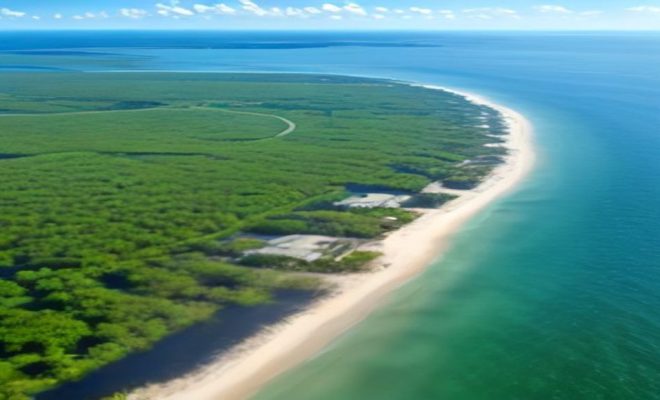
Imagine owning a slice of paradise, a private island in the breathtaking Florida Keys, only to find yourself locked in a decades-long legal war just to build a home on it. That’s the heart-wrenching reality for the heirs of Snipe Key Island, a story that has become a landmark property rights Florida Keys case study. It’s a saga that pits the deeply personal dream of private ownership against the ever-growing imperative of environmental conservation, playing out in one of the world’s most delicate ecosystems.
For those of us who believe in the sanctity of private property, this case is more than just a legal dispute; it’s a profound examination of what it truly means to own land in a modern, environmentally conscious society. When the lines blur between what you bought and what the government says you can do with it, where do you stand? And what happens when those rules change dramatically, long after you’ve made your investment? This isn’t just about one family’s fight; it’s about the fundamental tension between individual liberty and collective responsibility, a tension that defines much of our contemporary legal and social landscape.
The Genesis of a Dream: Acquiring Snipe Key in 1956
The story of Snipe Key begins in 1956, a time when the Florida Keys were still largely untamed, a wild frontier of mangrove forests and turquoise waters. It was in this era that the original owner purchased a 7.9-acre island, Snipe Key, with a clear understanding: it was zoned for residential development. Picture it – a blank canvas, ready for someone to build their dream home, a private retreat amidst the stunning natural beauty of the Keys. This wasn’t some speculative, last-minute grab; it was a legitimate acquisition under the prevailing regulations of the time, complete with the promise of future development.
For many, the idea of owning a private island is the ultimate aspiration, a symbol of success and freedom. The owner’s vision was likely simple: a quiet home, perhaps a dock, a place to escape the bustle of the mainland. They weren’t buying a nature preserve; they were buying a piece of land with a specific, legally recognized purpose. This initial purchase, made in good faith and under clear zoning laws, forms the bedrock of the family’s claim today. It’s a critical detail because it establishes the baseline expectation and the original intent behind the ownership, setting the stage for the dramatic conflicts that would unfold over the subsequent decades.
Environmental Awakening and Shifting Sands of Regulation
Fast forward a few decades, and the world began to wake up to the fragility of ecosystems like the Florida Keys. The very natural beauty that drew people to Snipe Key also made it incredibly vulnerable. Scientific understanding of coastal habitats, mangrove forests, and coral reefs evolved dramatically, leading to a surge in environmental protections. What was once seen as developable land began to be reclassified as critical habitat, essential for the health of the broader ecosystem.
This shift wasn’t sudden, but gradual, a creeping tide of new regulations, designations, and conservation efforts. Laws were enacted to protect wetlands, limit coastal construction, and preserve endangered species habitats. While undeniably crucial for safeguarding our planet, these new protections often came at a direct cost to existing property owners. For those like the Snipe Key family, who had purchased land under a different regulatory regime, these changes felt like the ground shifting beneath their feet – or in this case, the water rising around their island. This era marked the beginning of the fundamental clash that would define the Snipe Key property rights Florida Keys case study: the clash between established private ownership and evolving public interest in environmental preservation.
The Decades-Long Legal Labyrinth: A Fight for Development Rights
The transition from a property zoned for residential use to one heavily constrained by environmental regulations didn’t happen overnight, nor did the family simply accept it. What followed was a protracted, agonizing legal battle that spanned decades. Imagine the emotional and financial toll: court filings, appeals, expert testimonies, all while the dream of building on their island remained just out of reach. This wasn’t a quick skirmish; it was a marathon, a testament to the family’s unwavering commitment to their property rights.
The core of the dispute revolved around whether the new environmental laws constituted a ‘taking’ of their property without just compensation, a violation of the Fifth Amendment of the U.S. Constitution. If the government’s regulations effectively stripped the land of all its economic value or its reasonably expected use, then, under legal precedent, it might be considered a taking. The family argued that by preventing any meaningful development, the state and local governments had essentially confiscated their land’s value, leaving them with an island they owned but couldn’t use as intended. This legal quagmire highlights the complexity of modern property law, where the right to own is often intertwined with the right to use, and where environmental concerns can dramatically alter that equation. (See: Florida Keys property rights issues.)
Key Legal Milestones: Appellate Court Rulings of 2025 and 2026
After years, even generations, of legal wrangling, the Snipe Key property rights Florida Keys case study finally saw significant breakthroughs in 2025 and 2026. Appellate courts, after reviewing the extensive history and arguments, largely sided with the heirs of the original owner. These rulings weren’t a complete free pass for unrestricted development, but they were a monumental victory for the family, affirming their ability to proceed with limited residential development on the island.
What makes these rulings so significant? They represent a judicial recognition that while environmental protection is vital, it cannot completely erase pre-existing property rights without due process or compensation. The courts acknowledged the original zoning and the family’s long-held expectations. This doesn’t mean developers can now run rampant in sensitive areas, but it does suggest a careful balancing act. The specific details of the ‘limited residential development’ are crucial here; they likely involve strict adherence to environmental guidelines, perhaps limiting the footprint, requiring specific building materials, or mandating mitigation efforts to minimize ecological impact. These rulings set a precedent, reaffirming that private property rights, even in the face of evolving environmental concerns, still hold considerable weight in the legal system. For more context, see private ownership vs. environmental conservation.
The Balancing Act: Property Rights vs. Environmental Conservation
The Snipe Key saga is a quintessential example of the perennial conflict between individual property rights and the broader societal goal of environmental conservation. On one side, you have the deeply ingrained principle that private property owners should have the right to use their land as they see fit, especially when that use was permitted at the time of purchase. This is a cornerstone of American jurisprudence and economic freedom. For the Snipe Key family, their island represents not just an asset, but a legacy, a dream, and a right they believed was guaranteed.
On the other side, we have the undeniable urgency of protecting fragile ecosystems. The Florida Keys are a unique and invaluable natural treasure, home to endangered species, critical marine habitats, and a delicate balance that, once disturbed, can be incredibly difficult to restore. Unchecked development in such areas can lead to irreversible damage, impacting everything from water quality to biodiversity and even the resilience of the coastline itself against storms. So, how do you reconcile these two powerful forces? The courts, in this property rights Florida Keys case study, seemed to suggest that a compromise, a ‘limited’ development, was the answer. It’s a recognition that neither extreme can fully prevail without significant costs to the other.
Implications for Coastal Development and Future Policy
This landmark ruling has far-reaching implications, particularly for coastal areas like the Florida Keys, where environmental sensitivity and development pressure are constantly at odds. For starters, it sends a clear message to landowners: your established rights aren’t easily extinguished, even by subsequent environmental legislation. This could embolden other property owners in similar situations to pursue legal action, potentially leading to more challenges against stringent development restrictions.
Conversely, for environmental advocates and policymakers, the case serves as a stark reminder of the complexities involved in conservation efforts. It underscores the need for proactive planning and, perhaps, more robust compensation mechanisms when regulations significantly diminish property value. Future environmental laws might need to incorporate clearer provisions for addressing existing properties, perhaps through buyout programs, transferable development rights, or other creative solutions to avoid similar protracted legal battles. The Snipe Key outcome will undoubtedly be scrutinized by lawyers, developers, and environmental groups across the nation, shaping discussions around coastal zone management and the future of private land in ecologically sensitive regions.
The Emotional and Financial Toll of Protracted Litigation
Beyond the legal principles and policy implications, it’s crucial to acknowledge the immense human cost of a decades-long legal fight. Imagine the emotional roller coaster: the hopes dashed, the frustrations mounted, the sheer uncertainty hanging over your family for generations. This isn’t just about a piece of land; it’s about the emotional connection to a dream, a legacy, and the stress of fighting a powerful system.
Then there’s the financial burden. Legal fees for a case of this magnitude can easily run into the millions. Expert witnesses, court costs, attorney hours – it all adds up. Even a victory, after such a long and expensive battle, can feel bittersweet. This aspect of the Snipe Key property rights Florida Keys case study often gets overlooked in the dry legal summaries, but it’s a profound element of the human experience within the justice system. It makes you wonder how many other property owners, with equally valid claims, simply don’t have the resources or the fortitude to see such a battle through to the end.
Monetization Potential: A High-Value Asset in a Niche Market
From a purely commercial perspective, the Snipe Key case, now with its resolution allowing for limited development, unlocks significant monetization potential. Private islands, especially developable ones in prime locations like the Florida Keys, are rare and command astronomical prices. This isn’t just a plot of land; it’s a luxury asset, appealing to an exclusive clientele. (See: environmental conservation and property rights.)
The implications ripple across several high-value niches. For real estate investors, a developable Snipe Key represents a unique opportunity for ultra-luxury residential projects, potentially attracting high-net-worth individuals seeking unparalleled privacy and exclusivity. For legal services, the case itself becomes a valuable precedent and a source of expertise in property law, environmental law, and land use litigation. Firms specializing in these areas will undoubtedly reference Snipe Key when advising clients on similar issues. Moreover, for the luxury travel sector, the eventual development of a private residence on Snipe Key could become a featured destination, showcasing the ultimate in secluded, high-end escapes. This whole narrative, from legal battle to potential paradise, generates considerable interest and value in specific, high-CPC markets.
Understanding “Regulatory Takings” and the Fifth Amendment
To really grasp the legal underpinnings of the Snipe Key case, you need to understand the concept of a “regulatory taking.” It’s not as straightforward as the government physically seizing your land for a highway. Instead, it’s when government regulations become so restrictive that they essentially strip your property of all its economic value or its “reasonable investment-backed expectations,” without actually taking formal title. The Fifth Amendment to the U.S. Constitution famously states, “nor shall private property be taken for public use, without just compensation.” While initially applied to direct expropriation, the Supreme Court has expanded this to include regulatory actions that go “too far.” For more context, see property rights and legal disputes.
The legal tests for a regulatory taking are complex and often involve a three-pronged analysis from the Supreme Court’s 1978 Penn Central Transportation Co. v. City of New York decision: the economic impact of the regulation on the property owner, the extent to which the regulation interferes with distinct investment-backed expectations, and the character of the governmental action. Later cases, like Lucas v. South Carolina Coastal Council (1992), established that if a regulation deprives an owner of all economically beneficial use of their land, it’s a taking unless the prohibited use was already part of the state’s background principles of property law. The Snipe Key family’s argument hinged on demonstrating that the environmental regulations effectively rendered their island unusable for its intended, and previously permitted, residential purpose, thereby triggering their right to compensation or relief.
The Ecological Significance of the Florida Keys and Snipe Key
It’s impossible to discuss the Snipe Key case without emphasizing the extraordinary ecological value of the Florida Keys. This fragile archipelago is a global biodiversity hotspot, home to North America’s only living coral barrier reef. The shallow waters, mangrove forests, and seagrass beds surrounding islands like Snipe Key act as crucial nurseries for countless marine species, including commercially important fish and shellfish. Mangroves, in particular, are vital coastal protectors, stabilizing shorelines, preventing erosion, and acting as natural storm buffers – a critical function in a hurricane-prone region.
Snipe Key itself, being largely undeveloped, likely supports a rich array of flora and fauna. These remote islands often serve as nesting sites for migratory birds, habitats for rare reptiles, and vital stepping stones for species moving through the ecosystem. Any development, even limited, in such an area requires extreme caution to avoid disrupting these delicate balances. The environmental agencies weren’t acting arbitrarily; they were responding to a genuine concern for the health and longevity of one of the planet’s most unique and threatened ecosystems. This tension between preserving a global treasure and respecting individual property rights is what makes the Snipe Key case so potent and so indicative of the challenges we face in a rapidly changing world.
Expert Perspectives: Legal Scholars and Environmental Scientists Weigh In
When a case like Snipe Key reaches such prominence, it sparks considerable debate among experts. Legal scholars often highlight the shifting interpretations of the “takings clause,” with some arguing that the judiciary has become more protective of private property rights in recent decades, while others maintain that environmental regulations are essential for the common good and should not always trigger compensation. They might point to the difficulty in assigning a monetary value to ecosystem services that are lost due to development, making “just compensation” a complex calculation.
Environmental scientists, on the other hand, often express frustration with rulings that permit development in highly sensitive areas. They might cite statistics on mangrove loss, coral bleaching, and species endangerment in the Keys, arguing that even limited development contributes to cumulative impacts that threaten the entire ecosystem. From their perspective, the economic benefits of a single private residence pale in comparison to the long-term ecological and economic costs of environmental degradation. They might advocate for more aggressive land acquisition programs by governments or conservation groups to proactively protect critical habitats before development conflicts arise, offering fair market value to property owners who wish to sell.
Comparing Snipe Key to Other Coastal Property Rights Battles
The Snipe Key case isn’t an isolated incident; it’s part of a broader pattern of conflicts across coastal regions, both in Florida and beyond. Think about the battles over beachfront property in areas prone to erosion, where regulations might prevent rebuilding after a storm to protect public safety and natural coastal processes. Or consider disputes in wetlands along the Gulf Coast, where development permits are denied due to the habitat’s importance for flood control and wildlife. (See: land use and public health.)
For example, in parts of the Outer Banks of North Carolina, property owners have faced restrictions on building or rebuilding due to rapid shoreline retreat, leading to similar “taking” claims. In California, stringent coastal commission regulations often limit development near the ocean, sparking ongoing legal challenges. What distinguishes Snipe Key is the pristine nature of the island, its significant ecological value within a globally recognized sensitive area like the Florida Keys, and the sheer longevity of the legal battle. While the specifics differ, the underlying tension between private property and public environmental interest remains a constant thread in these coastal property rights sagas, making the Snipe Key resolution a significant benchmark.
The Future of Snipe Key: From Legal Victory to Sustainable Development?
With the appellate court rulings in hand, the future of Snipe Key now hinges on the specifics of that “limited residential development.” This isn’t just about constructing a building; it’s about navigating a path that respects both the family’s rights and the island’s ecological fragility. The design and construction phase will likely involve extensive environmental assessments, requiring detailed plans for wastewater management, power generation, freshwater supply, and waste disposal that minimize impact on the surrounding marine environment.
Developers will need to consider elevated structures to protect against storm surge, use eco-friendly materials, and potentially implement native landscaping to support local wildlife. There’s an opportunity here to create a model for sustainable island development, showcasing how luxury living can coexist with environmental stewardship. Or, if not handled carefully, it could simply become another example of private gain at ecological cost. The real test of the Snipe Key resolution will be whether the eventual development manages to honor the spirit of both property rights and environmental protection, creating a lasting legacy that truly balances these powerful forces.
Lessons Learned from Snipe Key for Property Owners and Regulators
So, what can we take away from this epic property rights Florida Keys case study? For property owners, particularly those with land in environmentally sensitive areas, the Snipe Key saga is a powerful reminder to understand the full scope of your property rights and, crucially, to be aware of the ever-evolving regulatory landscape. It underscores the importance of due diligence, not just at the point of purchase, but throughout your ownership. If you believe your rights are being infringed upon by new regulations, this case offers hope that the courts may indeed side with you, though it will likely require immense perseverance.
For regulators and environmental agencies, Snipe Key highlights the necessity of striking a delicate balance. While conservation is paramount, ignoring established property rights can lead to costly, drawn-out legal battles and a sense of injustice among citizens. It suggests that policies should be crafted with an eye towards fairness, perhaps incorporating mechanisms for fair compensation or alternative solutions for property owners whose land is significantly devalued by new protections. Ultimately, the story of Snipe Key isn’t just about one island; it’s a microcosm of the larger societal challenge of balancing progress, protection, and individual liberty in a world grappling with finite resources and fragile ecosystems. It reminds us that while laws can change, the deeply human desire for home and ownership remains a powerful force.
Trending Now
Frequently Asked Questions
What is the Snipe Key property rights case about?
The Snipe Key property rights case revolves around the heirs of a private island in the Florida Keys who are engaged in a lengthy legal battle to build a home on their inherited land, highlighting the conflict between private ownership and environmental conservation.
How did the original owner acquire Snipe Key?
The original owner acquired Snipe Key in 1956, purchasing the 7.9-acre island with an understanding that it was zoned for residential development, thus setting the stage for future construction amidst the natural beauty of the Florida Keys.
What are the implications of the Snipe Key case for property rights?
The Snipe Key case raises significant questions about property rights, particularly the tension between individual ownership and government regulations, illustrating how changes in environmental policies can impact long-held dreams of private land development.
Why is the Snipe Key case considered a landmark case?
This case is deemed landmark because it encapsulates the broader struggle between private property rights and environmental conservation, reflecting the complexities of land ownership in today's ecologically aware society.
What challenges do landowners face in the Florida Keys?
Landowners in the Florida Keys face challenges such as evolving environmental regulations, legal disputes over property rights, and the need to balance personal aspirations with collective environmental responsibilities.
What's your take on this? Share your thoughts in the comments below — we read every one.