Shocking: The Deepfake Nirmala Sitharaman Scam That Stole Rs 1 Crore
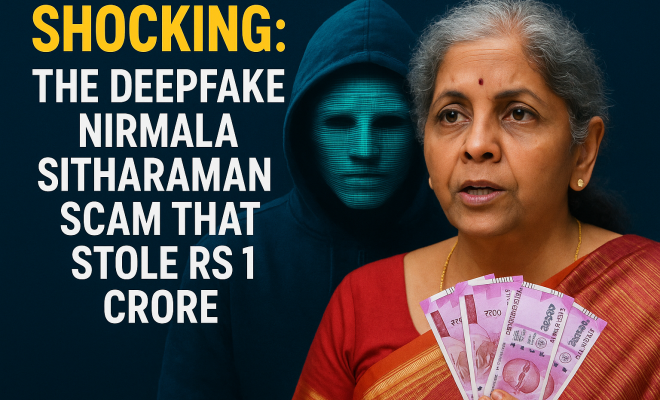
Imagine receiving a video, seemingly from a highly respected public figure, endorsing an investment opportunity that sounds almost too good to be true. You watch, you listen, and every nuance of their voice, every familiar gesture, convinces you it’s legitimate. You’re seeing and hearing them with your own eyes and ears, after all. What if I told you that this seemingly authentic endorsement could be nothing more than an elaborate, AI-generated lie designed to steal your life savings? This chilling scenario isn’t a plot from a sci-fi thriller; it’s a stark reality that recently played out for a businessman in Pune, India, who tragically lost over Rs 1 crore (that’s more than $120,000 USD) to a sophisticated deepfake scam involving none other than India’s Finance Minister, Nirmala Sitharaman.
This isn’t just another cautionary tale about online fraud. This is a watershed moment, a stark illustration of how rapidly artificial intelligence is transforming the landscape of cybercrime. The Pune incident, where a deepfake Nirmala Sitharaman video was used to promote a fraudulent trading platform, serves as a visceral wake-up call. It highlights the terrifying effectiveness of AI in crafting deceptions that even seasoned individuals struggle to identify. As these technologies become more accessible and sophisticated, the lines between what’s real and what’s manipulated are blurring at an alarming pace, leaving us all vulnerable.
The Anatomy of a High-Tech Deception: The Deepfake Nirmala Sitharaman Case
Let’s break down how this devastating scam unfolded. It wasn’t a quick, smash-and-grab operation; it was a meticulously planned, long-term con that leveraged cutting-edge technology and psychological manipulation. The Pune businessman, whose identity has been withheld for privacy, was initially lured into what appeared to be a legitimate investment scheme. The crucial turning point, however, came when he was presented with a video featuring a deepfake Nirmala Sitharaman.
This deepfake wasn’t some shoddy, easily discernible imitation. It was crafted with enough precision to convincingly portray the Finance Minister endorsing a fraudulent trading platform. Think about that for a moment: the voice, the facial expressions, the mannerisms – all meticulously replicated by AI. For someone less tech-savvy, or even for someone who trusts official-looking endorsements, the illusion would have been incredibly powerful. This isn’t just about a convincing voiceover; it’s about a complete audiovisual fabrication that preys on our inherent trust in authority figures and visual evidence.
The scam played out over nearly two months, a testament to its elaborate nature and the patience of the fraudsters. During this period, the businessman made a staggering 36 separate bank transfers, gradually draining his funds into the fraudsters’ accounts. This incremental approach is a common tactic in sophisticated scams, designed to prevent victims from realizing the full extent of the deception until it’s too late. It’s a slow boil, where small losses accumulate into a catastrophic sum, making it harder for the victim to pull out, both financially and psychologically.
Why Deepfakes Are a Game-Changer for Fraudsters
Traditional phishing emails or even phone scams, while still prevalent, often leave subtle clues – grammatical errors, awkward phrasing, or unusual requests that might trigger suspicion. Deepfakes, however, operate on an entirely different level. They bypass these traditional red flags by directly manipulating our most trusted senses: sight and sound. When you see a familiar face and hear a familiar voice, your brain is wired to believe it’s real. This inherent trust is precisely what deepfake technology exploits.
The human brain is incredibly adept at recognizing faces and voices, honed over millennia of social interaction. This evolutionary advantage, however, becomes a liability when confronted with AI-generated forgeries that are indistinguishable from reality. A deepfake Nirmala Sitharaman speaking directly to you, even if it’s just a few seconds, can establish a level of credibility that no amount of text or even a static image ever could. It creates an almost personal connection, making the victim feel like they’re receiving an exclusive, trusted tip from a high-level source.
The viral potential of deepfakes also plays a significant role. Even if a deepfake video is eventually debunked, its initial spread can be incredibly rapid across social media platforms. People share compelling, shocking, or even seemingly authoritative content without always verifying its authenticity. This rapid dissemination means that even a short-lived deepfake can reach millions, potentially ensnaring numerous victims before the truth catches up. The sheer volume of information we encounter daily makes critical evaluation a challenge, especially when content is designed to trigger an emotional response or a sense of urgency.
The Broader Trend: AI-Enabled Investment Scams Skyrocket
The deepfake Nirmala Sitharaman incident isn’t an isolated anomaly; it’s a symptom of a much larger, and frankly terrifying, trend. AI-enabled investment scams are multiplying at an alarming rate across the globe. We’re talking about a significant escalation in both the frequency and financial impact of these sophisticated frauds. The numbers paint a grim picture: in the United States alone, losses from investment scams reached over $632 million in 2025. Think about that figure for a moment – over half a billion dollars lost in a single year, much of it facilitated or amplified by AI technologies.
This isn’t just about deepfakes, though they are a particularly potent weapon. AI is being used to craft hyper-realistic phishing emails, generate convincing fake websites, create AI chatbots that simulate human interaction for extended periods, and even to analyze potential victims’ online behavior to tailor scams more effectively. The fraudsters are leveraging AI to make their operations more efficient, more persuasive, and ultimately, more successful at siphoning money from unsuspecting individuals.
The sheer scale of these losses indicates a systemic problem. It’s no longer just the most vulnerable who are falling victim. As the technology behind these scams improves, even individuals with a good understanding of cybersecurity principles can be caught off guard. The sophistication of these attacks means that the old advice – ‘look for typos’ or ‘check the sender’s email address’ – is becoming increasingly inadequate in the face of AI’s ability to create flawless forgeries. (See: Understanding deepfake technology.)
Why We’re So Susceptible: The Psychology of Deception
Beyond the technological prowess of deepfakes, there’s a profound psychological element at play. Scammers are master manipulators of human emotion and cognitive biases. The desire for financial gain, especially in uncertain economic times, can cloud judgment. The deepfake Nirmala Sitharaman video tapped into a powerful combination of perceived authority and the allure of an exclusive investment opportunity. When a figure of such national importance appears to endorse something, it lends an immediate, almost irrefutable, stamp of approval.
We’re also wired for social proof. If a scammer can convince you that ‘everyone else is doing it’ or that ‘smart investors are getting rich,’ it creates a sense of urgency and fear of missing out (FOMO). Deepfakes enhance this by making the ‘proof’ visually compelling. Furthermore, once someone has invested a small amount, they often experience a sunk cost fallacy – they’ve already committed, so they’re more likely to commit further, hoping to recoup their initial investment, rather than cutting their losses and admitting they were fooled.
The long duration of the Pune scam – 36 transfers over two months – speaks to the gradual erosion of a victim’s defenses. It’s a slow process of building trust, reinforcing the fake narrative, and gradually escalating the demands. By the time the victim realizes something is wrong, they’ve often invested so much, both financially and emotionally, that escaping the psychological trap becomes incredibly difficult. It’s a calculated assault on rationality, exploiting our inherent human tendencies and weaknesses. (how to identify these scams)
The Global Reach: From Pune to Your Pocket
While the deepfake Nirmala Sitharaman incident occurred in Pune, India, the implications are global. Cybercrime knows no borders. The tools and techniques used by these fraudsters are readily available to criminal networks worldwide. What happens in one part of the world can quickly be replicated and adapted to target individuals in another. The internet has created a truly interconnected ecosystem for both legitimate commerce and illicit activities.
Consider the ease with which deepfake technology can be accessed. While creating a highly convincing deepfake like the one used in the Pune scam still requires some expertise, the barriers to entry are rapidly falling. Open-source tools, online tutorials, and even AI-as-a-service platforms are making it easier for even less skilled individuals to generate synthetic media. This democratization of deepfake technology means that the threat is no longer confined to highly resourced state-sponsored actors or sophisticated criminal syndicates. It’s becoming a tool accessible to a broader range of fraudsters, increasing the sheer volume of potential attacks.
This global interconnectedness means that individuals, businesses, and governments everywhere need to be on high alert. A scam targeting an Indian businessman today could easily be adapted to target an American investor tomorrow, or a European retiree next week. The techniques are transferable, and the human vulnerabilities they exploit are universal. We can’t afford to view these incidents as isolated events occurring ‘elsewhere’; they are precursors to what could happen right in our own communities.
What Can Be Done? Protecting Yourself in the Age of AI Deception
Given the escalating threat, what practical steps can you take to protect yourself from sophisticated scams like the deepfake Nirmala Sitharaman fraud? It starts with a healthy dose of skepticism, but it extends far beyond that. We need to evolve our defenses as rapidly as the fraudsters are evolving their attacks.
First and foremost, verify, verify, verify. If you receive an unsolicited investment opportunity, especially one endorsed by a public figure or promising unusually high returns, treat it with extreme caution. Do not rely solely on the video or audio presented. Seek independent verification through official channels. If it’s supposedly from a government official, check their official website or social media accounts for any announcements about the platform. Contact the organization directly using publicly listed, verified contact information, not numbers or links provided in the suspicious communication.
Second, educate yourself and others. Understand what deepfakes are and how they work. Be aware that even convincing video and audio can be fabricated. Share information about these scams with family and friends, especially older relatives who might be less familiar with advanced digital manipulation. The more people who are aware of this threat, the harder it becomes for scammers to find unsuspecting victims. For more on this, see Elon Musk's deepfake controversy.
Third, be wary of urgency and exclusivity. Scammers often create a sense of urgency, pressuring you to act quickly before an ‘opportunity’ disappears. They might also suggest the offer is exclusive or ‘for a select few.’ These are classic manipulation tactics designed to bypass rational thought and critical analysis. Legitimate investment opportunities rarely require immediate, high-pressure decisions.
Fourth, secure your devices and accounts. Use strong, unique passwords for all your online accounts, and enable two-factor authentication (2FA) wherever possible. This adds an extra layer of security, making it much harder for fraudsters to gain access even if they manage to steal your login credentials.
The Role of Social Media Platforms and Regulators
Individual vigilance is crucial, but it’s not enough. Social media platforms, where many of these deepfake videos gain traction and viral spread, have a significant responsibility. They need to invest more in AI-powered detection tools to identify and remove deepfakes promoting fraudulent schemes quickly. They also need clearer reporting mechanisms for users to flag suspicious content and faster response times to those reports. The current ‘whack-a-mole’ approach simply isn’t working against the sheer volume of malicious content. (See: The rise of deepfakes and their risks.)
Regulators and law enforcement agencies also face an uphill battle. The cross-border nature of these crimes makes jurisdiction complex, and the rapid evolution of technology often outpaces existing legal frameworks. Governments need to collaborate internationally to share intelligence, coordinate enforcement efforts, and develop new legislation that specifically addresses AI-enabled fraud. There’s also a clear need for public awareness campaigns led by official bodies, not just independent cybersecurity experts, to truly reach a broad audience.
Consider the immense technical challenge. Detecting deepfakes accurately and at scale is incredibly difficult. As AI improves, so does the ability to create more subtle, harder-to-detect fakes. This creates an arms race between creators of synthetic media and those trying to identify it. However, platforms cannot simply throw up their hands. They are the gatekeepers of information for billions, and their inaction has real-world, devastating consequences for victims like the Pune businessman.
Rebuilding Trust in a Digital World
The deepfake Nirmala Sitharaman incident, and countless others like it, erode public trust in digital media, in online information, and even in institutions. When you can’t trust what you see and hear, the very fabric of our digital society begins to unravel. Rebuilding this trust is paramount, and it requires a multi-faceted approach.
One potential avenue is the development and widespread adoption of digital provenance tools. Imagine if every piece of digital content – every image, video, and audio file – carried an embedded, verifiable signature indicating its origin and any subsequent modifications. This ‘digital watermark’ could help users and platforms distinguish genuine content from manipulated versions. Initiatives like the Content Authenticity Initiative (CAI) are working on such standards, but widespread adoption is still a long way off.
Transparency from AI developers is also critical. As AI models become more powerful, there needs to be greater accountability and ethical considerations embedded in their development. Preventing malicious use cases should be a core design principle, not an afterthought. This might involve technical safeguards within the models themselves or rigorous vetting processes for those who gain access to advanced AI generation tools.
Expert Perspectives: Cybersecurity vs. AI Advancement
The rise of deepfake technology like the one used in the Nirmala Sitharaman scam presents a continuous challenge for cybersecurity experts. We’re in an arms race. On one side, you have increasingly sophisticated AI models generating hyper-realistic synthetic media. On the other, cybersecurity professionals are trying to build detection systems that can keep up. Many experts believe that solely relying on detection is a losing battle in the long run. They advocate for a shift towards authentication and provenance. Instead of trying to identify every fake, the focus might need to be on verifying the authenticity of real content. This involves cryptographic signatures and blockchain technologies to create an immutable record of a piece of media’s origin and any changes it undergoes. However, integrating such systems broadly across the internet, particularly with legacy content, is a monumental task.
Some experts also highlight the role of human-in-the-loop systems. While AI can generate fakes, human intelligence can still be the ultimate arbiter, especially when trained to spot subtle inconsistencies. This means public awareness campaigns are more vital than ever, teaching people what to look for, even if those tells are becoming harder to spot. It’s about empowering individuals to be their own first line of defense, recognizing that technology alone might not provide a complete solution.
Legal and Ethical Implications
The deepfake Nirmala Sitharaman incident also shines a spotlight on significant legal and ethical quandaries. When a deepfake of a public figure is used to commit fraud, who is held responsible? Is it the creators of the deepfake technology, the platforms that host the content, or only the immediate perpetrators of the scam? Current laws often struggle to adapt to the rapid pace of technological change. Many jurisdictions lack specific legislation addressing deepfake fraud, making prosecution challenging.
Ethically, the ability to perfectly mimic someone’s likeness and voice without their consent raises fundamental questions about identity, reputation, and autonomy. If someone’s digital twin can be weaponized against the public or even against themselves, what does that mean for trust in public discourse and personal security? There’s a strong argument for global ethical frameworks and international legal cooperation to address these issues, as deepfakes don’t respect national borders. The lack of clear legal precedents can create a vacuum where fraudsters operate with relative impunity, exacerbating the problem.
The Path Forward: Vigilance and Innovation
The deepfake Nirmala Sitharaman scam is a chilling reminder of our vulnerability in an increasingly AI-driven world. It’s a stark warning that the tools of deception are becoming incredibly powerful, making our traditional defenses less effective. While the prospect of AI-powered fraud can feel overwhelming, we are not powerless. (See: Impact of technology on safety.)
Our path forward lies in a combination of heightened individual vigilance, continuous education, and concerted efforts by technology companies, regulators, and law enforcement. We must cultivate a healthy skepticism about online content, especially anything that seems too good to be true, or that pressures us into quick decisions. Simultaneously, we need to push for innovation in deepfake detection, digital provenance, and robust cybersecurity measures. The battle against AI-enabled fraud is just beginning, and our collective ability to adapt, learn, and innovate will determine whether we can safeguard our finances and our trust in the digital realm.
Frequently Asked Questions About Deepfakes and Investment Scams
What exactly is a deepfake?
A deepfake is synthetic media where a person in an existing image or video is replaced with someone else’s likeness using artificial intelligence. It uses deep learning algorithms, particularly generative adversarial networks (GANs), to convincingly swap faces, alter expressions, or even generate entirely new speech that sounds like the original person. Related reading: what the scandal means for you.
How can I spot a deepfake, especially a sophisticated one like the Nirmala Sitharaman example?
Spotting sophisticated deepfakes is getting harder, but there are still some tells. Look for unnatural blinking patterns, inconsistent lighting or shadows on the face, awkward movements or stiffness, blurry edges around the face, or audio that doesn’t quite match the lip movements. Sometimes, the person might not look directly at the camera in an unnatural way, or their voice might have subtle robotic undertones or strange inflections. Always cross-reference the content with official sources.
Why are public figures, like Nirmala Sitharaman, often targeted in deepfake scams?
Public figures are prime targets because they carry a high level of authority and trust. A deepfake endorsement from someone like a Finance Minister instantly lends credibility to a fraudulent scheme, making it much harder for victims to question its legitimacy. Their public visibility also means there’s a lot of existing footage and audio available for AI models to train on, making it easier to create convincing fakes.
If I fall victim to a deepfake investment scam, what should I do first?
If you suspect you’ve been scammed, the very first thing to do is contact your bank or financial institution immediately. They might be able to halt or reverse transactions. Next, gather all available evidence – screenshots, videos, email exchanges, transaction details – and report the incident to law enforcement. In India, this would be the cybercrime unit. Don’t be ashamed; these scams are designed to be highly deceptive.
Are there any tools or apps that can help detect deepfakes?
Yes, researchers and tech companies are developing various deepfake detection tools. However, these are often experimental and constantly evolving. They typically use AI themselves to analyze anomalies in video and audio. While some consumer-facing apps exist, their reliability can vary. For critical verification, it’s always best to rely on official sources and expert analysis rather than just a single app.
What role does cryptocurrency play in these deepfake investment scams?
Cryptocurrency is often involved because it offers a degree of anonymity and makes tracing funds much more difficult than traditional bank transfers. Scammers frequently instruct victims to transfer funds to cryptocurrency wallets, which can then be quickly moved and laundered across various exchanges, making recovery nearly impossible for law enforcement.
Trending Now
Frequently Asked Questions
What is a deepfake scam?
A deepfake scam involves the use of AI-generated videos that convincingly mimic the appearance and voice of a real person, often a public figure. These videos are used to promote fraudulent schemes, tricking individuals into believing they are receiving legitimate endorsements.
How did the Nirmala Sitharaman deepfake scam work?
The scam involved a sophisticated video of India's Finance Minister, Nirmala Sitharaman, endorsing a fraudulent investment platform. The victim was manipulated over time, ultimately leading to a loss of over Rs 1 crore, showcasing the effectiveness of deepfake technology in deception.
What are the risks of deepfake technology?
Deepfake technology poses significant risks, including the potential for financial fraud, misinformation, and erosion of trust in media. As this technology becomes more accessible, it raises concerns about the authenticity of video content and the vulnerability of individuals to scams.
How can I protect myself from deepfake scams?
To protect yourself from deepfake scams, be cautious of investment opportunities promoted through video endorsements, especially from unfamiliar sources. Always verify the authenticity of the content through multiple channels and consult trusted financial advisors before making significant investments.
Why are deepfake scams becoming more common?
Deepfake scams are becoming more common due to advancements in AI technology that make creating realistic fake videos easier and more accessible. This evolution allows scammers to exploit public figures' credibility, making it harder for individuals to discern real from fake endorsements.
Have you experienced this yourself? We'd love to hear your story in the comments.