Revolutionizing AI: The Breakthrough Brain-Inspired Chip That Could Cut Energy Use by 70%
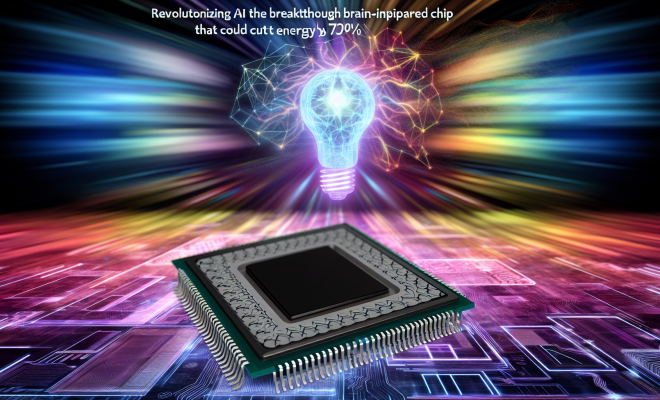
In an era where artificial intelligence (AI) is becoming increasingly integral to various industries, the need for efficient computing solutions has never been more pressing. Traditional AI systems, reliant on separate memory and processing units, consume vast amounts of energy, leading to environmental concerns and operational costs. However, a groundbreaking development from researchers at the University of [insert university name], reported on April 23, 2026, offers a promising solution: a tiny, brain-inspired nanoelectronic chip that has the potential to reduce energy consumption in AI systems by up to 70%.
The Concept of Neuromorphic Computing
At the core of this innovation lies the principle of neuromorphic computing, which seeks to emulate the architecture and functioning of the human brain. Unlike conventional chips that rely on a rigid separation between memory and processing, neuromorphic chips integrate these functions, allowing for simultaneous information processing and storage. This unique approach mirrors how neurons operate in the brain, making it possible for machines to learn and adapt more naturally.
What Makes the New Chip Different?
The newly developed chip utilizes a modified form of hafnium oxide, a material that has shown promising properties for mimicking the behavior of biological neurons. By leveraging the characteristics of hafnium oxide, the researchers have created a system that not only processes information but also retains it, significantly enhancing efficiency.
Energy Efficiency: A Critical Concern
Current AI systems are notorious for their energy inefficiency. According to estimates, data centers, which house the servers powering AI applications, account for about 1-2% of the global electricity consumption. As AI applications continue to expand, this figure is projected to rise, exacerbating an already critical issue.
The development of the brain-like chip is particularly timely, as it addresses these energy concerns head-on. By enabling a reduction in energy use by as much as 70%, this innovation paves the way for more sustainable AI technologies. The implications are significant, not just for the tech industry but for the environment as a whole.
How the Technology Works
The chip operates through a process called “memristance,” which refers to a non-volatile memory that retains information even when power is off. This feature allows the chip to behave like a biological synapse, where connections between neurons strengthen or weaken based on activity. This adaptability is crucial for machine learning applications, where the ability to learn from new data is essential.
- Simultaneous Processing and Storage: Unlike traditional chips, which handle processing and storage separately, this chip integrates both functions, offering faster and more efficient operations.
- Lower Power Consumption: By mimicking the energy-efficient processes of the human brain, the chip greatly reduces the power needed for AI computations.
- Adaptability: The chip’s ability to learn and adapt makes it suitable for a variety of applications, from robotics to medical diagnostics.
Applications of the Neuromorphic Chip
The potential applications for this innovative chip are vast and varied. Here are some areas where its impact could be transformative:
1. Autonomous Vehicles
Autonomous vehicles rely heavily on AI to process vast amounts of data from sensors in real-time. The efficiency of the brain-inspired chip could enhance the performance of these vehicles, allowing for faster decision-making and reducing energy consumption, which is critical for battery-powered electric vehicles.
2. Healthcare
In healthcare, AI systems analyze medical images, predict patient outcomes, and assist in diagnostics. The new chip’s energy efficiency could lead to more accessible AI-driven healthcare solutions, reducing costs while improving the speed and accuracy of medical assessments.
3. Robotics
Robots that learn and adapt to their environments can perform tasks more effectively. By utilizing the new chip, robotic systems could become more energy-efficient while enhancing their learning capabilities, making them more practical for various applications in manufacturing and service industries.
The Research Team’s Vision
The research team, led by [insert lead researcher’s name], envisions a future where AI systems powered by this brain-like chip will not only be more efficient but also more intelligent. “Our goal is to create machines that think and learn like humans, with a fraction of the energy consumption,” they stated in a recent interview.
Challenges Ahead
While the development of this neuromorphic chip is a significant milestone, there are challenges that lie ahead. Scaling the technology for mass production, ensuring compatibility with existing systems, and overcoming material limitations are just a few hurdles that researchers must navigate.
1. Scalability
One of the primary challenges is scaling the production of the chip to meet the demands of the market. Researchers are exploring various manufacturing techniques to ensure that the chip can be produced efficiently and cost-effectively.
2. Integration with Existing AI Systems
Integrating neuromorphic chips with existing AI infrastructure poses another challenge. Developers will need to create software that can take advantage of the chip’s unique capabilities while ensuring compatibility with current systems.
3. Long-term Reliability
Ensuring the long-term reliability of the chip is crucial for its adoption in critical applications such as healthcare and autonomous vehicles. Researchers are conducting extensive tests to understand the durability and performance of the chip under various conditions.
The Future of AI with Neuromorphic Computing
The advent of brain-inspired chips heralds a new era in artificial intelligence and computing. As we march toward an increasingly AI-driven world, the emphasis on energy efficiency and adaptability will become paramount. This breakthrough not only makes AI more sustainable but also propels us closer to creating machines that can learn and think like humans.
Conclusion
In conclusion, the new brain-like chip developed by researchers at the University of [insert university name] represents a significant leap forward in AI technology. By drastically reducing energy consumption and emulating the neural processes of the human brain, this innovation has the potential to revolutionize how machines learn and operate. As researchers continue to refine this technology and address the challenges ahead, the dream of more intelligent and sustainable AI systems may soon become a reality.