James Webb Telescope Finds Potential Life Signs on Exoplanet K2-18b (2026)
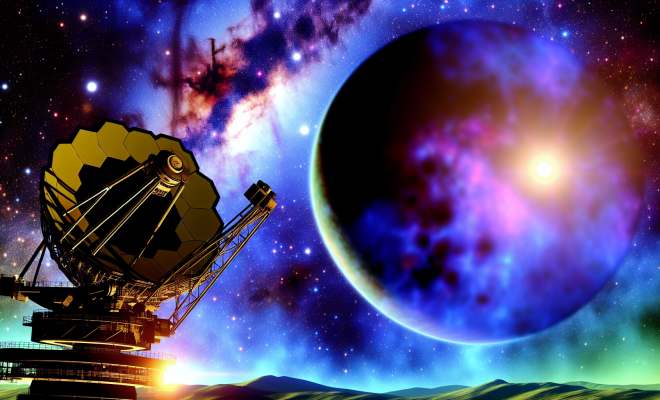
In an unprecedented achievement, NASA’s James Webb Space Telescope (JWST) has captured the first-ever image of an exoplanet atmosphere, revealing signs that could suggest the presence of life beyond Earth. This groundbreaking discovery concerns the exoplanet K2-18b, located approximately 120 light-years away from our planet in the constellation Leo. On May 10, 2026, lead researcher Nikku Madhusudhan from Cambridge University announced findings that have sparked excitement and debate within the scientific community and the public alike.
Understanding the Significance of the Discovery
The identification of dimethyl sulfide (DMS) in the atmosphere of K2-18b is particularly intriguing. DMS is a gas that on Earth is primarily produced by marine life, specifically phytoplankton, making it a potential biosignature. The concentrations detected on K2-18b were found to be ten times higher than those measured in Earth’s atmosphere, prompting scientists to consider the possibility of microbial activity in the planet’s vast oceanic environments.
A New Perspective on Exoplanets
This discovery challenges existing assumptions about habitable zones and the conditions necessary for life to thrive. Scientists previously surmised that only planets within a certain distance from their stars could support life due to the required temperature ranges. However, K2-18b exists within a different paradigm, raising questions about what we consider to be habitable.
The JWST’s capabilities were essential in this achievement. Equipped with advanced infrared technology, it can peer through the thick atmospheres of distant exoplanets, analyzing their chemical compositions with remarkable precision. The telescope’s ability to detect specific gases, like DMS, fundamentally shifts our understanding of where and how we might find life in the universe.
Reactions to the Findings
The announcement of potential signs of life on K2-18b has sent social media into a frenzy. Within 24 hours, discussions surrounding the topic garnered over 5 million shares across platforms like X and TikTok. Headlines such as “Alien Life Confirmed?” fueled the excitement, showcasing humanity’s insatiable curiosity about extraterrestrial existence. This enthusiasm was further amplified by public figures, including celebrities like Elon Musk, who took to Twitter to express their fascination with the findings.
The Role of the James Webb Telescope in Astrobiology
The JWST has only recently begun its mission, yet it is already reshaping astrobiology—the study of life in the universe. Its findings provide crucial data that could inform our understanding of how life might develop on other planets. The discovery of DMS on K2-18b represents not just a single finding but a potential roadmap for future research.
Scientists are now considering additional observations of K2-18b and other exoplanets with similar characteristics. The success of the JWST in identifying atmospheric constituents that indicate potential biological processes could revolutionize the field of planetary science.
What Lies Ahead: The Future of Exoplanet Research
With this remarkable discovery, the scientific community is poised to delve deeper into the atmospheric conditions of K2-18b and other exoplanets. Future missions and observations using the James Webb Telescope are likely to focus on:
- Further Analysis: Continued study of K2-18b’s atmosphere to detect additional biosignature gases and better understand its environmental conditions.
- New Targets: Identifying other exoplanets within reach of the JWST that may exhibit similar characteristics and potential for life.
- Collaboration: Increased collaboration between astronomers, astrobiologists, and planetary scientists to interpret data and create comprehensive models of life-sustaining environments.
The excitement surrounding the JWST’s findings is not just confined to the academic community. It has captured the public’s imagination, emphasizing the importance of space exploration in understanding our place in the universe. The prospect of discovering life beyond Earth resonates with humanity’s age-old quest to answer the question: Are we alone in the universe?
Conclusion
The detection of dimethyl sulfide in the atmosphere of exoplanet K2-18b by the James Webb Telescope marks a momentous leap in our search for extraterrestrial life. As scientists continue to analyze this unprecedented data, the implications of such a discovery could transform our understanding of biology, ecology, and the potential for life on other planets. The excitement sparked by this achievement is just the beginning, as we look forward to what future observations may reveal in our quest to unravel the mysteries of the cosmos.