3D Printing Innovations 2026: Automotive to Assistive Tech
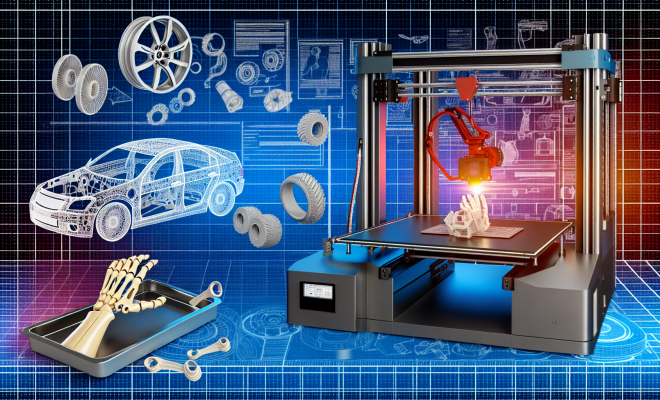
The landscape of 3D printing continues to evolve at a rapid pace, with recent advancements showcasing the technology’s potential across various sectors, from automotive engineering to healthcare. This overview highlights significant developments in the 3D printing arena as of March 2026, with a particular focus on new applications and innovations that promise to reshape industries.
Automotive Advancements: Conflux Technology’s Game-Changer
One of the standout innovations comes from Conflux Technology, which has successfully tested a groundbreaking 3D printed transmission oil cooler on a Multimatic Motorsports car. This development not only underscores the capabilities of 3D printing in producing complex automotive components but also demonstrates how rapid prototyping can lead to enhanced performance in high-stakes environments like motorsport.
The oil cooler, designed using advanced 3D printing techniques, offers improved thermal management, which is crucial for maintaining optimal engine performance during races. The integration of 3D printing into automotive manufacturing not only accelerates production times but also allows for more innovative designs that were previously difficult or impossible to achieve using traditional manufacturing methods.
Revolutionizing Onsite Manufacturing: MIT’s Multimaterial 3D Printing
In a significant advancement for onsite manufacturing, researchers at the Massachusetts Institute of Technology (MIT) have developed a multimaterial 3D printing platform capable of fabricating a functioning electric linear motor in just three hours. Led by principal research scientist Luis Fernando Velásquez-García, this pioneering technology aims to reduce dependency on complex supply chains and enable quicker production of essential hardware.
The implications of this development are profound. With the ability to create fully operational components onsite, manufacturers can streamline production processes, significantly cut costs, and respond more rapidly to market demands. This innovation is particularly valuable in scenarios where rapid prototyping and immediate deployment are critical, such as in defense and emergency response situations.
Healthcare Innovations: Stryker’s 3D Printed Orthopaedic Implant
In the healthcare sector, Stryker, a leading medical technologies firm, has unveiled a new 3D printed orthopaedic implant. This implant is designed to improve patient outcomes through personalized medical solutions that cater to individual anatomical requirements. Utilizing 3D printing technology, Stryker can create implants that are not only tailored to the patient’s specific needs but also reduce the time required for surgical procedures.
The ability to produce complex geometries with enhanced strength-to-weight ratios makes 3D printed implants particularly advantageous in orthopaedics. Surgeons can now rely on implants that fit better and promote faster healing, ultimately leading to improved patient satisfaction and recovery times.
Assistive Technology: NYC Innovation Center Launch
In a move to push the boundaries of assistive technology, a global engineering nonprofit has launched an innovation center in New York City. This center is dedicated to developing advanced assistive devices through 3D printing, aimed at enhancing the quality of life for individuals with disabilities.
- Focus Areas: The center will focus on creating custom solutions that address specific needs, ranging from mobility aids to communication devices.
- Community Engagement: By involving the community in the design process, the center aims to ensure that the technologies developed are user-friendly and meet the real-world needs of those they are intended to assist.
This initiative not only highlights the versatility of 3D printing in creating personalized solutions but also emphasizes the importance of inclusivity in technological advancements.
Accelerating Qualification of 3D Printed Parts: DMG Mori’s AI Tool
To further enhance the efficiency and reliability of 3D printing processes, the U.S. Department of Energy is backing an innovative AI tool developed by DMG Mori. This tool is designed to accelerate the qualification of 3D printed parts using high-performance computing technologies.
The qualification process is typically a time-consuming and resource-intensive task. However, with the integration of artificial intelligence, DMG Mori aims to streamline this process, allowing manufacturers to validate the quality and performance of 3D printed components much faster. This advancement could significantly reduce lead times and improve production efficiency in various sectors, including aerospace and automotive.
Conclusion: The Future of 3D Printing
The recent advancements in 3D printing technology demonstrate its transformative potential across multiple industries. From enhancing automotive performance to revolutionizing healthcare and assistive technologies, the applications are vast and varied. As research and development continue to progress, it is clear that 3D printing will play a pivotal role in shaping the future of manufacturing, healthcare, and beyond. The journey is just beginning, and as these technologies mature, they will undoubtedly lead to even more groundbreaking innovations.