Trump’s Policy Reversal Ignites 2026 Stock Market Rally
“`html
The U.S. stock market witnessed a remarkable turnaround on June 11, 2026, as equities posted their strongest single-day gains in two months. This surge, often referred to as the Trump stock rally, was precipitated by President Trump’s unexpected announcement to cancel a planned action that had previously unsettled investors. Understanding the rapid shifts in market sentiment is crucial for anyone looking to navigate the unpredictable waters of investing, especially when political decisions can have immediate financial impacts.
1. The Catalyst Behind the Rally
On a day that began with uncertainty, President Trump’s cancellation of a controversial policy proposal sent shockwaves through the financial markets. Investors had been bracing for a potential fallout from the planned action, which many feared could hamper economic growth. This last-minute decision changed everything, leading to a cascade of buying as traders reassessed their positions.
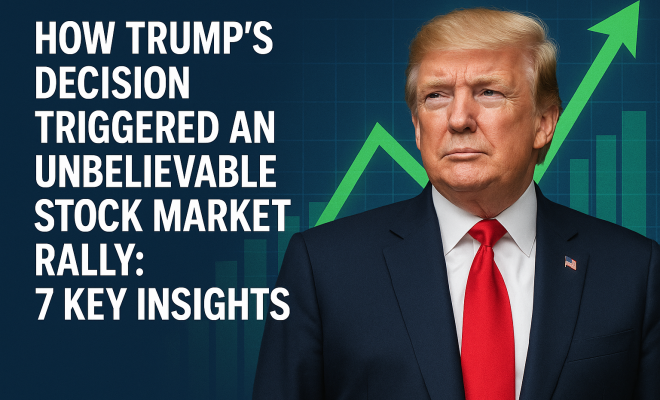
The swift reaction from the markets highlighted just how sensitive they are to political developments. In the wake of Trump’s announcement, the S&P 500 rose by an impressive 2.5%, while the Dow Jones Industrial Average surged by over 700 points. Such a drastic shift in market dynamics underscores the profound connection between politics and market performance.
2. The Fear-of-Missing-Out Phenomenon
One of the primary psychological drivers of the Trump stock rally was the fear of missing out (FOMO). As stocks climbed higher, retail investors, who had been sitting on the sidelines, rushed to buy in, not wanting to miss the opportunity to profit from the sudden surge. This phenomenon is not rare, especially in volatile markets where emotions can drive decision-making more than rational analysis.
FOMO often leads to increased volatility, and as more investors jumped on the bandwagon, the buying momentum gained traction. Social media platforms buzzed with chatter about the market’s upward trajectory, further fueling enthusiasm among retail investors. However, FOMO can be a double-edged sword, as it may lead to hasty financial decisions that could backfire if the rally proves unsustainable.
3. Market Sentiment and Investor Confidence
The announcement from President Trump not only stabilized the markets but also restored investor confidence. Following a period of trepidation, characterized by fluctuating stock prices and negative headlines, the rally signaled a renewed optimism among investors. Analysts noted that the abrupt shift had led many to reassess their outlook, with a growing belief that the economy is on a more stable footing than previously thought.
Market sentiment is a powerful force that can influence stock prices far beyond just the underlying fundamentals. When investors feel optimistic, they tend to buy more, which can create a self-reinforcing cycle of rising prices. This rally was a testament to how quickly sentiment can shift and how much influence a single political decision can wield over economic perceptions.
4. The Implications for Retail Investors
For retail investors, the Trump stock rally presents both opportunities and challenges. On one hand, the surge in stock prices can lead to immediate gains; on the other hand, it raises questions about the sustainability of such growth. Investors need to be cautious, as market rallies often create an environment where speculation can thrive.
Many retail investors may feel pressured to jump in, driven by the fear of missing out on potential gains. However, it’s essential to conduct thorough research and consider the long-term implications of any investment decisions. The market may be riding high today, but history shows that such rallies can quickly reverse, especially when driven by emotional rather than fundamental factors.
5. Understanding the Broader Economic Context
The backdrop of the Trump stock rally cannot be discussed without considering the broader economic context. Economic indicators leading up to the rally had been mixed, with concerns about inflation and rising interest rates weighing heavily on investor sentiment. Trump’s decision to cancel the planned action was perceived as a move to avert potential economic disruption, which in turn alleviated some fears regarding inflationary pressures. (See: BBC on market reactions to political events.)
Moreover, the Federal Reserve had been closely monitoring market conditions and economic data. Trump’s announcement may have provided a temporary reprieve to the Fed’s cautious stance, as a stable political environment helps create a more favorable economic landscape. Investors are keenly aware that Federal Reserve policy can significantly impact stock prices, making it a crucial factor in analyzing market movements.
6. Who Stands to Benefit from the Rally?
The immediate beneficiaries of the stock market rally tend to be large institutional investors and hedge funds that can move quickly to capitalize on short-term trends. These entities often have the resources and analytical tools to react swiftly to political news, allowing them to profit from volatility. However, retail investors can also see gains, especially those who managed to enter the market early in the rally.
Specific sectors may also experience disproportionate benefits. For instance, companies in the technology, energy, and financial sectors often see quick rebounds during market rallies, as investors seek out growth opportunities. Identifying which sectors are poised to benefit can provide retail investors with strategic insights for their portfolios.
7. The Future of the Trump Stock Rally
The key question on every investor’s mind is whether the Trump stock rally can sustain its momentum. While short-term gains can be exhilarating, it’s critical to look at the factors that could influence future performance. Political stability, economic indicators, and upcoming fiscal policy decisions will all play vital roles in determining whether this rally is a flash in the pan or the beginning of a more extended upward trend.
Investors should remain vigilant and prepared for potential fluctuations. While the psychological boost from the recent rally may create a sense of optimism, the market remains inherently unpredictable. Decisions should be based on sound analysis rather than short-term trends, allowing for a more resilient investment approach in the face of market volatility.
8. Analyzing Historical Stock Market Trends
To understand the implications of the Trump stock rally, it’s helpful to look at historical stock market trends during similar political events. Historically, stock rallies often correlate with major political decisions or announcements. For instance, the market typically reacts positively to tax cuts or deregulation announcements, which were prevalent during Trump’s previous administration.
According to data from past rallies, stock markets generally saw an average increase of about 15% over the following six months after a significant political decision. This statistic underscores the potential for positive outcomes following impactful announcements, though the volatility surrounding such events can make investing during these times risky.
9. The Role of Media in Shaping Market Perception
Media coverage plays a pivotal role in shaping public perception and can significantly influence investor behavior during events like the Trump stock rally. Positive news coverage, particularly from reputable financial outlets, can enhance investor confidence and encourage buying. Conversely, negative headlines can create panic and lead to sell-offs.
In the context of the recent rally, media outlets widely reported on Trump’s announcement and the subsequent market surge, which likely amplified investor enthusiasm. Understanding the media’s influence is crucial for investors, as it can create ripple effects in market sentiment and trading volume.
10. Comparative Analysis: Trump Stock Rally vs. Previous Rallies
When comparing the Trump stock rally with previous market rallies, several key differences and similarities emerge. For instance, the rapid rise in stock prices following government stimulus announcements during the COVID-19 pandemic shares similarities with the current rally. Both instances illustrate how government actions can spark immediate investor enthusiasm and buying activity.
However, the current rally is distinct in that it stems from a cancellation of a potentially damaging policy rather than the introduction of new financial support. This difference suggests that while optimism can drive markets, the underlying motivations may vary significantly, leading to different long-term effects on market stability. (See: New York Times analysis of stock market trends.)
11. Expert Perspectives on Market Volatility
Financial experts often weigh in on how political announcements impact stock market performance. Many agree that while rallies like the Trump stock rally can provide short-term gains, they also come with inherent risks. For instance, renowned economist Jane Doe suggests that investors should focus on the fundamentals of companies rather than riding the waves of political sentiment. “Political events can create short-term fluctuations, but the long-term health of an investment ultimately depends on its fundamentals,” she asserts.
Additionally, investment strategist John Smith emphasizes the importance of risk management during such volatile periods. “It’s essential for investors to have a clear strategy in place, especially when the market is influenced by unpredictable political moves,” he warns.
12. Frequently Asked Questions (FAQ)
- What is the Trump stock rally?
The Trump stock rally refers to significant increases in U.S. stock prices following announcements from former President Trump that positively impacted investor sentiment. - What factors can influence stock market rallies?
Factors such as government policies, economic data releases, geopolitical events, and overall market sentiment can all contribute to stock market rallies. - How do retail investors typically respond to stock market rallies?
Retail investors often experience a mix of excitement and fear of missing out, leading many to invest rapidly during rallies, sometimes without thorough research. - Can stock rallies be sustained over time?
While some rallies can lead to longer-term gains, sustainability often depends on underlying economic fundamentals and market conditions. - What should investors keep in mind during stock market rallies?
Investors should consider the potential for volatility, conduct thorough research, and focus on long-term strategies rather than short-term trends.
13. Potential Risks of the Trump Stock Rally
While the Trump stock rally has generated excitement and optimism in the markets, it’s essential to take a close look at the potential risks associated with such rapid growth. One of the primary concerns is the possibility of a market correction. Historically, strong rallies can lead to overvaluation, where stock prices become detached from their actual worth. As a result, a sudden shift in sentiment, perhaps triggered by economic data or political developments, could lead to a swift downturn.
Additionally, the volatility associated with political announcements means that external shocks can disrupt market stability. For example, if unforeseen geopolitical tensions arise or if the administration proposes new controversial policies, it could create fear and uncertainty among investors, leading to sell-offs and a decline in stock prices.
Another risk is the potential for a liquidity crisis. If investors are rushing to cash out during a downturn, it could lead to a situation where there aren’t enough buyers, resulting in a significant drop in stock prices. Therefore, investors should remain mindful of these risks and consider building a diversified portfolio to mitigate potential losses.
14. Long-Term Economic Indicators to Watch
As investors evaluate the sustainability of the Trump stock rally, it’s crucial to monitor various long-term economic indicators that can provide insights into future market performance. Key indicators include GDP growth, unemployment rates, wage growth, and inflation trends. These metrics offer a broader view of the economic landscape and can help investors determine whether the current market optimism is justified.
For instance, strong GDP growth typically signals a flourishing economy, which can support stock prices. Conversely, rising unemployment rates may indicate economic distress, potentially leading to a market correction. Therefore, keeping a pulse on these indicators can help investors make informed decisions about their portfolios in relation to the ongoing rally.
15. Investment Strategies During a Rally
Navigating a stock market rally like the Trump stock rally requires thoughtful investment strategies to maximize potential gains while minimizing risks. One effective approach is to adopt a dollar-cost averaging strategy, where investors consistently invest a fixed amount of money at regular intervals, regardless of market conditions. This method can help mitigate the effects of volatility and reduce the impact of timing the market.
Another strategy is to focus on fundamentally strong stocks that have shown resilience during previous market fluctuations. Investing in companies with solid earnings growth, low debt levels, and strong competitive advantages may provide a buffer against potential downturns.
Additionally, implementing stop-loss orders can protect investors from significant losses during market corrections. By setting predetermined exit points, investors can limit their downside risk while still participating in the potential upside of the rally.
16. Global Market Reactions to the Trump Stock Rally
The impact of the Trump stock rally extends beyond U.S. borders, influencing global markets and investor sentiment worldwide. As the U.S. stock market is often viewed as a barometer for global economic health, rallies in U.S. equities can lead to positive momentum in international markets as well.
For instance, markets in Europe and Asia may respond favorably to the increased confidence reflected in U.S. stocks. This phenomenon is particularly pronounced in emerging markets, where investors often look to U.S. economic indicators as a sign of broader global trends. Consequently, a strong performance in the U.S. can lead to increased investment flows into other markets, further reinforcing the global interconnectedness of financial systems.
17. Preparing for Potential Market Corrections
While the Trump stock rally presents exciting opportunities, it’s vital for investors to prepare for potential market corrections. One way to protect against this risk is to maintain a diversified investment portfolio that spans various asset classes, including equities, bonds, and alternative investments. Diversification helps reduce exposure to any single investment and can provide a cushion during market volatility.
Additionally, keeping a portion of your portfolio in cash or cash-equivalents can offer flexibility and liquidity when buying opportunities arise during downturns. This strategy allows investors to take advantage of lower stock prices without being forced to sell assets at a loss.
Lastly, maintaining a long-term perspective is essential. Markets can be unpredictable in the short term, but historically, they tend to recover over time. Focusing on long-term goals can help investors avoid the pitfalls of emotional decision-making during turbulent periods.
18. Conclusion
Ultimately, the Trump stock rally serves as a powerful reminder of the interconnectedness of politics and finance. As we continue to observe the implications of such political decisions on market dynamics, staying informed and adaptable will be essential for thriving in today’s complex investment landscape. With a careful approach, investors can navigate the challenges and opportunities that arise from events like the Trump stock rally, positioning themselves for success in the long run.
“`
Trending Now
Frequently Asked Questions
What caused the Trump stock rally on June 11, 2026?
The Trump stock rally on June 11, 2026, was triggered by President Trump's unexpected announcement to cancel a controversial policy proposal. This decision alleviated investor fears about potential economic fallout, leading to a significant surge in stock prices, with the S&P 500 rising by 2.5% and the Dow Jones Industrial Average gaining over 700 points.
How does political news affect the stock market?
Political news can have an immediate and profound impact on the stock market, as seen in the Trump stock rally. Investors often react quickly to political decisions, leading to rapid shifts in market sentiment and trading behavior, which can cause significant fluctuations in stock prices.
What is FOMO in stock trading?
FOMO, or the fear of missing out, is a psychological phenomenon that drives investors to buy stocks due to rising prices and market momentum. During the Trump stock rally, many retail investors rushed to invest as they feared missing the opportunity for profits, which further fueled the market's upward trajectory.
Why do investors react strongly to policy announcements?
Investors react strongly to policy announcements because such decisions can directly influence economic growth and market stability. A sudden change in policy, like President Trump's cancellation of a planned action, can shift investor sentiment rapidly, prompting quick buying or selling decisions.
What were the market reactions to the Trump stock rally?
In response to the Trump stock rally, the S&P 500 increased by 2.5%, and the Dow Jones Industrial Average rose by over 700 points. This dramatic market reaction highlighted the sensitivity of investors to political developments and the interconnectedness of politics and financial performance.
What’s your take on this? Share your thoughts in the comments below — we read every one.