NASA’s Venus Mission: Unlocking Climate & Habitability Secrets
“`html
Introduction: The Enigmatic Planet Venus
Venus, the second planet from the Sun, is often overshadowed by its more famous neighbor, Mars. However, as the hottest planet in the solar system, it presents an intriguing case study that captivates scientists and the public alike. Despite its distance from the Sun, Venus experiences extreme temperatures that can melt lead, and its surface is hidden beneath a thick, toxic atmosphere of carbon dioxide and sulfuric acid clouds. This juxtaposition of familiar size and composition with horrific surface conditions makes Venus a point of interest, especially in light of ongoing discussions about planetary habitability and climate change.
As we stand on the cusp of a new era in space exploration, the upcoming NASA Venus mission is set to provide groundbreaking insights into the planet’s mysteries. With a combination of advanced technology and renewed interest in planetary science, this mission aims to answer critical questions about Venus’s history, its geological activity, and its potential for past habitability.
The Dual Nature of Venus: A Closer Look
Venus, often referred to as Earth’s “evil twin”, shares many similarities with our planet, such as size, composition, and proximity to the Sun. Both planets are terrestrial, meaning they have solid surfaces, and they are roughly comparable in mass and diameter. However, the stark contrast in their atmospheres and surface conditions highlights a unique divergence in their evolutionary paths.
While Earth has managed to support life for billions of years, Venus has transformed into a hellish world, primarily due to a runaway greenhouse effect. This phenomenon has led to atmospheric pressures over 90 times that of Earth, coupled with surface temperatures averaging around 900 degrees Fahrenheit (475 degrees Celsius). Such conditions render it an inhospitable environment for life as we know it, yet the question remains: could Venus have once harbored life?
The Importance of the NASA Venus Mission
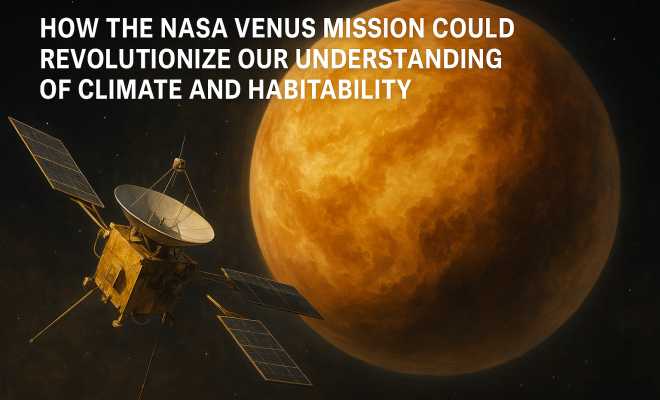
The upcoming NASA Venus mission focuses on two major projects: the DAVINCI+ (Deep Atmosphere Venus Investigation of Noble gases, Chemistry, and Imaging) and VERITAS (Venus Emissivity, Radio Science, InSAR, Topography, and Spectroscopy). Both missions seek to unravel the layers of mystery surrounding Venus.
DAVINCI+ aims to explore Venus’s atmosphere in detail, including its composition and the processes that have shaped its climate. By analyzing noble gases and other elements, scientists hope to understand the planet’s geological history and assess whether Venus could have ever been habitable.
On the other hand, VERITAS intends to map the surface of Venus in unprecedented detail. By utilizing radar imaging and topographical studies, it will provide insights into the planet’s geological features, including evidence of past volcanic activity and tectonic movements. Together, these missions will give researchers a more comprehensive understanding of Venus’s evolution and its stark differences from Earth.
Unpacking the Greenhouse Effect: Lessons from Venus
The concept of a runaway greenhouse effect, as exemplified by Venus, serves as a potent warning for Earth. The thick atmosphere of Venus traps heat, leading to extreme surface conditions that challenge our understanding of climate dynamics. As global temperatures continue to rise on Earth, examining Venus can provide crucial insights into potential future scenarios.
For example, scientists can study how Venus’s atmosphere became so dense and toxic over time. What specific processes contributed to its transformation? By learning from Venus’s history, researchers can develop models that predict how Earth might evolve under similar conditions, especially in the face of climate change. (See: Wikipedia article on Venus.)
The Habitable Zone and Planetary Divergence
Understanding the habitable zone—the region around a star in which conditions might be right for life—is key to astrobiology. Venus is often cited in discussions about planetary habitability due to its position within the habitable zone of our solar system. However, the divergent evolutionary paths of Venus and Earth raise essential questions: What conditions are necessary to maintain a planet’s habitability?
Research indicates that, at some point in its history, Venus may have had a more temperate climate, with liquid water on its surface. This hypothesis is supported by the discovery of features resembling ancient riverbeds and indications of past volcanic activity. The upcoming NASA Venus mission aims to investigate these aspects further, potentially revealing the planet’s transitional climatic phases.
Technological Innovations Driving Exploration
The NASA Venus mission is underpinned by remarkable technological innovations that allow for deeper exploration and analysis of Venus’s atmosphere and surface. Advanced radar imaging, spectroscopy, and atmospheric sampling techniques will enhance our understanding of the planet like never before.
For instance, the use of synthetic aperture radar (SAR) will enable VERITAS to create high-resolution maps of Venus’s surface. These maps can reveal features such as volcanic structures, tectonic activity, and impact craters, providing evidence for geological processes that have shaped the planet over time.
Moreover, DAVINCI+ employs sophisticated instruments to analyze atmospheric gases and temperatures, helping scientists understand how the climate has evolved. The integration of these technologies represents a significant leap forward in planetary science, allowing us to gather data from environments previously deemed unapproachable.
Venus in the Public Imagination: Climate Change and Beyond
The fascination with Venus extends beyond scientific circles; the planet has captured the public imagination, particularly in relation to climate change. As discussions surrounding environmental issues rise, Venus serves as a stark reminder of the consequences of unchecked greenhouse gas emissions.
Moreover, the concept of Venus as “Earth’s evil twin” resonates with people concerned about our planet’s future. The parallels between the two planets can evoke a sense of urgency regarding climate action. By drawing attention to the NASA Venus mission, educators and scientists can engage the public in conversations about sustainability and planetary protection.
Comparative Planetology: Learning from Venus and Mars
Comparative planetology is a field that examines the similarities and differences between planets to better understand their evolution and characteristics. The NASA Venus mission aligns with similar missions to Mars, creating a comprehensive framework for understanding the factors that dictate planetary habitability.
By studying Venus alongside Mars, scientists can gain insights into how different planetary systems respond to similar conditions. While Mars exhibits signs of past water and potentially habitable conditions, Venus’s extreme environment offers a contrasting perspective on planetary evolution.
This comparative approach allows for a holistic understanding of planetary processes, shedding light on the delicate balance required to sustain life. It also highlights the importance of protecting Earth’s environment by learning from our neighboring planets.
Future Prospects: Beyond the NASA Venus Mission
The excitement surrounding the NASA Venus mission is only the beginning. As technology advances and our understanding of the cosmos deepens, there are opportunities for further exploration of Venus and beyond. Future missions could focus on returning samples from the surface, developing landers capable of withstanding the harsh conditions, and even exploring the potential for life in the cloud layers.
Ultimately, the quest to understand Venus is intertwined with our own survival. By studying our solar system’s planets, we gain insights into the processes that shape our environment and the potential futures that await us. The upcoming missions promise to not only expand our knowledge of Venus but also inspire a new generation of scientists and explorers. (See: NASA's Venus mission overview.)
Understanding Venus’ Geological Activity
Geological activity on Venus has been a topic of significant research. Unlike Mars, which shows clear evidence of past water and potentially habitable conditions, Venus exhibits features that suggest a more dynamic geological history. Evidence of volcanic activity has been prominently featured in many discussions about Venus’s past.
Recent studies have indicated that Venus may still be volcanically active, which is a crucial aspect of its geological evolution. A study published in the journal Geophysical Research Letters highlighted the presence of large volcanic structures, including what appear to be recent lava flows. This observation has prompted scientists to explore the possibility that Venus could still be undergoing geological changes, making it a critical point of interest for the upcoming NASA missions.
The role of volcanism on Venus contributes to its thick, carbon-dioxide-rich atmosphere and extreme climate, further emphasizing the importance of understanding its geological processes to draw parallels with Earth’s geological history.
Exploring the Atmosphere: More than Just a Dead End
Much of the research on Venus has been limited due to its hostile surface environment. However, the atmosphere of Venus presents another compelling area for study. The thick, sulfuric acid-laden clouds not only create a greenhouse effect but also lead to unique atmospheric phenomena.
For instance, scientists have observed super-rotating winds in Venus’s atmosphere that travel much faster than the planet’s rotation itself. This phenomenon creates fascinating dynamics within the atmosphere and may hold keys to understanding atmospheric circulation patterns that could be applicable to other celestial bodies. The upcoming NASA Venus mission aims to explore these wind patterns and their implications for our understanding of planetary atmospheres.
Additionally, studying the clouds of Venus could lead to insights into potential microbial life forms that might exist in the upper atmosphere. While life as we know it is unlikely to survive the extreme conditions on the surface, the upper layers of Venus’s clouds may present a more suitable environment for microbial life.
Statistics and Key Findings on Venus
To further understand the significance of the NASA Venus mission, consider the following statistics and findings regarding Venus:
- Atmospheric Composition: Venus’s atmosphere is composed of about 96.5% carbon dioxide, 3.5% nitrogen, and trace amounts of other gases, including sulfur dioxide, water vapor, and others. This composition plays a critical role in the greenhouse effect.
- Surface Pressure: The surface pressure on Venus is approximately 92 times that of Earth, equivalent to being about a mile underwater on Earth.
- Surface Temperature: The average surface temperature is around 900°F (475°C), making it the hottest planet in our solar system.
- Geological Features: Venus hosts numerous geological features, including over 1,600 volcanoes, vast lava plains, and extensive mountain ranges that showcase its complex geological history.
- Rotation and Day Length: A day on Venus (one full rotation on its axis) takes about 243 Earth days, while a year (one orbit around the Sun) takes about 225 Earth days. This results in a unique situation where a day on Venus is longer than its year.
Frequently Asked Questions (FAQ)
What is the primary goal of the NASA Venus mission?
The primary goal of the NASA Venus mission is to explore Venus’s atmosphere and surface in unprecedented detail to understand its geological activity and assess whether it could have ever harbored life.
How will the DAVINCI+ mission contribute to our understanding of Venus?
The DAVINCI+ mission will analyze the atmosphere of Venus by studying its chemical composition, examining cloud structures, and measuring temperature and pressure at various altitudes. This will help scientists understand the planet’s climatic history and potential for habitability.
What is the significance of the VERITAS mission?
VERITAS will provide high-resolution mapping of Venus’s surface, revealing geological features that can give insight into its volcanic history and tectonic processes. This information is crucial for understanding the evolution of the planet and its differences from Earth. (See: Scientific study on Venus's geology.)
Are there any plans for future missions to Venus after the NASA Venus mission?
Yes, the upcoming NASA Venus mission is expected to pave the way for future exploration. Plans may include potentially returning samples from Venus’s surface, developing new landers, and exploring the cloud layers for signs of microbial life.
How does studying Venus help us understand Earth?
Studying Venus provides critical insights into extreme climate conditions and geological processes that have led to its current state. Understanding these processes can inform our knowledge of Earth’s own climate dynamics and the potential impacts of climate change.
Key Comparisons: Venus vs. Earth
As we delve deeper into the significance of the NASA Venus mission, it is essential to draw direct comparisons between Venus and Earth. While both planets share similarities, the differences in their environments highlight critical planetary processes.
- Atmospheric Composition: Earth’s atmosphere is comprised of approximately 78% nitrogen, 21% oxygen, and trace amounts of carbon dioxide and other gases, which support life. In stark contrast, Venus’s atmosphere is overwhelmingly carbon dioxide, with no oxygen, making it hostile to life.
- Surface Conditions: Earth maintains a temperature range that supports various life forms due to its liquid water. Conversely, Venus’s surface is extremely hot, with no liquid water due to the high temperatures and pressures.
- Geological Activity: Earth exhibits tectonic activity that shapes its landscape and allows for the recycling of materials through geological processes. Venus may also have had tectonic activity, but the lack of water and extreme conditions create a different geological outcome.
- Potential for Life: Earth is teeming with diverse life forms, while Venus’s extreme conditions render it inhospitable for life as we understand it. However, studying Venus can help identify what conditions are necessary for life and the potential for extremophiles on other planets.
Venus in Cultural Context
Throughout history, Venus has been a focal point of human culture and mythology. Often referred to as the “Morning Star” or “Evening Star,” Venus has inspired countless stories, artworks, and scientific inquiries. In Roman mythology, Venus was the goddess of love, symbolizing beauty and desire. This cultural significance contrasts sharply with the planet’s harsh realities, representing the duality of perception and reality.
The upcoming NASA Venus mission also serves as a modern reminder of our quest for knowledge and understanding, showcasing humanity’s desire to explore the unknown. As we learn more about Venus, we not only advance our scientific knowledge but also reflect on our place in the universe and our responsibility toward our planet.
Conclusion: The Legacy of the NASA Venus Mission
As we prepare for the NASA Venus mission, it is clear that Venus holds the key to many questions that have long puzzled scientists. Its extreme climate, geological history, and potential past habitability make it a unique object of study. The mission’s findings are likely to have far-reaching implications, not only for our understanding of Venus but also for Earth’s climate and the future of our own planet.
In an age where climate change poses one of humanity’s greatest challenges, the lessons learned from Venus could provide critical insights into maintaining our environment. Through the lens of the NASA Venus mission, we are reminded of the delicate balance that sustains life and the importance of our responsibility in preserving that balance for future generations.
“`
Trending Now
- our breakdown of shocking new insights into cellular neuropathology of hearing loss you didn’t know about
- read the full story
- this guide on the bond market is shifting: how it impacts bitcoin and what it means for investors
- Why Investors Are Flocking to BMNR Stock: The Ethereum Connection Explained
Frequently Asked Questions
What is the NASA Venus mission?
The NASA Venus mission aims to explore the planet's surface and atmosphere using advanced technology. It seeks to uncover critical insights about Venus's geological activity, history, and potential for past habitability, thereby enhancing our understanding of climate and planetary evolution.
Why is Venus referred to as Earth's 'evil twin'?
Venus is called Earth's 'evil twin' because it shares similar size, composition, and proximity to the Sun with Earth. However, its extreme surface conditions, including high temperatures and toxic atmosphere, starkly contrast with Earth's ability to support life.
What makes Venus the hottest planet in the solar system?
Venus is the hottest planet due to a runaway greenhouse effect, where thick clouds of carbon dioxide trap heat. This results in surface temperatures averaging around 900 degrees Fahrenheit (475 degrees Celsius), making it inhospitable for life as we know it.
Could Venus have ever supported life?
Scientists speculate that Venus may have once harbored life due to its similarities to Earth. The upcoming NASA mission aims to investigate this possibility by analyzing the planet's history and geological features that could indicate past habitability.
How does the atmosphere of Venus differ from Earth's?
Venus has a thick, toxic atmosphere composed mainly of carbon dioxide and sulfuric acid clouds, creating pressures over 90 times that of Earth. In contrast, Earth's atmosphere supports life and regulates temperatures, showcasing a significant divergence in planetary evolution.
Agree or disagree? Drop a comment and tell us what you think.