The Edvocate

Top Menu

Main Menu

  • Start Here
    • Our Brands
    • Governance
      • Lynch Education Consulting, LLC.
      • Dr. Lynch’s Personal Website
      • Careers
    • Write For Us
    • Books
    • The Tech Edvocate Product Guide
    • Contact Us
    • The Edvocate Podcast
    • Edupedia
    • Pedagogue
    • Terms and Conditions
    • Privacy Policy
  • PreK-12
    • Assessment
    • Assistive Technology
    • Best PreK-12 Schools in America
    • Child Development
    • Classroom Management
    • Early Childhood
    • EdTech & Innovation
    • Education Leadership
    • Equity
    • First Year Teachers
    • Gifted and Talented Education
    • Special Education
    • Parental Involvement
    • Policy & Reform
    • Teachers
  • Higher Ed
    • Best Colleges and Universities
    • Best College and University Programs
    • HBCU’s
    • Diversity
    • Higher Education EdTech
    • Higher Education
    • International Education
  • Advertise
  • The Tech Edvocate Awards
    • The Awards Process
    • Finalists and Winners of The 2026 Tech Edvocate Awards
    • Finalists and Winners of The 2025 Tech Edvocate Awards
    • Finalists and Winners of The 2024 Tech Edvocate Awards
    • Finalists and Winners of The 2023 Tech Edvocate Awards
    • Finalists and Winners of The 2021 Tech Edvocate Awards
    • Finalists and Winners of The 2022 Tech Edvocate Awards
    • Finalists and Winners of The 2020 Tech Edvocate Awards
    • Finalists and Winners of The 2019 Tech Edvocate Awards
    • Finalists and Winners of The 2018 Tech Edvocate Awards
    • Finalists and Winners of The 2017 Tech Edvocate Awards
    • Award Seals
  • Apps
    • GPA Calculator for College
    • GPA Calculator for High School
    • Cumulative GPA Calculator
    • Grade Calculator
    • Weighted Grade Calculator
    • Final Grade Calculator
  • The Tech Edvocate
  • Post a Job
  • AI Powered Personal Tutor

logo

The Edvocate

  • Start Here
    • Our Brands
    • Governance
      • Lynch Education Consulting, LLC.
      • Dr. Lynch’s Personal Website
        • My Speaking Page
      • Careers
    • Write For Us
    • Books
    • The Tech Edvocate Product Guide
    • Contact Us
    • The Edvocate Podcast
    • Edupedia
    • Pedagogue
    • Terms and Conditions
    • Privacy Policy
  • PreK-12
    • Assessment
    • Assistive Technology
    • Best PreK-12 Schools in America
    • Child Development
    • Classroom Management
    • Early Childhood
    • EdTech & Innovation
    • Education Leadership
    • Equity
    • First Year Teachers
    • Gifted and Talented Education
    • Special Education
    • Parental Involvement
    • Policy & Reform
    • Teachers
  • Higher Ed
    • Best Colleges and Universities
    • Best College and University Programs
    • HBCU’s
    • Diversity
    • Higher Education EdTech
    • Higher Education
    • International Education
  • Advertise
  • The Tech Edvocate Awards
    • The Awards Process
    • Finalists and Winners of The 2026 Tech Edvocate Awards
    • Finalists and Winners of The 2025 Tech Edvocate Awards
    • Finalists and Winners of The 2024 Tech Edvocate Awards
    • Finalists and Winners of The 2023 Tech Edvocate Awards
    • Finalists and Winners of The 2021 Tech Edvocate Awards
    • Finalists and Winners of The 2022 Tech Edvocate Awards
    • Finalists and Winners of The 2020 Tech Edvocate Awards
    • Finalists and Winners of The 2019 Tech Edvocate Awards
    • Finalists and Winners of The 2018 Tech Edvocate Awards
    • Finalists and Winners of The 2017 Tech Edvocate Awards
    • Award Seals
  • Apps
    • GPA Calculator for College
    • GPA Calculator for High School
    • Cumulative GPA Calculator
    • Grade Calculator
    • Weighted Grade Calculator
    • Final Grade Calculator
  • The Tech Edvocate
  • Post a Job
  • AI Powered Personal Tutor
  • Apply to Get a Free Kinsa Smart Thermometer for Every Family at Your School

  • California’s Game-Changing Move: Can New Laws Finally Protect Kids from Big Tech’s Grasp?

  • This Bill Could Devastate Vulnerable Kids, Warns Veteran Lawman

  • Revealed: The Untold 9/11 Health Crisis Quietly Affecting a New Generation

  • Unprecedented AI Restrictions in Schools: Why Millions of Students Are Losing Access

  • The Future of Instructional Design Careers: Skills Needed for Success with AI Tools like ezSuite™

  • The AI Revolution: Is This New Tool the Ultimate Game-Changer for Instructional Designers?

  • The AI Revolution in EdTech: 8 Ways ezSuite Will Change How You Create Content

  • The AI Content Revolution: Why Publishers Are Scrambling to Adapt

  • The Looming Crisis: How Ghana’s Faculty Recruitment Wars Threaten Academic Freedom

Uncategorized
Home›Uncategorized›Hubble’s 2025 Survey: Unlocking Milky Way’s Galactic Bulge Secrets

Hubble’s 2025 Survey: Unlocking Milky Way’s Galactic Bulge Secrets
By Matthew Lynch
May 12, 2026
0
Spread the love

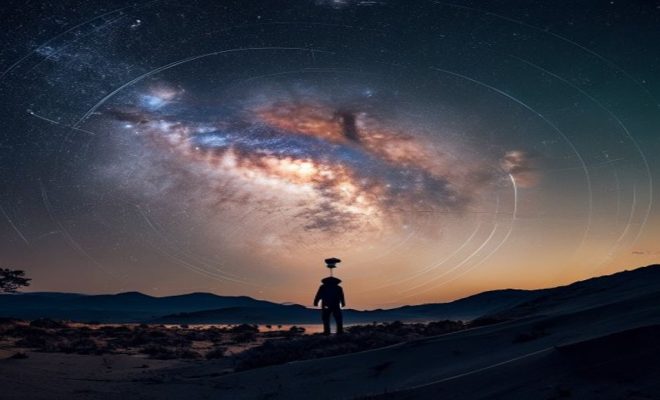
The universe is a treasure trove of secrets, and at the heart of our galaxy lies a complex region brimming with potential discoveries. As scientists prepare for the Nancy Grace Roman Space Telescope’s imminent launch, a recent Hubble survey of the Milky Way center has provided invaluable insights into this enigmatic area. Conducted in the spring of 2025, this extensive survey utilized the Hubble Space Telescope to gather an unprecedented amount of data on billions of stars, planets, and other celestial objects.

Understanding the Galactic Bulge

The Milky Way’s galactic bulge is a densely populated region located at the center of our galaxy, home to a vast array of stars and cosmic phenomena. However, this area is notoriously difficult to observe due to thick layers of cosmic dust that obscure our view. Past observations by both the Hubble and James Webb Space Telescopes have revealed some secrets of the bulge, but the recent Hubble survey has taken our understanding to a whole new level.

Methods and Technology Behind the Survey

The Hubble Space Telescope, known for its stellar imaging capabilities, embarked on this sizeable survey to create the clearest dataset available prior to the Roman Telescope’s launch. This mission aimed not only to push the boundaries of what Hubble could achieve but also to set the stage for Roman’s superior infrared capabilities, which are designed to observe hidden regions of space that are otherwise shrouded in darkness.

  • High-resolution imaging: The Hubble survey captured images of the galactic bulge with remarkable clarity, allowing astronomers to identify individual stars and complex structures within the region.
  • Data collection: Billions of data points were collected, focusing on various celestial objects including stars, rogue planets, and potential planetary systems.
  • Collaboration: Key astronomers and survey coordinators collaborated to analyze the data, ensuring that the findings would seamlessly integrate with Roman’s upcoming observations.

The Excitement Around the Hubble Survey Findings

The release of the Hubble survey’s findings has generated significant excitement across the scientific community and the public. Stunning images showcasing the complex structures and population of the Milky Way’s center have circulated on social media platforms, leading to a surge in interest regarding what lies hidden within our galaxy.

One of the most fascinating aspects of this survey is its potential for revealing new planetary systems and rogue worlds — planets that do not orbit any star and instead drift through interstellar space. The implications of discovering such celestial bodies could be profound, altering our understanding of planetary formation and dynamics.

Preparing for Roman’s Observations

As scientists eagerly await the launch of the Nancy Grace Roman Space Telescope, they are keenly aware of the importance of the Hubble survey data. The Roman Telescope, equipped with cutting-edge infrared instruments, will allow astronomers to delve deeper into the dense fabric of the Milky Way’s center, uncovering secrets that have long remained hidden.

  • Infrared capabilities: Roman’s advanced technology will enable observations that penetrate the dust that obscures many celestial objects, revealing structures and phenomena that were previously invisible.
  • Potential discoveries: The insights gained from the Hubble survey set a solid foundation for Roman’s mission, positioning astronomers to make groundbreaking discoveries in the near future.
  • Collaboration between missions: The synergy between Hubble and Roman ensures that findings from one telescope will complement and enhance the observations made by the other.

The Broader Implications of the Survey

Beyond merely cataloging objects in the galactic bulge, the Hubble survey’s findings may have broader implications for our understanding of the universe. By studying the composition, structure, and behaviors of celestial bodies at the Milky Way center, astronomers can draw conclusions about the evolution of galaxies and the fundamental processes that govern star formation.

What’s Next for Astronomers?

For astronomers around the world, the future is incredibly bright. The combination of the Hubble survey of the Milky Way center and the forthcoming observations made by the Roman Telescope promises to open an entirely new chapter in our understanding of the cosmos. As we stand on the cusp of these groundbreaking discoveries, the excitement in the astronomical community is palpable.

  • Anticipated findings: As Roman begins its observations, scientists expect to uncover new details about the formation of stars, the dynamics of rogue planets, and the interplay between various celestial phenomena.
  • Public engagement: The viral spread of Hubble’s stunning images serves as a reminder of the importance of public engagement in science. As excitement builds, more people are encouraged to learn about astrophysics and the mysteries of the universe.
  • Collaborative efforts: Ongoing collaboration among international astronomers will facilitate a comprehensive understanding of the Milky Way center and the larger universe.

Conclusion

NASA’s Hubble survey of the Milky Way center is a pivotal step forward in our quest to understand the cosmos. By providing an unparalleled dataset and setting the stage for future observations, this survey ensures that the upcoming Nancy Grace Roman Space Telescope will have a wealth of information at its disposal. As we anticipate the discoveries to come, one thing is clear: our understanding of the universe is about to expand in ways we can only imagine.

The collaboration between Hubble and Roman represents one of the most exciting eras in modern astronomy, with the potential for jaw-dropping findings that could shift our perceptions of the cosmos. As we continue to explore this region of the Milky Way, let us remain curious and engaged, ready to embrace whatever secrets the stars have yet to reveal.


Previous Article

401(k) Catch-Up Limits Slashed to $4,500: Act ...

Next Article

Proton-Neutron Correlations: A New Era for Energy ...

Matthew Lynch

Related articles More from author

  • Uncategorized

    Identity Crisis: How Higher Ed Can Look Inward Critically

    January 2, 2025
    By Matthew Lynch
  • Uncategorized

    Looking For a Place to Publish Your Thought Leadership?

    September 9, 2016
    By Matthew Lynch
  • Uncategorized

    Best Highlighters That Don’t Bleed

    July 8, 2026
    By Matthew Lynch
  • Uncategorized

    9 Child Temperament Traits: Shaping Personality From Birth

    June 21, 2026
    By Matthew Lynch
  • Uncategorized

    Digital Nomad Visa Changes 2025: Europe’s Golden Era Ends

    July 30, 2026
    By Matthew Lynch
  • Uncategorized

    Hill Harper’s Mentoring Group Empowers Black Boys

    May 18, 2016
    By Matthew Lynch

Search

Registration and Login

  • Log in
  • Entries feed
  • Comments feed
  • WordPress.org

Newsletter

Signup for The Edvocate Newsletter and have the latest in P-20 education news and opinion delivered to your email address!

RSS feed: Matthew on Education Week Matthew on Education Week

  • Au Revoir from Education Futures November 20, 2018 Matthew Lynch
  • 6 Steps to Data-Driven Literacy Instruction October 17, 2018 Matthew Lynch
  • Four Keys to a Modern IT Approach in K-12 Schools October 2, 2018 Matthew Lynch
  • What's the Difference Between Burnout and Demoralization, and What Can Teachers Do About It? September 27, 2018 Matthew Lynch
  • Revisiting Using Edtech for Bullying and Suicide Prevention September 10, 2018 Matthew Lynch

About Us

The Edvocate was created in 2014 to argue for shifts in education policy and organization in order to enhance the quality of education and the opportunities for learning afforded to P-20 students in America. What we envisage may not be the most straightforward or the most conventional ideas. We call for a relatively radical and certainly quite comprehensive reorganization of America’s P-20 system.

That reorganization, though, and the underlying effort, will have much to do with reviving the American education system, and reviving a national love of learning.  The Edvocate plans to be one of key architects of this revival, as it continues to advocate for education reform, equity, and innovation.

Newsletter

Signup for The Edvocate Newsletter and have the latest in P-20 education news and opinion delivered to your email address!

Contact

The Edvocate
910 Goddin Street
Richmond, VA 23230
(601) 630-5238
[email protected]
  • situs togel online
  • dentoto
  • situs toto 4d
  • situs toto slot
  • toto slot 4d
Copyright (c) 2026 Matthew Lynch. All rights reserved.