Agentic Commerce Travel: Winners & Losers in the AI Revolution
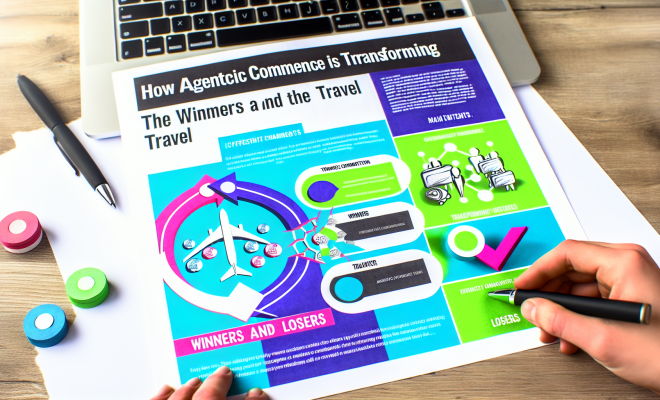
In the rapidly evolving landscape of travel technology, the concept of agentic commerce travel is gaining traction, fueled by advancements in artificial intelligence (AI). This approach is redefining how travelers book and manage their itineraries, introducing a new era where autonomous AI agents handle tasks previously done by human agents. However, while there’s considerable buzz surrounding this innovation, much of it may be more hype than reality.
The Rise of Agentic Commerce in Travel
Agentic commerce travel refers to the use of AI-driven systems that autonomously execute tasks related to travel planning and bookings. These AI agents are designed to understand user preferences, manage bookings, and even provide personalized recommendations. The technology promises a more efficient, user-friendly experience, streamlining processes that have traditionally been cumbersome. However, the actual implementation of these systems varies greatly, with many industry players still grappling with how to effectively integrate AI into their operations.
Winners: Who Stands to Benefit?
As with any technological shift, there are distinct winners and losers in the transition towards agentic commerce travel. Analysts predict that certain players in the travel sector will thrive:
- Tech-Savvy Online Travel Agencies (OTAs): Companies that embrace AI tools and adaptive technologies are poised to capture a larger market share. These OTAs will likely leverage AI to enhance customer engagement and streamline operations.
- AI Startups: Innovators in the AI space are expected to emerge as key players in travel. Their ability to provide sophisticated, adaptive technology tailored to the needs of travelers puts them at a significant advantage.
- Travel Platforms with Flexible Models: Organizations that can pivot quickly and adapt to the evolving landscape of travel technology will likely gain traction. This agility is essential in a rapidly changing market.
Losers: Who Is at Risk?
Conversely, traditional travel agencies and rigid platforms may face substantial challenges in the age of agentic commerce travel. Key losses include:
- Traditional Travel Agencies: With the rise of autonomous AI agents, established agencies that rely on conventional booking methods could see a significant decline in clientele.
- Legacy Systems: Platforms that have not modernized their technology or adapted to AI-driven frameworks risk losing competitive advantage. Their inability to innovate could result in decreased customer satisfaction and loyalty.
- Agents Resistant to Change: Human agents who are unwilling or unable to adapt to new technologies may find themselves displaced as AI takes over their roles.
Market Trends: 30% Shift by 2027
Experts project that by 2027, approximately 30% of all travel bookings may be handled through AI systems. This staggering figure underscores the urgency for companies to embrace these technologies. The shift represents not just a trend, but a fundamental change in how travelers engage with the booking process. Companies that remain static in their operations might find themselves left behind in a market increasingly dominated by AI efficiencies.
Implementation Strategies: What Experts Are Saying
Industry leaders are currently debating the best strategies for implementing agentic commerce travel solutions. Among the most pressing concerns are:
- Integration Challenges: How can existing systems work in tandem with new AI solutions? For many companies, the answer lies in investing in adaptable technologies that can bridge the gap between old and new.
- Privacy Issues: As AI systems gather and analyze vast amounts of customer data, privacy becomes a critical concern. Companies must navigate the complexities of data security while delivering personalized experiences.
- Job Displacement Concerns: The rise of AI raises legitimate fears about job losses in the travel sector. Experts stress the importance of reskilling employees to work alongside technology rather than being replaced by it.
The Social Debate: FOMO and AI Adoption
The conversation surrounding agentic commerce travel is rife with debates on social media, particularly as professionals express their fears of missing out (FOMO) on the AI revolution. While many acknowledge the benefits of AI, the reality remains that actionable steps towards integrating these tools are often slow to materialize. Discussions often revolve around:
- Real vs. Hype: Is the excitement surrounding AI matching the actual developments in the industry? Many experts argue that while there is significant buzz, the practical implementation of AI tools has yet to catch up.
- Training Needs: As the demand for AI adoption grows, so does the need for training programs that equip travel professionals with the necessary skills to thrive in an AI-dominated landscape.
- Ethical Considerations: As AI takes the stage, ethical questions arise regarding decision-making processes and the potential biases that could emerge from automated systems.
Conclusion: Preparing for the Future of Travel
The trajectory of agentic commerce travel is set to reshape the travel industry in profound ways. Players in this space must prepare for significant shifts, embracing technological advancements while addressing the concerns that accompany such change. From ensuring data privacy to reskilling the workforce, the path forward will require thoughtful strategies and proactive measures.
As we look to the future, it is clear that the adoption of AI in travel is not just an option—it is becoming a necessity. Companies must navigate this transition carefully, balancing innovation with ethical considerations and workforce implications. The age of AI is upon us, and those who adapt will undoubtedly emerge as the leaders of tomorrow’s travel landscape.