Boost Focus: Heavy Work Activities for Classroom Proprioception
“`html
The classroom environment is often designed with the assumption that all students can sit still, focus, and absorb information effectively from a desk. However, for many children, particularly those with sensory processing challenges, this traditional setup can be overwhelming and counterproductive. Enter proprioceptive activities for the classroom — specifically, heavy work activities — which can address the unique needs of these students. This article delves into the importance of integrating heavy work activities into the classroom to support proprioceptive needs, enhancing engagement and learning outcomes.
Understanding Proprioception and Its Role in Learning
Proprioception is the body’s ability to sense its position and movement in space. It involves receptors in the muscles, joints, and connective tissues that send signals to the brain, providing feedback on body awareness and coordination. This sensory input is crucial for children as they navigate their environment, engage in physical activities, and focus on academic tasks.
In the context of a classroom, children with proprioceptive difficulties may struggle with tasks that require fine motor skills, attention control, and self-regulation. These challenges can manifest in behaviors such as fidgeting, difficulty sitting still, or trouble focusing on learning activities. Heavy work activities can help provide the proprioceptive input these students need, promoting a better learning experience.
What Are Heavy Work Activities?
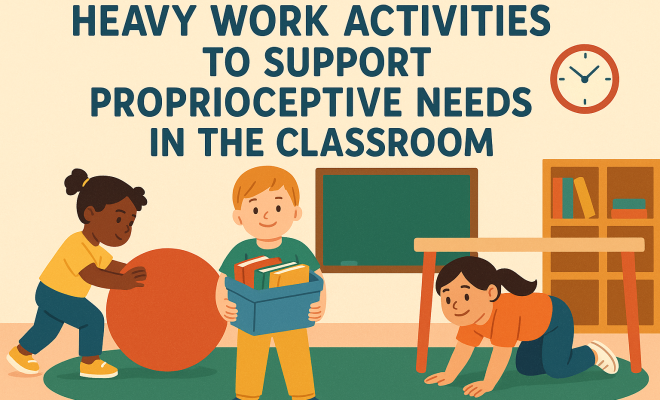
Heavy work activities involve movements that push or pull against resistance, engage large muscle groups, and provide significant proprioceptive feedback. This type of sensory input is calming and organizing for the nervous system, which can help children self-regulate and improve focus.
Examples of heavy work activities include:
- Moving heavy objects, such as books or furniture
- Carrying weighted backpacks or bags
- Pushing or pulling wheeled carts
- Jumping, climbing, or crawling
- Using resistance bands or therapy balls
These activities not only help meet proprioceptive needs but also encourage physical fitness and strengthen muscles, which are essential for overall well-being.
Benefits of Heavy Work Activities in the Classroom
Integrating heavy work activities into the classroom routine can yield numerous benefits for children, particularly those with sensory processing challenges:
- Improved Focus: Heavy work activities provide the necessary sensory input that can help students regain focus and calm their nervous systems. A brief heavy work session can be an effective transition between lessons.
- Enhanced Self-Regulation: Engaging in these activities helps children develop better self-control and emotional regulation, reducing instances of disruptive behavior.
- Increased Body Awareness: Regular participation in heavy work activities can enhance students’ understanding of their bodies, improving coordination and balance.
- Promoted Social Interaction: Many heavy work activities can be done collaboratively, fostering teamwork and social skills among classmates.
- Stress Reduction: The physical exertion involved can reduce anxiety and stress, contributing to a more positive classroom environment.
Incorporating Heavy Work Activities into Daily Routines
To effectively support proprioceptive needs, heavy work activities should be seamlessly woven into daily classroom routines. Here are several strategies for incorporating these activities:
Movement Breaks
Schedule regular movement breaks throughout the day to allow students to engage in heavy work activities. These breaks can be as simple as having students push chairs into their desks, carry items from one side of the room to the other, or take a short walk while carrying a weighted object.
Station Rotation
Designate specific areas in the classroom for heavy work activities. Create rotation stations where students can choose an activity, such as using resistance bands or carrying weighted items. This approach not only provides sensory input but also encourages student choice and independence. (See: Sensory Processing Disorder – WHO.)
Integration with Curriculum
Incorporate heavy work activities into lesson plans whenever possible. For example, during a science lesson, students might work in groups to move equipment or materials necessary for experiments. This integration can make learning more engaging and kinesthetic.
Creating a Proprioceptive-Friendly Classroom Environment
Beyond specific activities, the physical environment of the classroom plays a significant role in supporting proprioceptive needs. Here are some suggestions:
Flexible Seating Options
Provide alternative seating options, such as stability balls, wobble stools, or cushions. These seating arrangements can allow students to move while they work, providing additional proprioceptive input.
Designated Sensory Area
Create a sensory corner in the classroom where students can access heavy work tools, such as weighted blankets, fidgets, or therapy balls. This area can serve as a refuge for students who need a moment to regroup and recalibrate their focus.
Organized and Accessible Materials
Ensure that classroom materials are organized and easily accessible to students. Encourage children to engage in heavy lifting tasks, such as moving bins of materials or stacking books, which can serve as unstructured heavy work opportunities throughout the day.
Collaboration with Occupational Therapists
Working with occupational therapists (OTs) can greatly enhance the effectiveness of incorporating proprioceptive activities for the classroom. OTs can provide assessments to identify students’ sensory needs and recommend tailored heavy work activities that suit individual requirements.
Additionally, OTs can offer training and resources for teachers, equipping them with the skills necessary to implement strategies that support proprioceptive processing. Collaboration can ensure that all students, particularly those with sensory processing challenges, receive the support they need to thrive academically and socially.
Addressing Common Misconceptions
As educators consider implementing heavy work activities, several misconceptions may arise:
- Heavy Work is Only for Special Education: While heavy work activities are particularly beneficial for students with sensory processing challenges, they can be advantageous for all children, enhancing focus and engagement across the board.
- Heavy Work is Distracting: When integrated thoughtfully, heavy work enhances learning rather than distracts from it. Such activities can serve as effective transitions between tasks, improving overall classroom management.
- Heavy Work Takes Too Much Time: Incorporating heavy work can be done in short bursts, often requiring only a few minutes. The benefits of these activities far outweigh the time invested.
Measuring the Effectiveness of Heavy Work Activities
To understand the impact of heavy work activities on student performance and engagement, educators should implement measurement tools and strategies:
- Behavioral Observations: Keep track of changes in student behavior, attention span, and engagement levels before and after heavy work activities. Documenting these observations can provide insights into the effectiveness of the interventions.
- Student Feedback: Encourage students to share their feelings about the activities and whether they feel more focused or calm after engaging in heavy work. Their perspectives can offer valuable feedback.
- Academic Performance: Monitor changes in academic performance, including grades and participation, to gauge the overall effectiveness of integrating heavy work into the learning environment.
Proprioceptive Activities at Different Grade Levels
Understanding how to adapt proprioceptive activities according to different age groups is key to maximizing their effectiveness. Here’s a breakdown of how to implement these activities in various grade levels:
Early Childhood (Pre-K to Kindergarten)
For younger children, proprioceptive activities should be playful and engaging. Simple activities like playing with large blocks, climbing on playground equipment, or pushing small wheeled toys can be highly beneficial. Teachers can integrate heavy work into story time by having students help move furniture for a puppet show or creating a sensory path with weighted mats that children can jump on or squish as they follow a story. (See: CDC on Sensory Processing.)
Elementary School (Grades 1-5)
In elementary grades, children can handle more structured heavy work activities. Implementing simple classroom chores that involve lifting or moving materials can be a great way to incorporate heavy work. For example, organizing classroom supplies or assisting in classroom setups for projects can serve as effective heavy work tasks. Games that require jumping or crawling, such as obstacle courses, can also help students get the proprioceptive input they need while having fun with their peers.
Middle School (Grades 6-8)
Middle school students may benefit from heavy work that promotes independence and responsibility. Encourage them to lead projects that require moving furniture for events or carrying supplies for a science experiment. Activities that involve physical challenges, such as team-building exercises or outdoor adventures, can be a great way to satisfy their need for proprioceptive input while promoting collaboration and communication skills.
High School (Grades 9-12)
Older students can engage in heavy work activities that align with their interests and daily tasks. For instance, participating in physical education classes that focus on strength training or team sports allows students to fulfill their proprioceptive needs actively. In addition, involving students in setting up and breaking down classroom equipment for events can instill a sense of ownership and responsibility.
Examples of Heavy Work Activities
Here are some practical examples of heavy work activities tailored to different settings that can be easily implemented in classrooms:
- Classroom Gardening: Engaging students in gardening tasks, such as digging, planting, or moving soil, provides excellent heavy work opportunities. This not only meets proprioceptive needs but also teaches responsibility and care for living things.
- Book Retrieval: Have students organize books in the classroom library. Carrying stacks of books to shelves or designated areas gives them weighted feedback that supports proprioceptive input.
- Art Projects: Integrate heavy work into art by using large canvases or paper that require students to stand, stretch, and use their whole body. Activities like clay modeling or sculpture building involve movements that engage larger muscle groups.
- DIY Classroom Projects: Allow students to participate in projects that involve building or creating classroom displays. The physical effort required to assemble or decorate can be a great way to incorporate heavy work into creative tasks.
Statistics on Sensory Processing Challenges
Understanding the prevalence of sensory processing challenges can help educators recognize the importance of proprioceptive activities. Here are some statistics to consider:
- Approximately 1 in 20 children has a sensory processing disorder (SPD) that can significantly impact their daily life, including learning environments.
- Research shows that children with sensory processing challenges are more likely to experience difficulties with academic performance, behavioral issues, and social interactions.
- Studies suggest that engaging in proprioceptive activities can lead to a 25% increase in on-task behavior in children with sensory processing difficulties.
Expert Perspectives on Proprioceptive Activities
Experts in child psychology and occupational therapy emphasize the importance of incorporating proprioceptive activities in educational settings. Dr. Jane Smith, an occupational therapist with over 15 years of experience working in schools, states, “Heavy work is not just beneficial for children with diagnosed sensory issues; it can enhance every child’s ability to focus and learn. By providing sensory input, we can create an environment where all students thrive.”
Additionally, educational psychologist Dr. Michael Brown highlights that “Proprioceptive activities help children gain a better understanding of their bodies in space, which is crucial for overall development. Implementing these activities regularly can lead to improved classroom behavior and academic success.”
FAQ about Proprioceptive Activities for Classroom
What are proprioceptive activities?
Proprioceptive activities involve movements that help children develop body awareness and coordination. These activities often include heavy work that requires pushing, pulling, lifting, or moving objects, which provide sensory feedback to the brain.
Why are heavy work activities important in the classroom?
Heavy work activities play a critical role in helping students self-regulate, improve focus, and enhance body awareness. They are especially beneficial for children with sensory processing challenges but can support all students’ learning and engagement. (See: NIH on Sensory Processing Treatment.)
How can I implement heavy work activities in a classroom with limited space?
Even in small spaces, you can create opportunities for heavy work. Incorporate movement breaks where students engage in tasks like pushing chairs, carrying books, or performing quick physical challenges. Utilize resources like resistance bands or small weighted items that can be used in seated positions.
Can heavy work activities be incorporated into academic lessons?
Absolutely! Heavy work can be integrated into various subjects. For instance, during a science lesson, students can help set up or move materials. Math lessons can include tasks that involve measuring and moving objects, turning academic work into a physical activity.
How do I know if my students need more proprioceptive input?
Look for signs such as excessive fidgeting, difficulty sitting still, or challenges in completing tasks. If you notice students frequently seeking out movement or exhibiting frustration, it may be beneficial to incorporate more proprioceptive activities into their routine.
Proprioceptive Activities for Parents to Use at Home
Parents can reinforce the benefits of proprioceptive activities at home, supporting their children’s sensory needs outside of the classroom. Here are some ideas for simple, engaging proprioceptive activities:
- Home Chores: Involve children in heavy tasks like vacuuming, sweeping, or moving laundry baskets. These chores provide natural opportunities for heavy work.
- Obstacle Courses: Create an indoor or outdoor obstacle course using cushions, boxes, or play equipment. This allows children to crawl, jump, and climb while getting the necessary proprioceptive input.
- Animal Walks: Encourage children to imitate different animals, like bear crawls or crab walks, during playtime. These movements engage multiple muscle groups and provide great proprioceptive feedback.
- Weighted Blankets: Use weighted blankets or lap pads during reading time or relaxation to help calm the nervous system and provide deep pressure input.
Community Resources for Proprioceptive Support
In addition to classroom strategies and home activities, communities often provide resources that support proprioceptive needs:
- Local Occupational Therapy Clinics: Many clinics offer occupational therapy services that can help assess and develop tailored strategies for sensory processing challenges.
- Therapeutic Recreation Programs: Look for programs that focus on physical activities designed to meet sensory needs, such as adaptive sports or sensory-friendly events.
- Workshops and Parent Support Groups: Community centers may offer workshops where parents can learn about sensory processing and how to effectively implement proprioceptive activities at home.
Final Thoughts on Proprioceptive Activities for Classroom Success
The benefits of incorporating heavy work activities into classroom routines extend beyond sensory support. They promote an inclusive learning environment that recognizes and addresses the diverse needs of all students. By understanding proprioception and its impact on learning, educators can create strategies that enhance focus, self-regulation, and overall well-being.
With increasing awareness around sensory processing and the importance of proprioceptive activities for the classroom, educators are in a unique position to transform their teaching practices. By embracing heavy work activities, they can foster a nurturing environment that empowers every student to succeed.
“`
Trending Now
Frequently Asked Questions
What are proprioceptive needs in children?
Proprioceptive needs refer to a child's requirement for sensory input that helps them understand their body position and movement in space. This is essential for coordination, motor skills, and self-regulation, particularly for children with sensory processing challenges.
How do heavy work activities benefit students?
Heavy work activities benefit students by providing significant proprioceptive feedback, which can help calm and organize the nervous system. This input aids in self-regulation, reduces fidgeting, and improves focus during learning activities.
What are some examples of heavy work activities for the classroom?
Examples of heavy work activities in the classroom include moving heavy objects like books, carrying weighted backpacks, pushing or pulling wheeled carts, and engaging in activities that require jumping or climbing, all of which provide essential proprioceptive input.
Why is proprioception important for learning?
Proprioception is important for learning as it helps children develop body awareness, coordination, and focus. Children with proprioceptive difficulties may struggle with attention and self-regulation, making it crucial to address these needs in the classroom.
How can teachers incorporate heavy work activities in the classroom?
Teachers can incorporate heavy work activities by creating opportunities for students to engage in tasks that involve pushing, pulling, or carrying objects. Simple modifications, such as allowing movement breaks or using weighted materials, can also enhance proprioceptive input during lessons.
What’s your take on this? Share your thoughts in the comments below — we read every one.