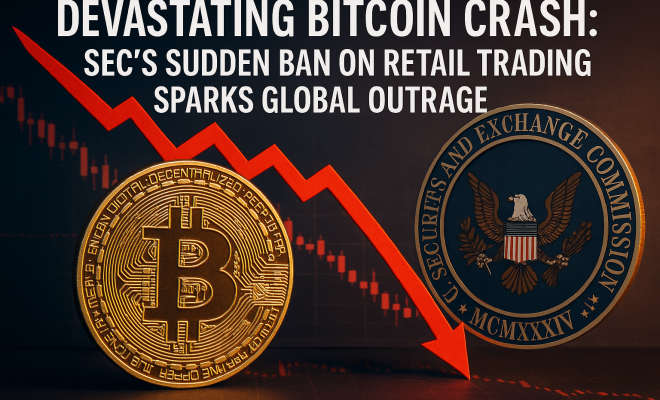
Bitcoin Plunges 65% in 24 Hours After SEC Retail Trading Ban (2026)
“`html
On July 19, 2026, an unexpected announcement from the U.S. Securities and Exchange Commission (SEC) sent shockwaves through the cryptocurrency market. The SEC declared a total ban on retail cryptocurrency trading, leading to a jaw-dropping 65% plunge in Bitcoin’s value within just 24 hours. This unprecedented move erased a staggering $1.2 trillion from the cryptocurrency market, triggering global panic among investors who felt blindsided by the sudden regulatory shift.
The SEC’s Justification: A Systemic Threat?
The SEC’s abrupt action was framed as a necessary measure to protect financial stability. According to the commission, retail trading in cryptocurrencies posed a “systemic threat” due to its volatile nature and the potential for widespread financial harm. This justification raised eyebrows, especially among those who viewed the decision as an overreach by regulators attempting to impose control over an increasingly decentralized economy.
Many investors were left wondering about the true motivations behind the ban. Was it a genuine concern for the financial health of everyday Americans, or was it a calculated move to rein in an industry that has consistently challenged traditional financial norms? Many believe that the SEC’s choice to act without prior warning indicated a lack of understanding of the cryptocurrency ecosystem.
The Immediate Fallout: Panic and Disbelief
As news of the ban spread, social media exploded with reactions. Videos and memes flooded platforms like Twitter and Instagram, showcasing the anger and disbelief of thousands who felt their life savings had been wiped out overnight. The emotional response was palpable, with many expressing feelings of betrayal toward government regulators who they believed should have provided more guidance or at least advance notice of such drastic measures.
This outpouring of frustration reflects a deeper sentiment within the cryptocurrency community. Many retail investors had placed their trust in a system that promised decentralization and financial freedom, only to find themselves at the mercy of regulatory decisions that could undo years of personal investment and faith in the market.
Understanding the Ripple Effect: Impact on Other Cryptocurrencies
The immediate impact of the Bitcoin crash extended well beyond its own value. Many altcoins, already struggling in a bearish market, faced devastating losses as fear spread among investors. The SEC’s decision raised questions about the future of other cryptocurrencies. Would they be next?
The uncertainty prompted a surge in online searches as investors desperately sought information about the stability of their own portfolios. Many began to wonder if other tokens would be banned as well, leading to widespread panic selling across multiple platforms.
Analyzing the Market Dynamics: Why Did Bitcoin Drop So Dramatically?
To truly understand the scale of the bitcoin crash, one must consider the mechanics of the cryptocurrency market itself. Unlike traditional markets, where trading can be halted for various reasons, the cryptocurrency market operates 24/7, allowing for rapid price fluctuations. In this case, the SEC’s announcement led to mass sell-offs, as investors scrambled to exit their positions.
Market liquidity played a crucial role in amplifying the crash. As more sellers entered the market, the price of Bitcoin fell sharply. The sell-off created a feedback loop; the more the price dropped, the more investors felt compelled to sell, driving the price down further. This vicious cycle is often seen in financial markets during times of extreme uncertainty.
The Emotional Toll: A Community in Crisis
While financial losses are quantifiable, the emotional toll on those involved in the cryptocurrency space is harder to measure. Many investors had viewed their investments not just as financial assets, but as part of a larger movement toward decentralized finance. Losing a substantial amount of money can trigger feelings of anxiety, depression, and hopelessness, particularly for those who invested significant portions of their savings.
Social media has become a platform for sharing these feelings, with many posting about their struggles and seeking support from others who are facing similar challenges. This sense of community is vital during times of crisis, as investors look for solace and understanding amid chaos.
Political Reactions: A Divided Response
The SEC’s ban did not go unchallenged. Lawmakers from across the political spectrum voiced their opinions, with many arguing about the implications of such a sweeping ban. Some saw it as a necessary step to protect investors, while others decried it as an infringement on personal freedoms and economic innovation. (See: U.S. Securities and Exchange Commission.)
Critics argue that the ban could stifle innovation in a sector that has the potential to reshape financial systems globally. Economists have also weighed in, suggesting that more measured regulatory approaches could provide oversight without stifling growth. This division among lawmakers indicates that the conversation around cryptocurrency regulations is far from over.
The Future of Cryptocurrency: What Happens Next?
As the dust settles from the Bitcoin crash, many are left pondering the future of cryptocurrencies. Will this ban lead to a more regulated environment, or will it push investors further underground into less regulated territories? The SEC’s decision could set a precedent for how other countries approach cryptocurrency regulations.
Investors are now at a crossroads. Some may choose to withdraw entirely from the market, disillusioned by the recent upheaval, while others may see this as an opportunity to buy the dip. The actions taken by regulators in the coming weeks and months will likely determine the trajectory of the market and investor sentiment.
Learning from the Crash: Strategies for Future Investors
For those still invested in cryptocurrencies or considering entering the market, this crash serves as a crucial learning opportunity. Diversification has always been a sound investment strategy, and this instance reaffirms its importance. Relying too heavily on one asset, especially one as volatile as Bitcoin, can lead to significant risks.
Additionally, staying informed about regulatory developments is vital. The cryptocurrency landscape is rapidly changing, and being proactive rather than reactive could save investors from future shocks. Those interested in cryptocurrencies should engage with community discussions, follow reputable news sources, and perhaps even consult with financial advisors knowledgeable about the crypto space.
The Historical Context of Bitcoin’s Volatility
To better understand the recent crash, it’s important to look at Bitcoin’s history. Launched in 2009, Bitcoin has been characterized by its extreme price volatility. For instance, in 2017, Bitcoin’s value surged from around $1,000 to nearly $20,000, only to crash back down to approximately $3,200 by late 2018. This pattern of boom and bust has become a hallmark of the cryptocurrency market, driven by speculation, regulatory news, and market sentiment.
Each significant price movement often leads to panic among investors, similar to the reactions witnessed after the SEC’s latest announcement. The historical context of Bitcoin’s price fluctuations illustrates not only the emotional investment many have in the asset but also the market’s susceptibility to external influences, such as regulatory crackdowns, which can exacerbate the volatility.
Global Regulatory Landscape: A Comparative Analysis
Understanding how different countries regulate cryptocurrencies can provide insights into what the SEC’s decision may mean for the future. For example, while the U.S. has taken a cautious approach, countries like El Salvador have embraced Bitcoin, declaring it legal tender in 2021. Conversely, China has intensified its crackdown on cryptocurrencies, banning all transactions and mining activities.
This divergence in regulatory approaches highlights the complexities of the global cryptocurrency landscape. In jurisdictions where cryptocurrencies are welcomed, market confidence tends to be higher, often resulting in price stability. In contrast, areas with heavy restrictions can lead to mass sell-offs and investor panic, as seen with the SEC’s recent actions.
Market Sentiment Analysis: Understanding Investor Behavior
The psychology of investing plays a significant role in market dynamics, particularly during crashes. Behavioral finance suggests that decisions made under stress often lead to irrational outcomes. During the Bitcoin crash, fear and uncertainty dominated investor sentiment, prompting many to liquidate their assets rather than hold on in hopes of recovery.
Surveys conducted during this tumultuous period revealed that a significant percentage of retail investors felt insecure about their financial futures. Many expressed concerns about their ability to recover their losses, which influenced their decision to exit the market quickly. Understanding these psychological triggers can help future investors manage their emotions and make more rational decisions, especially during periods of high volatility.
Expert Perspectives: What Economists and Analysts Say
In the aftermath of the crash, financial experts and cryptocurrency analysts weighed in on the implications of the SEC’s ban and the future of Bitcoin. Some economists argue that this could lead to a more stable regulatory environment in the long term, suggesting that stricter regulations might weed out bad actors from the market and establish a framework for growth.
Others, however, caution that excessive regulation could push innovation and investment into unregulated spaces, leading to greater risks for investors. Notable voices in the cryptocurrency community, including prominent figures like Anthony Pompliano and Michael Saylor, have emphasized the importance of adapting to regulatory changes while maintaining the core values of decentralization and financial freedom that cryptocurrencies represent. (See: New York Times coverage on SEC ban.)
Frequently Asked Questions About the Bitcoin Crash
1. What triggered the recent Bitcoin crash?
The crash was primarily triggered by the SEC’s announcement of a total ban on retail cryptocurrency trading, which led to widespread panic selling among investors.
2. How does regulatory news impact cryptocurrency prices?
Regulatory news can significantly impact cryptocurrency prices as it affects investor confidence. Negative regulatory developments often lead to sell-offs, while positive news can enhance market sentiment and lead to price increases.
3. Is this crash different from previous Bitcoin downturns?
While Bitcoin has faced crashes before, this one is significant due to the magnitude of the SEC’s ban and the potential long-term impacts on retail trading. It reflects a growing tension between regulatory bodies and the cryptocurrency community.
4. What should investors do in the wake of this crash?
Investors should assess their portfolios and consider diversification to mitigate risks. Staying informed about regulatory changes and market trends is crucial for making future investment decisions.
5. Can Bitcoin recover from this crash?
While historical trends suggest that Bitcoin has the potential to recover from downturns, the trajectory will largely depend on regulatory developments, market sentiment, and broader economic factors.
6. How can investors protect themselves from future crashes?
Investors can protect themselves by diversifying their investments, setting stop-loss orders, keeping informed about market trends, and avoiding emotional decision-making during volatile periods.
7. What role does market liquidity play in cryptocurrency crashes?
Market liquidity is crucial during a crash; low liquidity can exacerbate price drops as there are fewer buyers to stabilize the market. High volatility often leads to rapid sell-offs, further driving down prices.
8. Is it still a good time to invest in Bitcoin?
Deciding to invest in Bitcoin depends on individual risk tolerance and market outlook. Some may view the current dip as an opportunity, while others may prefer to wait for more clarity in the regulatory environment.
Additional Insights on Market Recovery: What Can Investors Expect?
As the dust settles from the recent crash, it’s essential to evaluate the broader market trends that could influence Bitcoin’s recovery. Historically, Bitcoin has shown resilience after significant downturns. For instance, after the 2017 crash, it took about a year for Bitcoin to regain momentum and reach new all-time highs.
Investor behavior plays a critical role in this recovery. Some analysts predict that once regulatory clarity emerges, there could be a rush of institutional investment into Bitcoin and other cryptocurrencies, potentially stabilizing prices. In 2020 and 2021, institutional investment was a driving force behind the price surge, and a similar trend might emerge as companies and investors reassess their positions in light of recent events.
Additionally, technological advancements and integration into mainstream finance can provide a boost. Projects focused on scalability and security, such as the Lightning Network, are continually enhancing Bitcoin’s transaction capabilities, making it more appealing to users and businesses alike.
Revisiting the Potential of Decentralized Finance (DeFi)
In the wake of the SEC’s ban, the focus on decentralized finance (DeFi) platforms has intensified. DeFi allows users to trade, lend, and earn interest on cryptocurrencies without the need for traditional financial intermediaries. The SEC’s actions may prompt more users to explore these alternatives, where regulatory oversight is often less stringent.
Platforms like Uniswap and Compound have gained popularity because they empower users to maintain control over their assets. As a result, DeFi could become a refuge for investors looking to escape traditional financial systems that seem increasingly unpredictable. Moreover, the rise of decentralized exchanges (DEXs) could provide a new avenue for trading cryptocurrencies without falling under the purview of centralized regulatory bodies.
Community Responds: Grassroots Movements and Advocacy
The cryptocurrency community hasn’t remained silent in response to the SEC’s ban. Grassroots movements advocating for cryptocurrency rights and regulatory reform have emerged, aiming to raise awareness and influence policy-making. Organizations such as the Blockchain Association and Coin Center are actively engaging with lawmakers to promote a more favorable regulatory environment for digital assets. For more on this, see top investment schools.
These movements underline the community’s resilience and determination to maintain the principles of decentralization and innovation that underpin cryptocurrencies. They argue that rather than outright bans, a framework for responsible innovation should be established, balancing consumer protection with the need for market growth.
The Global Perspective: How Other Countries Are Reacting
It’s essential to consider how international markets are responding to the SEC’s ban. Countries like Canada and Switzerland have taken proactive approaches to cryptocurrency regulations, creating clear guidelines that foster innovation while providing consumer protection. In contrast, nations with stricter regulations may see outflows of investment as entrepreneurs and investors look for friendlier jurisdictions.
This global perspective highlights the competitive landscape of cryptocurrency markets. Countries that embrace blockchain technology and cryptocurrencies may attract talent and investment, positioning themselves as leaders in the future of finance. Conversely, countries that impose harsh restrictions could risk lagging in technological advancement and economic growth.
Looking Ahead: Will There Be a Long-Term Shift in Investment Strategies?
The Bitcoin crash has prompted many investors to reevaluate their strategies. Traditional investment approaches may need to adapt to the unique challenges and opportunities presented by cryptocurrencies. For instance, strategies that focus solely on quick gains may become less viable in a market characterized by high volatility and regulatory uncertainties.
Instead, a long-term investment outlook that considers the potential for innovation and growth in the cryptocurrency sector may be more advantageous. This might include investing in emerging technologies, such as blockchain applications, that extend beyond just currency use cases. Additionally, incorporating risk management strategies, such as dollar-cost averaging, can help investors navigate turbulent markets more effectively.
Conclusion: A Moment of Reflection
The SEC’s sudden ban on retail cryptocurrency trading has changed the landscape for Bitcoin and the entire crypto market in a matter of hours. As investors grapple with the aftermath of the crash, it’s essential to remember that financial markets are inherently volatile. The emotional, financial, and regulatory implications of this ban will likely be felt for years to come. Whether this event serves as a cautionary tale or a rallying cry for change remains to be seen, but the crypto community is resilient. Only time will tell how the industry will adapt and evolve in the wake of such a significant regulatory shift.
“`
Trending Now
Frequently Asked Questions
Why did the SEC ban retail cryptocurrency trading?
The SEC banned retail cryptocurrency trading citing it as a 'systemic threat' to financial stability due to its volatility. The commission aimed to protect investors from potential widespread financial harm, though many viewed the decision as an overreach and questioned the regulators' understanding of the cryptocurrency ecosystem.
What was the impact of the SEC's ban on Bitcoin?
The SEC's ban on retail trading caused Bitcoin's value to plummet by 65% within 24 hours, erasing approximately $1.2 trillion from the overall cryptocurrency market. This drastic decline triggered panic and outrage among investors who felt blindsided by the sudden regulatory action.
How did the public react to the SEC's announcement?
Public reaction to the SEC's announcement was one of anger and disbelief, with social media platforms flooded with videos and memes expressing frustration. Many investors felt betrayed and believed that regulators should have provided advance notice or more guidance regarding such a significant decision.
What are the potential reasons behind the SEC's decision?
Many speculate that the SEC's decision was motivated by a desire to control an industry that challenges traditional financial norms. While the official stance cited financial stability concerns, critics argue that the lack of prior warning suggests a misunderstanding of the cryptocurrency landscape.
What does the SEC's ban mean for the future of cryptocurrency?
The SEC's ban raises concerns about the future of cryptocurrency trading, particularly for retail investors. It reflects a growing tension between regulatory bodies and the decentralized nature of cryptocurrencies, potentially leading to stricter regulations and impacting investor confidence in the market.
Have you experienced this yourself? We'd love to hear your story in the comments.