Coming Together to Fill Childcare and Learning Gaps

In Pennsylvania, childcare providers are banding together and working with schools to provide flexible childcare and academic support in an uncertain environment.
Fifty years ago, the founder of Lehigh Valley Children’s Centers could never have imagined the uncertain times we face today. The year was 1970. A leader by the name of Judy Chase had a vision to provide full-day, year-round early education and child care for low-income families. Even after President Nixon vetoed a congressionally approved bill to establish universal child care in 1972, Judy Chase stayed true to her vision. Although the bill never came to be, 50 years later, during a worldwide pandemic, Lehigh Valley Children’s Centers continues to meet community needs for childcare while filling the learning gaps. In our region, we’re creating “universal” access to high-quality learning to meet the needs of diverse working families.
Although toilet paper shortages grabbed all the headlines when COVID-19 first hit, safe and supervised spaces where children can attend virtual classes or do homework have also been in short supply as a result of the pandemic. Once schools closed their doors in the spring, it was no secret to anyone in the childcare world—or to anyone raising children, for that matter—that many working families were struggling to provide supervision for their children during the work day, let alone to step into the role of their child’s teacher.
As childcare providers and educators, at Lehigh Valley Children’s Centers (LVCC) we knew that we could play a role in addressing these shortfalls and providing supplemental education to those families who need it.
Putting Community Over Competition
As with many of the challenges raised by the pandemic, this one required a community-wide response. That’s why we partnered with the Greater Valley YMCA (GVY), which many would have considered a competitor of ours in the past. Both of our organizations have decades of experience providing homework support and recreation for our community youth. What is different with this new partnership is that we are now focused on facilitating remote learning.
While our state, Pennsylvania, was still in the red phase of pandemic response—the most restrictive stage of business and school closures—four of LVCC’s facilities and six of GVY’s offered childcare to essential workers. Since then, many more of our facilities are up and running, so together we’ve launched an effort not just to provide childcare and remote education support, but to enlist other organizations to join us in providing those essential services.
Aligning Safety Across the Community
Safety has always been the first concern at both LVCC and GVY, but that concern is of course heightened these days. To ensure the safety of all our children, class sizes are restricted and children only interact with limited staff. We’ve become fanatical about handwashing, and we check temperatures frequently.
LVCC and GVY serve children across multiple school districts—a total of 17, to be exact—and each district has its own reopening plan. Some districts are providing an entirely remote learning program, others are offering a combination of distance learning and on-campus classes, and still others are providing traditional in-person instruction or a mix of options for families to select.
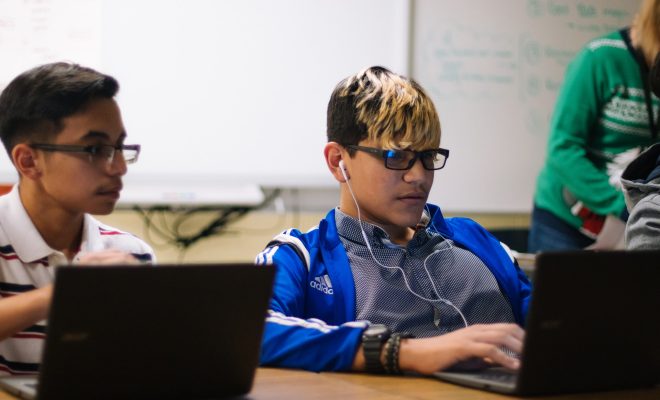
These varying district plans impact the level of school-age child care that families need, ranging from traditional before- and after-school programs, to our full-day Edu-Childcare. In an Edu-Childcare program, students whose schools are offering remote instruction can attend one of our sites, where they receive supervision and support as they complete their remote lessons.
The changes we made for safety were pretty straightforward and common-sense. But the bigger challenges are the academic and logistical changes to make sure we’re meeting the needs (and the changing plans) of the 17 different school districts we serve. We worked together with our state Early Learning Resource Center (ELRC14) and our local United Way of the Greater Lehigh Valley to create an Edu-Childcare collaboration group for local providers. Through this group, childcare providers received support and resources, along with updates on the changing schedules and strategies of each local school district. The schedules of up to 17 school districts can be a difficult roadmap to navigate, especially while trying to manage 24 individual children’s schedules in a classroom.
We started to become technology experts as we mapped out the entire model of how our classrooms would work virtually for these students. We increased our internet capability and created learning spaces for individual instruction that typically operating school age classrooms did not have. We developed “checks and balances” sheets to be used with the school age groups participating in Edu-Childcare to ensure children were signing on and completing work. We totally reinvented the wheel, and our staff was the driving force of this movement.
Our staff is now in charge of supporting a wide range of scenarios throughout the school day from in-person to fully virtual and hybrid models in between. Ensuring we are meeting the wide range of community and family needs remains a challenge, yet a high priority for us all. Everything is a moving target these days, and we had to adjust some of our learning plans to be flexible enough to hit those targets while ensuring consistency with our partners.
Doubling Down on What Works
One of the ways we’ve managed to maintain a sense of continuity with all of our stakeholders is by continuing relationships with existing partners, such as Waterford.org. This early education nonprofit already excelled at remote learning before it became the new normal. Waterford Reading Academy, for example, offers an online curriculum focused on early literacy, numeracy, and STEM concepts.
The software is adaptive, so it meets students where they are and facilitates independent learning. With roots in supporting early learning for students and families who don’t have access to high-quality preschool, Waterford.org is a veteran of distance learning and is driven by a desire to help parents understand how to best become their children’s first teachers. Between their expertise in facilitating learning at a distance and our expertise in providing safe educational spaces and support, we couldn’t ask for a more complementary pairing.
Students are also using Waterford Reading Academy in two 15-minute sessions a day, one focused on literacy and the other on math. We’re also remotely assessing students using a range of tools, including Waterford.org’s Classroom Advantage, Preschool Early Literacy Indicator (PELI), Teaching Strategies GOLD, Ages and Stages Questionnaire (ASQ’s), Positive Alternative Thinking Strategies (PATHS), and Teach Me To Read at Home.
Recognizing that social engagement is largely missing from online learning, we’ve bridged that gap with “parent cafes.” These are Zoom meetings with five families at a time. They provide support and education for parents and allow them to share questions and concerns with their child’s teacher and other parents. These meetings are designed to increase parents’ investment in their child’s educational success.
Finally, we’re also offering in-home activities through “educational enhancement bags,” which include various literacy and math games, manipulatives, and family-friendly activities to reinforce the online learning. Our parents also explore these kits during parent cafes to help increase family engagement in their children’s at-home learning.
The Days Ahead
If we’ve learned anything during our 50-year history, it’s that the need for high-quality early education and child care continues to grow, even during the most uncertain times. If we have learned anything from the pandemic, it’s that we never know what tomorrow will bring. In looking towards the future, we are quite certain that our partnerships will continue and get stronger. In times of widespread uncertainty, collaboration represents a more promising way forward. Strengthening the collective team and maintaining collaborative communities ensures children in the Lehigh Valley have a safe place to learn and play, no matter what challenges the future brings.
Charles Dinofrio is the president and CEO of Lehigh Valley Children’s Centers in Allentown, PA. He can be reached at [email protected].