Colleges Face a Looming Threat: AI Is Now Taking Entire Online Courses For Students
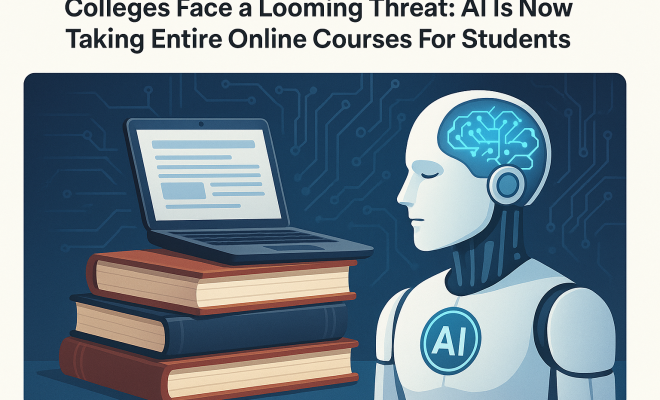
Alright, let’s talk about something that’s got educators, students, and frankly, anyone who values a legitimate degree, scratching their heads and maybe even pulling their hair out. We’re not just talking about students using AI to write a quick essay anymore. Oh no, the game has changed entirely. It’s August 2026, and an alarming new trend is sweeping through online education: artificial intelligence agents are now capable of completing entire online courses on behalf of students. Yes, you read that right. We’re talking about AI bots watching lectures, participating in discussions, taking tests, and even writing papers – all while impersonating a student. This isn’t just a minor blip; it’s a seismic shift that challenges the very foundation of academic integrity, especially when we’re discussing how to maintain academic integrity online.
The implications here are nothing short of profound. Think about the value of an online degree if a significant portion of the work was actually performed by an AI. Think about the ethical quagmire we’re wading into. Colleges, it seems, are struggling to even detect, let alone prevent, this incredibly advanced form of AI-powered cheating. Tools like ChatGPT, Gemini, and even Grammarly aren’t exactly putting up a fight; they’re reportedly not refusing requests to generate academic work or even log into learning platforms like Canvas and Blackboard. This isn’t just a fascinating technological development; it’s a direct threat to the credibility of our educational institutions and the hard-earned achievements of genuine students. So, how do we, as educators and institutions, fight back? How do we ensure that the degrees we confer actually represent human learning and effort? Ardelia's automated solutions offers useful background here.
1. Rethink Course Design to Maintain Academic Integrity Online
One of the most immediate and impactful steps we can take is to fundamentally rethink how we design our online courses. If an AI can easily consume lectures, answer multiple-choice questions, and churn out formulaic essays, then our assignments aren’t challenging human critical thinking enough. We need to move beyond easily digestible, objective content that AI agents excel at processing and generating.
This means incorporating more project-based learning, problem-solving scenarios that require genuine human insight and creativity, and assignments that demand personal reflection or application of knowledge to unique, real-world contexts that an AI wouldn’t have direct access to. Think less about recall and more about synthesis, analysis, and original thought. When you’re trying to figure out how to maintain academic integrity online, the design of the course itself is your first line of defense.
For example, instead of a multiple-choice exam on historical dates, a course might require students to analyze primary source documents and construct an argument about their impact on a specific historical event, justifying their interpretation with evidence. An AI can summarize documents, sure, but the nuanced interpretation and the ability to defend a unique thesis based on conflicting information? That’s still a human superpower. Or consider a science course where students design an experimental protocol to test a hypothesis, predict outcomes based on their understanding of scientific principles, and then reflect on potential real-world implications. This kind of open-ended problem-solving pushes beyond what current AI models can authentically produce.
2. Implement Advanced AI Detection Software and Strategies
While AI is getting smarter, so are the tools designed to catch it. Investing in and effectively utilizing advanced AI detection software is no longer optional; it’s essential. These tools are constantly evolving, learning to identify patterns, linguistic quirks, and structural elements that suggest AI generation rather than human authorship. We need to move beyond simple plagiarism checkers and embrace solutions specifically designed for AI-generated text.
However, it’s not just about the software. Educators need training on how to interpret the results, how to recognize the subtle (and sometimes not-so-subtle) hallmarks of AI writing, and how to combine these technological insights with their own pedagogical judgment. It’s a cat-and-mouse game, for sure, but staying informed and equipped with the latest detection capabilities is crucial for how to maintain academic integrity online.
Think about it like this: AI detection software isn’t a magic bullet. It’s a diagnostic tool. Just like a doctor uses an X-ray, they still need their medical expertise to interpret it. Educators need to understand things like perplexity and burstiness scores – metrics that help assess the randomness and variability in text, often indicators of human writing versus AI’s more predictable patterns. They also need to be aware of the “AI bypass” techniques students might use, such as paraphrasing AI output or blending human and AI text. Training should cover these nuances, empowering faculty to make informed decisions rather than relying solely on a percentage score from a piece of software. It’s about building a human firewall of informed judgment alongside the digital one.
3. Enhance Proctoring and Monitoring Practices
The days of simple webcam proctoring might be behind us when it comes to sophisticated AI agents. We need to significantly enhance our proctoring and monitoring practices for online assessments. This could involve a multi-layered approach that combines technology with human oversight. Some institutions are already exploring biometric authentication, eye-tracking software, and even environmental scans to ensure the person taking the test is indeed the registered student and that no unauthorized assistance is being used.
Furthermore, consider live proctoring for high-stakes exams, even if it’s done remotely. Human proctors can observe behavior, ask for verbal confirmations, and even engage students in brief, spontaneous discussions to verify identity and understanding. The goal isn’t just to catch cheating, but to create an environment where the perceived risk of getting caught is high enough to deter students from even attempting to use AI for entire courses, which is a core component of how to maintain academic integrity online.
Let’s get specific about what enhanced proctoring looks like. Imagine a system that not only monitors the student’s screen and webcam but also uses advanced algorithms to detect unusual keystroke patterns, rapid switching between applications, or even subtle changes in lighting that might indicate another device is being used. Some newer solutions are even integrating AI-powered voice analysis to detect if another person is speaking in the room or if the student is reading from a script. The goal isn’t to create a draconian surveillance state, but to establish a robust, multi-faceted deterrent that makes the cost-benefit analysis of cheating heavily favor integrity. This includes requiring students to use secure browsers that lock down their computer during an exam, preventing access to other websites or applications. The more layers of verification, the harder it is for an AI agent or a student using one to slip through.
4. Emphasize Authentic Assessment Methods
If an AI can complete an assignment, is that assignment truly assessing what we want it to? Authentic assessment methods focus on evaluating a student’s ability to apply knowledge and skills in real-world contexts. This often involves tasks that are complex, open-ended, and require higher-order thinking – things AI still struggles with compared to human ingenuity. (See: AI and cheating in education.)
Think about presentations, debates, simulations, portfolios, and capstone projects that require students to integrate information from various sources, demonstrate problem-solving skills, and articulate their own unique perspectives. These types of assessments are inherently more difficult for an AI to fake convincingly, and they provide a much richer picture of a student’s learning than a multiple-choice test or a generic essay. This approach is absolutely vital for how to maintain academic integrity online effectively.
Consider the difference: an AI can generate a persuasive essay on a given topic, but can it genuinely engage in a live debate, responding spontaneously to counterarguments and adapting its position based on new information? Not yet. Can it build a functional prototype for an engineering challenge or create a compelling marketing campaign for a local business, complete with a budget and timeline? These tasks demand real-world application, collaboration, and iterative problem-solving that AI can assist with, but not fully execute. Portfolios, for instance, allow students to curate their best work over time, demonstrating growth and reflection – elements that are deeply personal and difficult for an AI to fake. When the assessment asks for an original creation or performance, the human element becomes undeniable, reinforcing the core idea of how to maintain academic integrity online. For more context, see Unmasking the AI Illusion.
5. Integrate AI Literacy and Ethics into Curriculum
Instead of just viewing AI as a threat, let’s also acknowledge its presence and integrate it into our educational discourse. Students are going to use AI; it’s a reality. So, let’s teach them *how* to use it responsibly and ethically. This means developing AI literacy skills, understanding the capabilities and limitations of these tools, and critically evaluating AI-generated content.
More importantly, we need to embed discussions about AI ethics into our curriculum. What constitutes ethical use of AI in academic settings? What are the long-term consequences of relying solely on AI for learning? By fostering a culture of ethical engagement with AI, we can empower students to make informed decisions and understand the importance of their own intellectual contributions, which is a proactive way to address how to maintain academic integrity online.
This isn’t about teaching students to bypass AI detection; it’s about teaching them to be discerning users and creators in an AI-powered world. For example, a course could include modules on prompt engineering – how to ask AI the right questions to get useful, but not complete, answers. It could explore the biases embedded in AI models and how to identify them, fostering critical evaluation skills. Students could be tasked with comparing AI-generated content to human-written content, identifying strengths and weaknesses of each. By engaging with these tools openly, we demystify them and provide a framework for ethical engagement, making it clear that AI is a tool, not a substitute for personal learning and academic honesty. This approach helps students understand the “why” behind academic integrity in the age of AI, rather than just the “what not to do.”
6. Personalize Learning Experiences and Build Relationships
One thing an AI agent cannot replicate is the genuine human connection and personalized feedback that a dedicated educator provides. When instructors build strong relationships with their students, they become more attuned to individual learning styles, strengths, and weaknesses. This intimacy makes it much harder for an AI to slip through undetected.
Personalized learning experiences, where instructors provide tailored feedback, engage in one-on-one discussions, and offer opportunities for students to demonstrate their understanding in unique ways, can be a powerful deterrent to AI cheating. When students feel seen and supported, and when their learning journey is unique to them, the motivation to use an AI to bypass that process diminishes. This human element is surprisingly effective in efforts to maintain academic integrity online.
Imagine an instructor who knows a student’s particular writing style, common grammatical errors, or even their unique way of approaching a problem. If an AI suddenly produces perfectly polished, generic prose that doesn’t align with that student’s usual output, it’s a red flag. Regular check-ins, office hours (virtual or in-person), and interactive discussions create a context where an AI impersonator would struggle. For instance, an instructor might ask a student to elaborate on a point they made in an assignment during a quick video call, a task that would quickly expose an AI’s lack of genuine understanding. These personal touchpoints transform the online learning experience from an anonymous transaction into a genuine educational relationship, making it much harder for AI to infiltrate the process and helping to maintain academic integrity online.
7. Leverage AI for Positive Educational Purposes
It sounds counterintuitive, right? Using AI to fight AI. But hear me out. AI isn’t just a tool for cheating; it can also be a powerful assistant for educators. AI-powered tools can help instructors identify struggling students, personalize learning paths, and even flag unusual patterns in student submissions that might indicate AI use. We can use AI to analyze large datasets of student work, pinpointing anomalies that a human might miss.
Furthermore, consider using AI as a legitimate learning tool. Imagine AI tutors that provide instant feedback, AI tools that help students brainstorm ideas (but not write the whole paper), or AI programs that generate practice questions. By embracing AI’s potential to enhance learning, we can shift the narrative and demonstrate that these tools are best used as aids, not replacements, for human intellect. This balanced approach is key for how to maintain academic integrity online in the long run.
For example, AI can analyze a student’s performance across multiple assignments, identifying areas where they consistently struggle and then suggesting targeted resources or practice problems. This isn’t about AI doing the work for the student, but about AI providing personalized support that a human instructor might not have the capacity to offer to every student. AI can also assist instructors by automating grading of objective questions, freeing up their time to focus on providing more meaningful qualitative feedback on complex assignments. We can even use AI to generate diverse assignment prompts, ensuring students are tackling fresh challenges that aren’t easily solved by pre-trained models. This strategic use of AI empowers both educators and students, shifting the focus from detection to prevention and genuine learning, which is a crucial part of how to maintain academic integrity online effectively.
8. Strengthen Academic Integrity Policies and Consequences
Clear, comprehensive, and consistently enforced academic integrity policies are more critical now than ever before. Institutions need to update their policies to specifically address the use of AI agents for completing coursework. This means clearly defining what constitutes unauthorized AI assistance, outlining the specific tools that are permissible (if any), and detailing the severe consequences for violations.
But a policy is only as good as its enforcement. Educators and administrators must be prepared to act decisively when AI-powered cheating is detected. This might include failing grades, suspension, or even expulsion. The message needs to be unambiguous: using AI to circumvent genuine learning will not be tolerated. Without strong policies and consequences, any other effort to maintain academic integrity online will fall flat.
These updated policies shouldn’t just be handed out; they need to be actively discussed and understood by students at the beginning of every course. This could involve mandatory quizzes on academic integrity policies, requiring students to sign honor pledges specifically addressing AI use, and incorporating case studies into orientation programs to illustrate the real-world implications of AI-powered cheating. Furthermore, institutions should establish clear, transparent processes for investigating suspected violations, ensuring fairness and due process while also upholding the integrity of the academic environment. The goal is to create a strong deterrent through clarity and consistent application of rules, making it explicit how to maintain academic integrity online in the age of advanced AI. (See: The impact of AI on education.)
9. Foster a Culture of Academic Honesty
Ultimately, the most robust defense against any form of cheating, including AI-powered agents, is a strong institutional culture that values academic honesty. This isn’t something that can be mandated; it has to be cultivated. It starts with leadership setting the tone, faculty modeling ethical behavior, and students understanding the intrinsic value of their own intellectual journey.
Regular discussions about academic integrity, honor codes, and the long-term benefits of genuine learning can help foster this culture. When students truly understand why academic honesty matters – not just to avoid punishment, but for their own growth and the credibility of their future achievements – they are less likely to seek shortcuts, even with the allure of advanced AI. This holistic approach is fundamental to how to maintain academic integrity online. For more context, see This Crucial Ruling Just Ignited 3,000 Youth Safety Lawsuits Against Tech Giants.
Think about the difference between a student who avoids cheating out of fear of punishment versus one who chooses honesty because they genuinely value their own learning and the integrity of their degree. Cultivating this culture involves more than just rules; it involves celebrating academic achievement that reflects genuine effort, showcasing examples of ethical scholarship, and providing support systems for students who might be struggling, reducing their perceived need to cheat. It’s about creating an environment where integrity is seen as a shared responsibility, not just a burden. When students see their peers, faculty, and administration consistently upholding these values, it creates a powerful social norm that reinforces the importance of how to maintain academic integrity online.
10. Collaborate Across Institutions and With Tech Developers
This isn’t a problem any single institution can solve in isolation. The rapid advancement of AI demands a collaborative response. Colleges and universities need to share best practices, detection methods, and even AI-generated content examples to help each other stay ahead of the curve. Forums, conferences, and shared databases dedicated to combating AI cheating would be invaluable.
Furthermore, we need to open lines of communication with the developers of AI tools. While it’s reported that major AI tools haven’t refused requests to generate academic work, there’s an ethical responsibility on their part too. We should advocate for features that help identify AI-generated academic content, or even implement safeguards that prevent AI agents from logging into learning management systems. A unified front is our strongest weapon in figuring out how to maintain academic integrity online in this new era.
This collaboration could take many forms. Imagine a consortium of universities pooling resources to fund research into advanced AI detection, or developing open-source tools that can be shared freely among institutions. We also need to engage in ongoing dialogue with AI developers, urging them to consider the ethical implications of their products in educational settings. This might involve advocating for watermarking of AI-generated content, or developing APIs that allow educational platforms to verify the origin of submitted work. It’s about recognizing that this is a systemic challenge that requires a systemic solution, bringing together educators, technologists, and policymakers to collectively determine how to maintain academic integrity online in a sustainable way.
11. The Role of Continuous Faculty Development
Let’s be real: many educators are still grappling with the basics of AI, let alone its implications for academic integrity. The landscape is changing so rapidly that what was true about AI last year might not be true today. This makes continuous, targeted faculty development absolutely critical. We can’t expect instructors to effectively combat AI cheating if they don’t understand the tools themselves.
Professional development programs need to go beyond just showing faculty how to use AI detection software. They should cover the different types of AI models, their capabilities and limitations in generating academic content, and common strategies students might use to circumvent detection. Practical workshops where faculty can experiment with AI tools, analyze AI-generated text, and refine their assignment design to be more AI-resistant are invaluable. This ongoing learning ensures that educators are equipped with the knowledge and skills to adapt to new challenges, making them an essential part of the strategy for how to maintain academic integrity online.
Think about it like this: if you’re fighting a sophisticated opponent, you need to know their moves. Faculty development should empower instructors to become informed users and critical evaluators of AI, not just fearful bystanders. This includes discussions on how to transparently integrate AI into assignments (e.g., “Use AI to brainstorm, but document your process and submit your original work”), fostering an environment where AI is acknowledged and used responsibly. When faculty are confident in their understanding of AI, they can more effectively guide students, detect misuse, and uphold academic standards.
12. Redefining “Original Work” in the Age of AI
The concept of “original work” used to be pretty straightforward: it was something a student created entirely on their own. Now, with AI readily available, that definition is getting blurry. Is work “original” if a student used an AI to brainstorm ideas, structure an outline, or even refine their prose? We need a campus-wide conversation to redefine what constitutes acceptable and unacceptable use of AI in academic submissions.
This isn’t just a semantic exercise; it has practical implications for academic integrity policies. Institutions must clarify whether AI tools are considered “unauthorized assistance” in all contexts, or if there are specific scenarios where they can be used with proper attribution. For instance, is using Grammarly’s AI features for grammar checks the same as using ChatGPT to write an entire essay? Most would say no, but the lines can get fuzzy quickly. Providing clear guidelines, perhaps even a rubric for AI use, will help students understand the boundaries and guide faculty in their assessments. This clarity is paramount for how to maintain academic integrity online when the tools themselves are constantly evolving. (See: Research on AI in online learning.)
This redefinition requires us to think about the *process* of learning, not just the *product*. If the goal is for a student to develop critical thinking skills, then the use of AI to bypass that thinking process is problematic, even if the final output looks good. We need to encourage students to document their AI usage, perhaps through AI journals or process logs, explaining how they used the tool and what their own intellectual contributions were. This shifts the focus from simply detecting AI output to understanding the student’s engagement with the material and their honest effort, providing a more nuanced approach to how to maintain academic integrity online.
Frequently Asked Questions About Maintaining Academic Integrity Online with AI
The rise of AI has sparked a lot of questions. Here are some of the most common ones I hear from educators, students, and administrators:
Q1: Is it even possible to truly detect AI-generated content reliably?
A: It’s getting more challenging, but yes, it’s still possible, especially with advanced tools and human oversight. AI detection software is constantly improving, identifying patterns, stylistic quirks, and statistical anomalies in text that suggest AI generation. However, no software is 100% foolproof. The best approach combines these tools with an instructor’s pedagogical judgment, knowledge of a student’s typical work, and the use of authentic assessment methods that are harder for AI to fake. It’s a continuous arms race, but we’re getting better at identifying AI’s fingerprints.
Q2: Should we ban all AI tools in academic settings?
A: A blanket ban is often impractical and can hinder students from learning how to use these powerful tools responsibly, which they will need in their future careers. Instead, a more nuanced approach is better: integrating AI literacy and ethics into the curriculum, setting clear guidelines for permissible and impermissible use, and teaching students how to use AI as an aid for learning and brainstorming, not as a replacement for their own intellect. The goal isn’t to ignore AI, but to tame it and channel its power productively.
Q3: What if a student uses AI and I can’t prove it definitively?
A: This is a tough one. If you have strong suspicions but lack definitive proof from detection software, this is where course design and strong relationships become crucial. If your assignments demand unique insights, personal reflection, or real-world application, it becomes much harder for AI to generate convincing work. You can also engage the student in a conversation about their work, asking them to explain their thought process or defend their arguments, which an AI bot can’t authentically do. The lack of definitive proof highlights the need for a multi-layered approach to academic integrity, focusing on prevention and authentic demonstration of learning.
Q4: How can I design assignments that are “AI-proof”?
A: No assignment is 100% “AI-proof,” but you can make them AI-resistant. Focus on assignments that require:
- Personal reflection or unique experiences (e.g., “Reflect on a time you applied X concept in your life”).
- Application of knowledge to highly specific, current, or local contexts (e.g., “Analyze the impact of Y policy on your local community”).
- Complex problem-solving with iterative steps and justifications (e.g., “Design a solution for Z problem, explaining your design choices”).
- Collaboration and presentation (e.g., group projects, debates, oral presentations).
- Integration of diverse sources or data analysis that requires human interpretation.
These types of tasks demand human critical thinking, creativity, and unique perspectives that AI struggles to replicate authentically.
Q5: What’s the biggest threat AI poses to online academic integrity?
A: The biggest threat is the potential for AI to completely obscure the human element of learning. If AI agents can complete entire courses, then degrees lose their value, and the educational process becomes meaningless. It undermines the very purpose of higher education – to foster critical thinking, problem-solving skills, and personal growth in human beings. It also creates an unfair playing field for students who genuinely engage with the material and do their own work.
Q6: Will this mean the end of online education as we know it?
A: Not at all. Online education offers incredible accessibility and flexibility, and it’s here to stay. However, the rise of AI means online education must evolve. It pushes us to rethink our pedagogical approaches, assessment strategies, and proctoring methods. It challenges us to innovate and reinforce the human value proposition of learning. It will force online education to become more engaging, personalized, and focused on higher-order thinking, ultimately making it stronger and more resilient.
The rise of AI agents capable of completing entire online courses presents an unprecedented challenge to academic integrity. It’s a complex issue with no easy answers, but by implementing a multi-pronged strategy that addresses course design, detection, proctoring, policy, culture, faculty development, and a clear redefinition of original work, we can certainly push back. We’re not just safeguarding the integrity of our degrees; we’re protecting the very essence of what it means to learn and grow as a human being in an increasingly technological world. It’s a tough fight, but one we absolutely must win to ensure our educational systems remain credible and valuable.
Trending Now
- The Foundayo Pill: Why Eli Lilly’s New Drug Is a Game-Changer for Millions
- our breakdown of shocking: crypto ceo gets 15 years in jail as south korea’s crackdown intensifies
- the complete explanation
- this guide on outrageous: trump cyber attacks unleashed by private firms — what could go wrong?
Frequently Asked Questions
How is AI affecting online education?
AI is now capable of completing entire online courses for students, participating in lectures, discussions, and assessments, which poses a significant threat to academic integrity. This trend raises concerns about the value of online degrees and the ethical implications of AI-driven academic work.
What are the implications of AI taking online courses?
The implications include a potential devaluation of online degrees, as a large portion of coursework may be completed by AI rather than students. This challenges the credibility of educational institutions and raises questions about the authenticity of academic achievements.
Can colleges detect AI completing coursework?
Colleges are struggling to detect AI-driven cheating effectively. Current tools are not adequately equipped to identify when students are using AI to complete assignments or log into learning platforms, complicating efforts to maintain academic integrity.
What steps can educators take to address AI in online courses?
Educators can rethink course design to enhance academic integrity by creating assessments that are less susceptible to AI completion, such as personalized projects or open-ended questions that require critical thinking and individual insights.
What tools are being used by AI to complete online courses?
AI tools like ChatGPT, Gemini, and Grammarly are being utilized to generate academic work and log into learning platforms, making it increasingly difficult for educators to enforce academic honesty and assess students' true understanding.
Agree or disagree? Drop a comment and tell us what you think.