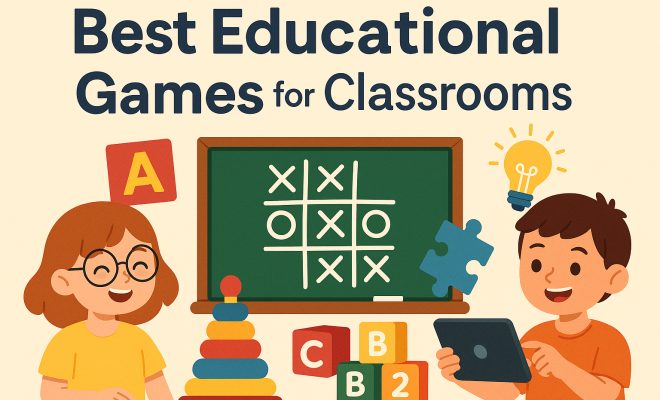
Best Educational Games for Classrooms
“`html
Engaging students in the classroom can be a challenge, especially when it comes to maintaining their attention and enthusiasm for learning. One effective approach that many educators are embracing is the use of educational games for classrooms. These games not only make learning fun but also promote critical thinking, teamwork, and problem-solving skills. In this article, we’ll explore ten outstanding educational games that can invigorate your classroom and enhance the learning experience for students of all ages.
1. Kahoot!: Interactive Quizzes and Surveys
Kahoot! is a game-based learning platform that allows teachers to create quizzes, surveys, and discussions in a fun and interactive way. Students can participate using their own devices, entering a game PIN to join a session. This program’s real-time feedback and competitive element make it perfect for reinforcing knowledge.
With a vast library of ready-made quizzes covering various subjects, educators can easily find resources tailored to align with their curriculum. The platform also encourages collaboration and healthy competition among students, fostering a lively classroom environment.
2. Quizlet: Learning Through Flashcards
Quizlet is a versatile educational tool that enables students to study and learn through interactive flashcards. Teachers can create sets of flashcards tailored to specific topics, allowing students to engage with content actively. The platform offers various modes, including games like “Match” and “Gravity,” which turn studying into a competitive endeavor.
Additionally, Quizlet is accessible on multiple devices, which means students can continue their practice outside of the classroom. This adaptability makes it a fantastic resource for both in-class activities and homework assignments, promoting continuous learning.
3. Classcraft: Gamifying Classroom Management
Classcraft takes a unique approach by gamifying classroom management. In this game, students assume the roles of characters within a fantasy world and earn points based on their behavior and academic performance. This structure not only motivates students to engage but also fosters a sense of community and cooperation.
The platform allows teachers to set up quests, assign roles, and create challenges that cater to different learning styles. With Classcraft, educators can address classroom behavior while simultaneously promoting a positive learning atmosphere where students feel valued and engaged. Related reading: Quizlet tools for classrooms.
4. Prodigy Math: Fun and Adaptive Math Learning
Prodigy Math combines the excitement of gaming with math practice, making it an excellent choice for students who may struggle with the subject. The game adapts to each student’s skill level, presenting problems that are neither too easy nor too difficult, ensuring continuous progress.
As students navigate through an engaging fantasy world, they solve math problems to battle creatures and complete quests. This element of adventure keeps them motivated and encourages them to practice math skills regularly. Teachers can track each student’s progress through dashboards that provide insight into their strengths and areas needing improvement.
5. Breakout EDU: Hands-On Problem Solving
Breakout EDU is an immersive game that challenges students to solve puzzles and riddles in order to escape from a locked box. The games can cover a wide range of subjects, from science to history, and they promote collaboration, critical thinking, and communication skills.
Teachers can purchase pre-made kits or create their own experiences tailored to specific learning objectives. This hands-on experience not only engages students but also teaches them how to work together to solve problems, making it a valuable addition to any classroom. (See: Education Research from the U.S. Department of Education.)
6. Nearpod: Interactive Lessons and Assessments
Nearpod provides a platform for creating interactive lessons enriched with videos, quizzes, and multimedia content. Educators can engage students in real time, allowing for instant feedback and adjustments based on student understanding. This interactive component helps keep students focused and encourages participation.
Teachers can incorporate various types of content, including virtual reality experiences, which can take students on a trip to historical sites or through scientific phenomena. The ability to assess student understanding through built-in quizzes keeps the learning process dynamic and responsive. This builds on strategies for critical thinking.
7. Minecraft: Education Edition: Building and Creativity
Minecraft: Education Edition is a popular game that allows students to build, create, and collaborate in a virtual world. This version of Minecraft is specifically designed for educational purposes, offering lesson plans across various disciplines, including science, math, and art.
Students can work together on projects, fostering teamwork and creativity. The game encourages students to think critically about design and problem-solving, making it a powerful tool in the classroom. Additionally, teachers can monitor progress and evaluate student work easily within the platform.
8. GoNoodle: Movement and Mindfulness
GoNoodle is an educational game that focuses on movement and mindfulness. It offers interactive videos that encourage students to get up and move, enhancing their physical activity while also promoting mental focus. The platform includes a variety of activities, from dance breaks to mindfulness exercises.
This game is particularly beneficial for younger students who may need to release energy throughout the day. By incorporating GoNoodle into the classroom routine, teachers can help students improve concentration and readiness to learn, creating a more productive learning environment.
9. Flipgrid: Video Discussions and Feedback
Flipgrid is a social learning platform where students can create and share short videos on various topics. This interactive approach encourages students to express their thoughts and opinions while also learning from their peers. Teachers can create discussion prompts related to the curriculum, allowing students to engage in meaningful conversations.
Flipgrid promotes a sense of community in the classroom as students provide constructive feedback to one another. This can help develop public speaking and presentation skills, vital for student success in various aspects of life.
10. Scrabble or Word Games: Building Vocabulary
Traditional word games like Scrabble or Boggle can also serve as effective educational tools in the classroom. These games help build vocabulary and spelling skills while encouraging friendly competition among students. They promote critical thinking as players must strategize to use their letters efficiently.
By incorporating these games into lesson plans, teachers can create a fun and engaging way for students to enhance their language skills. Moreover, these games can be easily adapted for different age groups, making them a versatile choice for diverse classrooms.
Why Educational Games Matter
It’s essential to understand why educational games have gained prominence in modern classrooms. Traditional methods of teaching often rely heavily on lectures and rote memorization, which can hinder student engagement. Educational games help bridge this gap by integrating play into the learning process, making education more enjoyable and less daunting.
Studies have shown that students retain information better when they are actively involved in learning. According to research published in the journal Science, active learning strategies can lead to higher retention rates than traditional lectures. Games provide that active engagement by requiring students to participate, make decisions, and reflect on their learning in real time. (See: Educational Games Research on ScienceDirect.)
Benefits of Using Educational Games in Classrooms
- Enhanced Engagement: Games captivate students’ attention more effectively than traditional teaching methods.
- Development of Critical Skills: Many games focus on problem-solving, teamwork, and adaptability, skills essential for success in today’s world.
- Instant Feedback: Games often provide immediate feedback, allowing students to learn from their mistakes and understand concepts more thoroughly.
- Fostering a Positive Learning Environment: When students are having fun, they are more likely to collaborate and form positive relationships with their peers and teachers.
Implementing Educational Games in Your Classroom
To effectively implement educational games, consider the following steps:
- Identify Learning Objectives: Determine what skills or knowledge you want students to gain from the game.
- Choose the Right Game: Select a game that aligns with your curriculum and the specific learning goals you’ve set.
- Prepare Your Students: Explain the game’s rules and objectives clearly to ensure everyone understands how to participate.
- Debrief After the Game: Discuss the learning outcomes and what students took away from the experience to reinforce the concepts learned.
Statistics on Educational Games
When considering the effectiveness of educational games, statistics can provide a compelling case. A study by McKinsey & Company found that students who engage with educational games can improve their test scores by an average of 12%. In addition, according to the National Education Association, 86% of teachers believe that educational games are effective in enhancing student learning. These figures underscore the importance of integrating games into educational curriculums.
Expert Perspectives on Educational Games
Educators and psychologists alike recognize the value of games in education. Dr. Jane McGonigal, a game designer and author of Reality is Broken, argues that games can provide resilience and enhanced problem-solving skills. “When students are engaged in a game, they are not just playing; they are developing the ability to deal with challenges and adapt to new situations,” she states. Such insights highlight the broader implications of games beyond mere enjoyment; they can foster skills applicable to real-world challenges.
Comparisons to Traditional Methods
Traditional education methods often emphasize memorization, while educational games encourage exploration and experimentation. For example, a typical math lesson might involve learning formulas and practicing problems through worksheets. In contrast, a game like Prodigy Math allows students to apply those formulas in a fun context, battling creatures and solving real-world problems. This not only makes learning enjoyable but also reinforces the application of knowledge in a meaningful way. There’s a fuller look at engaging critical thinking activities.
Frequently Asked Questions (FAQ)
What age groups can benefit from educational games?
Educational games can be adapted for all age groups. Younger students often enjoy simpler, interactive games that encourage basic skill development, while older students can engage with more complex games that require critical thinking and strategy.
How do I assess student learning through games?
Teachers can assess student learning through built-in progress tracking features available in many educational games. Observing student engagement during gameplay and conducting debrief discussions afterward can also provide insights into their understanding.
Can educational games replace traditional teaching methods?
While educational games are a valuable supplement to traditional methods, they shouldn’t completely replace them. A balanced approach that incorporates both instruction and interactive learning can provide the most comprehensive educational experience.
Are there any costs associated with educational games?
Many educational games offer free versions or trials, while others may require a subscription or one-time purchase. Educators can often find budget-friendly options or grants that support the integration of these tools into classrooms.
How can I find suitable educational games for my subject area?
Many websites and educational platforms compile lists of games by subject or grade level. Additionally, teacher forums and social media groups can be excellent resources for recommendations from fellow educators.
Case Studies of Successful Educational Game Implementation
Several schools have successfully integrated educational games into their curricula, showcasing the potential benefits. For instance, a middle school in Texas implemented Kahoot! in their science classes, resulting in a notable increase in student engagement and test scores. Teachers reported that students looked forward to the quizzes, which transformed a typically challenging subject into something fun and interactive. (See: New York Times on Educational Games.)
Similarly, a high school in California used Minecraft: Education Edition to facilitate a project-based learning unit on architecture and engineering. Students collaborated to design and build structures, applying principles from math and science while also enhancing their creativity. The educators observed improved teamwork skills and greater interest in STEM subjects among participants.
The Future of Educational Games in Classrooms
As technology continues to evolve, so will the potential for educational games in the classroom. Innovations such as augmented reality (AR) and virtual reality (VR) offer exciting opportunities for immersive learning experiences. For instance, AR apps can bring historical events to life or visualize complex scientific concepts, making learning more tangible.
Moreover, as more educators recognize the value of gamification, we can expect to see an increase in game-based learning initiatives. The integration of AI and data analytics will enable more personalized learning experiences, ensuring that educational games cater to each student’s unique needs and learning pace.
Challenges in Implementing Educational Games
While there are many benefits to educational games, educators may encounter challenges when incorporating them into their classrooms. One common issue is access to technology; not all students may have devices or reliable internet access. Schools need to find equitable solutions to ensure all students can participate in game-based learning.
Another challenge is balancing game time with traditional instruction. Teachers may struggle to integrate games without compromising the core curriculum. To address this, educators can strategically choose games that align with learning objectives and integrate them into existing lesson plans, making the transition smoother. See also robotics and problem solving.
Best Practices for Maximizing Educational Games
To maximize the benefits of educational games, consider these best practices:
- Start Small: Begin with a few games that fit seamlessly into your curriculum, gradually expanding as you and your students become more comfortable with the approach.
- Gather Feedback: Regularly seek feedback from students on the games they enjoy and find beneficial. This input can guide future game selections.
- Collaborate with Colleagues: Share experiences and ideas with fellow educators to discover new games and strategies for implementation.
- Monitor Progress: Use analytics provided by educational games to track student progress and adjust your teaching strategies accordingly.
Incorporating educational games for classrooms can significantly enhance the learning experience. From interactive quizzes to hands-on problem-solving games, these tools not only engage students but also promote essential skills like teamwork, critical thinking, and creativity. As educators continue to seek innovative ways to capture students’ attention, games present an exciting opportunity to transform traditional learning into an engaging adventure.
“`
Trending Now
Frequently Asked Questions
What are the benefits of using educational games in the classroom?
Educational games engage students, making learning fun while promoting critical thinking, teamwork, and problem-solving skills. They help maintain students' attention and enthusiasm, creating a lively classroom environment that encourages collaboration and healthy competition.
How can Kahoot! be used in the classroom?
Kahoot! is an interactive platform that allows teachers to create quizzes and surveys. Students participate using their devices, entering a game PIN. Its real-time feedback and competitive nature help reinforce knowledge and foster an engaging learning experience.
What is Quizlet and how does it help students learn?
Quizlet is a versatile tool that uses interactive flashcards for studying. Teachers can create customized sets for various topics, and students can engage with content through games like 'Match' and 'Gravity,' making learning dynamic and enjoyable.
Can educational games be used for homework assignments?
Yes, many educational games, like Quizlet, are accessible on multiple devices, allowing students to practice and learn outside the classroom. This adaptability supports continuous learning and helps reinforce concepts taught during class.
What is Classcraft and how does it gamify classroom management?
Classcraft gamifies classroom management by turning behavioral and academic goals into a game format. Students earn rewards for positive behavior and collaboration, making classroom management more engaging and motivating for learners.
Agree or disagree? Drop a comment and tell us what you think.