Asian Chipmakers Grapple with Helium Shortage Amid US-Iran Tensions
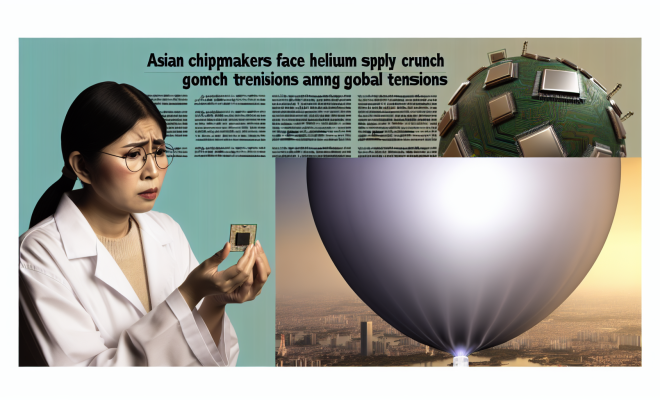
As the global technology landscape continues to evolve, a looming helium supply shortage is emerging as a significant challenge for chipmakers across Asia. This issue has garnered attention as tensions between the U.S. and Iran threaten to exacerbate supply chain vulnerabilities, raising concerns among firms striving to compete with industry giants like Nvidia and Huawei.
The Helium Dilemma
Helium, a non-renewable resource, plays a crucial role in various high-tech applications, particularly in semiconductor manufacturing. Its unique properties make it indispensable for cooling and purging processes in chip production. However, recent reports indicate that the supply of helium is facing unprecedented pressures, leading to fears of a critical shortage.
Impact on Asian Chipmakers
The ramifications of this helium supply crunch are particularly pronounced among Chinese chipmakers. With ambitions to ramp up production and compete on the global stage, these firms are now confronted with stock declines as the reality of limited helium availability sets in.
- Chinese Firms Struggling: Several Chinese semiconductor companies have reported falling stock prices, attributed directly to concerns over helium shortages. As these companies aim to bolster their output and invest in advanced technologies, the reduction in helium supply poses a significant barrier to their growth.
- Plans to Triple Output: In response to these challenges, one prominent Chinese firm has announced plans to triple its production capacity. This ambitious move highlights the urgent need for a reliable helium supply to sustain their operational goals.
The Broader Context: U.S.-Iran Tensions
The helium crisis is intertwined with geopolitical tensions, particularly between the U.S. and Iran. The complexities of international relations and trade policies can have cascading effects on supply chains, particularly for resources like helium, which is often extracted as a byproduct of natural gas production.
As the situation unfolds, companies are advised to closely monitor geopolitical developments that could further disrupt the supply chain. The interconnected nature of global markets means that localized shortages can quickly escalate into wider issues affecting multiple industries.
Technological Innovations Amidst Challenges
Despite the impending helium shortage, Asia’s technology sector is also witnessing significant advancements. Notably, Alibaba has launched an open cloud mobile app, designed to enhance accessibility and streamline cloud services for users. This innovation could potentially offset some of the challenges posed by the helium crisis, enabling companies to leverage cloud computing resources more effectively.
Additionally, the Chinese artificial intelligence sector is making strides, with companies like Tencent focusing on the mass adoption of AI technologies beyond simple applications such as chatbots. These innovations are critical as they showcase the resilience and adaptability of the tech ecosystem in the face of supply chain disruptions.
Looking Ahead
As the helium supply situation continues to evolve, it is essential for industry stakeholders to develop strategies to mitigate risks. This may include diversifying supply sources, investing in alternative technologies, or collaborating on research initiatives aimed at finding substitutes for helium in semiconductor manufacturing.
Moreover, companies will need to enhance their supply chain management practices to navigate an increasingly complex global environment. Building robust partnerships and maintaining open lines of communication will be vital for ensuring a steady flow of essential materials.
Conclusion
The looming helium supply shortage presents a formidable challenge for Asian chipmakers, particularly as they strive to compete with established players like Nvidia and Huawei. With geopolitical tensions further complicating the situation, it is imperative for the industry to adapt and innovate. By embracing technological advancements and re-evaluating supply chain strategies, firms can position themselves to weather the storm and emerge stronger in the dynamic tech landscape.