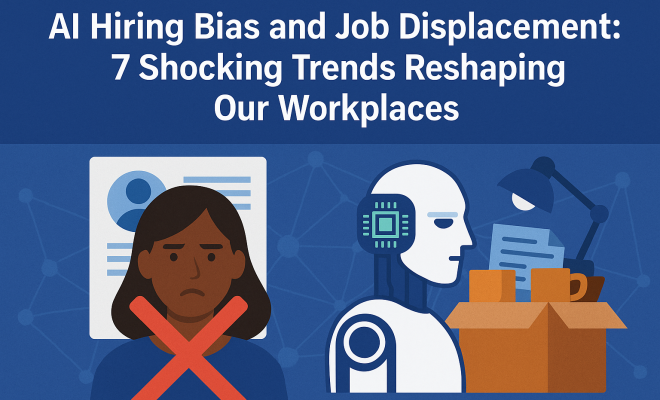
AI’s Impact: 7 Trends Reshaping Workplaces in 2024
“`html
In an era dominated by technological advancements, the labor market is undergoing a seismic shift. As companies like Oracle invest heavily in artificial intelligence (AI) while simultaneously shrinking their human workforce, the narrative of automation replacing jobs has sparked widespread concern. Adding to this complexity, Workday is facing a landmark lawsuit tied to claims of AI hiring bias, stirring emotional reactions and raising significant questions about fairness in the job market. Let’s explore seven critical trends emerging from these developments that are reshaping the landscape of work as we know it. See also AI team for consultants.
1. Oracle’s Workforce Reduction: A Stark Reality of Automation
In recent months, Oracle has made headlines for its dramatic decision to reduce its human workforce while ramping up investments in AI technology. This shift highlights a growing trend among major corporations looking to cut costs and increase efficiency through automation. What does this mean for the thousands of employees who find themselves facing layoffs?
With the rise of AI, Oracle’s workforce reduction isn’t just a financial strategy. It’s a clear indication of the changing tides in the job market. Employees in various sectors, especially those in administrative and support roles, are feeling the pinch as machines take over tasks once performed by humans. This alarming trend has caught the attention of job seekers and policymakers alike, igniting fears of widespread economic displacement.
2. The AI Investment Boom: Fueling the Fear of Job Loss
As Oracle’s investments in AI surge, analysts are closely monitoring the potential ramifications for the job market. Companies are pouring resources into AI technology, betting on its ability to enhance productivity and drive profitability. However, this investment comes at a steep cost: jobs. Related reading: job displacement insights.
According to recent statistics, technology firms are forecasting that up to 30% of their workforce could be replaced by AI in the next decade. This figure is staggering and has started to resonate with the general public, as Google Trends indicate a spike in searches related to job displacement and automation. Individuals are increasingly aware that the traditional job landscape is shifting, prompting many to seek out new skills and opportunities to stay relevant.
3. Workday’s Landmark Lawsuit: A Case Study in AI Hiring Bias
In an explosive development, Workday has found itself at the center of a controversial lawsuit alleging that its AI hiring algorithms systematically discriminate against certain demographics. This case serves as a critical example of how AI technologies can inadvertently perpetuate bias and inequality in hiring practices.
The lawsuit claims that the algorithm disproportionately affects minority groups, raising questions about transparency in AI systems and the accountability of tech giants. As civil rights groups rally to support the affected individuals, this case has generated significant social media engagement, shining a spotlight on the urgent need for fair AI practices in recruitment.
4. The Role of the World Economic Forum: Redefining Work in an AI Era
The World Economic Forum (WEF) is stepping in to address the changing dynamics between humans and AI in the workplace. As job displacement fears mount, the WEF has initiated discussions on the future of work, emphasizing the need for upskilling and reskilling programs.
With the advent of AI, many jobs will evolve rather than disappear entirely. The WEF’s emphasis on redefining human roles alongside AI technologies reflects a growing recognition that the workforce needs to adapt to the demands of a technologically advanced landscape. This shift is not only about preventing job losses but also about harnessing AI’s potential to create new opportunities for workers willing to embrace change.
5. The Emotional Toll: Fear and Anxiety in the Workforce
As automation and AI hiring bias loom large, the emotional impact on workers cannot be understated. The anxiety surrounding job security has reached a fever pitch, leading to increased levels of stress and uncertainty among employees. Many individuals fear they may become obsolete in their roles as AI takes over tasks that were once considered uniquely human. (See: Oracle's workforce reduction news.)
This emotional toll extends beyond the workforce itself. Families, communities, and economies may feel the repercussions of widespread job displacement, leading to broader societal issues. Addressing the emotional ramifications of these changes is crucial as we move forward, and companies must take steps to support their employees through these transitions.
6. The Need for Ethical AI Practices: Ensuring Fairness in Recruitment
With the spotlight on AI hiring bias, the demand for ethical practices in AI recruitment has intensified. Organizations must take a proactive stance in ensuring that their AI systems are free from bias and discrimination. This calls for a more thoughtful approach to AI development, including diverse datasets, regular audits, and transparency in algorithms.
Moreover, companies should engage with civil rights organizations and industry experts to develop frameworks for responsible AI use. Fostering partnerships that prioritize fairness and inclusivity can pave the way for a more equitable job market, where everyone has a fair shot at employment regardless of their background.
7. The Future of Work: Adapting to Change
As we stand at the crossroads of technological advancement and workforce evolution, the future of work remains uncertain. Workers must adapt to the changes brought about by AI, and this requires a commitment to lifelong learning. Upskilling and reskilling initiatives have become essential tools for those looking to thrive in an AI-driven job market.
In this landscape, professionals need to be proactive in acquiring new skills, whether through formal education, online courses, or on-the-job training. Those who embrace change will be better positioned to navigate the complexities of the evolving workplace, while others may find themselves left behind.
8. AI Hiring Bias: An In-Depth Look
AI hiring bias is not just a technological issue; it’s a complex societal challenge with far-reaching implications. Often, the algorithms used in hiring processes are trained on historical data that may reflect existing biases. For instance, if a company has predominantly hired individuals from a specific demographic, that data can lead AI to favor applicants who fit that mold, neglecting highly qualified candidates from diverse backgrounds.
For example, a study by MIT and Stanford found that AI algorithms can exhibit racial bias when trained on data that is not representative of the population. This can lead to a cycle of disadvantage for underrepresented groups, further entrenching inequality in the hiring process.
Additionally, a survey by the Pew Research Center indicated that nearly 50% of Americans believe that AI will have a negative effect on job opportunities, particularly for marginalized communities. This perception underscores the urgency for businesses to address these biases head-on.
9. Case Studies and Real-World Examples
Several high-profile cases have highlighted the challenges posed by AI hiring bias. One notable example is Amazon’s attempt to develop an AI recruiting tool that was eventually scrapped after it was discovered that the algorithm favored male candidates over female candidates. The AI had been trained on resumes submitted over a ten-year period, during which the tech industry was predominantly male. This illustrates the critical importance of ensuring that training data is diverse and inclusive to avoid perpetuating existing inequalities.
Another case involves a recruitment firm that deployed AI to screen resumes but soon found that the system was rejecting candidates with African-American sounding names at a disproportionate rate. This prompted an immediate review of the algorithms in use, showcasing the necessity for continuous monitoring and adjustment of AI systems to ensure fairness.
10. The Role of Regulation and Policy
As concerns about AI hiring bias continue to mount, regulatory bodies are beginning to take notice. Governments worldwide are exploring policies aimed at ensuring fairness and transparency in AI systems. For instance, the European Union has proposed regulations that would require AI providers to disclose the data used to train their algorithms, particularly in recruitment contexts. (See: Impact of automation on jobs.)
In the U.S., various states are considering legislation that mandates regular audits of AI hiring tools to assess their impact on diversity and inclusion. A recent report from the National Labor Relations Board emphasized the importance of holding companies accountable for the algorithms they deploy, suggesting a shift towards more stringent oversight of AI practices.
11. Expert Perspectives on AI Hiring Bias
Experts in the field of AI and ethics are vocal about the urgent need for change. Dr. Kate Crawford, a leading researcher in AI ethics, emphasizes that organizations must prioritize ethical considerations in AI development. “If we don’t address bias in AI systems, we’re not just affecting individuals; we’re shaping the very structures of society,” she states.
Additionally, Professor Ruha Benjamin, author of “Race After Technology,” argues that technology should serve to uplift marginalized communities rather than reinforce systemic inequalities. “We need to reimagine who benefits from technology and ensure that it serves the public good,” she asserts, highlighting the importance of inclusive design practices in AI development.
12. Frequently Asked Questions (FAQ)
What is AI hiring bias?
AI hiring bias refers to the tendency of artificial intelligence systems to favor certain candidates over others based on biased training data or algorithms. This can lead to discrimination against underrepresented groups in the hiring process.
How does AI hiring bias occur?
AI hiring bias occurs when algorithms are trained on historical data that reflects existing inequalities. If the training data is not diverse or representative, the AI may learn to favor candidates from specific demographics, perpetuating bias.
What are the consequences of AI hiring bias?
The consequences of AI hiring bias include reduced diversity in the workplace, missed opportunities for qualified candidates, and reinforcement of societal inequalities. It can also damage a company’s reputation and lead to legal challenges.
How can companies reduce AI hiring bias?
Companies can reduce AI hiring bias by using diverse and representative training data, regularly auditing their algorithms, and collaborating with experts in diversity and inclusion. Transparency in AI processes and stakeholder engagement are also crucial.
Is there legislation addressing AI hiring bias?
Yes, various governments and regulatory bodies are exploring legislation aimed at ensuring fairness and transparency in AI hiring practices. This includes proposed regulations that mandate audits and disclosures from AI providers.
What role does education play in addressing AI hiring bias?
Education plays a vital role in raising awareness about AI hiring bias and equipping the workforce with the skills necessary to engage with AI technologies responsibly. Training programs focused on ethical AI practices can foster a culture of accountability among developers and users alike.
What can individuals do to combat AI hiring bias?
Individuals can advocate for transparency from employers regarding their hiring algorithms. They can educate themselves about AI technologies and their implications and engage in discussions around fairness in recruitment. Supporting organizations and initiatives focused on diversity and inclusion also helps amplify the push for ethical AI. (See: AI and job displacement trends.)
Are there any tools available to help identify AI hiring bias?
Yes, various tools and platforms have been developed to help organizations analyze and mitigate AI hiring bias. These tools can assess the fairness of algorithms, provide insights into potential biases, and suggest improvements in training data and model design. Companies are increasingly turning to these resources to enhance their recruitment processes.
What role do data scientists play in preventing AI hiring bias?
Data scientists play a crucial role in preventing AI hiring bias by ensuring that the data used for training AI systems is diverse and representative. They are responsible for developing algorithms that prioritize fairness and inclusivity. Additionally, data scientists can implement monitoring systems to regularly evaluate AI performance and bias, making adjustments as necessary.
The intersection of AI hiring bias and job displacement presents a unique and challenging environment for both employers and employees. As we witness these developments unfold, it’s imperative that we engage in conversations about the ethical implications of AI and the responsibilities we hold in shaping the future of work. After all, the changes we make today will set the foundation for the workforce of tomorrow.
13. Long-Term Implications of AI Hiring Bias
The long-term implications of AI hiring bias are profound, potentially reshaping labor markets and societal structures. As companies increasingly rely on AI to make hiring decisions, the risk of institutionalizing discrimination grows. This bias doesn’t just impact individual job seekers; it can skew the entire workforce landscape, leading to homogeneity in hiring practices and hindering diversity.
Over time, companies that fail to address AI hiring bias may find themselves at a competitive disadvantage. A lack of diversity can stifle innovation and limit a company’s ability to understand and serve a diverse customer base. Research shows that diverse teams outperform homogeneous teams, indicating that firms prioritizing equitable hiring practices may see better business outcomes in the long run.
14. Best Practices for Ethical AI Development
To combat AI hiring bias effectively, organizations should adopt best practices for ethical AI development. This includes:
- Inclusive Data Practices: Ensuring training datasets are inclusive and representative of diverse populations can mitigate bias.
- Algorithm Transparency: Making algorithms publicly available for scrutiny can help identify and address biases.
- Continuous Monitoring: Regular audits of AI systems should be conducted to ensure ongoing fairness and effectiveness.
- Stakeholder Engagement: Collaborating with community organizations and advocacy groups can provide valuable insights and support in developing equitable AI practices.
15. Conclusion: Navigating the Intersection of Technology and Humanity
The ongoing dialogue about AI hiring bias highlights a critical intersection of technology and humanity. As we navigate this new terrain, it’s essential for companies, policymakers, and individuals to work together to create a more equitable job market. Understanding and addressing AI hiring bias is not just a technical challenge; it is a moral imperative that requires a collective commitment to fairness, transparency, and accountability.
“`
Trending Now
- this guide on top new online learning trends to watch
- our breakdown of 2026 – 2027 best bachelor’s degree programs in public relations
- our breakdown of top 7 free windows rss feed readers/news aggregators
- our breakdown of top 5 maxwell audio products for every listener: from budget-friendly to kid-approved
- The Top 10 Non-Coding Web3 Jobs You Should Know About
Frequently Asked Questions
What is AI hiring bias?
AI hiring bias refers to the unfair discrimination that can occur when artificial intelligence systems are used in the recruitment process. These biases may arise from the data used to train AI models, leading to unfair treatment of certain groups based on gender, race, or other characteristics, ultimately affecting job opportunities.
How is automation affecting jobs?
Automation, particularly through the use of AI, is significantly impacting jobs by replacing roles traditionally held by humans. Companies like Oracle are reducing their workforce in favor of automated solutions, leading to fears of widespread job displacement, particularly in administrative and support positions.
What are the trends in AI and job displacement?
Key trends in AI and job displacement include increased investments in AI technology by major corporations, workforce reductions to cut costs, and the potential for a significant percentage of jobs to be replaced by AI systems. These trends raise concerns about the future job market and economic stability. We covered impact on creative roles in more detail.
What are the implications of Oracle's workforce reduction?
Oracle's workforce reduction highlights a broader trend of automation replacing human jobs. This decision not only indicates a shift in corporate strategy towards efficiency but also raises concerns about the economic impact on affected employees and the job market as a whole.
How can companies address AI hiring bias?
Companies can address AI hiring bias by implementing diverse training data, regularly auditing AI systems for fairness, and involving human oversight in the hiring process. These measures can help ensure that AI tools promote equity and do not perpetuate existing biases in recruitment.
Agree or disagree? Drop a comment and tell us what you think.