Education Department Sends Student Loan Borrowers ‘Final Notices’ With Ominous Warning
“`json
{“title”: “Critical: Millions Facing Student Loan Payment Shock as SAVE Program Ends”, “content”: “
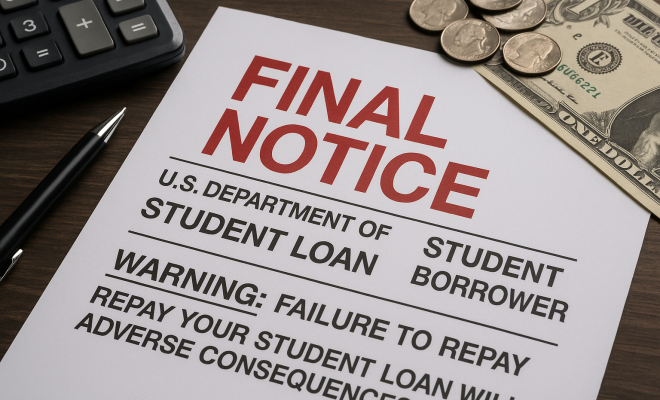
If you’re one of the millions of Americans carrying student loan debt, you’ve likely felt the ground shift beneath your feet more than once in recent years. But the latest tremor, a series of ‘Final Notices’ from the U.S. Education Department, isn’t just a shake-up; it’s a direct challenge with potentially devastating financial consequences. These aren’t just polite reminders; these are serious warnings, urging borrowers to take immediate action. The popular SAVE (Saving on a Valuable Education) repayment program, which offered a lifeline to many by significantly lowering monthly payments, is being terminated due to court challenges. For those who relied on SAVE, or even those who just haven’t paid close attention, these student loan final notices are a critical alert: fail to choose a new plan within 30 days, and you could be automatically enrolled in a fixed payment schedule that might be far more expensive than you can afford.
\n\n
It’s a situation fraught with anxiety and confusion, impacting millions of households across the country. The stakes are incredibly high. Imagine going from a manageable payment, perhaps even $0 under SAVE, to hundreds of dollars more each month, seemingly overnight. That’s the reality many borrowers are now confronting. This isn’t just about abstract policy; it’s about real people, real budgets, and the very real threat of financial instability. We’re going to dive deep into what these final notices mean, why the SAVE program is ending, and what you absolutely need to do right now to protect yourself from a potential financial catastrophe.
\n\n
The Ominous Warning: What These Final Notices Really Mean
\n\n
When the Education Department labels something a ‘Final Notice,’ it’s not hyperbole. This isn’t your average junk mail or a gentle nudge. These communications are designed to convey urgency, and for good reason. For borrowers who have been enrolled in the SAVE plan, or who were eligible for it but hadn’t yet selected an alternative, these notices mark a critical deadline. The core message is stark: your current (or previously intended) repayment structure is no longer viable, and you must proactively select a new one. The alternative is not pretty.
\n\n
The biggest immediate danger lies in the automatic enrollment process. If you receive one of these student loan final notices and fail to act within the specified 30-day window, the Education Department isn’t going to simply wait. Instead, they’ll default you into a standard, fixed payment plan. For many, particularly those who qualified for SAVE’s lower payments based on their income and family size, this automatic enrollment could mean a dramatic surge in their monthly bill. Think about it: the SAVE program was specifically designed to make payments affordable, often tying them to a small percentage of discretionary income. A fixed payment plan, by contrast, amortizes your loan over a set period (typically 10 years for standard plans), often resulting in significantly higher monthly outlays, regardless of your current financial situation. This is where the ‘ominous warning’ truly hits home.
\n\n
Why the SAVE Program is Being Terminated
\n\n
To understand the current crisis, we need to look back at the origins and eventual downfall of the SAVE program. The Saving on a Valuable Education (SAVE) plan was introduced as a successor to the Revised Pay As You Earn (REPAYE) plan, designed to be the most affordable income-driven repayment (IDR) option ever offered by the federal government. Its key features included a lower percentage of discretionary income used to calculate payments (5% for undergraduate loans, 10% for graduate loans, or a weighted average), an increase in the income exemption from 150% to 225% of the federal poverty line (meaning more income was protected from payment calculations), and most crucially, an interest subsidy that prevented unpaid interest from capitalizing and growing the principal balance. This last feature was a game-changer for many, as it meant their loan balance wouldn’t balloon even if their payments were too low to cover the accrued interest.
\n\n
The program was immensely popular, providing relief to millions struggling with student debt. However, its very generosity became its political Achilles’ heel. Almost immediately after its implementation, the SAVE program faced legal challenges from conservative states and advocacy groups. These lawsuits primarily argued that the Education Department exceeded its statutory authority in creating and implementing such a broad and expensive program without Congressional approval. They contended that only Congress has the power to enact such sweeping changes to federal student loan policy, not an executive agency. Courts, in several key rulings, sided with these challengers, issuing injunctions that effectively halted the program’s operation and ultimately led to its termination. It’s a classic example of policy being caught in the crosshairs of legislative and executive power struggles, with millions of borrowers left in the balance. (See: U.S. Department of Education.)
\n\n
The Timeline of Confusion: From 90-Day Notices to Final Deadlines
\n\n
The path to these final notices has been anything but clear for borrowers, adding to the widespread confusion and anxiety. The first wave of alerts came in the form of 90-day notices, which began going out on July 1, 2026. These initial communications were meant to inform borrowers of the impending changes to the SAVE program and advise them to start exploring alternative repayment options. While 90 days might sound like a reasonable amount of time, the reality on the ground was far messier. For more context, see What the 2026 Election Means For Your Student Loans.
\n\n
Many borrowers reported not receiving these initial notices, or if they did, the information was often vague, buried in dense legal jargon, or simply overlooked amidst the deluge of other communications. Service providers, already stretched thin, struggled to handle the influx of inquiries, leading to long wait times and inconsistent advice. This initial period of uncertainty gave way to the current phase of student loan final notices, which carry a much shorter, more urgent 30-day deadline. The compressed timeframe leaves little room for error or procrastination, placing an enormous burden on borrowers to quickly understand complex options and make critical financial decisions. The lack of a smooth, well-communicated transition has exacerbated the emotional distress for many, turning what should be a bureaucratic process into a high-stakes scramble.
\n\n
The Financial Fallout: Higher Payments and Default Risk
\n\n
The most immediate and tangible consequence of the SAVE program’s termination is the significant increase in monthly payments for millions of borrowers. For many, the SAVE plan had reduced their payments to $0 or a very low, manageable amount, based on their income and family size. With SAVE gone, and without actively choosing an alternative, these borrowers are now staring down the barrel of a standard repayment plan. This means their payments will be calculated based on the total loan amount, interest rate, and a 10-year repayment term, irrespective of their current income. The jump could be hundreds, if not thousands, of dollars per month.
\n\n
Consider a borrower with $30,000 in undergraduate loans and an adjusted gross income of $40,000, living alone. Under SAVE, their payment might have been $0 or very low. Under a standard 10-year repayment plan at 6% interest, their payment would jump to approximately $333 per month. For someone already living paycheck to paycheck, this additional financial burden can be impossible to absorb. This sudden and substantial increase in required payments pushes many to the brink of financial distress, significantly raising the risk of default. Defaulting on federal student loans has severe, long-lasting consequences, including wage garnishment, tax refund offsets, damage to credit scores, and ineligibility for future federal aid. It’s a vicious cycle that can trap individuals in a spiral of debt, making it harder to secure housing, employment, or other forms of credit. The ripple effect extends beyond individual borrowers, potentially impacting the broader economy as consumer spending is curtailed.
\n\n
Navigating Your Options: What to Do After Receiving a Final Notice
\n\n
If you’ve received one of these student loan final notices, the absolute most important thing you can do is not panic, but act decisively and quickly. You have options, but you need to understand them and choose one that fits your financial situation before that 30-day deadline passes. Here’s a breakdown of the primary alternatives to the now-defunct SAVE plan:
\n\n
- \n
- Other Income-Driven Repayment (IDR) Plans: While SAVE is gone, other IDR plans remain. These include Pay As You Earn (PAYE), Income-Based Repayment (IBR), and Income-Contingent Repayment (ICR). Each has slightly different eligibility requirements, payment calculation methods, and repayment terms. For example, PAYE generally caps payments at 10% of discretionary income, similar to SAVE, but has different eligibility criteria (you must be a “new borrower” after October 2007 and have a partial financial hardship). IBR caps payments at 10% or 15% of discretionary income, depending on when you took out your loans, and requires a partial financial hardship. ICR is often less generous but is available to a wider range of borrowers. You’ll need to compare these carefully to see which one offers the most affordable payment for your specific circumstances.
- Standard Repayment Plan: This is the default option if you do nothing. Payments are fixed and typically amortized over 10 years. While it leads to the lowest total interest paid over the life of the loan, it often results in the highest monthly payments.
- Graduated Repayment Plan: Payments start low and gradually increase every two years. This can be a good option if you expect your income to rise steadily over time, but initial payments might still be higher than what you had under SAVE.
- Extended Repayment Plan: If you have more than $30,000 in federal student loans, you might be eligible to extend your repayment period up to 25 years, which can lower your monthly payments. However, you’ll pay more interest over the life of the loan.
\n
\n
\n
\n
\n\n
The best course of action is to contact your loan servicer immediately. Don’t wait until the last minute. Be prepared with your financial information, including recent tax returns or pay stubs, to help them calculate your eligibility for different IDR plans. You can also use the Federal Student Aid website’s Loan Simulator tool to compare different plans and estimate your monthly payments. (See: Centers for Disease Control and Prevention.)
\n\n
The Role of Loan Servicers and Communication Breakdowns
\n\n
The relationship between borrowers and their loan servicers has long been a source of frustration, and the current situation with the termination of SAVE has only exacerbated these tensions. Loan servicers, like Nelnet, MOHELA, and Aidvantage, are the companies contracted by the Education Department to manage federal student loans, send bills, process payments, and assist borrowers. Ideally, they should be a reliable source of information and guidance. However, the reality often falls short. For more context, see Shocking Stockton University Layoffs: What It Means For Higher Ed's Future.
\n\n
Borrowers frequently report long wait times to speak with representatives, inconsistent advice from different agents, and difficulty navigating complex repayment options. When a program as significant as SAVE is abruptly terminated, the servicers are on the front lines, dealing with millions of confused and anxious borrowers simultaneously. The sheer volume of inquiries can overwhelm their capacity, leading to breakdowns in communication. This isn’t necessarily a malicious failure on the part of servicers, but rather a systemic issue of understaffing and inadequate resources to handle such massive policy shifts effectively. The onus then falls on individual borrowers to be persistent, meticulous in their record-keeping, and proactive in seeking out accurate information, even when it’s difficult to obtain. Document every call, every email, and every piece of advice you receive. It could prove crucial if disputes arise later.
\n\n
The Broader Impact: Economic and Social Ramifications
\n\n
The termination of the SAVE program and the subsequent financial pressure on millions of borrowers isn’t just a personal finance issue; it has significant broader economic and social ramifications. When millions of households face unexpected and substantial increases in their monthly expenses, it constrains their ability to spend on other goods and services, save for emergencies, or invest in their futures. This reduction in consumer spending can have a noticeable dampening effect on local and national economies. Small businesses, in particular, often feel the pinch as discretionary spending declines.
\n\n
Beyond economics, there’s a profound social impact. Student loan debt is disproportionately carried by younger generations and minority groups, meaning the termination of a beneficial program like SAVE could exacerbate existing wealth disparities. The increased stress and anxiety associated with mounting debt can also take a toll on mental health, relationships, and overall quality of life. It can delay major life milestones, such as buying a home, starting a family, or pursuing further education. Furthermore, the political controversy surrounding student loan policies continues to fuel public distrust in government institutions, especially when relief programs are introduced only to be dismantled later. It reinforces a sense of instability and unpredictability, making it harder for individuals to plan their financial futures with confidence.
\n\n
Seeking Expert Guidance: When to Get Help
\n\n
Given the complexity of student loan repayment options and the high stakes involved, sometimes seeking professional guidance is not just helpful, but necessary. If you’re feeling overwhelmed, confused, or simply unsure which path is best for you, don’t hesitate to reach out to experts. Here are a few avenues: (See: New York Times coverage on student loans.)
\n\n
- \n
- Non-profit Credit Counseling Agencies: Organizations accredited by the National Foundation for Credit Counseling (NFCC) or the Financial Counseling Association of America (FCAA) offer free or low-cost counseling services. They can help you understand your financial situation, explore repayment options, and develop a budget.
- Student Loan Debt Relief Companies: Be extremely cautious here. While some legitimate companies offer assistance, the industry is unfortunately rife with scams. If you consider using one, do thorough research, check their reputation with the Better Business Bureau, and avoid any company that promises instant forgiveness or asks for upfront fees before providing services. Always remember, you never have to pay for help that your loan servicer or the Department of Education can provide for free.
- Legal Aid: If you’re facing default, wage garnishment, or other serious collection actions, or believe your rights have been violated, consulting with an attorney specializing in consumer or student loan law might be appropriate. They can help you understand your legal protections and options.
\n
\n
\n
\n\n
The key is to seek help from reputable sources and to be wary of anything that sounds too good to be true. A legitimate advisor will empower you with information, not make grand promises.
\n\n
The Political Landscape and Future of Student Loan Relief
\n\n
The termination of the SAVE program underscores the highly politicized nature of student loan debt in the United States. What began as a bipartisan effort to expand access to higher education has evolved into a multi-trillion-dollar crisis with deep ideological divides. On one side, advocates for borrowers push for broader forgiveness, more affordable repayment options, and stronger consumer protections, arguing that the current system is unsustainable and predatory. They point to the immense burden on individuals and the stifling effect on economic growth.
\n\n
On the other side, critics argue that broad relief programs are unfair to taxpayers who didn’t attend college or who already paid off their loans, and that they encourage irresponsible borrowing. They emphasize the need for fiscal responsibility and argue that any significant changes should come through legislative action, not executive orders. This fundamental disagreement means that the future of student loan relief is likely to remain turbulent and subject to shifts with every election cycle and court ruling. Borrowers cannot afford to rely on the hope of future, broad-sweeping relief. Instead, they must remain vigilant, informed, and proactive in managing their debt under the current, often challenging, regulatory framework. These student loan final notices are a stark reminder that policy decisions, however well-intended, can be reversed, leaving individuals to pick up the pieces.
\n\n
The ‘Final Notices’ regarding student loan repayment plans are more than just administrative alerts; they are a call to action for millions of Americans. The termination of the SAVE program due to court challenges has thrust many into a precarious financial position, facing potentially unaffordable payment increases and the looming threat of default. While the situation is undoubtedly stressful, ignoring these notices is simply not an option. By understanding your remaining repayment options, proactively engaging with your loan servicer, and seeking expert guidance when needed, you can navigate this challenging period and protect your financial well-being. The path ahead may be uncertain, but informed action is your best defense.
“}
“`
Trending Now
- the complete explanation
- this guide on devastating: california childcare costs are breaking families — here’s how bad it really is
- our breakdown of outrageous: teachers pay teachers’ ai ban sparks seller rebellion!
- this guide on explosive: what the 2026 election means for your student loans — it’s worse than you think
- Your Career’s Next Leap: 7 AI Governance Certifications EdTech Is Desperate For
Frequently Asked Questions
What does the final notice from the Education Department mean?
The final notice from the Education Department serves as a serious warning to student loan borrowers. It indicates that immediate action is required to avoid being automatically enrolled in a potentially more expensive fixed payment plan, especially following the termination of the SAVE program.
Why is the SAVE program ending?
The SAVE program is ending due to court challenges that have affected its continuation. This change has significant implications for borrowers who relied on the program for reduced monthly payments, leaving them to navigate new repayment options.
What should I do if I received a final notice for my student loan?
If you received a final notice, it’s crucial to act quickly. You should review your repayment options and choose a new plan within 30 days to avoid being placed on a fixed payment schedule that may be unaffordable.
How will the end of the SAVE program affect my monthly payments?
With the end of the SAVE program, many borrowers may see their monthly payments increase significantly. Those who were paying $0 or a reduced amount could face much higher payments, impacting their financial stability.
What are the consequences of ignoring the final notice?
Ignoring the final notice can lead to automatic enrollment in a fixed payment plan, which may be much higher than your previous payments. This could result in financial strain and increased debt, making it essential to respond promptly.
Have you experienced this yourself? We'd love to hear your story in the comments.