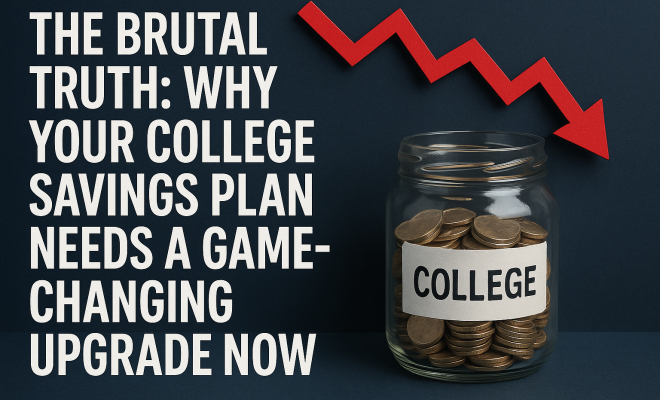
The Brutal Truth: Why Your College Savings Plan Needs a Game-Changing Upgrade Now
Look, if you’re a parent today, you already know the financial squeeze is real. It’s not just a feeling; it’s a stark, undeniable reality backed by numbers that frankly, make your jaw drop. A recent LendingTree report, hot off the presses from 2026, laid it all out: the average cost to raise a child to age 18 has soared to an eye-watering $303,418. And get this – that’s a 1.9% jump from last year, and it doesn’t even touch college expenses. Can you believe it? Three hundred thousand dollars, just to get them to the cusp of adulthood, before the real educational bills even start piling up.
This isn’t just about inflation; it’s about a systemic shift that’s pushing families to the brink. We’re seeing parents going into debt, delaying having kids, or even rethinking parenthood altogether because they simply can’t afford it. The conversations on social media, especially around mid-October 2026, have been buzzing with parental stress and a desperate cry for solutions. It’s a heavy topic, no doubt, but it also highlights an urgent need for families to get smart about their financial future, particularly when it comes to higher education. Finding the best college savings plans for families isn’t just a good idea anymore; it’s a critical survival strategy.
Understanding the Financial Landscape: Why College Savings Are More Crucial Than Ever
Let’s be blunt: the days of casually saving a few bucks here and there for college are over. The financial burden of raising a child, as LendingTree’s 2026 report vividly illustrates, has become monumental. When you’re already shelling out over $300,000 before tuition, fees, and textbooks even enter the picture, you realize that every penny saved for college is a penny less in student loan debt later. This isn’t just about giving your child a leg up; it’s about protecting their future from crippling financial obligations that can follow them for decades.
The conversation isn’t just about the cost of college itself, which continues its relentless ascent. It’s about the compounding effect of all these expenses. You’re trying to cover daily living, extracurriculars, healthcare, and then, suddenly, you’re faced with university bills that can easily dwarf a mortgage. This is why a proactive, well-thought-out college savings strategy isn’t just an option; it’s a non-negotiable part of responsible parenting in the 21st century. We need to move beyond hoping for the best and start implementing robust financial plans.
1. 529 Plans: The Gold Standard for College Savings
When you talk about the best college savings plans for families, 529 plans almost always come up first, and for good reason. These state-sponsored investment plans offer incredible tax advantages that can make a huge difference over the long haul. Here’s the deal: your contributions grow tax-free, and as long as you use the withdrawals for qualified education expenses – think tuition, fees, room and board, books, and even computers – those withdrawals are also tax-free at the federal level. Many states even offer a tax deduction or credit for your contributions, which is a sweet bonus.
There are two main types of 529 plans: prepaid tuition plans and education savings plans. Prepaid plans let you lock in future tuition rates at eligible in-state public colleges, which can be a fantastic hedge against rising costs if you’re sure your child will attend an in-state public school. Education savings plans, on the other hand, are more flexible. You invest in a portfolio of mutual funds or other investments, and the value fluctuates with the market. While there’s more risk, there’s also more potential for growth, and you can use the funds at virtually any accredited college or university, public or private, in any state, and even for K-12 private school tuition up to $10,000 per year. They’re a truly versatile tool for families looking to maximize their college savings.
2. Coverdell Education Savings Accounts (ESAs): A Smaller, More Flexible Option
While 529 plans often steal the spotlight, Coverdell ESAs are another excellent option, especially if you’re looking for a bit more control over your investment choices. Like 529s, contributions to a Coverdell ESA grow tax-free, and withdrawals are tax-free when used for qualified education expenses. But here’s where they differ: Coverdells have an annual contribution limit of $2,000 per beneficiary, which is significantly lower than most 529 plans. This makes them less suitable for families aiming to save the entirety of college costs, but they can be a powerful supplement.
One of the biggest advantages of a Coverdell ESA is the investment flexibility. You’re generally not limited to a pre-selected menu of funds; you can invest in individual stocks, bonds, mutual funds, and ETFs. This gives you more control and potentially higher returns if you’re a savvy investor. Plus, Coverdell funds can be used for a broader range of K-12 expenses beyond just tuition, including uniforms, tutoring, and even transportation. However, there are income limitations for contributors, meaning higher-income earners might not qualify. So, while not the primary vehicle for most, a Coverdell can be a valuable piece of the puzzle for families with specific needs. (See: positive parenting resources from CDC.)
3. Custodial Accounts (UGMA/UTMA): Flexibility with a Catch
Custodial accounts, known as Uniform Gifts to Minors Act (UGMA) or Uniform Transfers to Minors Act (UTMA) accounts, are straightforward ways to save for a child’s future. You, as the custodian, manage the assets until the child reaches the age of majority (usually 18 or 21, depending on the state). All contributions are considered irrevocable gifts to the child, and the assets are held in their name. This means the money can be used for anything that benefits the child, not just education, which offers a level of flexibility that 529s and Coverdells don’t. For more context, see the real cost of raising children.
However, that flexibility comes with a significant catch. Once the child reaches the age of majority, they gain full control of the funds. There’s no guarantee they’ll use it for college; they could buy a car, travel, or frankly, blow it on something less productive. Another drawback is the tax treatment: earnings are taxed at the child’s rate, which is often lower than the parents’ rate, but it can complicate financial aid eligibility since the assets are considered the child’s. While they offer simplicity and broad use, the lack of control once the child comes of age makes them a riskier choice for dedicated college savings, especially when compared to the best college savings plans for families that prioritize education.
4. Roth IRAs: A Retirement Account with a College Twist
You might be scratching your head, thinking, ‘A Roth IRA for college? Isn’t that for retirement?’ And you’d be mostly right! A Roth IRA is primarily a retirement savings vehicle, offering tax-free growth and tax-free withdrawals in retirement. But here’s the clever twist: you can withdraw contributions (not earnings) from a Roth IRA at any time, for any reason, without penalty or taxes. And if you’ve had the account for at least five years, you can withdraw earnings penalty-free for qualified higher education expenses, although those earnings might be subject to income tax.
This dual-purpose nature makes Roth IRAs a surprisingly attractive option for some families. Not only are you building your own retirement nest egg, but you also have a flexible fund that can be tapped for college expenses if needed. The beauty is that if your child ends up getting scholarships or deciding not to go to college, that money remains in your Roth IRA, continuing to grow tax-free for your retirement. It’s important to note the income limits for contributing to a Roth IRA, and that prioritizing your own retirement is generally wise before using these accounts primarily for college. Still, for those who qualify, it’s a powerful tool among the best college savings plans for families.
5. Savings Bonds: A Traditional, Low-Risk Approach
U.S. Savings Bonds, specifically Series EE and Series I bonds, represent a much more traditional and conservative approach to saving for college. These are essentially loans you make to the U.S. government, which then pays you interest. Series EE bonds have a fixed interest rate, while Series I bonds have an interest rate that adjusts with inflation, offering some protection against purchasing power erosion. They are incredibly safe investments, backed by the full faith and credit of the U.S. government, so there’s virtually no risk of losing your principal.
The real appeal for college savings comes with the potential for tax exemption. If you use the proceeds from qualified Series EE or I bonds to pay for higher education expenses, the interest earned can be tax-free at the federal level, provided you meet certain income requirements in the year you redeem them. This makes them an attractive option for risk-averse savers. However, their growth potential is typically lower than investment-based accounts like 529s, and they have annual purchase limits. They won’t make you rich, but they offer a secure, predictable way to set aside funds, especially for those who prefer safety over aggressive growth in their quest for the best college savings plans for families.
6. Prepaid Tuition Plans (State-Specific): Locking in Tomorrow’s Rates Today
We touched on prepaid tuition plans briefly within the 529 discussion, but they warrant a closer look as a distinct category. These plans, typically offered by individual states, allow you to purchase future tuition credits at today’s prices. The idea is simple: you pay a set amount now, and in return, the plan guarantees that a certain number of credits or a percentage of tuition will be covered at eligible in-state public colleges, regardless of how much tuition increases by the time your child enrolls. It’s a powerful hedge against the relentless march of tuition inflation.
The main advantage is the inflation protection. If tuition skyrockets, you’re insulated from those increases for the portion you’ve prepaid. However, there are limitations. Most prepaid plans are state-specific, meaning they primarily cover tuition at public universities within that state. If your child decides to go out of state or attend a private institution, the value of the plan might be transferable, but often at a reduced rate or only up to the average cost of an in-state public university. They also don’t typically cover room, board, or fees. So, while excellent for specific scenarios, their lack of portability can be a drawback for families who want maximum flexibility in college choice. (See: New York Times on rising college costs.)
7. Brokerage Accounts: Unrestricted, but Tax-Inefficient
Finally, we have standard taxable brokerage accounts. These are simply investment accounts where you can buy and sell stocks, bonds, mutual funds, ETFs, and virtually any other investment. They offer maximum flexibility in terms of investment choices and how you use the money. There are no contribution limits (beyond what you can afford), no restrictions on who the beneficiary is, and no rules about what the money must be used for. If your child doesn’t go to college, you can use the funds for a down payment on a house, a business venture, or simply as part of your general wealth. This sounds appealing, right? For more context, see the true cost of raising a child.
The downside, and it’s a big one when compared to the best college savings plans for families, is the tax inefficiency. Any capital gains or dividends generated within a brokerage account are subject to annual taxation. This means your money isn’t growing tax-free like in a 529 or Coverdell, and you’ll owe taxes on those earnings year after year. Over decades, this can significantly erode your returns. While they offer unparalleled flexibility, the lack of tax advantages makes them a less optimal choice for dedicated college savings, especially when compared to tax-advantaged accounts designed specifically for education.
Choosing the Best College Savings Plans for Families: Factors to Consider
Now that we’ve walked through the main options, how do you pick the right one? It’s not a one-size-fits-all answer. Your choice of the best college savings plans for families depends heavily on your unique financial situation, risk tolerance, and long-term goals. Here are some key factors to weigh:
- Your State’s 529 Plan: Start by looking at your home state’s 529 plan. Many states offer a tax deduction for contributions, which can be a significant benefit. If your state’s plan isn’t great, remember you can often invest in any state’s 529 plan.
- Investment Control vs. Simplicity: Do you want to pick individual stocks and funds, or do you prefer a hands-off approach with age-based portfolios? Coverdell ESAs offer more control, while 529s often have pre-selected investment options.
- Financial Aid Impact: Assets held in a parent-owned 529 plan or Coverdell ESA are generally treated more favorably in financial aid calculations than assets held directly in a child’s name (like UGMA/UTMA accounts).
- Flexibility of Use: Do you need the funds strictly for college, or do you want the option to use them for K-12 expenses or even non-educational purposes? This will steer you toward or away from specific plan types.
- Risk Tolerance: Are you comfortable with market fluctuations for potentially higher returns (e.g., 529 education savings plans, brokerage accounts), or do you prefer guaranteed principal and lower growth (e.g., savings bonds, prepaid tuition plans)?
- Income Limitations: Some plans, like Coverdell ESAs and Roth IRAs, have income restrictions that might affect your eligibility.
Don’t just pick the first option you see. Take the time to research, compare fees, and understand the nuances of each plan. A little legwork now can save you a fortune later.
Maximizing Your College Savings Strategy
It’s one thing to choose a plan; it’s another to make it work effectively. To truly get the most out of the best college savings plans for families, you need a smart, consistent strategy. First and foremost, start early. The power of compound interest is your greatest ally here. Even small, regular contributions made over many years can grow into a substantial sum. Waiting until your child is in high school will put you at a severe disadvantage.
Next, automate your contributions. Set up a direct transfer from your checking account to your college savings plan each month. This removes the temptation to skip a contribution and ensures consistency. Also, review your investment allocations periodically. As your child gets closer to college, you’ll generally want to shift from more aggressive, growth-oriented investments to more conservative ones to protect your accumulated savings from market downturns right before you need them.
The Role of Financial Advisors in Navigating College Savings
Let’s be honest: the world of personal finance, especially college savings, can be complex and overwhelming. With the average cost to raise a child skyrocketing past $300,000, and college expenses piled on top, you might feel like you’re drowning in options and regulations. This is precisely where a qualified financial advisor can be invaluable. They don’t just tell you which of the best college savings plans for families to pick; they help you integrate that choice into your broader financial picture.
An advisor can help you assess your risk tolerance, project future college costs, understand the financial aid implications of different accounts, and even help you balance college savings with other crucial goals like retirement. They can also help you navigate state-specific rules for 529 plans and ensure you’re taking advantage of all available tax benefits. Think of them as your guide through a dense forest – they know the paths, the pitfalls, and how to get you to your destination most efficiently. Don’t underestimate the peace of mind that comes from having an expert in your corner, especially when so much is at stake.
Looking Beyond Savings: Other Avenues for College Funding
While having the best college savings plans for families is paramount, it’s also important to remember that they are just one piece of the funding puzzle. College can be incredibly expensive, and even with diligent saving, many families find they need to explore other avenues. Scholarships and grants are non-repayable forms of financial aid that should be aggressively pursued. Encourage your child to excel academically, participate in extracurriculars, and apply for every scholarship they qualify for – local, national, merit-based, need-based, and those tied to specific talents or interests.
Federal student loans, like Stafford loans, often come with more favorable terms than private loans and should typically be considered next if there’s still a funding gap. Finally, there’s always the option of part-time work during college, or even taking a gap year to save up. The key is to create a multi-pronged approach, where your dedicated savings plan is the foundation, but not the sole structure, of your child’s higher education funding.
The Bottom Line: Don’t Let College Costs Overwhelm You
The numbers from the LendingTree report are sobering, a stark reminder of the financial pressure on families today. Raising a child to adulthood is a massive undertaking, and college adds another layer of complexity and cost. But here’s the thing: you’re not powerless. By understanding the various tools available and proactively engaging with your finances, you can make a significant difference in your child’s future.
Whether you lean towards the tax advantages of a 529 plan, the flexibility of a Coverdell, or a blend of several strategies, the most important step is to start. Don’t let paralysis by analysis stop you. Research the best college savings plans for families that resonate with your situation, set up those automated contributions, and watch your efforts compound over time. Your future self, and more importantly, your child’s future, will thank you for it.
Trending Now
Frequently Asked Questions
Why is saving for college more important than ever?
With the average cost to raise a child to age 18 exceeding $303,000, saving for college has become crucial. Families face increasing financial pressures, making it essential to start saving early to minimize future student loan debt and provide children with a viable pathway to higher education.
What are the best college savings plans for families?
The best college savings plans include 529 plans, Coverdell Education Savings Accounts, and custodial accounts. Each offers unique tax benefits and growth potential, allowing families to strategically save for college expenses while maximizing their investments.
How can parents prepare for rising education costs?
Parents can prepare for rising education costs by starting a dedicated college savings account early, budgeting for future expenses, and exploring scholarships and financial aid options. Staying informed about the financial landscape is key to making smart saving decisions.
What impact does inflation have on college savings?
Inflation significantly impacts college savings by increasing the overall cost of tuition and related expenses. As costs rise, families must adjust their saving strategies to ensure they can meet future educational needs without incurring excessive debt.
How can I reduce my child's future student loan debt?
To reduce future student loan debt, start saving early in a dedicated college fund, explore scholarships, and encourage your child to apply for financial aid. The more you save now, the less reliance on loans will be needed later.
What's your take on this? Share your thoughts in the comments below — we read every one.