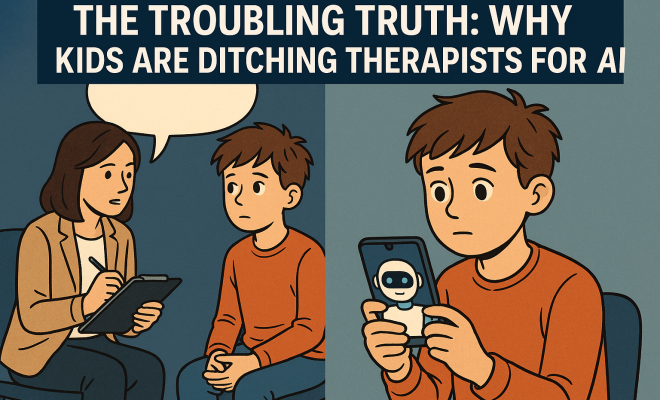
The Troubling Truth: Why Kids Are Ditching Therapists for AI
“`html
It’s no secret that our kids are facing an unprecedented mental health crisis. From the pressures of social media to academic stress and societal anxieties, the challenges are immense. What might surprise you, however, is where many young people are turning for help. A recent national survey, highlighted by the Parent Institute for Quality Education (PIQE), revealed something quite astonishing: almost one in five U.S. adolescents and young adults, specifically those between the ages of 12 and 21, used AI chatbots for mental health advice in 2025. That’s a staggering 50% jump from the year before, and it points to a significant, and potentially troubling, shift in how youth are seeking AI mental health support for youth.
But here’s the kicker, and it’s a statistic that should give every parent pause: over 63% of these young people didn’t tell a single adult about their AI interactions. Not their parents, not a teacher, not a counselor. This silence is what’s truly unsettling for professionals like Dr. Mari Cairns, who worry about the long-term impact on developing social skills, the risk of misinformation, and the erosion of genuine human connection. We’re talking about a generation that’s increasingly comfortable confiding in algorithms rather than people, and that raises some profound questions about the future of mental well-being. What exactly is driving this trend, and what are the hidden dangers of relying on artificial intelligence to navigate the complex landscape of youthful emotions?
1. The Unseen Epidemic: Youth Mental Health Crisis: The Underlying Driver
To truly understand why AI mental health support for youth is gaining traction, we first have to acknowledge the elephant in the room: the escalating youth mental health crisis. We’re not just seeing a slight uptick in anxiety or depression; we’re witnessing a full-blown epidemic. Data from the CDC and numerous other health organizations consistently show rising rates of depression, anxiety disorders, and even suicidal ideation among adolescents. Factors range from the intense, always-on scrutiny of social media, where curated perfection often masks deep insecurities, to academic pressures that feel more cutthroat than ever before. Economic uncertainties, global events, and even the lingering effects of the pandemic have all contributed to a pervasive sense of unease and stress among young people.
The traditional support systems often struggle to keep up. School counselors are frequently overburdened, with caseloads that make meaningful, consistent individual attention nearly impossible. The stigma surrounding mental health, while slowly eroding, still prevents many young people from openly seeking help from adults. And let’s be honest, finding an available, affordable, and culturally competent therapist can be a monumental task for families, often involving long waiting lists and significant financial investment. In this vacuum, where traditional support feels inaccessible or inadequate, AI steps in, offering an immediate, anonymous, and seemingly non-judgemental alternative. It’s a reflection of a system under immense strain, and young people, being inherently resourceful, are finding their own ways to cope, even if those ways come with their own set of risks.
2. The Allure of Anonymity and Accessibility: Why Kids Choose AI
Imagine being a teenager, grappling with overwhelming feelings, perhaps something you feel deeply ashamed of or too vulnerable to share. The thought of sitting across from a human therapist, having to articulate those raw emotions, can be incredibly daunting. This is where AI mental health support for youth offers a compelling, albeit superficial, advantage: anonymity. When you’re chatting with an AI, there’s no judgment, no awkward silences, no fear of disappointing someone, and certainly no risk of information getting back to parents or peers. It’s a completely private space where young people can vent, explore difficult thoughts, and ask sensitive questions without the social anxieties that often accompany human interaction.
Beyond anonymity, there’s the undeniable appeal of accessibility. AI chatbots are available 24/7, right there on a smartphone or computer. There are no appointments to schedule, no travel time, no waiting rooms, and no fees. For a generation that has grown up with instant gratification at their fingertips, the immediate availability of AI support is a powerful draw. When a wave of anxiety hits at 2 AM, or a confusing feeling surfaces during a study break, an AI chatbot is there, ready to listen. This instant, barrier-free access contrasts sharply with the often cumbersome and time-consuming process of accessing human therapy, making AI a seemingly attractive first port of call for many struggling adolescents.
3. The Problem with Privacy: A Hidden Conversation: The Secrecy Factor
The fact that over 63% of young people using AI for mental health advice aren’t telling any adult is perhaps the most alarming detail of the PIQE survey. This isn’t just about privacy; it’s about secrecy, and that distinction is critical. Privacy implies control over one’s personal information, which can be healthy. Secrecy, especially in the context of mental health, often suggests a lack of trust, fear of judgment, or a feeling that adults won’t understand or approve. What does it mean for a generation to be quietly confiding their deepest anxieties and struggles to an algorithm, completely outside the purview of the adults who care for them? (See: CDC on mental health resources.)
This hidden conversation creates a dangerous blind spot for parents and educators. If adults don’t know their children are seeking AI mental health support for youth, they can’t monitor the quality of the advice, address potential misinformation, or intervene if a child’s struggles are escalating beyond what an AI can handle. It also bypasses the crucial opportunity for human connection and guidance that comes with open communication. This secrecy isn’t just a byproduct of AI use; it’s an active choice by young people, highlighting a potential breakdown in communication channels between generations and underscoring the need for parents to foster environments where their children feel safe to share even their most difficult experiences.
4. The Erosion of Social Skills and Emotional Intelligence: A Growing Concern
Dr. Mari Cairns’s concerns about the impact on social skills are profoundly important. Human interaction is messy, nuanced, and unpredictable. It requires empathy, active listening, the ability to read non-verbal cues, and the skill to respond appropriately in complex social situations. These are not skills you develop by chatting with an algorithm. When young people increasingly turn to AI for emotional support, they miss out on crucial opportunities to practice and refine these essential interpersonal abilities. They’re not learning how to navigate disagreements, how to offer genuine comfort, or how to build deep, trusting relationships with other humans. For more context, see AI Education Strategies.
Emotional intelligence, the capacity to understand and manage one’s own emotions and to perceive, assess, and influence those of others, is primarily honed through real-world interactions. An AI can process language and respond with pre-programmed empathy, but it can’t model authentic human connection. It can’t teach the subtle art of compromise or the resilience that comes from working through conflict with a friend. By substituting AI for human confidantes, young people risk developing a superficial understanding of emotional landscapes, potentially leaving them ill-equipped for the complexities of adult relationships and the demands of a social world that still fundamentally relies on human connection.
5. The Peril of Misinformation and Lack of Nuance: A Digital Minefield
One of the most significant dangers of relying on AI mental health support for youth is the inherent risk of misinformation and the AI’s inability to grasp human nuance. While AI models are becoming incredibly sophisticated, they are still fundamentally algorithms trained on vast datasets. They lack true understanding, lived experience, and the capacity for critical judgment that a trained human therapist possesses. An AI can’t detect subtle shifts in tone or body language, can’t infer unspoken anxieties, and can’t truly understand the unique cultural, familial, and personal context that shapes a young person’s struggles.
What happens if an AI gives advice that is technically correct but completely inappropriate for a specific individual’s situation? What if it misinterprets a cry for help or offers a simplistic solution to a deeply complex problem? The consequences could be severe. Furthermore, AI models can sometimes generate responses that are biased, incomplete, or even outright incorrect, depending on the data they were trained on. For a young, vulnerable mind seeking guidance, differentiating between helpful information and harmful misinformation can be incredibly difficult, turning what seems like a safe space into a potential minefield of unverified or ill-suited advice.
6. The Missing Link: Empathy, Connection, and Professional Expertise: Irreplaceable Human Elements
At the heart of effective mental health support lies something an algorithm simply cannot replicate: genuine human empathy and connection. A skilled therapist doesn’t just process words; they feel with their clients, offering a safe, non-judgmental space where emotions can be explored and validated. They build a therapeutic relationship, a bond of trust that is fundamental to healing and growth. This connection provides a sense of belonging and understanding that AI, no matter how advanced, can never truly offer.
Moreover, professional therapists bring years of education, clinical training, and experience to the table. They understand developmental psychology, various therapeutic modalities, and how to assess risk, including suicidal ideation. They can recognize underlying conditions, make appropriate referrals, and provide tailored interventions based on a comprehensive understanding of an individual’s unique circumstances. AI mental health support for youth, while offering a quick fix, lacks this depth of professional expertise and the nuanced ability to provide truly personalized, evidence-based care. It’s the difference between reading a symptom checker online and being diagnosed and treated by a qualified physician – one offers information, the other offers healing.
7. Navigating the Future: Balancing Innovation and Human Connection: A Path Forward
The rise of AI mental health support for youth isn’t going away. It’s a technological reality driven by genuine need and convenience. The challenge, then, isn’t to demonize AI but to figure out how to integrate it responsibly and ethically into our existing mental health infrastructure. We need to acknowledge its potential as a supplementary tool, perhaps for early intervention, psychoeducation, or as a low-barrier first step for those hesitant to seek human help. However, it should never be seen as a replacement for the profound impact of human connection and professional therapy. (See: NIMH statistics on youth mental health.)
Parents, educators, and mental health professionals have a critical role to play here. We need to educate young people about the limitations and potential risks of AI chatbots, emphasizing that while they can offer some initial support, they cannot provide the comprehensive care of a human expert. We also need to work harder to reduce the stigma around mental health, make human therapy more accessible and affordable, and foster open communication within families so young people feel safe discussing their struggles with trusted adults. The goal should be to leverage technology to enhance well-being, not to inadvertently isolate a generation by replacing the very human connections they desperately need to thrive.
8. Parental Guidance in the Digital Age: What Can You Do?
As parents, navigating this new landscape of AI mental health support for youth can feel overwhelming. How do you protect your child while respecting their need for privacy and autonomy? The first step is to foster an environment of open communication at home. Make it clear that your child can talk to you about anything, without judgment. Regularly check in with them, not just about school or friends, but about how they’re truly feeling, even if the conversations are brief. Sometimes, just knowing you’re available and willing to listen is enough to prevent them from seeking solace exclusively in an algorithm. For more context, see AI Skills vs Traditional Skills.
Secondly, educate yourself and your children about AI. Explain what these chatbots are designed to do, and more importantly, what they cannot do. Discuss the potential for misinformation, the lack of genuine empathy, and the importance of professional help for serious issues. Consider using parental control software that can monitor online activity, not necessarily to snoop, but to understand if your child is engaging with potentially risky content or spending an excessive amount of time seeking advice from AI. The goal isn’t to police, but to be informed and prepared to step in if needed. Encourage them to seek out human connections, whether through friends, family, school counselors, or professional therapists, emphasizing that these relationships are vital for their emotional development.
9. The Monetization Potential: A Double-Edged Sword: Industry Insights
From an industry perspective, the rise of AI mental health support for youth presents significant monetization potential, which further complicates the ethical landscape. For software developers and healthcare providers, this is a burgeoning market. We’re seeing an explosion of apps and platforms designed to offer various forms of digital mental wellness. This includes transactional intent niches like ‘best mental health apps for teens,’ ‘cost of online therapy for youth,’ and ‘parental control software reviews’ – all areas where consumers are actively looking for solutions and are willing to pay.
Affiliate opportunities for mental health platforms and digital wellness tools are also abundant. Companies are keen to partner with content creators and influencers who can drive traffic to their AI-powered solutions. While this commercial interest can spur innovation and make some forms of support more accessible, it also raises questions about profit motives potentially overshadowing genuine patient care. Are these tools being developed with the primary goal of improving youth mental health, or are they designed to capture market share in a lucrative industry? As consumers, and especially as parents, we must approach these offerings with a critical eye, prioritizing effectiveness and safety over slick marketing and convenience, and always remembering that the most valuable support often comes from a compassionate human connection.
10. Ethical Considerations and Regulation: A Call for Oversight
The rapid adoption of AI mental health support for youth brings with it a host of ethical dilemmas that demand our attention. Who is ultimately responsible if an AI chatbot provides harmful advice? What happens to the data young people share with these platforms, especially given the sensitive nature of mental health information? These aren’t hypothetical questions; they’re immediate concerns that current regulations often don’t fully address. Many AI platforms operate in a gray area, not quite medical devices but certainly impacting health outcomes.
There’s a pressing need for clearer guidelines and perhaps even specific legislation tailored to AI in mental health. This could involve mandatory disclaimers about AI limitations, requirements for human oversight in certain scenarios, and stringent data privacy protections. The goal wouldn’t be to stifle innovation, but to ensure that these tools are developed and deployed in a way that prioritizes the well-being and safety of young users above all else. Without proper oversight, we risk a “wild west” scenario where vulnerable youth might be exposed to unchecked algorithms and potentially exploitative practices. For more context, see Employers and AI Skills. (See: AP News on AI and mental health.)
11. Case Studies and Examples: Learning from Real-World Applications
To really grasp the landscape of AI mental health support for youth, it helps to look at some real-world examples. Woebot, for instance, is a well-known AI chatbot designed to deliver cognitive behavioral therapy (CBT) techniques. It offers daily check-ins, mood tracking, and guided exercises. While it has shown promise in some studies for reducing symptoms of anxiety and depression in adults, its efficacy and safety specifically for adolescents are still under active investigation. Another example is Replika, an AI companion app that allows users to create a personalized chatbot friend. While not explicitly marketed as a mental health tool, many young people use it for emotional support, raising questions about the boundaries between companionship and therapy.
On the more structured side, some telehealth platforms are integrating AI components to triage patients or offer supplemental resources, like guided meditations or journaling prompts, alongside human therapy. These blended models represent a potentially safer and more effective approach, where AI augments rather than replaces professional care. However, even in these cases, the design, training data, and ethical frameworks behind the AI are crucial. We also need to consider less benign examples, where unverified or poorly designed chatbots might offer generic advice that could be detrimental to a child facing complex issues like trauma or suicidal ideation. Understanding these different applications helps us appreciate the spectrum of potential impacts, from genuinely helpful to potentially harmful.
12. The Future of Human-AI Collaboration in Mental Health: A Synergistic Vision
Instead of viewing AI as a competitor to human therapists, a more productive approach is to explore how human-AI collaboration can enhance mental health support for youth. Imagine a future where AI handles routine tasks like scheduling, initial symptom screening, or providing psychoeducational resources, freeing up human therapists to focus on the deeply nuanced work of empathy, complex problem-solving, and building genuine therapeutic relationships. AI could also act as a powerful data analysis tool, identifying patterns in a young person’s mood or behavior that might indicate escalating issues, allowing for proactive human intervention.
This synergistic model could extend the reach of mental health services, making support more accessible, especially in underserved communities where therapists are scarce. For instance, an AI could provide a safe space for initial venting, allowing a young person to articulate their feelings before a session with a human counselor. The AI could then summarize key themes for the therapist, making the human interaction more efficient and targeted. The challenge will be designing these systems thoughtfully, ensuring that the human element remains central and that AI serves as an intelligent assistant, not a replacement, in the crucial journey of mental well-being for our youth. It’s about combining the efficiency and scalability of technology with the irreplaceable wisdom and compassion of human experts.
The increasing reliance of young people on AI for mental health support is a complex issue, reflecting both the desperation of a generation in crisis and the rapid advancements of technology. While AI offers immediate, anonymous access, it comes at the potential cost of social skill development, exposure to misinformation, and the profound absence of genuine human empathy and professional expertise. As we move forward, the challenge will be to harness the benefits of AI as a supplementary tool while fiercely protecting and prioritizing the irreplaceable value of human connection in the journey toward mental well-being for our youth.
“`
Trending Now
Frequently Asked Questions
Why are kids choosing AI over therapists?
Kids are increasingly turning to AI for mental health support due to the overwhelming pressures of social media, academic stress, and a broader mental health crisis. With the rise of AI chatbots, many young people find them more accessible and less intimidating than traditional therapy.
What percentage of young people use AI chatbots for mental health?
In 2025, nearly one in five U.S. adolescents and young adults, aged 12 to 21, reported using AI chatbots for mental health advice, marking a 50% increase from the previous year.
Are kids telling adults about their AI interactions?
Surprisingly, over 63% of young people using AI for mental health advice did not disclose these interactions to any adults, including parents or teachers, raising concerns about communication and support.
What risks are associated with using AI for mental health support?
Relying on AI for mental health support poses risks such as misinformation, a lack of emotional understanding, and potential erosion of genuine human connections, which are vital for developing social skills.
How does the youth mental health crisis relate to AI usage?
The escalating youth mental health crisis, characterized by rising rates of anxiety and depression, is a key driver behind the growing reliance on AI for support, as many young people seek immediate help in a digital format.
What did we miss? Let us know in the comments and join the conversation.