This Mom’s Barefoot Race in India Is Heartbreaking — And It Exposes a Staggering Crisis
“`html
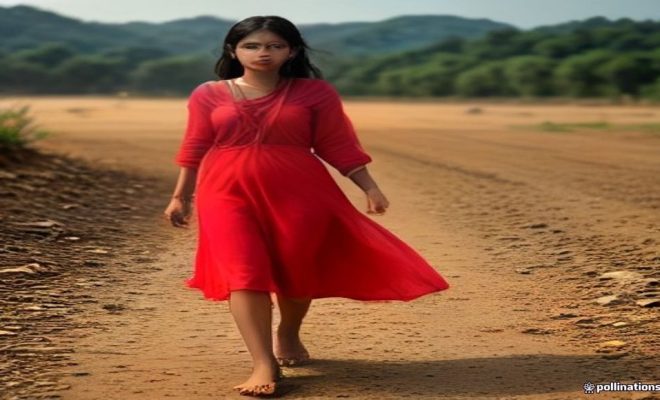
You’ve probably seen the image by now. It’s been impossible to miss, really. A woman, barefoot, running with an intensity that seems to defy the very ground beneath her. Her sari billows around her, a splash of vibrant color against the dusty, nondescript backdrop. This isn’t a professional athlete, mind you, nor is it a staged photo shoot. This is a mother, and her extraordinary act of endurance – a barefoot race in India – has become a powerful, poignant symbol, igniting a global conversation about the immense sacrifices parents make and the stark realities of an education system under immense strain.
The image, which went viral almost instantly, isn’t just a fleeting moment captured on film. It’s a snapshot of desperation, love, and an unwavering commitment that transcends personal comfort. This woman, whose name we may not even know universally, embodies the spirit of countless parents across India who are literally running against time, against poverty, and against systemic hurdles to secure a brighter future for their children. Her barefoot race in India wasn’t just about winning a prize; it was about winning a chance, a sliver of hope, for her daughter’s education. And that, truly, is what makes this story resonate so deeply with people from all walks of life.
The Unseen Marathon: Why a Mother Ran Barefoot for Education
Let’s unpack what propelled this mother into such an astonishing act. While the specific details of her personal circumstances might vary from one family to another, the core motivation remains agonizingly consistent: the fierce, protective love of a parent determined to see their child succeed. In many parts of India, access to quality education isn’t a given; it’s a privilege, often bought with immense financial strain. Fees, uniforms, books, transportation – these costs quickly add up, becoming insurmountable barriers for families living on the margins. When daily wages barely cover food and shelter, education often becomes the first casualty.
This mother’s decision to participate in a barefoot race in India wasn’t a whim. It was a calculated, desperate gamble. Perhaps there was a cash prize, a scholarship opportunity, or some form of support linked to the event that offered a potential lifeline for her daughter’s schooling. Whatever the immediate incentive, her choice to run without shoes speaks volumes about her resolve and the scarcity of other options. Imagine the pain, the blisters, the sheer physical toll of running a race on unforgiving ground, knowing that every stride is a step towards, or away from, your child’s future. It’s a testament to a mother’s will, a force that can move mountains – or, in this case, propel someone across a finish line against all odds.
Beyond the Finish Line: The Broader Crisis of Access to Education
While this mother’s individual story is profoundly moving, it’s crucial to understand that her struggle isn’t isolated. It’s a microcosm of a much larger, systemic issue plaguing India. The country has made significant strides in increasing primary school enrollment over the past few decades, which is commendable. However, the challenges really begin when you look at retention rates, particularly for girls, and the quality of education available, especially in rural or economically disadvantaged areas. We’re talking about a vast nation with an immense population, and ensuring equitable access to quality learning for every child is a monumental task.
Consider the statistics. According to UNICEF, while India has achieved near-universal primary school enrollment, dropout rates remain a significant concern, particularly at the secondary level. Economic factors are consistently cited as a primary reason. Families, especially those with multiple children, often face the agonizing choice between sending a child to school and having them contribute to household income, however meager that might be. This is where the barefoot race in India becomes such a potent symbol: it highlights the everyday dilemmas that force parents to such extreme measures.
The Economic Burden on Families: When School Fees Become a Luxury
For many Indian families, education is not just about tuition fees. It’s an entire ecosystem of expenses that can quickly overwhelm a household budget. There are the school uniforms, often mandatory and requiring specific tailoring. Then come the textbooks, notebooks, and stationary – items that might seem trivial in wealthier nations but represent a significant outlay for those earning daily wages. Add to that examination fees, transportation costs (even if it’s just a few rupees for a shared auto-rickshaw), and the occasional extra classes or tutoring many parents feel compelled to arrange if they want their child to truly excel.
This financial pressure is relentless. When a family barely scrapes by, every rupee counts. A sudden illness, a bad harvest, or a dip in daily labor opportunities can instantly derail a child’s education, forcing them out of school and into the workforce. The mother’s barefoot race in India isn’t just about paying for one semester; it’s about the ongoing, relentless battle to keep her daughter in the classroom, year after year, against a tide of economic uncertainty. It’s a stark reminder that for millions, education is a constant negotiation with poverty.
The Gender Gap: Why Girls’ Education Often Suffers First
While the struggle for education affects all children, girls often bear a disproportionate burden. In many traditional communities, boys are still prioritized for schooling, seen as the primary future breadwinners who will carry on the family name and support elderly parents. Girls, conversely, might be expected to contribute to household chores, care for younger siblings, or be prepared for early marriage. This deeply ingrained societal bias means that when financial resources are scarce, a daughter’s education is often the first to be sacrificed. (See: CDC on education and health.)
This isn’t to say that families don’t value their daughters’ education; many do, profoundly. But the societal pressures and economic realities can be overwhelming. A mother running a barefoot race in India for her daughter’s studies is not just fighting for an individual child’s future; she’s subtly, perhaps unknowingly, challenging centuries of gender inequality. Every girl who stays in school is a small victory against a pervasive prejudice, and stories like this amplify the urgent need to invest specifically in girls’ education as a powerful tool for societal change and economic empowerment.
Social Media’s Role: Amplifying Empathy and Outrage
The reason this story of a barefoot race in India exploded onto our screens is largely due to the power of social media. It’s a perfect storm of elements that compel engagement: a striking visual, an emotionally resonant narrative, and a clear connection to universal themes of parental love and societal injustice. When you see an image like that, it bypasses intellectual analysis and goes straight to the heart. It triggers empathy, yes, but also a healthy dose of outrage.
People share these stories because they feel a connection, because they want to highlight an injustice, or because they simply want to celebrate an individual’s heroic effort. The comments sections often become forums for moral debate, for people to share their own struggles, or to call for action. This viral spread isn’t just about likes and shares; it’s about collective consciousness, turning a local incident into a global conversation. It forces us to confront uncomfortable truths and makes it harder to ignore the systemic issues that create such heart-wrenching scenarios.
Beyond Charity: The Need for Systemic Solutions
While the immediate reaction to stories like the barefoot race in India is often a desire to help directly – to donate, to offer support – it’s crucial to recognize that individual acts of charity, while noble, are not a sustainable solution to a systemic problem. What’s truly needed are robust, long-term policy interventions that address the root causes of educational inequality and economic hardship. This means more than just building schools; it means investing in teacher training, improving curriculum quality, ensuring adequate infrastructure, and, critically, making education genuinely affordable and accessible for all.
Governments, NGOs, and international organizations need to collaborate on comprehensive strategies. This includes scholarships for deserving students, financial incentives for families to keep their children in school (especially girls), and programs that help alleviate the indirect costs of education, such as providing free meals, uniforms, or transportation. Without these foundational changes, individual mothers will continue to run their own silent, desperate races, and the cycle of poverty and limited opportunity will persist.
The Power of a Single Image: Inspiring Advocacy and Action
Sometimes, it takes just one powerful image to cut through the noise and grab our attention. The photograph of the mother in her barefoot race in India is precisely that kind of image. It’s not just a picture; it’s a call to action. It reminds us that behind every statistic about poverty or illiteracy, there are real people, real families, making unimaginable sacrifices. It humanizes the crisis in a way that dry reports and figures rarely can.
This image has the potential to move beyond fleeting virality. It can inspire advocacy groups to redouble their efforts, prompt policymakers to revisit existing programs, and encourage individuals to support organizations working on the ground. It serves as a stark reminder that while the world continues to grapple with complex global issues, the fundamental right to education – a right many of us take for granted – remains an elusive dream for far too many.
A Mother’s Unwavering Love: A Universal Language
Ultimately, what truly elevates the story of this barefoot race in India is the universal theme of a mother’s love. It’s a sentiment that transcends cultural, economic, and geographic boundaries. Whether you’re a parent in New York, London, or a remote village in India, the desire to provide the best possible future for your child is a deeply ingrained instinct. This mother’s incredible act of self-sacrifice speaks to that primal, powerful connection.
Her bare feet on the dusty ground are a metaphor for the arduous path many parents walk. Her determination, an echo of countless untold stories of resilience. While the immediate context is India’s education crisis, the emotional core of this narrative is something every human being can understand and relate to. It reminds us of the extraordinary lengths people will go to for those they love, and perhaps, encourages us to reflect on the privileges we possess and the injustices that still persist in the world around us. Let this powerful image not just be a fleeting viral moment, but a lasting catalyst for real, meaningful change.
The Role of Government Initiatives and Schemes
It’s important to acknowledge that the Indian government isn’t entirely unaware of these challenges. Over the years, various initiatives have been launched to address educational disparities. The Right to Education (RTE) Act of 2009, for instance, made education a fundamental right for children aged 6 to 14, aiming to ensure free and compulsory education. Schemes like the Mid-Day Meal program were introduced to incentivize attendance and address malnutrition, knowing that a hungry child struggles to learn.
However, the implementation and effectiveness of these programs can vary significantly across states and districts. Bureaucratic hurdles, corruption, and a lack of adequate funding often plague even the best-intentioned policies. For a mother participating in a barefoot race in India, these government safety nets might feel distant or insufficient. The gap between policy on paper and reality on the ground is often vast, and it’s in that gap where individual struggles like hers become so starkly visible.
The Impact of Digital Divide on Education
In recent years, the COVID-19 pandemic starkly exposed another significant barrier to education in India: the digital divide. As schools shifted to online learning, millions of children in rural and low-income urban areas were left behind. Many families lack access to smartphones, laptops, or reliable internet connectivity. Even if a device is available, multiple children might have to share it, or parents might need it for their own work, creating immense logistical challenges.
This digital exclusion isn’t just about remote learning during a crisis; it affects access to educational resources, online tutorials, and even crucial information about scholarships or admissions. The barefoot race in India, while pre-dating widespread pandemic-era online schooling, indirectly highlights the fact that basic access to educational tools is often a luxury. If a family can’t afford shoes, how can they be expected to afford a smartphone and data plan for their child’s education? This modern challenge layers another complex problem onto the existing economic and social barriers.
Community-Led Solutions and Local Heroes
While the focus is often on large-scale government and NGO interventions, it’s worth highlighting the incredible work being done at the grassroots level. Countless local communities, driven by a deep understanding of their unique challenges, are developing their own solutions. These might include community-run study centers, volunteer-led tutoring programs, or micro-financing initiatives that help families cover educational expenses.
These local heroes, often operating with minimal resources, embody the same spirit of resilience seen in the mother running her barefoot race in India. They understand that change often starts from within, by empowering individuals and strengthening community bonds. Their efforts, though often unsung, play a vital role in bridging the gaps left by larger systems and providing immediate, tangible support to children who might otherwise fall out of the education system entirely.
Expert Perspectives: Economists and Sociologists Weigh In
Economists frequently point to education as a key driver of economic development and poverty reduction. Investing in human capital, particularly for girls, has a ripple effect, leading to better health outcomes, reduced child mortality, and increased earning potential not just for the individual but for future generations. The short-term cost of education is far outweighed by its long-term societal benefits.
Sociologists, on the other hand, emphasize how education can break cycles of intergenerational poverty and challenge entrenched social hierarchies. They highlight the importance of culturally sensitive curricula and teaching methods that resonate with diverse communities. The image of the barefoot race in India, from a sociological perspective, isn’t just about individual sacrifice; it’s a powerful indictment of a society where such extreme measures are still necessary to access a fundamental right, exposing deep structural inequalities.
The Psychological Toll on Parents and Children
Beyond the financial and logistical challenges, there’s a significant psychological toll on both parents and children living under these pressures. For parents, the constant worry about their children’s future, the guilt of not being able to provide more, and the emotional burden of making impossible choices can be immense. The mother’s barefoot race in India isn’t just a physical strain; it’s a visible manifestation of profound emotional stress.
For children, the experience can lead to feelings of inadequacy, anxiety, or even resentment if they’re forced to drop out. The dream of an education, which should be a source of hope, can become a source of stress and disappointment. Creating an environment where children feel secure in their right to learn, free from the constant threat of withdrawal, is crucial for their mental well-being and long-term development.
FAQ: Understanding the Barefoot Race in India and its Implications
Q1: What exactly was the “barefoot race in India” that went viral?
A1: The “barefoot race in India” refers to a widely shared image of a mother running intensely without shoes, often in a sari, during what appears to be a local athletic event. The context usually implies she was participating to win a prize or support that would directly benefit her child’s education, highlighting the extreme lengths parents go to in the face of economic hardship and educational access issues.
Q2: Why did the image become so popular and resonate with so many people?
A2: The image struck a chord due to several powerful elements: the raw visual of a woman’s determination, the universal theme of a mother’s self-sacrificing love for her child, and the stark reality it portrayed about educational inequality and poverty. It humanized a systemic problem in a very immediate and emotional way, making it relatable across cultures.
Q3: Is this an isolated incident, or does it represent a broader issue?
A3: While the specific event might be unique, the struggle it represents is far from isolated. It’s a powerful symbol of the broader challenges many low-income families in India face in securing quality education for their children, including financial burdens, gender bias, and lack of adequate infrastructure and resources in schools.
Q4: What are the primary barriers to education in India, especially for girls?
A4: Key barriers include the direct and indirect costs of schooling (fees, uniforms, books, transport), the need for children to contribute to household income or chores, lack of nearby schools, poor quality of education, and deeply ingrained societal biases that often prioritize boys’ education over girls’, leading to higher dropout rates for girls, particularly at secondary levels.
Q5: What efforts are being made to address these educational disparities?
A5: The Indian government has implemented policies like the Right to Education (RTE) Act and programs like the Mid-Day Meal scheme. NGOs and community organizations also play a crucial role, providing scholarships, setting up learning centers, and advocating for policy changes. However, challenges in implementation and resource allocation remain significant.
Q6: How can individuals contribute to helping with the education crisis in India?
A6: While direct charity can help, supporting reputable NGOs and organizations that focus on long-term systemic change is more impactful. This includes groups working on teacher training, curriculum development, infrastructure improvements, and advocacy for equitable access. Raising awareness and engaging in informed discussions also helps keep the issue in the public consciousness.
Q7: What is the long-term impact of girls’ education on society?
A7: Educating girls has a profound ripple effect. It leads to improved health outcomes for families, reduced child mortality, lower rates of early marriage, greater economic empowerment for women, and stronger, more prosperous communities. It’s considered one of the most effective investments a country can make in its future.
“`
Trending Now
Frequently Asked Questions
What is the significance of the barefoot race in India?
The barefoot race symbolizes the immense sacrifices parents make for their children's education. It highlights the struggles against poverty and systemic barriers, showcasing the lengths to which a mother will go to secure a better future for her child.
Why did the mother run barefoot in the race?
The mother ran barefoot as an act of endurance and desperation, representing her commitment to her daughter's education. This powerful gesture reflects the harsh realities faced by many families in India who must navigate financial strains to access quality education.
What challenges do parents face in securing education in India?
Parents in India often confront significant challenges like high fees, transportation costs, and the need for uniforms and books. For many, these expenses become insurmountable barriers, making quality education a privilege rather than a right.
How did the image of the mother running barefoot go viral?
The poignant image of the mother running barefoot resonated with people globally, capturing the essence of love, desperation, and hope. Its emotional depth sparked widespread discussion about parental sacrifices and the urgent need for educational reform.
What does the barefoot race reveal about the education system in India?
The barefoot race reveals the systemic issues within India's education system, where access to quality education is often limited to those who can afford it. It underscores the urgent need for reforms to ensure every child has the opportunity for a brighter future.
Have you experienced this yourself? We'd love to hear your story in the comments.