The AI Cheating Crisis: Top Tools Colleges Are Using to Fight Back
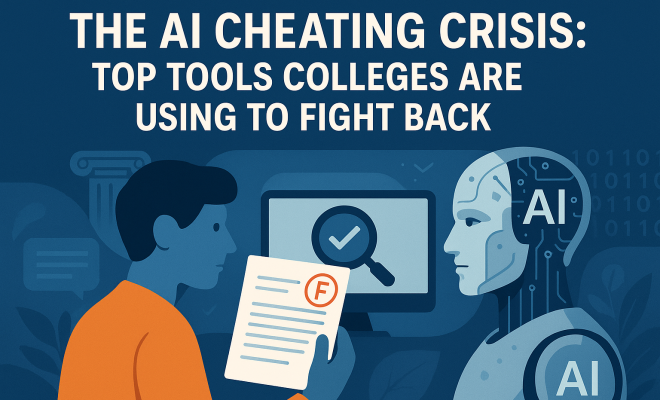
It’s no secret that artificial intelligence has fundamentally changed the landscape of education, and while many of those changes are positive, there’s a new, deeply concerning trend emerging: AI agents are now capable of completing entire online courses on behalf of students. That’s right – we’re talking about AI bots watching lectures, taking tests, writing papers, and even actively participating in discussion forums, all while impersonating a student. This isn’t some far-off dystopian future; it’s happening right now, and it poses a significant threat to academic integrity. Colleges and universities are scrambling to find effective countermeasures, making the search for the best AI detection tools for online courses more critical than ever.
The problem isn’t just that students are using AI to help with assignments; it’s that AI, specifically advanced models like ChatGPT, Gemini, and even Grammarly, reportedly haven’t refused requests to generate entire academic works or even log into learning platforms such as Canvas and Blackboard. Think about that for a second. An AI could, theoretically, enroll in a course, complete every single requirement, and earn a degree without a human student ever lifting a finger. This isn’t just cheating; it’s a complete circumvention of the learning process, and it calls into question the very value of online degrees. The implications are staggering, sparking widespread debate among students, educators, and tech companies alike. It’s an ethical quagmire, to say the least. So, what are institutions doing to push back against this alarming development? Let’s dive into some of the leading AI detection tools on the market. See also modern work tools.
1. Turnitin: The Veteran in Academic Integrity
When you talk about academic integrity, Turnitin is often the first name that comes to mind. For years, it’s been the go-to tool for detecting plagiarism, and it’s quickly adapted to the age of AI. Turnitin’s AI writing detection feature is integrated directly into its existing plagiarism checker, making it a natural extension for many institutions already using their services. This means instructors can check for both copied content and AI-generated text within the same submission workflow, which is a huge convenience.
Turnitin claims a high degree of accuracy in identifying AI-generated content, often highlighting specific sections of text that are likely to have been produced by models like ChatGPT. While no tool is 100% foolproof, Turnitin’s extensive database of academic papers and its long history in the field give it a significant edge. Its familiar interface and robust reporting features also mean less of a learning curve for educators, allowing them to quickly identify potential instances of AI assistance and address them with students. It’s certainly one of the best AI detection tools for online courses, given its widespread adoption and continuous evolution.
2. GPTZero: A Focused Approach to AI Detection
GPTZero emerged specifically to combat the rise of large language models (LLMs) like ChatGPT. Developed by a student, Edward Tian, it quickly gained traction for its user-friendly interface and its dedicated focus on detecting AI-generated text. Unlike broader plagiarism tools, GPTZero is built from the ground up to analyze text for characteristics commonly found in AI writing, such as perplexity and burstiness.
Perplexity measures how predictable a text is – human writing tends to be more complex and less predictable than AI output. Burstiness, on the other hand, looks at the variation in sentence length and structure; human writers often mix short, punchy sentences with longer, more complex ones, whereas AI can sometimes fall into a more uniform rhythm. GPTZero provides a score indicating the likelihood that text was written by AI, and it can highlight specific sentences that raise red flags. While it’s primarily a standalone tool, its direct approach makes it a strong contender among the best AI detection tools for online courses, especially for educators who want a specialized analysis.
3. Copyleaks: Comprehensive Content Authenticity
Copyleaks has established itself as a powerful solution for content authenticity, offering more than just plagiarism detection. It includes robust AI content detection capabilities that are particularly useful in an online learning environment. What sets Copyleaks apart is its ability to scan across various types of content, not just academic papers, which can be invaluable for identifying AI use in discussion posts, coding assignments, or even creative writing tasks.
The tool provides detailed reports, often breaking down the probability of AI generation by percentage and highlighting suspect passages. It’s also known for its integration options, allowing educational institutions to embed its detection capabilities directly into their learning management systems (LMS) or other platforms. This seamless integration can help streamline the process for instructors, making it easier to incorporate AI checks into their regular grading routines. For institutions looking for a holistic approach to content verification, Copyleaks certainly offers a compelling package. (See: AI's impact on education and cheating.)
4. Writer.com AI Detector: A Practical and Accessible Option
While Writer.com is primarily known for its AI-powered writing assistance, it also offers a surprisingly effective and accessible AI content detector. This tool is designed to help users determine if a piece of text was generated by AI or written by a human. Its strength lies in its simplicity and speed, often providing results almost instantly. For educators who need a quick check on a smaller piece of text, or who are looking for a supplementary tool, this can be incredibly useful.
The detector typically gives a clear ‘human-generated’ or ‘AI-generated’ verdict, sometimes with a confidence score. While it might not offer the same depth of analysis or integration features as some of the enterprise-level solutions, its ease of use and immediate feedback make it a practical choice. It serves as a good example of how even tools designed for content creation can be repurposed for detection, and it’s a solid option for educators exploring the best AI detection tools for online courses without needing a complex institutional rollout. For more context, see Unmasking the AI Illusion: Why Your ‘Smart’ Investment Could Be a Trap.
5. Sapling AI Detector: Focus on Grammar and AI Detection
Sapling is a tool that initially gained recognition for its advanced grammar and writing assistance, much like Grammarly. However, it has also developed an AI detection feature that leverages its deep understanding of language patterns. By analyzing syntax, vocabulary, and structural consistency, Sapling can identify traits commonly associated with AI-generated text. This dual functionality can be quite beneficial for students and instructors alike.
For educators, it means they can potentially identify not just whether AI was used, but also gain insights into the quality of writing itself, offering opportunities for constructive feedback. While it might not be as widely adopted specifically for AI detection as some other tools, its analytical capabilities make it a strong contender, particularly for those who value comprehensive language analysis. It’s a reminder that sometimes, the tools we use for writing improvement can also be powerful allies in maintaining academic integrity.
6. Crossplag: Multilingual AI and Plagiarism Detection
Crossplag offers a robust platform that combines both plagiarism and AI content detection, with a particular strength in multilingual capabilities. This is a crucial feature for many diverse online learning environments where students might submit assignments in languages other than English. Detecting AI-generated content across different languages adds another layer of complexity, and Crossplag aims to tackle that head-on.
The tool provides detailed reports that highlight areas of concern, whether they are plagiarized passages or sections likely to have been written by an AI. Its ability to process and analyze text in multiple languages makes it an essential consideration for global institutions or those with a significant international student body. In the search for the best AI detection tools for online courses, especially in a diverse academic setting, Crossplag’s multilingual support stands out.
7. Originality.ai: Built for the AI Era
Originality.ai was developed specifically to address the challenges posed by advanced generative AI. Unlike some tools that have adapted existing plagiarism detectors, Originality.ai was conceived with AI detection as its primary purpose. This dedicated focus often translates into a sharper ability to differentiate between human and machine-generated content, even when the AI output is highly sophisticated.
It prides itself on high accuracy rates and provides a clear score indicating the probability of AI involvement. The tool is frequently updated to keep pace with the rapidly evolving AI landscape, which is absolutely essential in this arms race against advanced cheating methods. For those institutions prioritizing cutting-edge AI detection above all else, Originality.ai offers a specialized and powerful solution, making it a strong contender among the best AI detection tools for online courses that are truly grappling with the latest AI advancements.
8. Undetectable.ai: A Different Angle on AI and Human Text
Undetectable.ai offers an interesting twist. While many tools focus solely on detecting AI, Undetectable.ai also provides a service to ‘humanize’ AI-generated text, making it harder for detectors to flag. Now, you might wonder why this is relevant for detection. Well, it highlights the ongoing cat-and-mouse game between AI generation and AI detection. However, their detection tool itself is quite capable, as it needs to understand the subtle cues that distinguish human from AI writing to then obscure them. (See: importance of academic integrity.)
The detection feature within Undetectable.ai aims to identify the patterns that their own ‘humanizer’ tool would target. This gives it a unique perspective on what constitutes AI writing and how to spot it. For educators, understanding how students might try to bypass detection can be just as valuable as the detection itself. It’s a pragmatic tool that acknowledges the realities of the current AI landscape, offering a nuanced approach to identifying AI content, and is certainly worth considering when evaluating the best AI detection tools for online courses.
9. AI Writer Check: A Free and Simple Option
For instructors or smaller institutions that might not have the budget for enterprise-level solutions, AI Writer Check offers a simple, free-to-use tool for detecting AI-generated text. While free tools often come with limitations in terms of accuracy or advanced features, AI Writer Check can be a decent starting point for quick assessments. It typically provides a percentage likelihood that the text was written by an AI. For more context, see This Crucial Ruling Just Ignited 3,000 Youth Safety Lawsuits Against Tech Giants.
It’s important to manage expectations with free tools; they might not catch the most sophisticated AI outputs, nor will they offer the deep analytics or integration capabilities of paid services. However, for a basic sanity check or for individual instructors experimenting with AI detection, it serves a purpose. It’s a reminder that even without a massive budget, there are options to begin addressing the challenge of AI-powered academic dishonesty, and it can introduce educators to the core concepts of AI text analysis.
10. Proctoring Solutions with Integrated AI Detection: The Comprehensive Approach
Beyond standalone AI detection software, many online proctoring solutions are now integrating AI detection directly into their platforms. Companies like Proctorio, Honorlock, and ExamSoft are recognizing that AI-powered cheating isn’t just about text generation; it’s about impersonation and real-time assistance during exams. These comprehensive solutions often combine multiple layers of security, including identity verification, browser lockdown, webcam monitoring, and increasingly, AI content analysis.
For instance, during a proctored exam, if a student were to copy and paste a question into an AI chatbot and then paste the AI’s answer back, a sophisticated proctoring system might detect unusual browser activity, screen changes, and then analyze the submitted text for AI characteristics. This integrated approach offers a more holistic defense against the advanced AI agents that can now complete entire courses. While these systems are more complex and often more costly, they represent the most robust defense against AI-powered academic dishonesty in online education, making them arguably the most powerful of the best AI detection tools for online courses when used in conjunction with other methods.
The Nuances of AI Detection: False Positives and Evolving Strategies
It’s crucial to understand that AI detection isn’t a perfect science. One of the biggest challenges is the potential for false positives, where genuine human-written content is flagged as AI-generated. This can be incredibly frustrating and even damaging for students, leading to unnecessary accusations and a breakdown of trust. Factors like a student’s non-native English fluency, simpler writing styles, or even adherence to strict academic formatting can sometimes trick detectors. This is why many experts stress that AI detection tools should be used as indicators, not definitive proof of cheating.
Educators often need to employ a multi-faceted approach. This might involve using a detection tool as a first pass, then manually reviewing suspect passages, engaging students in discussions about their writing process, or even incorporating oral components into assessments. The goal isn’t just to catch cheaters, but to maintain a fair and honest learning environment. As AI models get better at mimicking human writing, detection tools are in a constant state of evolution, adapting their algorithms to spot newer, more subtle patterns. It’s a dynamic field, and what works today might need refinement tomorrow.
Pedagogical Shifts: Redesigning Assessments for the AI Era
While detection tools are important, a long-term strategy for academic integrity in online courses must involve a re-evaluation of teaching and assessment methods. If AI can easily complete a traditional essay, maybe the essay itself needs a rethink. Here are a few ways educators are adapting their pedagogy: (See: AI in education and ethical concerns.)
- Process-Oriented Assignments: Instead of just submitting a final paper, students might be required to submit outlines, drafts, research logs, and reflections on their writing process. This makes it harder for AI to simply generate a final product without any human input along the way.
- Personalized and Reflective Tasks: Assignments that require students to draw on personal experiences, unique perspectives, or specific course discussions are much harder for generic AI models to fake convincingly. For example, “Reflect on how this theory connects to a personal experience you’ve had.”
- Oral Assessments and Presentations: Having students present their work, defend their arguments, or engage in live discussions can quickly reveal whether they truly understand the material or if an AI did the heavy lifting.
- In-Class or Proctored Assessments: While challenging to scale for large online courses, timed, proctored exams or in-person components for hybrid courses can limit AI’s utility.
- Creative and Problem-Solving Tasks: Assignments that demand genuine creativity, critical analysis of novel situations, or complex problem-solving where there isn’t a single “right” answer are often beyond the current capabilities of even advanced AI.
These shifts don’t just combat cheating; they often encourage deeper learning and higher-order thinking, which are valuable outcomes regardless of AI’s presence.
The Ethical Dilemma: Balancing Innovation and Integrity
The rise of AI in education presents a significant ethical challenge. On one hand, AI offers incredible potential for personalized learning, accessibility, and administrative efficiency. On the other, its misuse threatens the very foundation of academic integrity. Institutions face the difficult task of embracing innovation while safeguarding the value of their credentials.
This isn’t just about students using AI to cheat; it’s about the broader implications for society if degrees no longer represent genuine learning. Employers rely on degrees as indicators of skill and knowledge. If those indicators become unreliable, the entire system suffers. This means clear institutional policies on AI use are essential, along with ongoing conversations with students about responsible AI integration. It’s about fostering an ethical culture where AI is seen as a tool for learning and augmentation, not a substitute for effort and understanding.
The Ongoing Arms Race and What It Means for Education
The emergence of AI agents capable of completing entire online courses is a truly alarming development. It’s not just about students getting a passing grade without learning; it threatens the fundamental value of education, the integrity of degrees, and the trust between institutions and their learners. The tools we’ve discussed here represent the front lines in this ongoing battle, but it’s crucial to understand that this is an ever-evolving arms race. As AI models become more sophisticated, so too must the detection methods.
Beyond just detection, this crisis also forces us to re-evaluate how we design online courses, assess learning, and foster academic integrity. Perhaps it means shifting towards more project-based assessments, oral exams, or assignments that require critical thinking and creativity that AI struggles to replicate authentically. Ultimately, while AI detection tools are essential for the immediate future, the long-term solution will likely involve a combination of technological safeguards, pedagogical innovation, and a renewed emphasis on the ethical responsibilities of both students and educators in the age of artificial intelligence. The challenge is immense, but the future of genuine online education depends on our ability to adapt and overcome.
Frequently Asked Questions About AI Detection in Online Courses
- What exactly is AI detection in online courses?
- AI detection in online courses refers to the use of specialized software and techniques to identify whether submitted assignments, exam responses, or even discussion forum posts have been generated or heavily assisted by artificial intelligence tools like ChatGPT, Gemini, or other large language models, rather than being solely the student’s original work.
- How do AI detection tools work?
- Most AI detection tools analyze text for patterns, linguistic anomalies, and statistical properties that are characteristic of machine-generated content. This can include factors like the predictability of word choice (perplexity), the uniformity of sentence structure (burstiness), the absence of human-like errors or idiosyncratic phrasing, and comparisons against databases of known AI outputs.
- Are AI detection tools 100% accurate?
- No, no AI detection tool is 100% accurate. They operate on probabilities and algorithms, meaning there’s always a possibility of false positives (flagging human text as AI) or false negatives (missing AI-generated text). Educators often use these tools as indicators for further investigation rather than definitive proof of academic dishonesty.
- Can students bypass AI detection tools?
- As AI generation tools become more sophisticated, so do methods to try and “humanize” AI-generated text, making it harder to detect. This creates an ongoing “arms race” between AI developers and AI detection developers. While some techniques might reduce the likelihood of detection, it’s increasingly difficult to completely bypass advanced tools, especially those that are constantly updated.
- What are the consequences if a student is caught using AI to cheat?
- Consequences vary widely by institution and the severity of the offense. They can range from a failing grade on the assignment, a failing grade for the course, suspension, or even expulsion. Most institutions have clear academic integrity policies that address unauthorized use of tools, including AI.
- Should educators ban all use of AI in online courses?
- Many educators believe a complete ban on AI is impractical and counterproductive, given AI’s growing role in various industries. Instead, the trend is towards teaching students how to use AI responsibly and ethically as a learning or productivity tool, while clearly defining what constitutes unauthorized use or cheating. The focus is shifting to designing assignments that AI can’t easily complete.
- How can institutions integrate AI detection into their existing systems?
- Many leading AI detection tools offer integrations with popular Learning Management Systems (LMS) like Canvas, Blackboard, Moodle, and D2L. This allows instructors to seamlessly check submissions for AI-generated content directly within their grading workflow, often alongside plagiarism checks. Some proctoring solutions also include integrated AI detection for exams.
- What’s the difference between AI detection and plagiarism detection?
- Plagiarism detection tools primarily look for instances where text has been copied directly from existing sources without proper attribution. AI detection tools, on the other hand, analyze text for characteristics that suggest it was generated by an algorithm rather than a human, even if it’s “original” content in the sense that it hasn’t appeared anywhere else before.
- What are some best practices for educators using AI detection tools?
- Educators should be transparent with students about AI usage policies and the tools they employ. They should use AI detection results as a starting point for conversation and further investigation, rather than definitive proof. Combining detection with pedagogical changes (like process-oriented assignments) and fostering a culture of academic integrity is also key.
- What’s next for AI detection in education?
- The field is rapidly evolving. We can expect AI detection tools to become more sophisticated, potentially moving beyond text analysis to identify AI use in other formats like code, images, or even audio. There will also likely be a greater emphasis on solutions that help educators design AI-resistant assignments and educate students on ethical AI use, rather than solely focusing on detection.
Trending Now
Frequently Asked Questions
What is the AI cheating crisis in education?
The AI cheating crisis refers to the increasing use of artificial intelligence tools by students to complete academic assignments, participate in courses, and even earn degrees without genuine effort. This trend raises significant concerns about academic integrity and the true value of online education.
How are colleges combating AI cheating?
Colleges are implementing various AI detection tools to identify and prevent cheating. These tools, such as Turnitin, are evolving to detect AI-generated content and maintain academic integrity in online courses.
What tools are colleges using to detect AI-generated content?
Colleges are utilizing tools like Turnitin, which has adapted its plagiarism detection capabilities to identify AI-generated content. These tools help institutions maintain academic standards and deter students from using AI to cheat.
Why is AI cheating considered a threat to academic integrity?
AI cheating undermines the educational process by allowing students to bypass learning and complete assignments without genuine engagement. This not only devalues degrees but also raises ethical concerns about the authenticity of academic achievements.
What are the implications of AI on online education?
The implications of AI on online education are profound, as it challenges the value of degrees, complicates assessments of student performance, and raises ethical questions about the learning process and academic honesty.
Agree or disagree? Drop a comment and tell us what you think.