The AI Education Crisis: Why Our Kids Are Unprepared for 2026
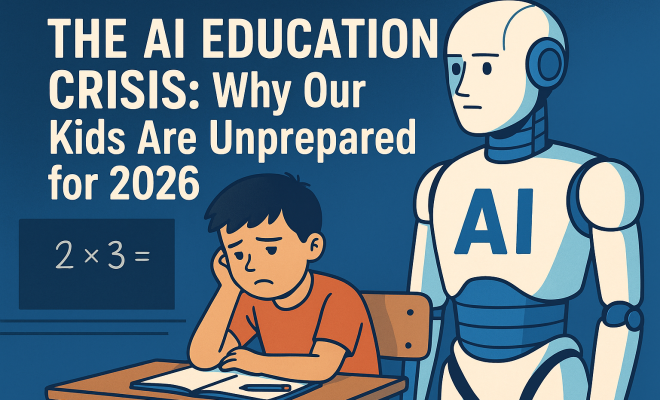
You’ve probably seen it. Your kids, or students you know, hunched over their laptops, maybe even a smartphone, using some AI tool to help with their homework. It’s become as common as a calculator, hasn’t it? But here’s the thing: while roughly 80% of students are now leveraging artificial intelligence for their schoolwork, a troubling disconnect is emerging. Most educational institutions simply haven’t caught up. We’re talking about a massive “policy gap” – a chasm between how students are actually using AI and the formal guidelines designed to govern that use. This isn’t just a minor oversight; it’s a rapidly escalating ethical concern that touches on everything from data privacy to algorithmic bias, and it’s creating a real headache for anyone grappling with AI in education ethics.
The urgency of this situation isn’t some distant hypothetical. Mark your calendars: August 2, 2026. That’s the date when the European Union’s AI Act, a landmark piece of legislation, becomes fully applicable. And it has some serious teeth, especially for what it deems “high-risk” AI systems used in education. Think about tools for admissions, for grading assessments, or even for personalized learning pathways. If these systems are deployed, they’ll be under intense scrutiny, carrying significant obligations. What does that mean for schools outside the EU? Well, global best practices often follow the lead of comprehensive regulations like this. So, whether you’re in Des Moines or Dublin, understanding and addressing the ethical implications of AI in education is no longer optional; it’s absolutely essential. There’s a fuller look at cost-saving strategies.
The Policy Gap: A Growing Chasm of Confusion
Let’s get down to brass tacks: the numbers are stark. While an overwhelming majority of students are integrating AI into their academic lives, only about half of educational institutions have bothered to establish formal AI policies. Think about that for a moment. We’re in an era where AI is becoming as fundamental as the internet itself, yet many of the very places tasked with preparing the next generation are operating without a clear rulebook. This isn’t just a matter of institutional sluggishness; it’s leading to widespread confusion among students.
Imagine being a student today. You’re told to innovate, to use cutting-edge tools, but then you’re also vaguely warned about “cheating” or “plagiarism” without clear definitions in the context of AI. Is using an AI to brainstorm ideas okay? What about paraphrasing an AI’s output? Is it acceptable to use it to correct grammar, or does that cross a line? Without clear, explicit guidelines, students are left to guess, often navigating a moral gray area. This isn’t fair to them, and it certainly isn’t conducive to fostering a strong sense of academic integrity. The lack of clarity isn’t just frustrating; it’s contributing to a situation where nearly half of surveyed students admit they simply don’t understand AI ethics. That’s a truly alarming statistic when you consider the pervasive nature of AI in their daily lives.
Student Voices and the Call for Clarity
It’s not just educators and policymakers wringing their hands over this. Students themselves are acutely aware of the ethical quagmire. In some cases, they’re not just waiting for institutions to act; they’re taking matters into their own hands. We’re seeing instances where students are drafting their own manifestos on AI education, articulating their concerns and proposing solutions. This grassroots movement is a powerful indicator that the younger generation understands the stakes. They’re not just passive recipients of technology; they’re active participants who want a voice in how these powerful tools are integrated into their learning environments. Their concerns often revolve around fairness, transparency, and the potential for AI to undermine genuine learning rather than enhance it.
This student-led initiative highlights a crucial point: any effective AI policy must be developed collaboratively, involving not just administrators and faculty, but also the very individuals who will be most impacted. Ignoring student perspectives would be a grave mistake, leading to policies that are out of touch, difficult to enforce, and ultimately ineffective. Their insights can help shape guidelines that are practical, relevant, and truly foster ethical AI use, rather than simply imposing restrictions from on high. It’s about empowering them to be responsible digital citizens, not just policing their behavior. There’s a fuller look at data privacy concerns.
The EU AI Act and High-Risk Systems: A Global Bellwether
The EU AI Act isn’t just another piece of European legislation; it’s a global benchmark. Its designation of certain AI systems in education as “high-risk” is particularly significant. What does “high-risk” actually mean in this context? It refers to AI systems that have the potential to significantly impact individuals’ fundamental rights, safety, or well-being. In education, this includes systems used for evaluating learning outcomes, for assessing eligibility for admission to educational institutions, or for monitoring student behavior in a way that could lead to significant negative consequences.
Consider an AI system designed to score essays for university admissions. If that system contains inherent biases, perhaps favoring certain writing styles or demographic groups, it could unfairly deny opportunities to deserving students. Or think about an AI-powered proctoring tool that flags students for suspicious behavior based on subtle movements or eye patterns, leading to false accusations of cheating. These aren’t just minor inconveniences; they can have profound, life-altering impacts on students’ futures. The EU’s proactive stance, requiring rigorous conformity assessments, risk management systems, and human oversight for these high-risk systems, sets a precedent that will undoubtedly influence regulatory frameworks worldwide. Ignoring these obligations, especially for companies operating internationally, would be a costly error.
Defining High-Risk AI in Educational Contexts
Let’s dig a little deeper into what constitutes a “high-risk” AI system in education under the EU AI Act. The Act specifically lists several categories that would fall under this umbrella. These include AI systems intended to be used for: (a) determining access to or assigning people to educational and vocational training institutions; (b) for evaluating persons’ learning achievements; and (c) for monitoring and detecting prohibited behavior during tests in educational and vocational training institutions. What’s crucial here is the potential for significant impact on an individual’s life prospects. A system that recommends a reading list based on student performance isn’t high-risk. A system that decides if a student gets into a university or passes a crucial exam absolutely is. (See: Artificial intelligence in education.)
The implications for developers and deployers of such systems are immense. They will need to implement robust risk management systems, ensure data quality, provide detailed documentation, maintain human oversight capabilities, and demonstrate a high level of accuracy and robustness. This isn’t just about technical compliance; it’s about embedding ethical considerations at every stage of the AI lifecycle, from design to deployment. For educational institutions, it means scrutinizing the AI tools they procure and use, demanding transparency from vendors, and understanding their own responsibilities when deploying these powerful technologies. (students mastering AI ethics)
Student Data Privacy: A Looming Battleground
One of the most pressing ethical concerns related to AI in education ethics is student data privacy. AI systems, by their very nature, thrive on data. The more data they ingest – about student performance, learning styles, emotional states, even biometric information – the more “intelligent” and personalized they can become. But whose data is it, really? And who controls how it’s collected, stored, analyzed, and shared?
Educational institutions hold a treasure trove of sensitive information about their students. Grades, attendance records, behavioral patterns, learning disabilities, socioeconomic backgrounds – this data is deeply personal. When this information is fed into AI systems, especially those developed by third-party vendors, the risks multiply. There’s the potential for data breaches, where malicious actors could gain access to sensitive student profiles. There’s also the concern about how this data might be used for purposes beyond education – perhaps for commercial profiling, or even in ways that could perpetuate existing societal inequalities. Without strong data governance frameworks, clear consent mechanisms, and robust cybersecurity measures, schools are essentially playing with fire.
The Monetization of Student Data and Ethical Safeguards
The drive for personalized learning experiences often relies on collecting extensive student data. But this data isn’t just valuable for educators; it’s also a highly sought-after commodity in the commercial sector. Companies offering “educational AI platforms” or “AI detection tools” might collect vast amounts of student usage data. The question then becomes: what happens to that data? Is it anonymized? Is it aggregated? Is it sold to other companies? The potential for monetization of student data, often without students or parents fully understanding the implications, is a serious ethical dilemma. We’ve seen this play out in other sectors, and education must learn from those mistakes.
To mitigate these risks, educational institutions need to adopt a “privacy-by-design” approach. This means building privacy protections into AI systems from the ground up, rather than trying to patch them on later. It also involves clear, transparent communication with students and parents about what data is being collected, why it’s being collected, how it’s being used, and who has access to it. Strong data protection agreements with vendors, regular security audits, and adherence to regulations like GDPR (even for non-EU entities, as a best practice) are no longer optional. They are foundational elements of responsible AI in education ethics.
Algorithmic Bias: Perpetuating Inequality Through Code
Perhaps one of the most insidious ethical challenges in AI in education ethics is algorithmic bias. AI systems learn from the data they are fed. If that data reflects existing societal biases – biases based on race, gender, socioeconomic status, or disability – then the AI system will not only learn those biases but can also amplify and perpetuate them. This isn’t theoretical; it’s a documented problem in various AI applications.
Imagine an AI-powered tutoring system designed to recommend resources or learning paths. If the training data disproportionately represents certain demographics or learning styles, the system might inadvertently offer less effective or less relevant support to students from underrepresented groups. Or consider an AI system used for behavioral analytics in schools. If the data used to train the system contains historical biases in how certain student groups were disciplined, the AI could perpetuate those unfair disciplinary patterns, leading to disproportionate suspensions or expulsions.
Bias in Assessment and Personalization
The potential for algorithmic bias is particularly concerning in areas like student assessment and personalized learning. If an AI grading system is trained on essays primarily written by students from a specific cultural background, it might inadvertently penalize writing styles or perspectives common in other cultures. This isn’t about malicious intent; it’s about the inherent limitations of data and the human biases embedded within it. The developers might not even be aware of the biases their training data contains, making the problem even harder to detect and correct.
Addressing algorithmic bias requires a multi-pronged approach. Firstly, there’s a need for diverse and representative training data. This means actively working to collect data that reflects the full spectrum of student populations, rather than relying on readily available, often biased, datasets. Secondly, AI developers and educators must actively audit AI systems for bias, using fairness metrics and testing the system’s performance across different demographic groups. Thirdly, transparency is key: understanding how an AI system makes its decisions, rather than treating it as a black box, is crucial for identifying and mitigating bias. Finally, human oversight and intervention remain critical. AI should augment human judgment, not replace it, especially when high-stakes decisions are involved. For more on this, see essential AI education insights.
Academic Integrity in the Age of Generative AI
The rise of generative AI tools, like ChatGPT, has thrown a massive wrench into traditional notions of academic integrity. Suddenly, students have access to sophisticated tools that can generate essays, solve complex problems, and even write code with remarkable proficiency. This presents an unprecedented challenge for educators trying to distinguish between genuine student work and AI-generated content. (See: Social determinants of health.)
The initial reaction from many institutions was often one of panic and prohibition. “No AI allowed!” became a common refrain. But as students increasingly adopt these tools, and as the tools themselves become more integrated into professional workflows, a blanket ban becomes both impractical and short-sighted. The real challenge isn’t just detecting AI use; it’s redefining what academic integrity means in a world where AI is a readily available assistant. Is using AI for brainstorming cheating? What if it helps articulate complex ideas? Where’s the line between legitimate assistance and outsourcing one’s own intellectual effort?
Beyond Detection: Fostering AI Literacy and Ethical Use
While AI detection tools have emerged as a response to this challenge, they are far from perfect and often lead to false positives or an adversarial dynamic between students and educators. A more sustainable approach involves moving beyond mere detection and focusing on fostering AI literacy and ethical use. This means teaching students not just how to use AI tools, but also when and why to use them appropriately. It involves explicitly defining what constitutes acceptable AI use in different assignments and disciplines.
For example, an instructor might allow AI for drafting an outline but require students to cite its use and substantially revise the content. Or, an assignment might specifically task students with critiquing an AI-generated response, thereby turning the AI into a learning tool rather than a cheating mechanism. This shift requires educators to rethink assignment design, perhaps emphasizing critical thinking, argumentation, and original research that AI tools struggle to replicate convincingly. Ultimately, it’s about empowering students to be responsible and discerning users of AI, understanding its capabilities and limitations, and integrating it ethically into their learning process.
The Economic Undercurrent: Monetization and Solutions
While the ethical challenges of AI in education are profound, it’s also worth noting the significant economic forces at play. This isn’t just an academic debate; it’s a rapidly growing market. The need for solutions to these ethical dilemmas has created robust monetization opportunities in several adjacent high-CPC (Cost Per Click) niches. This commercial intent signals that businesses are seeing the demand for tools and services that address these very concerns.
Think about software solutions: AI detection tools are a clear example, offering schools a way to identify AI-generated content. Beyond that, there’s a burgeoning market for ethical educational AI platforms – tools designed with privacy, fairness, and transparency built-in from the start. Then there’s the cybersecurity angle: with so much sensitive student data flowing through AI systems, robust data privacy solutions for schools are in high demand. Finally, the need for human understanding and guidance has fueled the growth of online education, with courses focusing on AI literacy, AI ethics training for educators, and responsible AI implementation. All of these areas cater to commercial intent for phrases like “AI policy solutions,” “AI ethics training,” and “educational AI software reviews,” indicating a strong market for practical, implementable solutions.
Investing in Responsible AI Ecosystems
The commercial interest in solving these problems is, in some ways, a positive sign. It means there’s capital flowing into developing the tools and expertise needed to create more ethical AI ecosystems in education. However, it also means institutions need to be incredibly discerning when evaluating these solutions. Not all “AI ethics training” is created equal, and not all “AI policy solutions” truly address the underlying complexities. The challenge for schools will be to invest wisely, choosing vendors and partners who demonstrate a genuine commitment to ethical principles, rather than simply offering a quick fix or a superficial compliance checkbox.
This also highlights the importance of collaboration between academia and industry. Researchers can provide the ethical frameworks and critical analysis, while companies can bring the technological innovation and scalable solutions. When these two worlds connect effectively, we can move beyond simply reacting to AI’s challenges and instead proactively shape its responsible integration into education, creating a virtuous cycle where ethical considerations drive innovation, and innovation, in turn, supports stronger ethical practices.
Addressing the Policy Gap: A Path Forward
So, where do we go from here? The policy gap is real, and the August 2026 deadline for the EU AI Act is fast approaching. Simply ignoring the problem or hoping it goes away is not an option. Educational institutions, from K-12 schools to universities, need to take decisive action to bridge this gap and establish clear, comprehensive AI policies. This isn’t about stifling innovation; it’s about guiding it responsibly. (See: AI's impact on education.)
The first step is honest self-assessment. What AI tools are currently in use, formally or informally, within your institution? What data are they collecting? Who has access to that data? What are the potential risks? Once these questions are answered, institutions can begin to develop policies that address the core ethical concerns: privacy, bias, and academic integrity. These policies should be clear, actionable, and communicated effectively to all stakeholders – students, faculty, staff, and parents.
Key Pillars of a Robust AI Policy
Developing a robust AI policy isn’t a one-time event; it’s an ongoing process that requires flexibility and regular review. However, certain key pillars should form its foundation. Firstly, Transparency and Communication are paramount. Everyone needs to understand the rules, the rationale behind them, and how they apply in practice. Secondly, Data Governance and Privacy must be central, outlining clear protocols for data collection, storage, use, and sharing, with strong emphasis on student consent and anonymization where possible. Thirdly, Algorithmic Fairness and Bias Mitigation should be explicitly addressed, requiring regular audits of AI systems and a commitment to using tools that are demonstrably fair and equitable.
Fourthly, policies must articulate clear expectations around Academic Integrity, defining acceptable and unacceptable uses of AI in assignments, research, and assessments. Finally, Professional Development and AI Literacy are crucial. Faculty and staff need training on how to effectively integrate AI into their teaching, how to detect misuse, and how to educate students about responsible AI use. Students, in turn, need to develop AI literacy skills, understanding not just how to operate the tools, but also their ethical implications and societal impact. This holistic approach ensures that AI becomes a tool for empowerment and learning, rather than a source of ethical peril. See also AI software transforming learning.
The Future of AI in Education Ethics: Collaboration and Continuous Learning
The landscape of AI in education is incredibly dynamic, with new tools and applications emerging constantly. This means that any policy or ethical framework cannot be static. It must be built on a foundation of continuous learning, adaptation, and collaboration. No single institution or group has all the answers, and the best solutions will likely come from ongoing dialogue and partnership.
This includes collaboration among educational institutions, sharing best practices and developing common standards. It means engaging with AI developers and vendors, pushing for ethical design and greater transparency in their products. And critically, it involves fostering an ongoing conversation with students, who are, after all, the primary users and beneficiaries (or victims) of these technologies. By embracing this collaborative and adaptive mindset, we can hope to navigate the complex ethical terrain of AI in education more effectively, ensuring that these powerful tools serve to enhance human learning and potential, rather than undermining it.
The path ahead isn’t easy, but the stakes are too high to falter. The next generation deserves an education system that is not only technologically advanced but also ethically sound. Let’s make sure we deliver on that promise, well before August 2, 2026, rolls around and the full weight of these new regulations comes to bear.
Trending Now
- Alarming: Court Slams Meta as ‘Public Nuisance’ for Youth Mental Health Crisis – What Parents MUST Know
- Shocking: Judge Declares Meta a ‘Public Nuisance’ – What It Means For Your Kids’ Mental Health
- Revealed: 8 Must-Know Alternatives to SAVE…
- Graduate PLUS Loans vs. Parent PLUS…
- this guide on revealed: the shocking truth about your new student loan repayment plan
Frequently Asked Questions
Why are students unprepared for AI in education?
Students are increasingly using AI tools for their homework, but educational institutions have not kept pace with these developments. This disconnect, referred to as the 'policy gap', raises ethical concerns related to data privacy and algorithmic bias, leaving students unprepared for the implications of AI in their academic environments.
What is the AI Act and how does it affect education?
The AI Act, effective from August 2, 2026, is a European Union legislation that imposes strict regulations on 'high-risk' AI systems in education. This includes tools for admissions and grading, which will face intense scrutiny, influencing global best practices in educational AI use.
How many students are using AI for schoolwork?
Approximately 80% of students are now leveraging artificial intelligence tools for their academic tasks. This widespread adoption highlights the urgent need for educational policies that address the ethical and practical implications of AI in the classroom.
What are the ethical concerns of AI in education?
The ethical concerns surrounding AI in education include data privacy, algorithmic bias, and the lack of formal guidelines governing AI use. These issues create significant challenges for educators and policymakers as they navigate the integration of AI into learning environments.
Are schools implementing AI policies?
Despite the high usage of AI among students, only about half of educational institutions have established formal AI policies. This lack of regulation contributes to the widening 'policy gap' and raises questions about the preparedness of schools to handle the implications of AI technology.
Have you experienced this yourself? We'd love to hear your story in the comments.