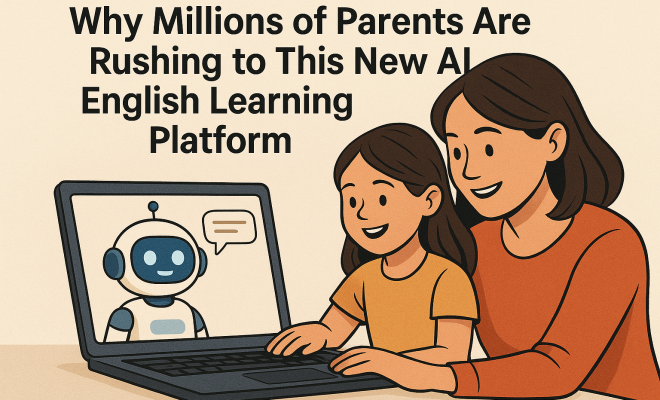
Why Millions of Parents Are Rushing to This New AI English Learning Platform
The education landscape is always shifting, isn’t it? From chalkboards to smartboards, every generation sees new tools promise to revolutionize how we learn. But what’s happening right now with artificial intelligence feels different, almost like a seismic shift. We’re not just talking about incremental improvements; we’re witnessing the birth of entirely new ways to engage with knowledge. This is especially true for language acquisition, a notoriously challenging journey for many. Enter the AI English learning platform, a concept that’s quickly moving from sci-fi fantasy to everyday reality.
One of the most talked-about developments in this space is LingoAce’s recent announcement about their new offering, “Tutor Luna.” Slated for launch on August 4, 2026, this isn’t just another app; it’s being positioned as an AI-native English learning platform designed from the ground up to personalize every child’s educational journey. The buzz around Tutor Luna, and similar platforms, isn’t just about the technology itself. It’s fueled by the exciting potential for truly individualized learning experiences, where an AI tutor can adapt in real-time to a student’s unique needs, strengths, and weaknesses. Imagine a tutor who never gets tired, always has the right answer, and can tailor lessons to your child’s exact pace and learning style. Sounds pretty compelling, right? But with such powerful potential comes a host of complex questions and ethical dilemmas, sparking a heated debate among parents, educators, and tech enthusiasts alike. Let’s dig into what makes these platforms so captivating, and why they’re generating such a fervent discussion.
1. The Promise of Hyper-Personalized Learning: A Tutor Just for Your Child
One of the biggest draws of an AI English learning platform like Tutor Luna is its ability to offer hyper-personalized learning. For decades, educators have dreamed of a world where every student could have a dedicated, infinitely patient tutor. In traditional classrooms, with 20, 30, or even 40 students, achieving true personalization is an uphill battle. Teachers do their best, but they simply can’t provide individual attention to every single child all the time.
This is where AI steps in. An AI tutor can analyze a student’s performance data – their correct answers, their mistakes, how long they spend on a particular problem, even their intonation and pronunciation in a language learning context. Based on this continuous stream of data, the AI can dynamically adjust the curriculum, the pace, and the teaching methods. If a child is struggling with verb tenses, the AI can provide extra exercises and explanations in that specific area, without making the child feel singled out or slowing down the entire class. Conversely, if a student masters a concept quickly, the AI can move them ahead to more challenging material, preventing boredom and fostering continuous engagement. This adaptive quality is what really sets these platforms apart, promising to unlock each child’s full potential by meeting them exactly where they are.
2. Real-Time Feedback and Instant Correction: No More Waiting
Think about how frustrating it can be to learn a new language. You try to speak, you make a mistake, and you might not even realize it until much later, if at all. In a traditional setting, a teacher can only correct so many students in a given class. With an AI English learning platform, that delay vanishes. Students receive immediate, real-time feedback on everything from grammar and vocabulary to pronunciation and fluency.
For instance, if a student mispronounces a word, the AI can instantly highlight the error, show them the correct phonetic breakdown, and even provide audio examples for them to mimic. If they make a grammatical mistake in a written exercise, the AI can pinpoint the error and offer explanations or alternative phrasing on the spot. This instant gratification and correction loop is incredibly powerful for learning. It allows students to correct their misunderstandings before they become ingrained habits, accelerating the learning process and building confidence. It’s like having a language coach constantly by your side, ready to guide you at every turn.
3. Addressing Algorithmic Bias: Ensuring Fairness in AI Education
The promise of AI is immense, but so are the ethical considerations. One of the most significant concerns for any AI English learning platform is algorithmic bias. This isn’t just an abstract tech issue; it has real-world implications for how children learn and are assessed. If the data used to train an AI is skewed or unrepresentative, the AI itself can perpetuate and even amplify existing biases. Related reading: impact of AI on education.
For example, if an AI’s speech recognition model is predominantly trained on data from native English speakers with a specific accent, it might struggle to accurately assess or understand learners with different accents, potentially leading to unfair evaluations or frustrating learning experiences. Similarly, if the content or examples within the platform inadvertently favor certain cultural backgrounds, it could disadvantage students from other cultures. Developers of platforms like Tutor Luna face a critical challenge: ensuring their algorithms are fair, inclusive, and robust enough to serve a diverse global student population. This requires meticulous data curation, ongoing testing, and a commitment to transparency, continually refining the AI to minimize bias and ensure equitable learning opportunities for all.
4. Data Privacy and Security Concerns: Protecting Our Children’s Information
When an AI English learning platform is constantly collecting data about a child’s learning patterns, progress, and even their voice, the question of data privacy becomes paramount. What kind of data is being collected? How is it stored? Who has access to it? And how is it protected from breaches? (See: U.S. Department of Education.)
Parents are understandably wary about their children’s digital footprint. The thought of sensitive academic and personal data being vulnerable is a major deterrent. Companies developing these platforms, like LingoAce, must prioritize robust cybersecurity measures. This includes end-to-end encryption, strict access controls, and clear, transparent privacy policies that explain exactly how data is used and protected. Furthermore, compliance with global data protection regulations like GDPR and COPPA is non-negotiable. Building trust with parents means demonstrating an unwavering commitment to safeguarding children’s information, ensuring that the benefits of personalized learning don’t come at the cost of privacy or security. This isn’t just a technical challenge; it’s a moral imperative for the entire ed-tech sector.
5. The Erosion of Human Teacher-Student Interaction: A Fundamental Shift?
Perhaps the most emotionally charged debate surrounding the rise of AI tutors centers on the role of human teachers. If an AI English learning platform can provide personalized instruction, instant feedback, and adapt to every student’s needs, what becomes of the human educator? Critics worry that an over-reliance on AI could lead to the erosion of crucial human teacher-student interaction, which is far more than just the transfer of information. There’s a fuller look at future of AI in learning.
Human teachers provide empathy, mentorship, social-emotional learning, and the ability to inspire and motivate in ways an algorithm simply cannot replicate. They understand the nuances of a child’s struggles beyond academic performance, recognizing when a student might be having a bad day, facing personal challenges, or needing a different kind of support. The concern isn’t necessarily that AI will replace teachers entirely, but rather that excessive dependence on AI might diminish the vital human connection that underpins effective education. The challenge for the future is to find a harmonious balance where AI serves as a powerful tool to augment and empower human teachers, rather than diminish their irreplaceable role in fostering holistic student development.
6. Risk of Over-Reliance and Stunted Critical Thinking: Beyond Rote Learning
While an AI English learning platform excels at delivering structured lessons and providing instant answers, there’s a legitimate concern that an over-reliance on these tools could inadvertently stunt critical thinking skills. If an AI is always there to provide the correct answer or guide a student through every step, do children learn how to grapple with ambiguity, problem-solve independently, or develop their own unique insights?
Critical thinking isn’t just about knowing facts; it’s about asking questions, evaluating information, synthesizing ideas, and forming independent judgments. These are skills often developed through struggle, through trial and error, and through collaborative discussions with peers and teachers. If AI platforms become too prescriptive, focusing heavily on rote learning or guided completion, they might inadvertently bypass opportunities for students to engage in deeper, more complex cognitive processes. The key lies in designing AI that not only delivers information but also prompts students to think critically, challenge assumptions, and explore solutions on their own, ensuring that the technology enhances, rather than hinders, the development of these essential higher-order skills.
7. The Future Workforce and AI Literacy: Preparing Students for Tomorrow
As AI becomes more ubiquitous in education, it also raises important questions about preparing students for a future workforce that will undoubtedly be heavily influenced by artificial intelligence. Learning to interact effectively with an AI English learning platform isn’t just about mastering English; it’s also about developing fundamental AI literacy skills.
Students need to understand how AI works, its capabilities, and its limitations. They’ll need to learn how to leverage AI as a tool for creativity and productivity, while also being able to critically evaluate the information it provides. This isn’t just about using AI; it’s about understanding its ethical dimensions, recognizing bias, and knowing how to collaborate with AI systems responsibly. The integration of AI into education, therefore, presents an opportunity to embed AI literacy into the curriculum, ensuring that today’s students are not just consumers of AI, but informed, critical, and ethical participants in an AI-powered world. This will be crucial for navigating a job market that will increasingly demand a sophisticated understanding of intelligent technologies.
The Commercial Momentum Behind AI in Education
Despite, or perhaps because of, these complex discussions, the commercial momentum behind AI in education is undeniable. Companies like LingoAce, with their Tutor Luna platform, are tapping into a massive market driven by parents and institutions seeking more effective and personalized learning solutions. The excitement around these platforms generates significant monetization opportunities across various sectors. AI's role in higher education offers useful background here.
For developers of secure AI learning platforms, the potential is enormous. The demand for robust, privacy-compliant, and effective AI tutors that can deliver tangible academic improvements is high. Alongside this, there’s a growing need for educational software reviews that can objectively compare and contrast different AI offerings, helping parents and schools make informed decisions. Furthermore, as AI becomes more integrated into classrooms, there’s a clear market for online courses on AI literacy and responsible integration for educators, empowering them to effectively utilize these new tools without sacrificing pedagogical principles. Finally, cybersecurity solutions specifically tailored for ed-tech companies will be crucial, ensuring the protection of sensitive student data. Terms like “best AI learning tools” and “AI in education software comparison” are already seeing high commercial intent, signaling a burgeoning market ready for innovation and ethical leadership. (See: New York Times on AI in Education.)
Navigating the AI Learning Revolution: A Balanced Perspective
The introduction of powerful AI English learning platform solutions like Tutor Luna marks a fascinating inflection point in education. On one hand, the promise of truly personalized, adaptive learning with real-time feedback is incredibly compelling, offering the potential for unprecedented academic gains. Imagine a world where no child is left behind because their learning style isn’t accommodated by a one-size-fits-all approach.
On the other hand, we can’t ignore the very real, very human concerns about data privacy, algorithmic bias, and the potential impact on critical thinking and the invaluable human connection in teaching. It’s not about choosing between AI and human teachers; it’s about finding the optimal synergy. How do we harness AI’s power to enhance learning without losing the essence of what makes education truly transformative? The answer lies in thoughtful design, rigorous ethical frameworks, continuous evaluation, and an ongoing dialogue among all stakeholders. As we move closer to August 2026 and the launch of platforms like Tutor Luna, the conversation will only intensify, pushing us to define what a truly intelligent, humane, and effective future of education looks like.
The Global Reach and Accessibility of AI Language Learning
One often-overlooked benefit of an AI English learning platform is its potential to democratize access to high-quality language education on a global scale. In many parts of the world, access to skilled English teachers is limited, either due to geographical constraints or economic barriers. A sophisticated AI tutor can bridge this gap, bringing personalized instruction to students in remote villages or underserved communities who might otherwise never have the opportunity to learn from a native-level speaker.
This accessibility not only opens doors for individual learners but also fosters global communication and understanding. Imagine a child in a developing country gaining fluency in English through an AI platform, unlocking educational resources, career opportunities, and connections to the wider world. Of course, this vision relies heavily on reliable internet access and affordable devices, but as technology continues to advance and become more widespread, the potential for AI to level the educational playing field for millions is profound. It’s a powerful argument for embracing these innovations, provided they are developed with global equity and accessibility at their core.
The Role of Parental Involvement and Oversight
While AI English learning platforms offer incredible autonomy to students, the role of parental involvement remains as crucial as ever. Parents aren’t just consumers of these technologies; they are partners in their children’s educational journey, and their oversight is vital to ensuring a balanced and effective learning experience. It’s not enough to simply hand a child a tablet with an AI tutor and assume the job is done.
Parents need to engage with the platform, understand its features, and monitor their child’s progress. They should be aware of the data being collected, the privacy settings, and how the AI is interacting with their child. Regular check-ins, discussions about what the child is learning, and even participating in some of the activities can reinforce the learning and provide valuable context that an AI cannot. Furthermore, parents play a critical role in balancing screen time with other essential activities like outdoor play, social interaction, and creative pursuits. The best outcomes will likely come from a collaborative approach where AI acts as a powerful tool, supported and guided by active parental involvement, ensuring a holistic and healthy development for the child.
Expert Perspectives: Educators Weigh In
Many educators are approaching the rise of the AI English learning platform with a mix of cautious optimism and practical concerns. Dr. Eleanor Vance, a veteran language teacher with over 20 years of experience, notes, “AI can handle the repetitive drills and instant corrections that often consume valuable classroom time. This frees me up to focus on the more nuanced aspects of language – things like cultural context, encouraging creative expression, and facilitating genuine conversational practice, which are areas where human interaction truly shines.” She sees AI as a tool that can differentiate instruction in ways a single teacher never could, especially in large classes. However, she also stresses the importance of training teachers to effectively integrate these tools, rather than just replacing traditional methods. “It’s not about the AI doing the teaching; it’s about the AI empowering the teacher to do even better teaching,” she emphasizes.
Conversely, Professor David Chen, a specialist in educational technology, highlights the importance of robust research. “We need more longitudinal studies to truly understand the long-term impact of AI English learning platforms on student motivation, self-efficacy, and deep learning,” he says. “The immediate gains are clear, but what about the development of intrinsic motivation or the ability to navigate unstructured learning environments? These are questions that require careful, ongoing investigation, not just anecdotal evidence.” This highlights a critical need for academic rigor to back up the bold claims often made by tech companies. (See: Research on AI in Learning.)
Comparison with Traditional Methods: Where AI Excels and Falls Short
Let’s consider how an AI English learning platform stacks up against traditional language learning methods. Historically, learning English involved textbooks, grammar exercises, classroom instruction, and perhaps language exchange partners. These methods certainly work, but they often come with limitations. We covered understanding adaptive learning in more detail.
Traditional classrooms, as mentioned, struggle with personalization. A teacher might spend 10 minutes explaining a grammar point that half the class already knows and the other half still doesn’t quite grasp. AI, with its adaptive algorithms, can bypass this inefficiency, allowing each student to progress at their optimal pace. For pronunciation, traditional methods rely on a teacher’s ear, which can be subjective and limited by time. AI’s speech recognition can provide objective, instant feedback on individual phonemes, intonation, and rhythm, a level of detail a human teacher often can’t match consistently for every student.
However, traditional methods foster invaluable social interaction. Group work, debates, and role-playing with peers build confidence, empathy, and crucial communication skills that extend beyond just linguistic accuracy. A human teacher can also interpret non-verbal cues – a furrowed brow, a hesitant posture – to understand a student’s confusion or frustration in a way AI currently struggles with. While AI can simulate conversations, the spontaneity, humor, and unpredictable nature of human interaction are still largely beyond its grasp. The strength of AI lies in its systematic, data-driven approach to skill acquisition, while human teachers excel at nurturing the holistic, social, and emotional aspects of language learning.
The Role of Gamification and Engagement
One area where an AI English learning platform often excels is in engagement through gamification. Many platforms incorporate elements like points, badges, leaderboards, and interactive challenges to make learning feel less like a chore and more like a game. This is particularly effective for younger learners or those who struggle with traditional motivation methods.
The AI can track a student’s progress and use these gamified elements to provide small, frequent rewards, creating a positive feedback loop. For example, mastering a new vocabulary set might unlock a new level or earn virtual currency to customize an avatar. This psychological approach taps into intrinsic motivation, making the learning process more enjoyable and sustainable. When students are having fun, they’re more likely to stick with it, even through challenging concepts. This engagement factor is a significant advantage over static textbooks or lectures, which often struggle to maintain student interest over extended periods. The AI’s ability to constantly refresh challenges and introduce new game mechanics keeps the experience dynamic and prevents boredom, a common pitfall in language acquisition.
The journey with AI in education, particularly with an AI English learning platform, is just beginning. It’s a path filled with immense promise and significant challenges. As we move forward, the key will be to innovate responsibly, prioritizing the well-being and comprehensive development of students above all else. The future of learning is undoubtedly intelligent, but it must also remain deeply human.
Trending Now
Frequently Asked Questions
What is the AI English learning platform Tutor Luna?
Tutor Luna is an AI-native English learning platform developed by LingoAce, set to launch on August 4, 2026. It aims to provide personalized learning experiences for children by adapting lessons to their individual needs, strengths, and weaknesses, making language acquisition more engaging and effective.
How does AI personalize learning for children?
AI personalizes learning by analyzing a student's performance and adapting lessons in real-time. This means that as a child interacts with the platform, the AI can adjust difficulty levels, provide tailored resources, and pace the learning according to the child's unique learning style and progress.
Why are parents interested in AI learning platforms?
Parents are drawn to AI learning platforms like Tutor Luna due to their promise of hyper-personalized education. These platforms offer a dedicated tutor-like experience that can cater to each child's specific needs, making the learning process more effective and engaging, especially in language acquisition.
What are the benefits of using AI in education?
The benefits of using AI in education include personalized learning experiences, real-time feedback, and the ability to adapt to individual learning styles. AI can provide consistent support without fatigue, offering tailored content that meets each student's unique pace and understanding.
What ethical concerns are associated with AI learning platforms?
Ethical concerns surrounding AI learning platforms include data privacy, the potential for over-reliance on technology, and the need to ensure equitable access to such resources. There are ongoing debates about the implications of AI in education and how it might affect traditional teaching methods.
What did we miss? Let us know in the comments and join the conversation.