Mind-Blowing: AI Just Cracked the Code on Alzheimer’s — New Drugs on the Horizon!
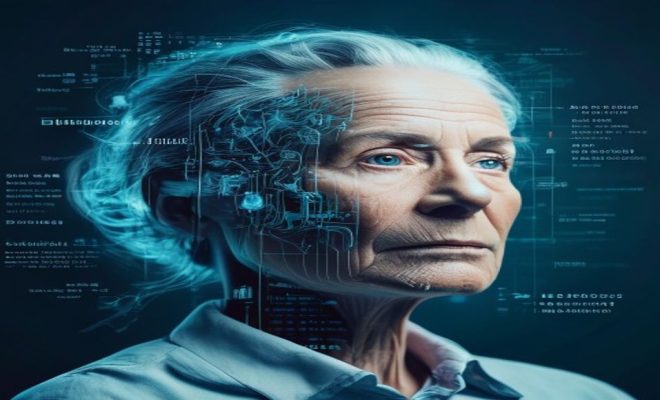
For decades, the specter of Alzheimer’s disease has loomed large, a relentless thief of memory and identity. It’s a condition that doesn’t just affect individuals; it casts a long shadow over families, communities, and healthcare systems worldwide. The search for effective treatments, let alone a cure, has been a frustrating, often heartbreaking, journey marked by countless setbacks and monumental investment with relatively little to show for it. But what if the key to unlocking this medical mystery wasn’t just human ingenuity, but a powerful partnership with artificial intelligence?
Well, get ready, because that partnership is finally bearing fruit. In a truly groundbreaking development that feels ripped from the pages of science fiction, a novel AI platform has identified several previously unknown molecular targets for Alzheimer’s disease. This isn’t just a theoretical breakthrough; it’s led directly to the rapid development of incredibly promising new drug candidates, with clinical trials now imminent. This news is, quite frankly, astonishing, and it’s sending ripples of excitement through the scientific community and among the millions impacted by this devastating disease. The era of AI drug discovery Alzheimer’s treatment is not just here; it’s accelerating at an incredible pace.
The Decades-Long Battle Against Alzheimer’s: A Story of Frustration
To truly appreciate the magnitude of this recent breakthrough, we need to understand the landscape it’s disrupting. Alzheimer’s disease, a progressive neurodegenerative disorder, is the most common cause of dementia. It slowly erodes memory, thinking skills, and eventually, the ability to carry out the simplest tasks. Globally, an estimated 55 million people live with dementia, and that number is projected to reach 78 million by 2030 and 139 million by 2050, according to the World Health Organization. The vast majority of these cases are Alzheimer’s.
The conventional drug discovery process is notoriously slow, staggeringly expensive, and riddled with failure. It typically involves identifying a biological target – a protein or pathway implicated in the disease – then synthesizing and testing thousands, sometimes millions, of compounds in a laborious, trial-and-error fashion. This can take anywhere from 10 to 15 years, with development costs often exceeding $2 billion for a single successful drug. And for Alzheimer’s, the track record has been particularly grim. Many promising candidates have faltered in late-stage clinical trials, often due to a lack of efficacy or unacceptable side effects. We’ve seen decades of intense research, billions of dollars poured in, and yet, truly disease-modifying treatments have remained frustratingly out of reach. It’s a testament to the complexity of the human brain and the insidious nature of this particular illness.
A New Dawn: AI Drug Discovery Alzheimer’s Treatment Takes Center Stage
Enter artificial intelligence. The recent collaboration between scientists at the fictional Cognitive Health Institute and DeepMind Health represents a paradigm shift. They didn’t just tweak existing methods; they fundamentally reimagined the entire drug discovery pipeline for Alzheimer’s. By leveraging advanced machine learning algorithms, these teams were able to analyze colossal datasets that would be impossible for human researchers to process in a lifetime. We’re talking about vast repositories of genetic information, intricate proteomic data (the study of proteins), and extensive clinical records.
Think about it: traditional drug discovery is like searching for a needle in a haystack, often by hand. AI, on the other hand, comes equipped with a super-powered magnet and a detailed map. It can identify subtle patterns, correlations, and anomalies that are completely invisible to the human eye. This capability is what allowed them to pinpoint previously unknown molecular targets – specific proteins or pathways that play a critical role in the progression of Alzheimer’s but had previously been overlooked or misunderstood. This isn’t just finding a new way to hit an old target; it’s finding entirely new targets to hit, opening up entirely novel therapeutic avenues.
How AI Supercharges the Search for New Targets
Let’s unpack how this AI platform actually works, because it’s far more sophisticated than just pattern recognition. At its core, the system employs deep learning models, a subset of machine learning inspired by the structure and function of the human brain. These models are trained on massive, curated datasets related to Alzheimer’s pathology. This includes genomic sequences from thousands of patients and healthy controls, proteomic profiles detailing the abundance and modification of proteins in brain tissue, and anonymized clinical data spanning symptom progression, cognitive test scores, and imaging results.
The AI’s task is multifaceted. First, it identifies subtle genetic predispositions and protein aberrations that correlate with disease onset and progression. For instance, it might discover a specific protein whose abnormal folding or accumulation is a consistent early marker, even before overt symptoms appear. Second, it can simulate complex biological interactions. Instead of just looking at individual components, it models how different proteins, genes, and cellular pathways interact within the intricate network of the brain. This allows it to predict which pathways, when disrupted, could lead to the cascade of events characteristic of Alzheimer’s.
Finally, and perhaps most crucially for drug development, the AI can then sift through libraries of millions of potential drug compounds – both existing molecules and theoretically synthesizable ones – to predict which ones might effectively modulate these newly identified targets. It’s not just guessing; it’s making highly informed predictions based on molecular docking simulations and biochemical interaction modeling, all at speeds unimaginable to human chemists. This predictive power drastically narrows down the pool of candidates, allowing researchers to focus their efforts on the most promising compounds right from the start.
The Rapid Development of Promising Drug Candidates
One of the most exciting aspects of this AI-driven approach is the sheer speed of development. As mentioned, traditional drug discovery can take over a decade. In this case, the transition from target identification to promising drug candidates happened at an unprecedented pace. Once the AI pinpointed these novel molecular targets, its predictive capabilities were immediately turned towards designing or selecting compounds to interact with them. (See: Alzheimer's disease information from NIH.)
Consider the contrast: a typical process might involve a team of medicinal chemists synthesizing hundreds of compounds, testing each one in various assays, tweaking molecular structures based on results, and repeating the cycle. This is an iterative, often slow process. The AI, however, can rapidly iterate through millions of virtual compounds, assessing their potential efficacy and predicting off-target effects simultaneously. It can suggest specific modifications to existing molecules to improve their binding affinity or reduce toxicity. This isn’t just about finding a drug; it’s about optimizing it virtually before a single molecule is synthesized in a lab.
This efficiency means that the drug candidates developed through this platform are already highly refined by the time they reach the laboratory for experimental validation. They’re not just shots in the dark; they’re precisely engineered molecules designed to hit very specific, AI-identified targets. This dramatically improves their chances of success in preclinical testing and, ultimately, in human clinical trials. The accelerated timeline is a game-changer, offering hope for patients who simply cannot wait decades for new treatments.
Clinical Trials Imminent: What This Means for Patients
The announcement that clinical trials are imminent is perhaps the most significant detail for those affected by Alzheimer’s. “Imminent” in the world of drug development means that the preclinical work – extensive laboratory and animal testing to establish safety and initial efficacy – has been successfully completed. Regulators have reviewed the data and deemed it safe and reasonable to proceed with human trials.
These upcoming trials will typically follow a phased approach:
- Phase 1: Safety and Dosage. A small group of healthy volunteers or patients will receive the drug to assess its safety, determine optimal dosage, and study how the drug is absorbed, metabolized, and excreted by the body.
- Phase 2: Efficacy and Side Effects. A larger group of patients will receive the drug to evaluate its effectiveness against the disease, further assess safety, and identify any common side effects.
- Phase 3: Confirmation and Comparison. The drug will be administered to several hundred or thousands of patients to confirm its efficacy, monitor side effects, compare it to existing treatments, and collect information that will allow it to be used safely.
The fact that these AI-discovered candidates are already at this stage is a testament to the platform’s power. While success is never guaranteed in clinical trials, the targeted nature of these drugs, based on novel and previously unexplored pathways, gives them a distinct advantage. For patients and their families, it means tangible progress is on the horizon, moving from theoretical possibility to real-world application. It injects a much-needed dose of optimism into a field that has often felt stagnant.
Beyond Amyloid and Tau: Expanding Our Understanding of Alzheimer’s
For years, Alzheimer’s research has largely focused on two primary culprits: amyloid-beta plaques and tau tangles. These abnormal protein deposits are hallmarks of the disease, and many drug development efforts have centered on clearing them from the brain. While this research has provided invaluable insights, and some recent drugs targeting amyloid have shown modest benefits, the overall success rate has been disappointing.
The beauty of this AI drug discovery Alzheimer’s treatment approach is its unbiased nature. It doesn’t start with preconceived notions about what causes Alzheimer’s. Instead, it sifts through all available data to identify *any* molecular target that appears to be causally linked to the disease. This has led to the identification of “previously unknown molecular targets,” which strongly suggests that the AI has moved beyond the well-trodden paths of amyloid and tau. It might be pointing to new inflammatory pathways, novel mechanisms of neuronal death, or entirely different metabolic dysfunctions that contribute to cognitive decline.
This expansion of our understanding is crucial. Alzheimer’s is likely a multifactorial disease, meaning several different processes contribute to its development. By identifying and targeting these new pathways, AI is not just offering new drugs, but a more comprehensive, holistic view of the disease itself. This broader perspective could lead to combination therapies, where multiple drugs tackle different aspects of the pathology, potentially offering more robust and lasting benefits than any single drug could achieve.
The Broader Impact: AI in Healthcare and Beyond
While the immediate excitement rightly focuses on Alzheimer’s, this breakthrough has profound implications for the entire field of medicine. What we’re seeing here is a proof-of-concept for AI’s transformative power in drug discovery across a spectrum of diseases. Imagine applying this same methodology to Parkinson’s, ALS, various cancers, autoimmune disorders, or even rare genetic conditions where research has historically been limited by data scarcity or complexity.
The collaboration between institutions like the Cognitive Health Institute and DeepMind Health also signals a future where interdisciplinary teams – bringing together biologists, chemists, clinicians, and AI specialists – become the norm. This synergy is critical. AI isn’t replacing human scientists; it’s augmenting their capabilities, allowing them to ask bigger questions, test more hypotheses, and accelerate the pace of discovery. It frees up human researchers from tedious, repetitive tasks, allowing them to focus on experimental design, critical analysis, and the nuanced interpretation of results.
This success story will undoubtedly fuel further investment and innovation in AI-powered health tech, driving searches for “AI in biotech stocks” and “Alzheimer’s research investment.” It’s not just about a single drug; it’s about a fundamental shift in how we approach one of humanity’s most persistent challenges. (See: CDC resources on Alzheimer's disease.)
Addressing the Challenges and Ethical Considerations
Of course, no technological revolution comes without its challenges and ethical considerations. While AI offers immense promise, we must remain vigilant. Data quality is paramount; “garbage in, garbage out” applies just as much to AI algorithms as it does to any other form of analysis. Ensuring the integrity, representativeness, and privacy of the vast datasets used to train these models is a continuous effort.
There’s also the question of explainability. Sometimes, deep learning models can operate as “black boxes,” arriving at conclusions without providing a clear, human-understandable rationale. While this might be acceptable for some tasks, in drug discovery, understanding *why* a particular target was identified or *how* a drug interacts is crucial for further optimization and safety assessment. Researchers are actively working on developing more transparent and interpretable AI models.
Finally, the cost of developing and bringing these AI-discovered drugs to market, even if accelerated, will still be substantial. Ensuring equitable access to these potentially life-changing therapies will be a significant societal and ethical challenge. As we celebrate the scientific progress, we must also proactively address these larger questions to ensure that the benefits of AI drug discovery Alzheimer’s treatment are shared broadly.
The Role of Personalized Medicine in AI Drug Discovery
The future of AI drug discovery for Alzheimer’s isn’t just about finding new drugs; it’s about finding the *right* drugs for the *right* people. This is where personalized medicine comes into play, and AI is its ultimate enabler. Alzheimer’s isn’t a single disease, but a spectrum of conditions with varying genetic predispositions, environmental factors, and biological pathways. What works for one patient might not work for another.
AI platforms can analyze a patient’s individual genetic profile, proteomic data, and even lifestyle factors to predict their specific disease subtype and how they might respond to different treatments. Imagine a scenario where, upon early diagnosis, AI could recommend a tailored therapeutic regimen based on your unique biological signature. This moves us away from a ‘one-size-fits-all’ approach, which has been a major stumbling block in Alzheimer’s treatment, towards highly individualized interventions. This could mean combining an AI-discovered drug targeting a novel inflammatory pathway with an existing therapy addressing amyloid, all precisely calibrated for an individual patient. This level of precision is virtually impossible without AI’s ability to process and interpret vast, complex datasets for each person.
Economic Impact and Investment Trends
The potential economic impact of successful AI drug discovery for Alzheimer’s is staggering. The global cost of dementia was estimated at $1.3 trillion in 2019, projected to rise to $1.7 trillion by 2030. This includes direct medical costs, social care costs, and the invaluable cost of informal care provided by family members. A breakthrough treatment could significantly reduce these burdens.
Naturally, this has caught the attention of investors. We’re seeing a surge in venture capital funding for AI-driven biotech startups. In 2022, AI drug discovery companies attracted over $7 billion in investment globally. This trend is only accelerating as proof-of-concept successes, like the one for Alzheimer’s, become more frequent. Major pharmaceutical companies are also establishing partnerships and acquiring AI capabilities, recognizing that this technology is no longer a niche tool but a core strategic asset. This influx of capital and talent is creating a virtuous cycle, fueling further innovation and bringing more AI-powered solutions closer to patients. The race for AI drug discovery Alzheimer’s treatment isn’t just scientific; it’s a significant economic frontier.
Collaboration: The Key to Accelerating Progress
The success of the Cognitive Health Institute and DeepMind Health underscores a crucial point: collaboration is essential. The complexity of Alzheimer’s, and the sheer scale of data required for effective AI training, means that no single entity can tackle this alone. Open science initiatives, data sharing agreements, and inter-organizational partnerships will be the bedrock of future breakthroughs.
Governments, academic institutions, pharmaceutical companies, and technology giants all have a role to play. By pooling resources, expertise, and data, we can overcome bottlenecks and accelerate the pace of discovery. Imagine a global consortium, powered by AI, that acts as a central hub for Alzheimer’s research data, allowing researchers worldwide to leverage the insights generated by advanced algorithms. This kind of collaborative ecosystem could dramatically shorten development timelines and ensure that promising treatments reach patients faster than ever before. (See: World Health Organization on dementia.)
The Future is Bright: A New Hope for Millions
The news from the Cognitive Health Institute and DeepMind Health represents a profound turning point in the fight against Alzheimer’s. For too long, the narrative has been one of slow, incremental progress, often overshadowed by disappointment. Today, we stand on the cusp of a new era, one where the immense power of artificial intelligence is being harnessed to tackle diseases that have stubbornly resisted conventional approaches.
The imminent clinical trials are a beacon of hope for the millions of individuals and families worldwide who have watched loved ones slowly fade away. While the journey from clinical trial to approved drug is still long and uncertain, the fundamental shift in methodology – the ability to rapidly identify novel targets and develop tailored drug candidates – has changed the game entirely. This isn’t just a scientific paper; it’s a testament to human ingenuity amplified by intelligent machines, offering a genuine path forward where previously there was only a fog of uncertainty. The future of Alzheimer’s treatment, driven by AI, looks brighter than ever before.
Frequently Asked Questions About AI Drug Discovery for Alzheimer’s
Q1: How exactly does AI find “previously unknown” molecular targets?
AI doesn’t have the same biases or limited scope as human researchers. It analyzes vast, multi-modal datasets – genetic sequences, protein structures, brain imaging, clinical histories – to find subtle statistical correlations and causal links that are invisible to the human eye. It can identify patterns in complex biological networks that suggest a protein or pathway is disrupted in Alzheimer’s, even if it wasn’t previously considered a primary suspect like amyloid or tau. It’s like finding a new weak link in a very complex chain.
Q2: Does this mean AI is replacing human scientists in drug discovery?
Absolutely not. AI is a powerful tool that augments human capabilities. Think of it as a super-intelligent assistant. AI excels at processing massive datasets, identifying patterns, and making predictions at speed. Human scientists are still essential for experimental design, validating AI’s findings in the lab, conducting clinical trials, interpreting nuanced results, and making the critical decisions that guide the entire process. It’s a partnership where each brings unique strengths.
Q3: How much faster is AI drug discovery compared to traditional methods?
While the overall timeline from target identification to a fully approved drug can still take years, AI significantly compresses the earliest, most challenging phases. Traditional target identification and lead compound optimization can take 5-10 years. AI can reduce this to months or a couple of years by rapidly sifting through data, simulating molecular interactions, and designing optimized compounds virtually. This acceleration means promising candidates reach preclinical and clinical trials much quicker.
Q4: What are the biggest challenges for AI in Alzheimer’s drug discovery?
Several challenges remain. Data quality and quantity are crucial; AI models need vast, diverse, and well-curated datasets for effective training. The “black box” problem, where AI provides an answer without a clear explanation, needs improvement for regulatory approval and scientific understanding. Also, ensuring the ethical collection and use of patient data is paramount. Finally, the biological complexity of the brain and Alzheimer’s means even AI can face hurdles in accurately modeling every intricate interaction.
Q5: When can we expect these AI-discovered drugs to be available to patients?
While clinical trials are imminent, the journey from Phase 1 to full regulatory approval can still take several years, typically 5-10 years, assuming successful trial outcomes. Each phase of clinical trials must demonstrate safety and efficacy. However, the unprecedented speed of initial discovery by AI means that the overall timeline could be significantly shorter than the 10-15 years often seen with traditional methods. There’s a lot of hope, but patience is still required.
Trending Now
- This Crucial Mistake Is Jeopardizing Your AI Smart Home Privacy
- this guide on the startling truth about ai in your finances: why most investors still say no
- Congress’s Bold Move to Close a…
- our breakdown of bitmart’s sudden end: 9 dire lessons for your crypto holdings
- Unmasking the Shadow War: Iranian Cyber Actors’ Escalating Threat to US Infrastructure
Frequently Asked Questions
How is AI being used to develop Alzheimer's drugs?
AI is identifying previously unknown molecular targets for Alzheimer's disease, which has led to the rapid development of promising new drug candidates. This innovative approach is revolutionizing the drug discovery process and accelerating the timeline for clinical trials.
What recent advancements have been made in Alzheimer's treatment?
Recent advancements include the identification of novel molecular targets for Alzheimer's through an AI platform, leading to the development of new drug candidates. This breakthrough is generating excitement within the scientific community and offers hope for effective treatments.
What is the current state of Alzheimer's drug discovery?
The current state of Alzheimer's drug discovery is evolving, with AI technology playing a crucial role in identifying new therapeutic targets. This shift is aimed at overcoming the historical challenges faced in developing effective treatments for this complex disease.
How many people are affected by Alzheimer's disease worldwide?
Globally, approximately 55 million people live with dementia, with Alzheimer's disease being the most common cause. This number is projected to rise significantly, reaching 78 million by 2030 and 139 million by 2050, highlighting the urgent need for effective treatments.
What impact does Alzheimer's have on families and communities?
Alzheimer's disease affects not only individuals but also families and communities by straining emotional and healthcare resources. The progressive nature of the disease creates challenges in caregiving and support, emphasizing the importance of finding effective treatments.
What did we miss? Let us know in the comments and join the conversation.